At an electronic music concert, Cameron et al. manipulated the presence of undetectable very-low frequencies and measured audience members’ movements. Audience members moved more when very-low frequencies were present versus absent. Vestibular sensitivity to low frequencies and connections to the motor system may underlie the effect of very-low frequencies on movement.
Undetectable very-low frequency sound increases dancing at a live concert | Hacker News
I used to run experiments with friends and family using a 800L ported subwoofer tuned to ~13Hz with a 40Hz cutoff. Not one person would mistake it for being on vs off. Certain content makes these frequencies substantially more obvious. Classical music performed in large concert halls is one surprising candidate outside of Mission Impossible scenes. Being able to "feel" the original auditorium in your listening room is a very cool effect to me.
Tiny Tech Tips: Why You Need Earplugs At Concerts
It may be the last thing on your mind when you're seeing an artist, but sound pressure levels at a live show can seriously impact long-term hearing. Tiny Desk engineer Josh Rogosin is here to help.

“Waiting for the Bass to Drop”: Correlations between Intense Emotional Experiences and Production Techniques in Build-up and Drop Sections of Electronic Dance Music
This study investigates the correlations between theories of intense emotional experiences and production techniques used in the electronic dance music (EDM) sections “build-up” and “drop”, which are designed to build tension and create a heightened emotional intensity among clubbers. This is done by descriptive and interpretive music analysis, where spectrograms and a schematic model visually represent the dominant production techniques. Through a theoretical framework consisting of musical expectancy and gravity, the analysis suggests that i) extensive use of uplifters, ii) the “drum roll effect”, iii) large frequency changes, iv) removal and reintroduction of bass and bass drum and v) a contrasting “breakdown” cause tension and anticipation, which seems to correlate with a possible intensification of emotional experience. This is furthermore discussed and more broadly related to the club experience seen as a whole, drawing on the psychological concepts Peak experience, Strong experiences with music (SEM) and Absorption.
Listening To Music May Be Damaging Your Creativity - Slashdot
The results of a new study suggest that listening to music can significantly impair your ability to perform creative tasks. Whilst music was found to disrupt creative processes, ambient "library noise" was found to have no significant effect. From a report: The first experiment saw volunteers comple...

How the brain perceives rhythm
MIT neuroscientists have found that people are biased toward hearing and producing rhythms composed of simple integer ratios. This holds true for musicians and non-musicians living in the United States, as well as members of a Bolivian tribe who have little exposure to Western music.

A B O U T - E X P E R I M A N C E
Experimentelle Musik, Klangkunst & Performance in Saarbrücken Experimental Music, Sound Art & Performance in Saarbrücken [Experi]ence: das Hörerlebnis als akustische Erfahrung // the listening experience as an acoustic experience Experi[m]ental: das Unkonventionelle und Fremdwirkende // the unconventional and foreign Perform[ance]: die vergängliche künstlerische Darbietung – the ephemeral artistic performance Seit 2016 bietet die Veranstaltung Experimance ... Read moreA B O U T
Music on the brain: Listening can influence our brain’s activity
The "Mozart effect" isn't real—but music does affect our mental processes.

Art of Noise
A multi-sensory exploration of how design has changed the way we’ve experienced music over the past 100 years.


Tomorrows World @ Fabric London Sonic Systems/HIT Bodysonic Dancefloor
When the eyes move, the eardrums move, too
Simply moving the eyes triggers the eardrums to move too, even in the absence of sound, says a new study by neuroscientists. The findings, which were replicated in both humans and rhesus monkeys, provide new insight into how the brain coordinates what we see and what we hear. It may also lead to new understanding of hearing disorders, such as difficulty following a conversation in a crowded room.

Making Alarms More Musical Can Save Lives - Slashdot
Medical alarms don't have to be louder to be more effective. Scientific American: Beeping alarms in hospitals are a life-or-death matter -- but with so many going off all the time, medical professionals may experience alarm fatigue that impairs care. Researchers now report that changing an alarm's s...

Noise — binaural beats generator
Binaural beats, Shepard tones, harmonic overtones, and noise generator. Keeps playing when your phone sleeps.
Dissonant tones sound fine to people not raised on Western music
Musical perception is, surprisingly, not shared by all humans.

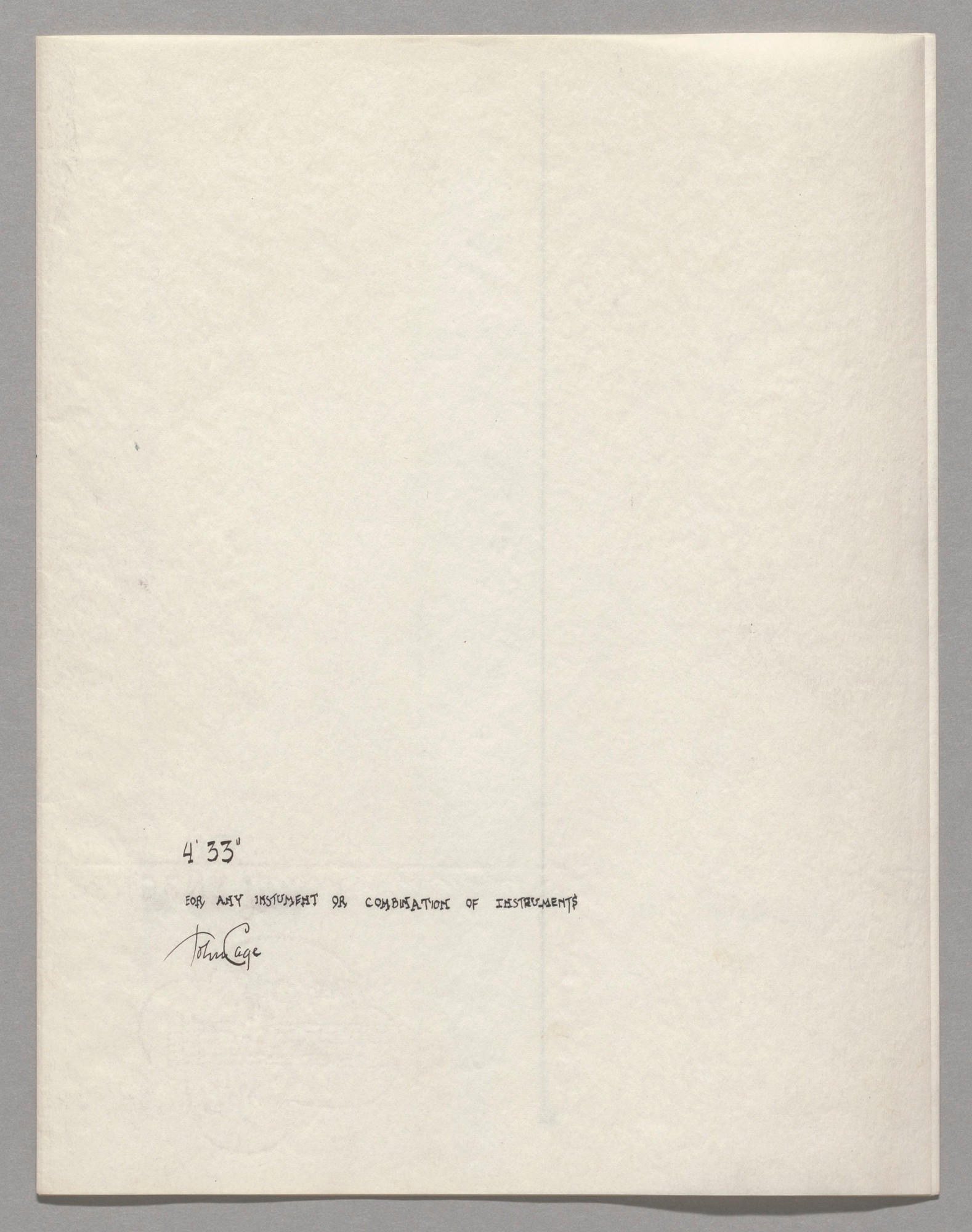
There Will Never Be Silence: Scoring John Cage’s 4′33″ | MoMA
Exhibition. Oct 12, 2013–Jun 22, 2014. On a warm summer evening in August 1952 pianist David Tudor approached a piano on stage at the Maverick Concert Hall in Woodstock, New York. Stopwatch in hand, Tudor sat before the piano and, without striking a note, premiered John Cage’s composition 4′33″. Commonly known as Cage's “silent” piece, 4′33″ comprises three movements during which a performer—or performers—are instructed to produce no intentional sounds for four minutes and 33 seconds. This radical gesture upended the conventional structure of music, shifting attention from the performer to the audience, and allowing for endless possibilities of ambient sounds to fill the space. Today, 4′33″ is recognized as a groundbreaking work that synthesizes Cage’s interests in chance operations, experimental music, and visual arts. When discussing the work over his lifetime, Cage emphasized that, rather than intending to simply shock his audience, he hoped to attune listeners to silence as a structure within musical notation. In the visual arts, Cage’s contemporaries were similarly using chance, “negative space,” and physically dematerialized works that encourage open presentations or interpretations of scripted experiences. This exhibition introduces the Museum’s recently acquired score for 4′33″ and examines it, and Cage’s influence, as a critical pivot around which a diverse array of artists working throughout the 20th century can be united. Taking its title from a letter written by Cage in 1954, There Will Never Be Silence features prints, drawings, artists’ books, photographs, paintings, sculptures, and films by such artists as Marcel Duchamp, Kurt Schwitters, Robert Rauschenberg, Robert Morris, Lawrence Weiner, Yoko Ono, Andy Warhol, and other artists associated with Fluxus, Minimalism, and Conceptual art who pushed preconceived boundaries of space, time, and physicality to new ends.