Machine learning has a pseudoscience problem. In this perspective, the authors explore the recent resurgence of deep learning-assisted physiognomy and argue that pseudoscientific and socially harmful applications of machine learning often arise from shared underlying epistemic failings. They urge researchers to reject notions that machine learning can be theory free and to consider their work in an appropriate social and historical context.
Deconstructing the Machine Learning Value Chain
This essay offers a materialist analysis of machine learning in the form of a critical intervention that deconstructs the value chain of this technological para

Deep learning gets the glory, deep fact checking gets ignored – Rachel Thomas, PhD
AI, science, education, & ethics

Understanding Artificial Neural Networks: Mysterianism about Known Mechanism is Mysticism
Mysterianism is the idea that human cognition, mind, cannot be understood. Taking this concept and applying it to known mechanism — such that claims are made that we do not know how engineered systems, such as artificial neural networks (ANNs), work, or that they constitute black boxes that we can only open with difficulty — is inappropriate at best and malicious at worst. We do know the mechanistic structure of such models because we designed and built them. We also do know their functional role (what they are for) as well as the mathematical function they are asked to approximate (map inputs to target outputs). Because mysterianist beliefs about known systems, such as ANNs, are often expressed, scientists need to sit up and take notice. We provide an error theory as to what is going on to help unpick this metatheoretical blunder. Ultimately, the problem is that 'understanding' is not a technical term in these cases: the word is co-opted for a specific narrative to sell 'artificial intelligence' through mystification. All computational systems, from pendulums to databases, will behave in ways we cannot predict or control — this is not a unique property of ANNs — and experts do indeed grasp the computational properties of these systems nonetheless.
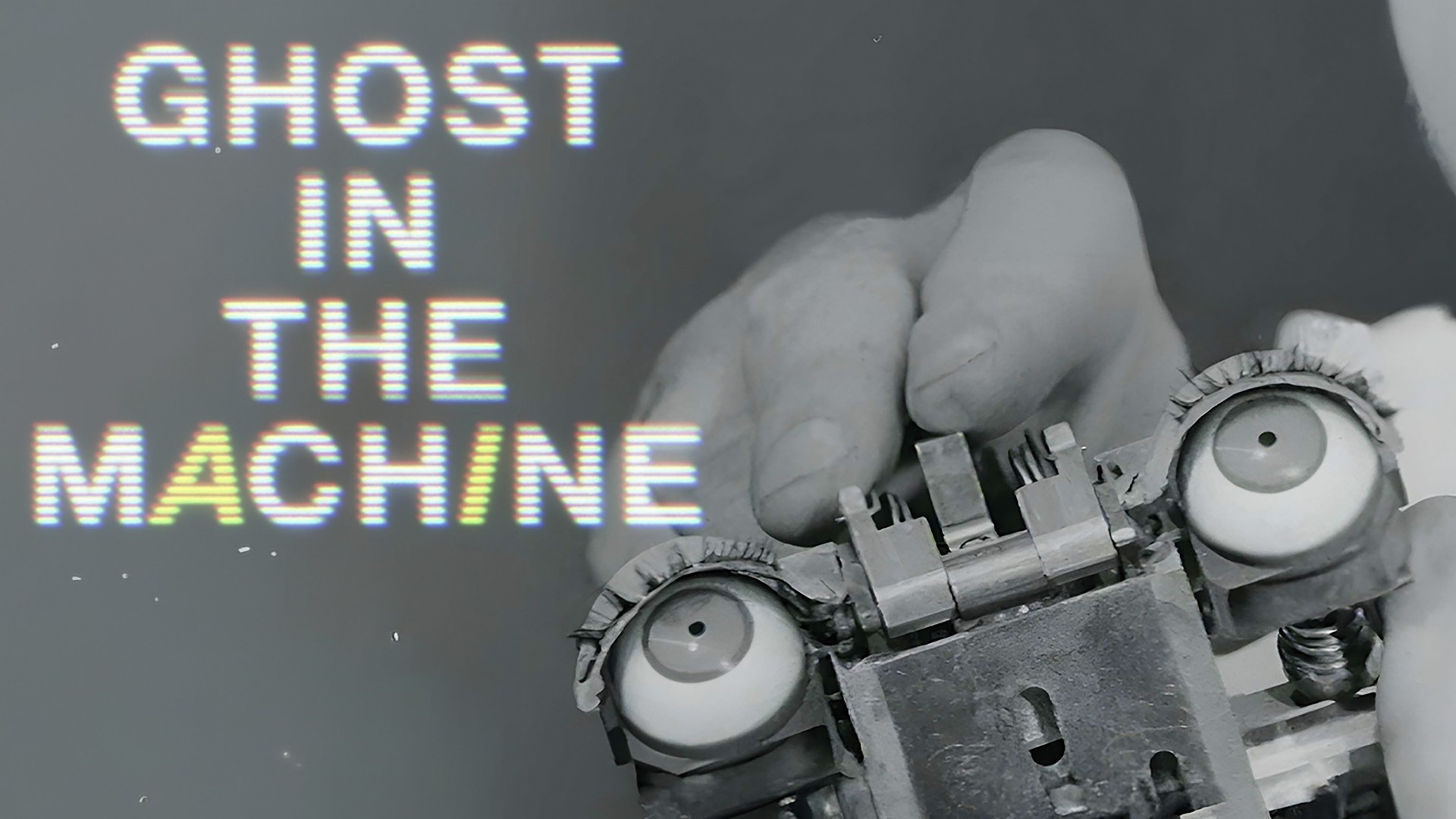
Ghost in the Machine | A.I. Documentary | Independent Lens
Ghost in the Machine reveals the problematic history of artificial intelligence and the consequences it imposes on our communities and environment.
What is Machine Learning? | IBM
Machine learning is the subset of AI focused on algorithms that analyze and “learn” the patterns of training data in order to make accurate inferences about new data.

The Impossibility of Automating Ambiguity
Abstract. On the one hand, complexity science and enactive and embodied cognitive science approaches emphasize that people, as complex adaptive systems, are ambiguous, indeterminable, and inherently unpredictable. On the other, Machine Learning (ML) systems that claim to predict human behaviour are becoming ubiquitous in all spheres of social life. I contend that ubiquitous Artificial Intelligence (AI) and ML systems are close descendants of the Cartesian and Newtonian worldview in so far as they are tools that fundamentally sort, categorize, and classify the world, and forecast the future. Through the practice of clustering, sorting, and predicting human behaviour and action, these systems impose order, equilibrium, and stability to the active, fluid, messy, and unpredictable nature of human behaviour and the social world at large. Grounded in complexity science and enactive and embodied cognitive science approaches, this article emphasizes why people, embedded in social systems, are indeterminable and unpredictable. When ML systems “pick up” patterns and clusters, this often amounts to identifying historically and socially held norms, conventions, and stereotypes. Machine prediction of social behaviour, I argue, is not only erroneous but also presents real harm to those at the margins of society.

Deep Fakes: A Looming Challenge for Privacy, Democracy, and National Security — California Law Review
Harmful lies are nothing new. But the ability to distort reality has taken an exponential leap forward with “deep fake” technology. This capability makes it possible to create audio and video of real people saying and doing things they never said or did. Machine learning techniques are escalating th

Ghost in the Machine | Full Documentary
The Unreasonable Effectiveness of Recurrent Neural Networks
Musings of a Computer Scientist.
Anthropic blames dystopian sci-fi for training AI models to act “evil”
But training on "synthetic stories" that model good AI behavior can help.

Society-in-the-loop: programming the algorithmic social contract
Recent rapid advances in Artificial Intelligence (AI) and Machine Learning have raised many questions about the regulatory and governance mechanisms for autonomous machines. Many commentators, scholars, and policy-makers now call for ensuring that algorithms governing our lives are transparent, fair, and accountable. Here, I propose a conceptual framework for the regulation of AI and algorithmic systems. I argue that we need tools to program, debug and maintain an algorithmic social contract, a pact between various human stakeholders, mediated by machines. To achieve this, we can adapt the concept of human-in-the-loop (HITL) from the fields of modeling and simulation, and interactive machine learning. In particular, I propose an agenda I call society-in-the-loop (SITL), which combines the HITL control paradigm with mechanisms for negotiating the values of various stakeholders affected by AI systems, and monitoring compliance with the agreement. In short, ‘SITL = HITL + Social Contract.’

AI is doing something weird to Science
In both good and bad ways, and it won't go away.

The AI We Deserve
Critiques of artificial intelligence abound. Where’s the utopian vision for what it could be?

New Studies: How Commercial Forces Make Science Less Reliable
Computational social science has been distorted by commercial forces, and AI is making it worse.

AI, peer review and the human activity of science
When researchers cede their scientific judgement to machines, we lose something important.