

Provides comprehensive information on the dynamics of income, employment, household composition, and government program participation.
How Are SNAP Benefits Spent? Evidence from a Retail Panel
We use a novel retail panel with detailed transaction records to study the effect of the Supplemental Nutrition Assistance Program (SNAP) on house-hold spending. We use administrative data to motivate three approaches to causal inference. The marginal propensity to consume SNAP-eligible food (MPCF) out of SNAP benefits is 0.5 to 0.6. The MPCF out of cash is much smaller. These patterns obtain even for households for whom SNAP benefits are economically equivalent to cash because their benefits are below their food spending. Using a semiparametric framework, we reject the hypothesis that households respect the fungibility of money. A model with mental accounting can match the facts.
GRP Model of Senate Spending

Moving Forward on Basic Income | Y Combinator
We have a few updates we want to share on our Basic Income Project [https://ycombinator.wpengine.com/basic-income]: Our Research Director Elizabeth Rhodes is joining Basic Income Project as our Research Director. She recently completed a joint PhD in Social Work and Political Science at the University of Michigan, where her research focused on health and education provision in slum communities in Nairobi. We received over 1000 applications for this position (including tenured professors from
The PEPPER V Report - Kelso Institute Europe
This Report provides an overview of the development of employee financial participation, i.e., employee share ownership and profit sharing, across the EU-27, the United Kingdom, and the United States of America as of January 2024. Against the background of the policy development of the past 35 years, it highlights the growth of financial participation over the last decade using the most recent cross-country data available, i.e., the 2021 CRANET Survey, the 2019 European Company Survey and the 2015 European Working Conditions Survey, which also show its potential positive impact on employment and productivity.
CHP Election Priorities Guide 2026 - Council to Homeless Persons website
CHP's Election Priorities Guide outlines the forward-thinking, community-building responses that will end homelessness in Victoria, which we urge politicians and voters to choose in November's State election.

Household Financial Transaction Data
The growth of the availability and use of detailed household financial transaction micro data has dramatically expanded the ability of researchers to understand both household decision making and aggregate economic fluctuations across a wide range of fields. This class of transaction data is derived from a myriad of sources, including financial institutions, FinTech apps, and payment intermediaries. We review how these detailed data have been utilized in finance and economics research and analyze both their benefits and limitations as compared to more traditional measures of income, spending, and wealth. Finally, we discuss the future potential of this flexible class of data in firm-focused research, real-time policy analysis, and macro statistics.

Global Data on Financial Inclusion | FinDev Gateway
Explore our curated list of data sources relevant for microfinance and financial inclusion.
So you want a behavioral finance job
I’m going to mainly focus on a career in the private sector, doing applied work. If you want to know about government work, ask Maya Shankar or Owain Service. If what I’ve written doesn’t answer your questions, ask me. Just have something specific and interesting to ask about! But first, some screeners: Is this a long-term interest? Is this something you want to dedicate at least a decade to? It should be, otherwise you’ll get out-competed by others.

Harnessing naturally occurring data to measure the response of spending to income
Balancing your incomings and outgoings Economic theory predicts that when someone receives money should have little effect on their spending patterns. Gelman et al. constructed a data set of 60 million transactions made by 75,000 people to test this theory. People do seem to go on a mini–spending spree after they get their paychecks or pensions. However, closer inspection reveals that that's mostly explained by the convenience of linking regular payments, such as rent and utilities, to regular income. Unsurprisingly, cash-strapped people are more likely to increase their spending in response to receiving income. Science , this issue p. 212 , How do theoretical predictions of individual fiscal behaviors match up against real-world, real-time data? , This paper presents a new data infrastructure for measuring economic activity. The infrastructure records transactions and account balances, yielding measurements with scope and accuracy that have little precedent in economics. The data are drawn from a diverse population that overrepresents males and younger adults but contains large numbers of underrepresented groups. The data infrastructure permits evaluation of a benchmark theory in economics that predicts that individuals should use a combination of cash management, saving, and borrowing to make the timing of income irrelevant for the timing of spending. As in previous studies and in contrast to the predictions of the theory, there is a response of spending to the arrival of anticipated income. The data also show, however, that this apparent excess sensitivity of spending results largely from the coincident timing of regular income and regular spending. The remaining excess sensitivity is concentrated among individuals with less liquidity.
Windfall Income and the Permanent Income Hypothesis: New Evidence
This paper examines consumer response to windfall income. By using data from the 1972–73 Consumer Expenditure Surveys, an attempt was made to test Friedman's permanent income hypothesis. The results revealed that the marginal propensity to consume regular income was greater than the marginal propensity to consume windfall income for windfalls that were large relative to regular income. However, when windfall income was less than ten percent of regular income, the relationship reversed. Implications are drawn for short and long‐run fiscal policies affecting consumers

Wave Dashboard
Interactive MRP estimates of American public opinion for every state and congressional district, from Wave's MOSAIC model.
Rules of Thumb in Household Savings Decisions: Estimation Using Threshold Regression
The rules of thumb offered by financial advisors regarding how much to hold in liquid reserves vary widely and usually imply far greater sums than low-income ho

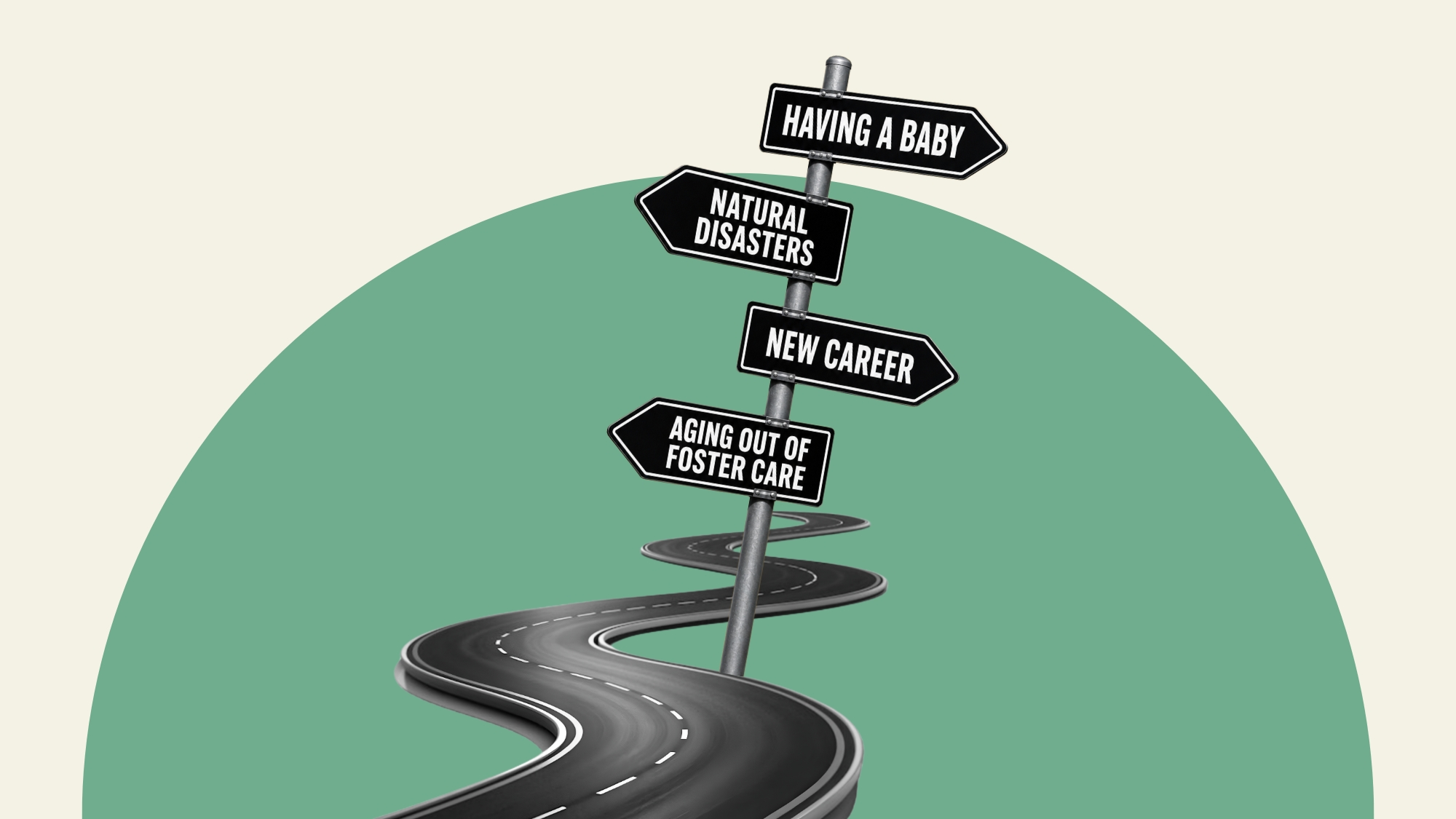
Right on Time: How Cash Helps Families Move Through Life's Transitions - Economic Security Project
Executive Summary Over the past decade, more than 250 guaranteed income pilots, programs that provide people with regular cash with no restrictions on how they use it, have run across 40 states and the District of Columbia. That research has revealed many learnings, and this report focuses on one clear takeaway: cash has its largest…
Temporal Reframing and Participation in a Savings Program: A Field Experiment
This study explores whether framing savings in more or less granular formats can increase sign-ups for a recurring deposit program in a FinTech environment. , A growing number of American workers are now freelancers and thus, responsible for their own retirement savings, yet they face psychological hurdles that hamper them from saving enough money for the long term. Although prior theory-derived interventions have been successful in addressing some of these obstacles, encouraging participation in saving programs is a challenging endeavor for policy makers and consumers alike. In a field setting, we test whether framing savings in more or less granular formats (for example, saving daily versus monthly) can encourage continued saving behavior through increasing the take up of a recurring deposit program. Among thousands of new users of a financial technology app, we find that framing deposits in daily amounts as opposed to monthly amounts quadruples the number of consumers who enroll. Furthermore, framing deposits in more granular terms reduced the participation gap between lower- and higher-income consumers: three times as many consumers in the highest rather than lowest income bracket participated in the program when it was framed as a $150 monthly deposit, but this difference in participation was eliminated when deposits were framed as $5 per day.

How to Run Surveys: A Guide to Creating Your Own Identifying Variation and Revealing the Invisible
Surveys are an essential approach for eliciting otherwise invisible factors such as perceptions, knowledge and beliefs, attitudes, and reasoning. These factors are critical determinants of social, economic, and political outcomes. Surveys are not merely a research tool. They are also not only a way of collecting data. Instead, they involve creating the process that will generate the data. This allows the researcher to create their own identifying and controlled variation. Thanks to the rise of mobile technologies and platforms, surveys offer valuable opportunities either to study broadly representative samples or to focus on specific groups. This article offers guidance on the complete survey process, from the design of the questions and experiments to the recruitment of respondents and the collection of data to the analysis of survey responses. It covers issues related to the sampling process, selection and attrition, attention and carelessness, survey question design and measurement, response biases, and survey experiments.
I will be presenting in the NBER Household Finance Summer Institute session this Friday at 1pm on "Using AI in Household Finance Research: A Practical Guide." nber.org/conferences/si-2026-household…

SI 2026 Household Finance
www.nber.org