

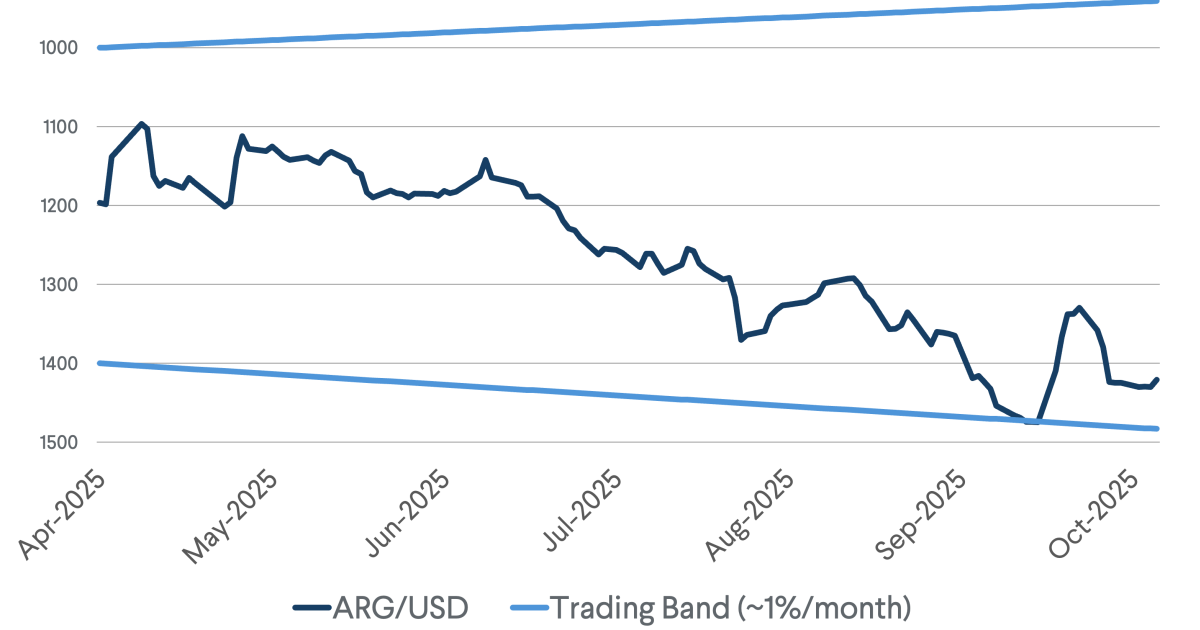
The pressure on Argentina’s reserves predated the increase in uncertainty ahead of Argentina’s October election, and it is unlikely to dissipate in full even after Milei’s victory.
Argentina - Wikitravel
Argentina, (Spanish: República Argentina) is a large, elongated country in the southern part of South America, neighbouring countries being Bolivia, Brazil, and Paraguay to the north, Uruguay to the north east and Chile to the west. In the east Argentina has a long South Atlantic Ocean coastline.
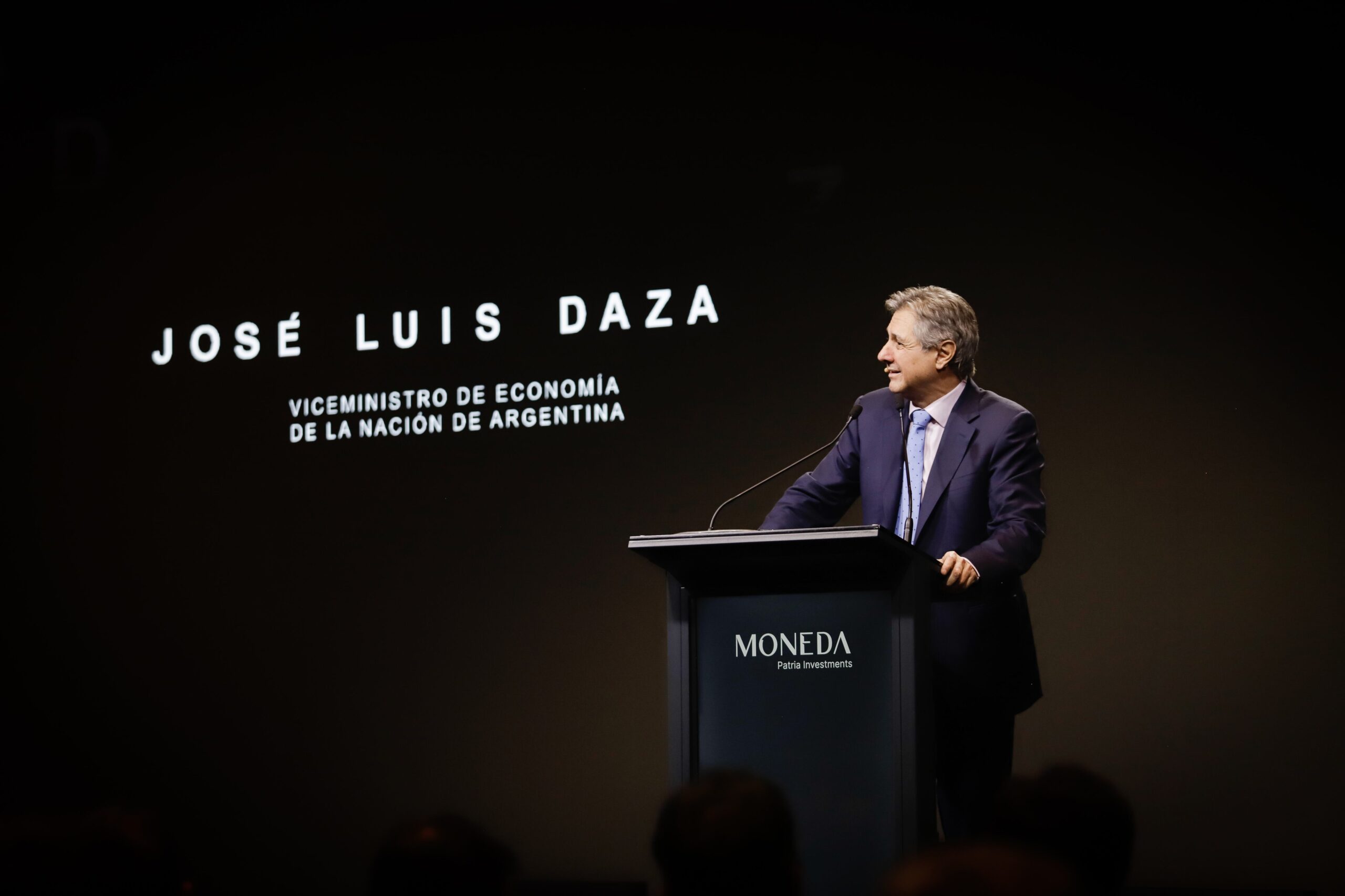
Argentina's Deputy Economy Minister Says Inflation Is No Longer the Problem
Argentina's deputy economy minister says inflation will keep falling and a new central bank law would be a confidence shock. July inflation was 2.1
Trump’s Venezuela oil deal gives US access to vast reserves as Iran war drives energy concerns | The National
Agreement deepens US involvement in Venezuela’s oil industry as midterms approach and energy prices remain elevated
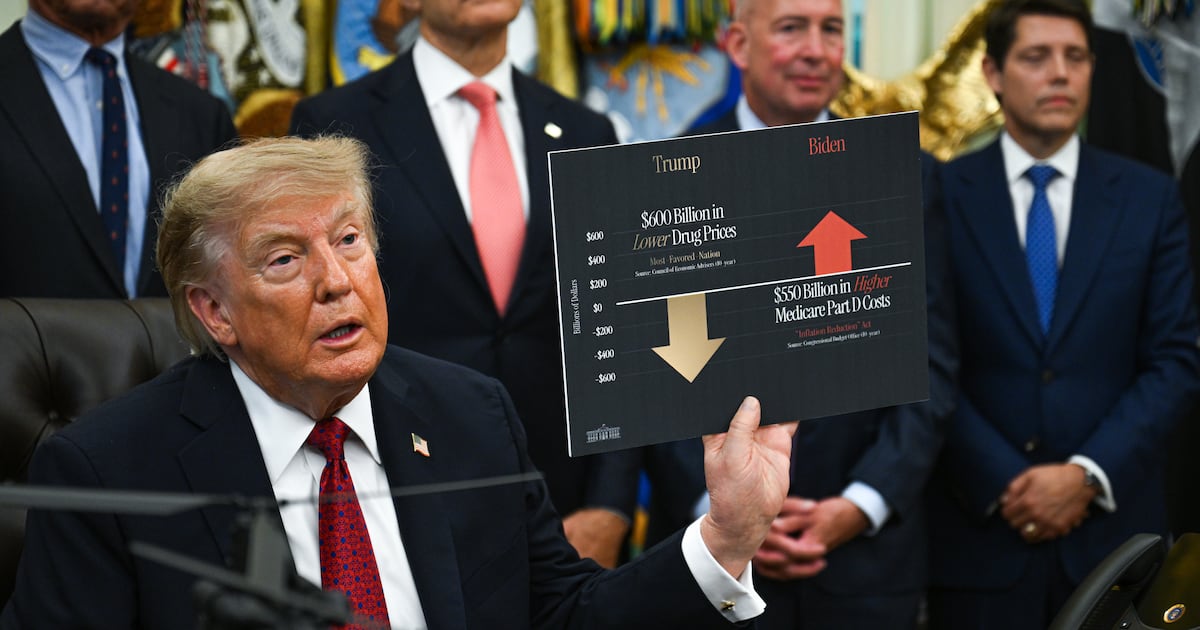
Trump says U.S. has entered deal with Venezuela to take control of 65 billion barrels of oil reserves
President Trump says his administration has entered a sweeping agreement with Venezuela that could give the U.S. access to vast amounts of the South American country's untapped oil reserves, at cost.
Cosas para hacer/conocer en BA
11 votes, 19 comments. Hi! I'm Brazilian (but don't judge me badly), because I really love Argentina (I've already visited 3 times), Buenos Aires…
(PDF) Authoritarian Neoliberalism from Below: Subjectivity and Platform Capitalism in Argentina and Brazil
PDF | We are witnessing a worldwide resurgence of reactionary ideologies and movements, combined with an escalating assault on democratic institutions... | Find, read and cite all the research you need on ResearchGate

Buenos Aires - Wikitravel
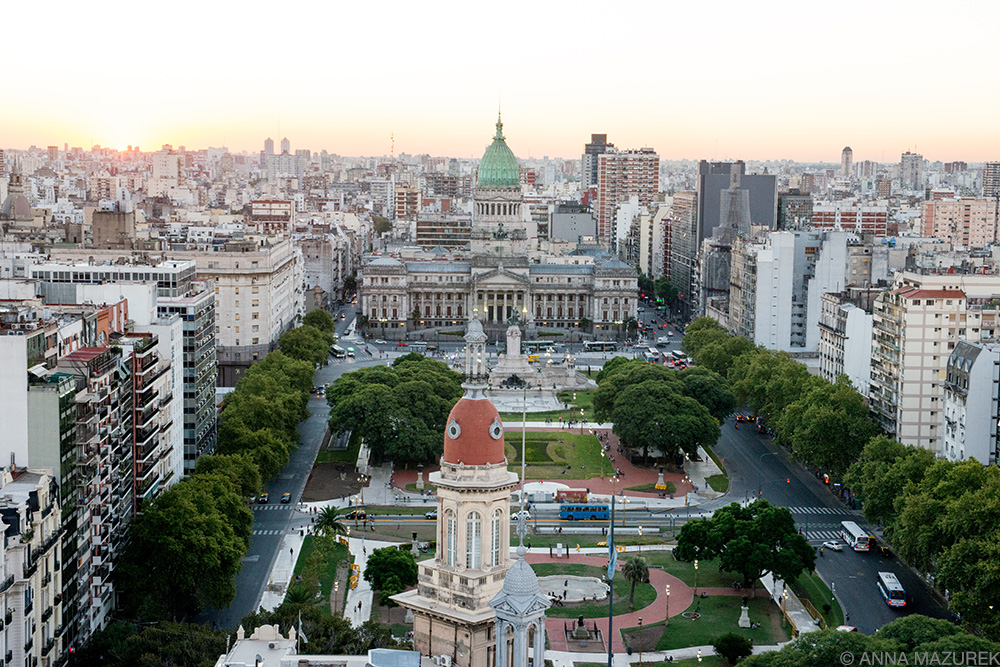
Buenos Aires (the official name 'is Ciudad Autónoma de Buenos Aires/Autonomous City of Buenos Aires, also called Capital Federal/Federal Capital) is the capital of the Argentine Republic. The name means fair winds, or literally good airs in Spanish. It is one of the largest cities in Latin America, with a lot of cultural offerings, and is the point of departure for traveling to the rest of the country. The inhabitants of Buenos Aires are called porteños, "people from the port", implying that many of the inhabitants are immigrants in some way or another. Buenos Aires is a singular, open, and integrating destination that allows the visitor not only to view the city but also to have an exceptional urban adventure.
The Ultimate Guide to Buenos Aires: What to Eat, See & Explore - Travel Like Anna
A detailed guide about the best things to do in Buenos Aires, Argentina, including where to eat and get the best blue dollar rate.
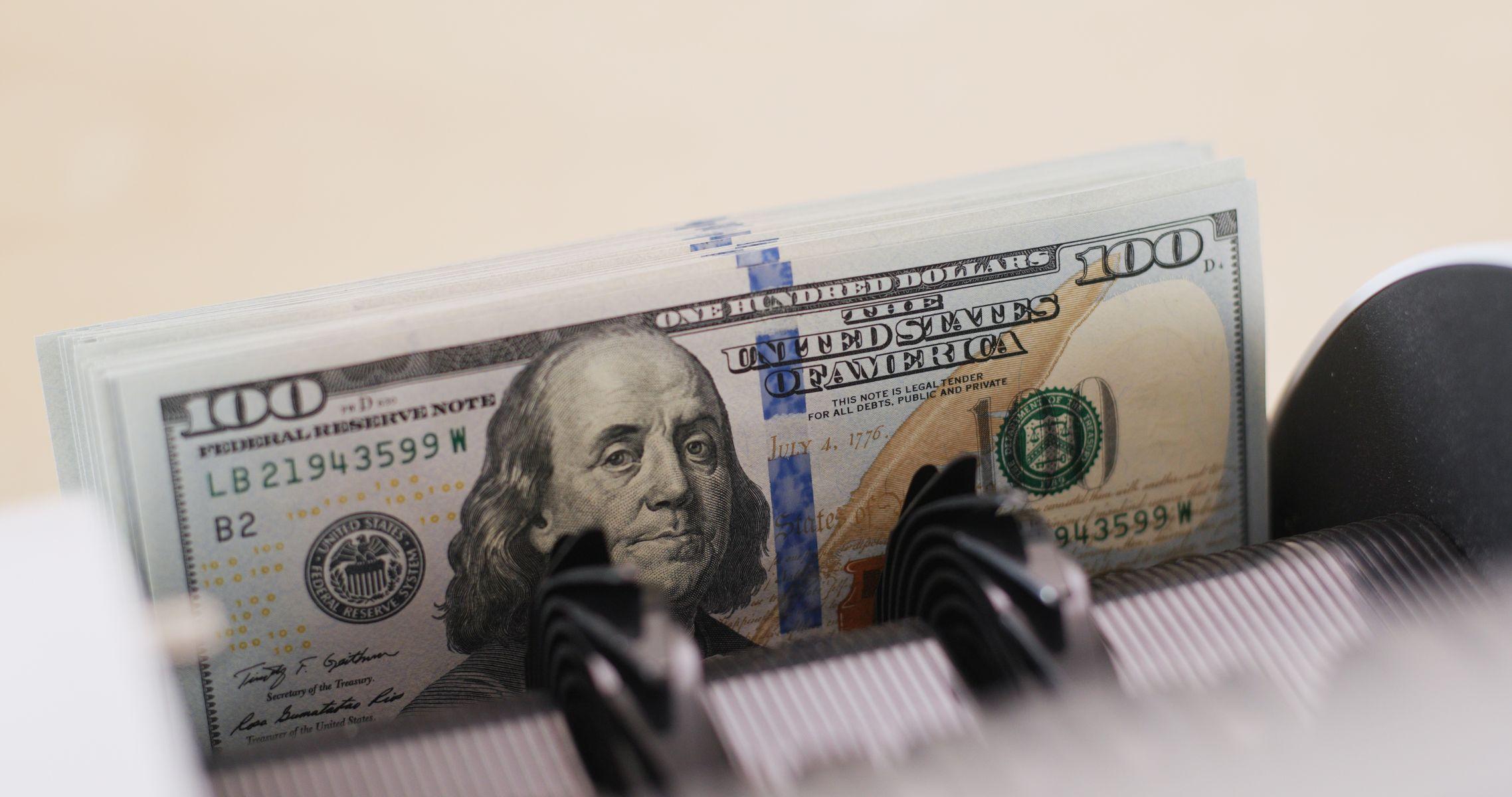
The U.S. Dollar’s Role as a Reserve Currency
One of the U.S. dollar’s influential international roles is as the dominant reserve currency, widely used in international foreign exchange reserves, which are rainy day funds for governments.

Venezuela: The Rise and Fall of a Petrostate
Introduction Venezuela, home to the world’s largest oil reserves, is a case study in the perils of becoming a petrostate. Since it was discovered in the country in the 1920s, oil has taken Venezuela on an exhilarating but dangerous boom-and-bust ride that offers lessons for other resource-rich states. Decades of poor governance have driven what was once one of Latin America’s most prosperous countries to economic and political ruin. In recent years, Venezuela has suffered economic collapse, with output shrinking significantly and rampant hyperinflation contributing to a scarcity of basic goods, such as food and medicine. Meanwhile, government mismanagement and U.S. sanctions have led to a drastic decline in oil production and severe underinvestment in the sector. Though Washington eased some sanctions on Venezuela’s oil and gas sector in 2023, signaling a potential détente, Caracas’s failure to meet conditions for a fair election prompted the U.S. government to reimpose sanctions in 2024. What is a petrostate? Petrostate is an informal term used to describe a country with several interrelated attributes: government income is deeply reliant on the export of oil and natural gas, economic and political power are highly concentrated in an elite minority, and political institutions are weak and unaccountable, and corruption is widespread. Countries often described as petrostates include Algeria, Cameroon, Chad, Ecuador, Indonesia, Iran, Kazakhstan, Libya, Mexico, Nigeria, Oman, Qatar, Russia, Saudi Arabia, the United Arab Emirates, and Venezuela. What’s behind the petrostate paradigm? Petrostates are thought to be vulnerable to what economists call Dutch disease, a term coined during the 1970s after the Netherlands discovered natural gas in the North Sea. In an afflicted country, a resource boom attracts large inflows of foreign capital, which leads to an appreciation of the local currency and a boost for imports that are now comparatively cheaper. This sucks labor and capital away from other sectors of the economy, such as agriculture and manufacturing, which economists say are more important for growth and competitiveness. As these labor-intensive export industries lag, unemployment could rise, and the country could develop an unhealthy dependence on the export of natural resources. In extreme cases, a petrostate forgoes local oil production and instead derives most of its oil wealth through high taxes on foreign drillers. Petrostate economies are then left highly vulnerable to unpredictable swings in global energy prices and capital flight. The so-called resource curse also takes a toll on governance. Since petrostates depend more on export income and less on taxes, there are often weak ties between the government and its citizens. Timing of the resource boom can exacerbate the problem. “Most petrostates became dependent on petroleum while, or immediately after, they were establishing a democracy, state institutions, an independent civil service and private sector, and rule of law,” says Terry Lynn Karl, a professor of political science at Stanford University and author of The Paradox of Plenty, a seminal book on the dynamics of petrostates. Leaders can use the country’s resource wealth to repress or co-opt political opposition. How does Venezuela fit the category? Venezuela is the archetype of a failed petrostate, experts say. Oil continues to play the dominant role in the country’s fortunes more than a century after it was discovered there. The oil price plunge from more than $100 per barrel in 2014 to under $30 per barrel in early 2016 sent Venezuela into an economic and political spiral, and despite rising prices since then, conditions remain bleak. A number of grim indicators tell the story: Oil dependence. In recent years, oil exports have financed almost two-thirds of the government’s budget. Estimates for 2024 place this figure slightly lower, at 58 percent. Falling production. Starved of adequate investment and maintenance, oil output has continued to generally decline, hitting its lowest level in decades. However, exports increased by some 12 percent in 2023, due in part to an easing of U.S. sanctions on the country’s oil and gas sector. Turbulent economy. Venezuela’s gross domestic product (GDP) shrank by roughly three-quarters [PDF] between 2014 and 2021. However, the economy grew by 5 percent in 2023, and the government forecasts it will reach 8 percent in 2024. Soaring debt. Venezuela has an estimated debt burden of $150 billion or higher. Hyperinflation. Annual inflation skyrocketed to just over 130,000 percent in 2018, and though it has since slowed, it remained at 190 percent in 2023, according to the central bank. !function(){"use strict";window.addEventListener("message",(function(a){if(void 0!==a.data["datawrapper-height"]){var e=document.querySelectorAll("iframe");for(var t in a.data["datawrapper-height"])for(var r=0;r

Prédominance du dollar dans le système de réserves internationales : mise à jour
IMFBlog est un espace où les services du Fonds monétaire international (FMI) et les autorités nationales échangent leurs points de vue sur l’économie mondiale et les questions de politique économique d’actualité les plus pressantes. Le FMI, dont le siège est à Washington, est une organisation composée de 191 pays membres qui s’emploie à encourager la coopération monétaire internationale et à assurer la stabilité financière dans le monde. Les opinions sont celles des auteurs et ne représentent pas nécessairement celles du FMI ou de son conseil d’administration. Plus
Imperialist appropriation in the world economy: Drain from the global South through unequal exchange, 1990–2015
Unequal exchange theory posits that economic growth in the “advanced economies” of the global North relies on a large net appropriation of resources and labour from the global South, extracted through price differentials in international trade. Past attempts to estimate the scale and value of this drain have faced a number of conceptual and empirical limitations, and have been unable to capture the upstream resources and labour embodied in traded goods. Here we use environmental input-output data and footprint analysis to quantify the physical scale of net appropriation from the South in terms of embodied resources and labour over the period 1990 to 2015. We then represent the value of appropriated resources in terms of prevailing market prices. Our results show that in 2015 the North net appropriated from the South 12 billion tons of embodied raw material equivalents, 822 million hectares of embodied land, 21 exajoules of embodied energy, and 188 million person-years of embodied labour, worth $10.8 trillion in Northern prices – enough to end extreme poverty 70 times over. Over the whole period, drain from the South totalled $242 trillion (constant 2010 USD). This drain represents a significant windfall for the global North, equivalent to a quarter of Northern GDP. For comparison, we also report drain in global average prices. Using this method, we find that the South’s losses due to unequal exchange outstrip their total aid receipts over the period by a factor of 30. Our analysis confirms that unequal exchange is a significant driver of global inequality, uneven development, and ecological breakdown.
Is the US dollar's reserve currency status eroding? | Brookings
Robin Brooks analyzes changes in the U.S. dollar's reserve currency status during the second Trump administration.
annotations: La Réserve fédérale doit garder son indépendance pour que l’économie américaine prospère
Blog de sciences économiques et sociales de Martin Anota. Traductions, revues de presse.
Venezuela is a founding member of OPEC. What they are realizing is it is a new world when it comes to oil. "Oil markets would lose a global supply manager that steps in when surpluses emerge, leaving prices more liable to drop and the global petroleum industry more exposed to shocks."

OPEC’s Future Darkens With Venezuela Latest Nation to Mull Exit
www.bloomberg.com
