[Coroutines trilogy: C preprocessor | C++20 native | general philosophy ]
The Story of C++: The World's Most Consequential Programming Language | The Official Story
Modular: The Claude C Compiler: What It Reveals About the Future of Software
Compilers occupy a special place in computer science. They're a canonical course in computer science education. Building one is a rite of passage. It forces you to confront how software actually works, by examining languages, abstractions, hardware, and the boundary between human intent and machine execution.

Essentials of Compilation
Compilers are notoriously difficult programs to teach and understand. Most books about compilers dedicate one chapter to each progressive stage, a structure ...
Welcome to Software Foundations in Coq
The cost of forsaking C
The C programming language is not trendy. The most recent edition of the canonical C text (the excitingly named The C Programming Language)…
A new, modern UI component library built on top of Base UI - coss ui
Built for developers and AI.

COBOL Is the Asbestos of Programming Languages
The most widely adopted computer language in history, COBOL is now causing a host of problems. It's also dangerously difficult to remove.


Learn C • Build Your Own Lisp
If you're looking to learn C, or you've ever wondered how to build your own programming language, this is the book for you.
A Coming Revolution in Metaprogramming | Will Crichton
A single programming language is no longer enough. I predict that soon, the best programmers will fluently move between languages and the best languages will interoperate well with others. This interoperability will likely stem from strong metaprogramming facilities. I examine how we might build a programmable compiler and look at recent work toward that end.
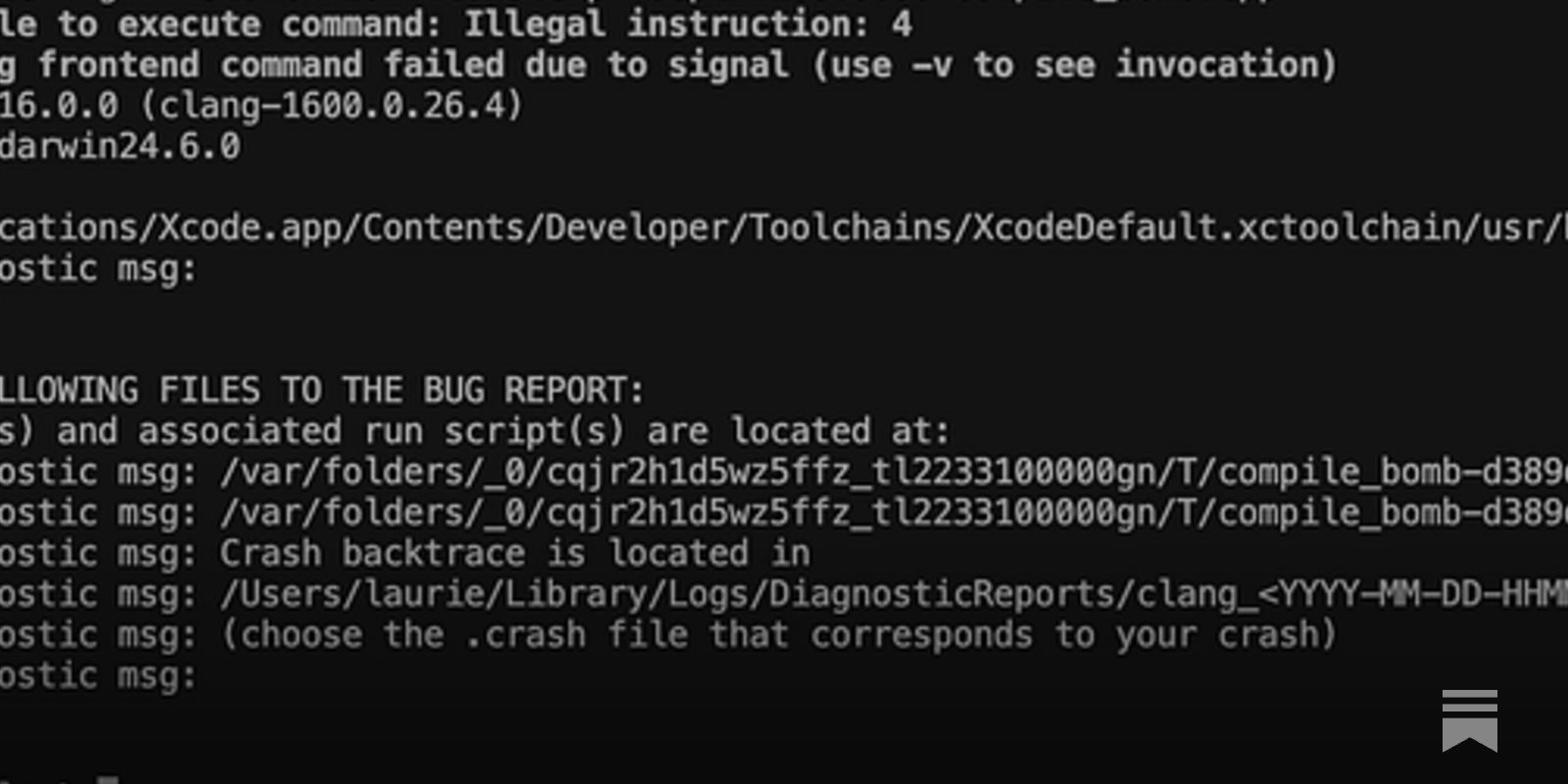
using C++ to exploit the C++ that is building the C++
today you’re going to segfault your compiler.
"Concatenative programming and stack-based languages" by Douglas Creager
What I Found Interesting in Claude Code's Source
A breakdown of the most interesting engineering patterns in Claude Code's leaked source code: composable system prompts, runtime instruction injection, context compression, forking, prompt caching architecture, and more.
A Design Space Exploration of Async/Await
Many modern programming languages include some form of asynchronous programming. In particular, a growing number now have what we call straight-line asynchrony: attempts to provide asynchronous functions that look similar to synchronous functions, thereby enabling asynchrony without introducing complex control. These languages often share construct names like "async" and "await," which suggests that they have deep semantic similarities. Yet, a close examination reveals that these languages are quite different along several dimensions, often subtly. These differences have real semantic consequences: similar-looking programs can exhibit divergent behavior, confusing developers and language designers alike. This paper therefore presents a design space exploration of straight-line asynchrony. We dissect several existing languages, and show how no two of them agree as a whole on design decisions that affect the presence and ordering of execution. We articulate a design space with nine dimensions covering the full lifecycle of an asynchronous computation, covering questions such as: What precise guarantees does a language give upon calling an asynchronous function? What happens at the end of a task's life? How can a task handle being cancelled? We explore these questions through concrete examples, informal design discussion, and a formal semantics. Our ultimate goal is to help programmers, language designers, and language theorists all better understand the emerging landscape of straight-line asynchrony.
How to Write Your Own C++ Game Engine
Lately I’ve been writing a game engine in C++. I’m using it to make a little mobile game called Hop Out. Here’s a clip captured from my iPhone 6. (Unmute for …