There is a consensus among all browser makers and lovers of the web: the current state of the web is a mess. The average web page is 2.4 megabyte big and has over 200 requests.
Funding The Web: A Wise Choice
The Web is slow-motion collapsing for multiple reasons, but at the heart of it all is a little known system: the Search/Browser Levy. Let's fix it!

Funding The Web: From Cartel to Covenant
The Web is slow-motion collapsing for multiple reasons, but at the heart of it all is a little known system: the Search/Browser Levy. Let's fix it!
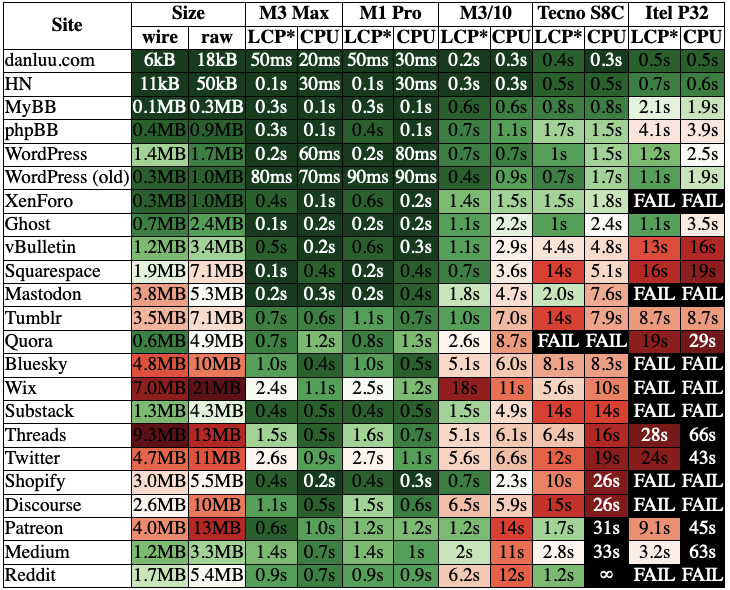
How web bloat impacts users with slow devices
In 2017, we looked at how web bloat affects users with slow connections. Even in the U.S., many users didn't have broadband speeds, making much of the web difficult to use. It's still the case that many users don't have broadband speeds, both inside and outside of the U.S. and that much of the modern web isn't usable for people with slow internet, but the exponential increase in bandwidth (Nielsen suggests this is 50% per year for high-end connections) has outpaced web bloat for typical sites, making this less of a problem than it was in 2017, although it's still a serious problem for people with poor connections.
The reckless, infinite scope of web browsers
This blog post was published on March 18, 2020. It might be out of date, have broken images or links, or simply contain bad ideas and opinions that didn't stand the test of time. Please read generously!

Freeing the Web from the Browser | reinterpretcast.com
The Web is, without a doubt, the most powerful research tool currently available to man. No longer must researchers comb through endless indices and catalogues to find what they are looking for. Instead, hyperlinks allow users to associatively explore rich interconnected structures of information with ease. In just a few clicks, it is possible to navigate through a vast global space of information comprising documents on virtually any subject.
The State of the Web at Google I/O 2018
The web is a global treasure, and has many strengths we all enjoy. It is a distribution platform like no other, providing people around the ...

The Missing Building Blocks of the Web
At a time when millions are losing trust in the the web’s biggest sites, it’s worth revisiting the idea that the web was supposed to be…

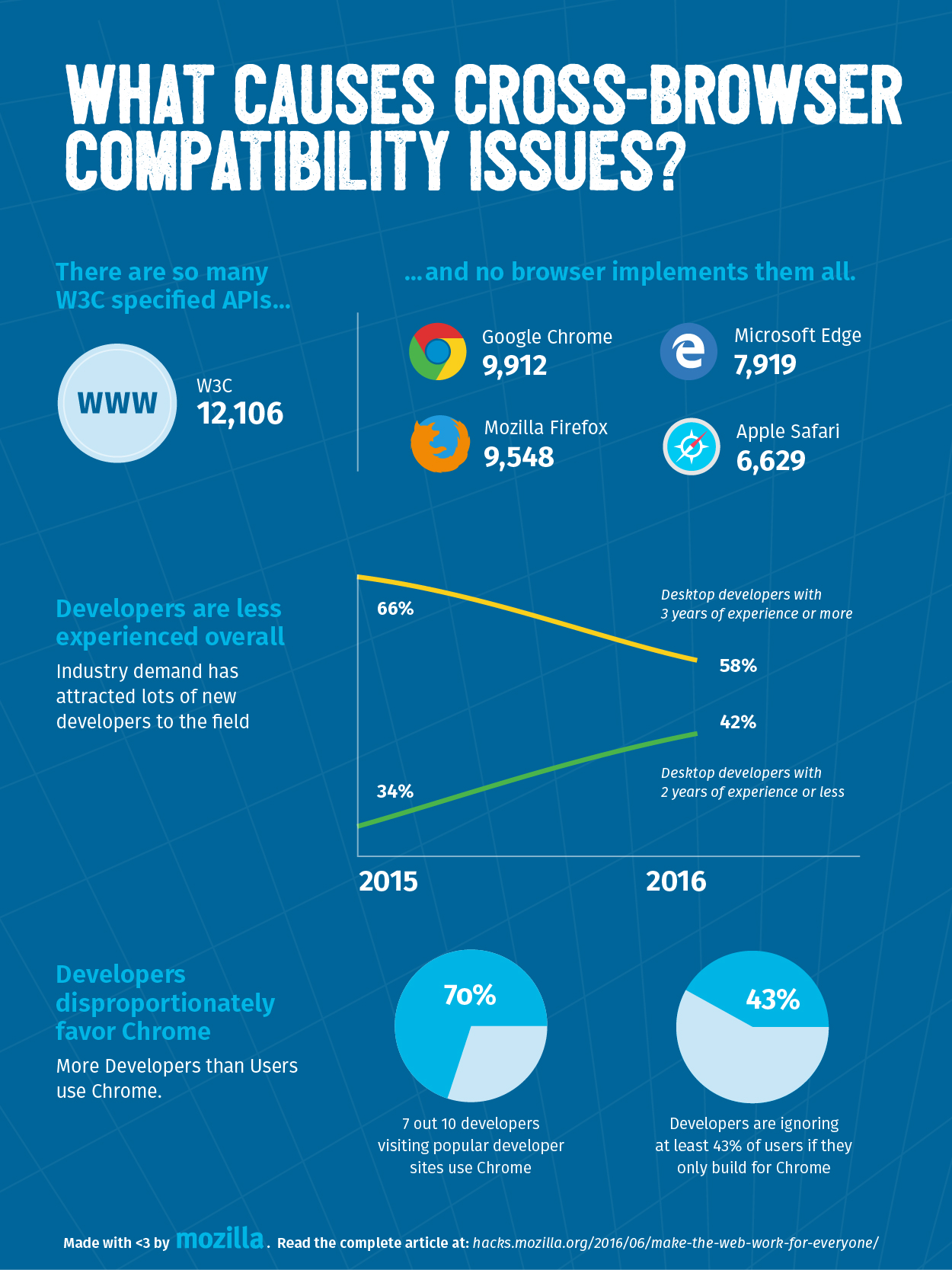
Make the Web Work For Everyone – Mozilla Hacks - the Web developer blog
Updated 2016/07/22: Commenters found a few data errors (thanks!) which have now been corrected. Millions of websites have compatibility problems on one or more of the major browsers, leading to ...
The 49MB Web Page
A look at modern news websites. How programmatic ad-tech, huge payloads and hostile architecture destroyed the reading experience.

The web is Doom - mobiForge
In July 2015, inspired by something Mat Marquis said at TXJS 2015, I suggested that the average web page weight would equal that of the Doom install image in about 7 months time. In about 7 months average web page size will be same as Doom install image. Well done us! Onwards & upwards! pic.twitter.com/xtSAtZjPGl


How to Fix the Web | Brave
The Web is always in trouble for some reason or other. I remember when Microsoft came after Netscape and threatened to lock Web standards into IE. Only the Web is so big, with such reach to billions of users, that no one owns it. This means it will always be contested ground.

Mozilla's Vision for a Healthy, Sustainable Web | The Mozilla Blog
Not surprisingly, the latest discussions around content blocking have resulted in a polarizing debate about the users who choose to block content as a way