

It used to simplify crucial tasks. Now it’s strangling scholars’ ability to think.
Email Doesn't Suck. It's Email Clients That Need Improving
Don't hate the technology, hate the implementation.

Mailing-List 2.0: Discourse
You got a few people working on something and you seek for an efficient way to communicate (ideas, news, messages, etc.) online. This guide gives you an overview about what you could expect in the past and what you should ask for nowadays. Mails According to Wikipedia, the first mail was sent in 1971. The access to a network we call Internet today was quite limited in these early days. Users have been mostly universities, and I guess, not everyone, but mostly the STEM disciplines Science, Technology, Engineering, and Mathematics. So it comes at no surprise that mails are perceived as inconvenient and antiquated.
Email Isn’t The Thing You’re Bad At
You and me, we’re bad at a lot of things. But email isn’t one of those things, no matter how much it seems like it.

A World Without Email: Reimagining Work in an Age of Communication Overload
A New York Times and Wall Street Journal bestsellerFrom New York Times bestselling author Cal Newport comes a bold vision for liberating workers from the tyranny of the inbox--and unleashing a new era of productivity.Modern knowledge workers communicate constantly. Their days are defined by a relentless barrage of incoming messages and back-and-forth digital conversations--a state of constant, anxious chatter in which nobody can disconnect, and so nobody has the cognitive bandwidth to perform substantive work. There was a time when tools like email felt cutting edge, but a thorough review of current evidence reveals that the "hyperactive hive mind" workflow they helped create has become a productivity disaster, reducing profitability and perhaps even slowing overall economic growth. Equally worrisome, it makes us miserable. Humans are simply not wired for constant digital communication.We have become so used to an inbox-driven workday that it's hard to imagine alternatives. But they do exist. Drawing on years of investigative reporting, author and computer science professor Cal Newport makes the case that our current approach to work is broken, then lays out a series of principles and concrete instructions for fixing it. In A World without Email, he argues for a workplace in which clear processes--not haphazard messaging--define how tasks are identified, assigned and reviewed. Each person works on fewer things (but does them better), and aggressive investment in support reduces the ever-increasing burden of administrative tasks. Above all else, important communication is streamlined, and inboxes and chat channels are no longer central to how work unfolds.The knowledge sector's evolution beyond the hyperactive hive mind is inevitable. The question is not whether a world without email is coming (it is), but whether you'll be ahead of this trend. If you're a CEO seeking a competitive edge, an entrepreneur convinced your productivity could be higher, or an employee exhausted by your inbox, A World Without Email will convince you that the time has come for bold changes, and will walk you through exactly how to make them happen.
‘I Have a Folder in My Email Called Hate Mail’: Academic Public Engagement, Digital Hate and the Unequally Distributed Risks of Visibility
Public engagement through �traditional� and social media is an increasingly important way for scholars to communicate research w

Falsehoods programmers believe about email
In the spirit of falsehoods programmers believe about names and time, here’s some falsehoods about email which are all too common.

Slack didn’t kill email — and it might have made it stronger
Front’s Mathilde Collin on why email is making a comeback

College professors face an emerging challenge: We know students are no longer reading entire books
Some teachers increasingly are shifting their approach to reading, assigning fewer books than they once did.
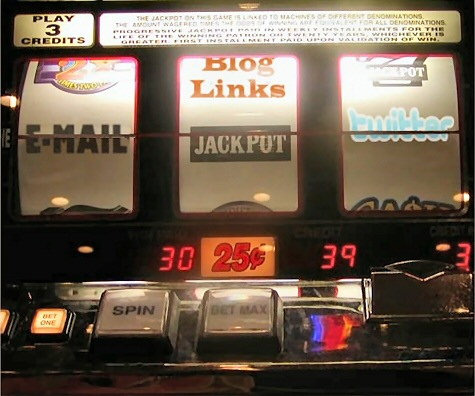
Email: The Variable Reinforcement Machine
How often do you check your email per day? Does checking your email make you more productive or less productive? Oh, sure, we delude ourselves into thinking we’re being extra-productive by obsessively checking and responding to our email, but in reality we’re attending too frequently to our
My Mad Quest to Fix Email Showed Me the Real Reason We Hate It
Last summer, I reached peak email despair. I started using email when I was 6 years old to keep in touch with my grandmother, and I’ve used it ever sin ...

The History of the URL
January 11th, 1982, 22 computer scientists met to discuss an issue with ‘computer mail’ (now known as email).

Email explained from first principles
Modern email is a patchwork of protocols and extensions. Here is one article to understand them all.
Large Language Muddle | The Editors
The AI upheaval is unique in its ability to metabolize any number of dread-inducing transformations. The university is becoming more corporate, more politically oppressive, and all but hostile to the humanities? Yes — and every student gets their own personal chatbot. The second coming of the Trump Administration has exposed the civic sclerosis of the US body politic? Time to turn the Social Security Administration over to Grok. Climate apocalypse now feels less like a distant terror than a fact of life? In three years, roughly a tenth of US energy demand will come from data centers alone.

Why kernel development still uses email
In a world full of fancy development tools and sites, the kernel project's dependence on email [...]
A delightfully fresh take on email + calendar, from 37signals
Gmail, Outlook, and Apple got complacent and took their eye off the ball. Then along came HEY.
Clarifying: I feel like we just invented email addresses. And they’re tricky, I get it. But I’m pushing back on “wtf is the @ symbol even, nobody knows what ‘inbox’ or ‘smtp’ is, stop making it hard for normies” Instead of making atproto invisible, what if we made it worth the learning curve?

Eli Mallon
If your goal is to make atproto accessible to non-technical users I implore you to stop calling them “normies”