CIBO’s advanced technology seamlessly integrates funding access, agronomic expertise and frictionless measurement to unlock the full potential of regenerative agriculture. Launch and grow high impact programs faster, with lower costs and greater confidence.
Home | BC Association for Regenerative Agriculture
INVESTING IN REGENERATIVE AGRICULTURE AND FOOD
THE INVESTING IN REGENERATIVE AGRICULTURE AND FOOD PODCASTThrough 400+ interviews with farmers, investors, scientists, and entrepreneurs, the podcast puts the spotlight on the pioneers in the regenerative food and agriculture space to learn more on how to put our money to work to regenerate soil, people, local communities and ecosystems while making an appropriate and fair return.
Embrace what may be the most important green technology ever. It could save us all | George Monbiot
Never mind the yuck factor: precision fermentation could produce new staple foods, and end our reliance on farming, says Guardian columnist George Monbiot
Some recent developments in controlled-environment agriculture: on plant physiology, sustainability, and autonomous control
In this review, we highlight some recent developments in controlled-environment agriculture (CEA), discuss its sustainability and provide a future outlook, mainly based on recently published work f...

Connecting New Farmers to Business Tools & Mentorship
Check out our Business Tools for new farmers to support skills development to run ecologically sustainable and financially viable farm businesses!

GainForest — Fund Regenerative Impact
GainForest connects funders with nature stewards doing on-ground regenerative work. Fund verified environmental impact directly.

About the Network
About the network Our vision is for a thriving and resilient food production system across BC. Since 2017, the BC Agricultural Climate Action Research Network (ACARN) has been working to make climate research more accessible and useful for the agricultural sector. By connecting people across disciplines and regions, we help ensure that climate solutions are […]
Agriculture needs changes to help save climate and farmers, says national agriculture group | CBC News
A report released Wednesday by the National Farmers Union concludes that some elements of old-fashioned mixed farming combined with the latest technology can reduce greenhouse gas emissions and keep more farm families on the land.

Sustainable Agriculture and Environment
In the Sustainable Agriculture and Environment program, you’ll learn how to produce food in a way that protects our soils, water and air.
A social-ecological framework for analyzing and designing integrated crop–livestock systems from farm to territory levels
Integrated crop–livestock systems are often considered a promising way to address agricultural sustainability issues. Many authors claim that complementarities and synergies between crops and livestock can improve nutrient cycling and delivery of ecosystem services (ES) in agricultural systems. They have analyzed effects of interactions at the farm level and affirmed the potential advantage of developing crop–livestock interactions at the territory level. However, potential benefits of developing synergies beyond the farm level have not been clearly identified. Thus, we developed a conceptual framework that can be used to analyze, design and perform integrated assessment of crop–livestock systems at the territory level. To address crop–livestock interaction issues, we define it as a social-ecological system called the territorial crop–livestock system (TCLS). The ecological system is represented as three interacting components, crops, grasslands and animals, allowing description of various land uses and their potential effects on nutrient cycling and ES. The social system, represented as farmers interacting with natural-resource managers and agro-food chain actors, determines land use and the nature and intensity of ES delivered. We highlight the importance of coordination and learning among actors to support implementation of complex adaptive systems such as TCLSs. We illustrate the expressive power of our conceptual framework through development of a generic typology of crop–livestock systems. Then we show how our conceptual framework can be used as an intermediary object with stakeholders in participatory design approaches. We illustrate this process by representing four archetypal TCLSs. We provide an example of the design approach implemented in Southwestern France to address severe recurrent water shortages, which includes analysis of land use in the current crop–livestock system and the associated key metabolic and ES issues, identification of options for change and multi-criteria analysis of these options. We conclude that this framework shows great potential to support development of sustainable farming systems at the territory level.
Friday Facts #414 - Spoils of Agriculture | Factorio
Hello, last week you've seen how Gleba looks, it's time to get a glimpse of what you can do there. With the idea of being a biological planet full of life, it seems reasonable to expect our engineer is about to harvest some of that. We already have ways of harvesting nature, specifically trees. On Nauvis we either just hit them with an axe enough times, or later our construction robots take care of that friendly forest devastation. These tools aren't quite up to speed to be a part of a mass-production chain in our factories, though... Both of the Nauvis methods are initiated manually so not the best for automation, and the trees don't grow back - so once an area has been harvested, you need to move your operation further.

Practicum in Sustainable Agriculture
UBC Farm Practicum The UBC Farm Practicum in Sustainable Agriculture is an experiential learning program that runs April–October (or April–August for summer students) and provides an introduction to small-scale, organic, agroecological mixed vegetable farming for sale through direct markets. It is designed for aspiring farmers and community food growers, as well as those seeking to […]
Tech firms and AI farming tools ‘playing with the food system’, warns thinktank
Google, Microsoft and Amazon among companies using algorithms and AI to influence what crops are grown and how, say critics

B.C. Targets 'Real Impact' with Support for New Upskilling Programs in Agtech - Tech Talent Canada
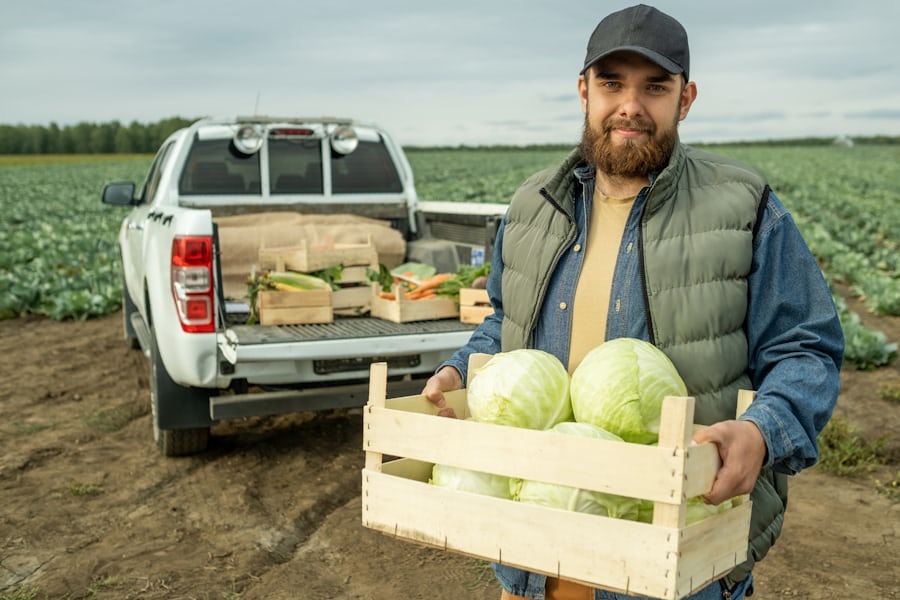
British Columbia is supporting job creation and upskilling projects to “ensure more people have the necessary skills to succeed in the growing agri-tech sector.” Ravi Kahlon, Minister of Jobs and Economic Growth for the Province, believes it is “critical that two of British Columbia’s greatest strengths—technology and agriculture—come together.” Kahlon says the latest moves connect […]
When the farm doesn’t need its cattle
on gradual disempowerment, why UBI and its alternatives won’t work, and what qualities a post-labour, post-AGI wealth distribution system needs.