


Tokens, open weights, paperclips and p(doom)? And that's just for starters. Here's a quick primer on the vocabulary of today's arcane yet everyday technology.
Artificial intelligence glossary: 60+ terms to know
Use this comprehensive glossary of AI terms to understand the language of artificial intelligence.

Opaque recurrence, and other AI terms that you should probably know | TechCrunch
The rise of AI has brought an avalanche of new terms and slang. Here is a glossary with definitions of some of the most important words and phrases you might encounter.

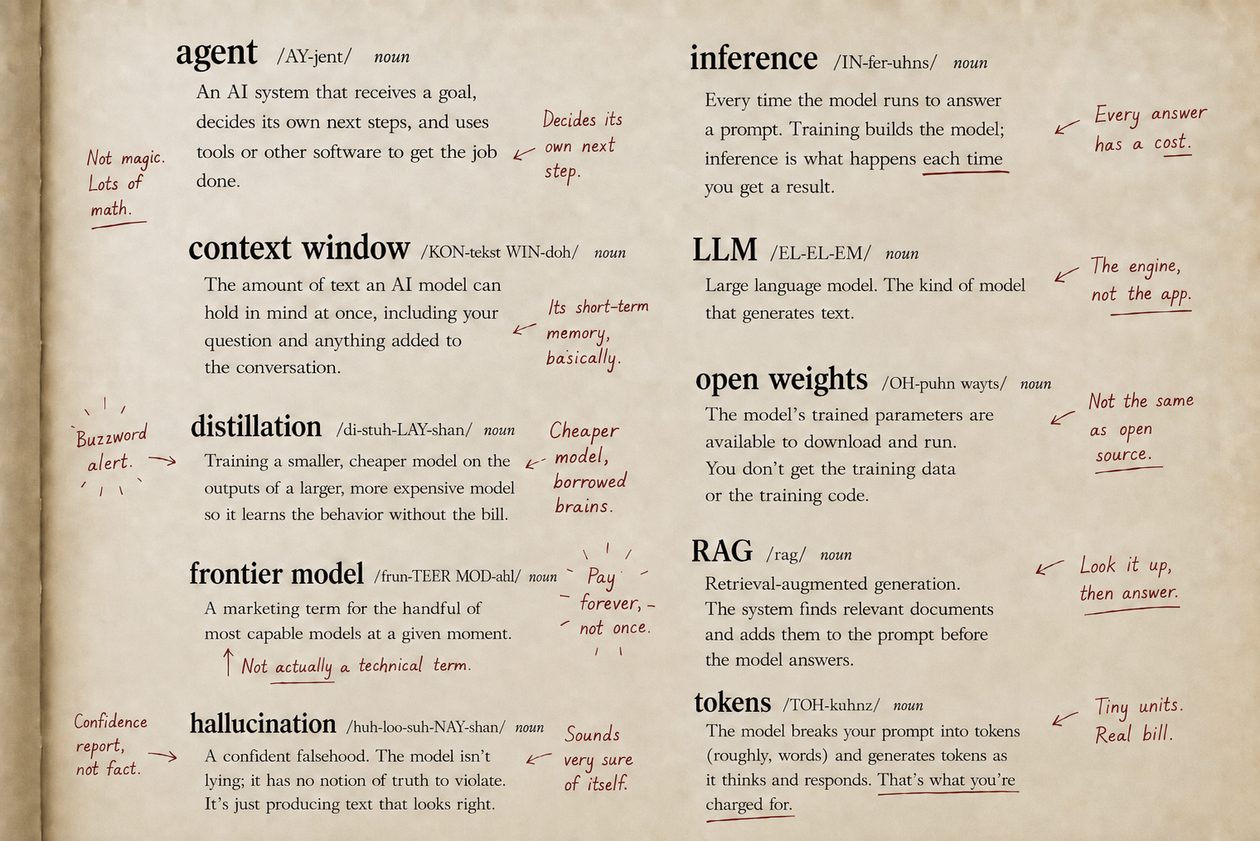
Etzioni on AI: An Opinionated Glossary of AI
Everyone in tech says things like LLM, open weights, RAG and agent; far fewer could define precisely what they all mean. Oren Etzioni sorts out about 30 AI terms in plain English, with a blunt verdict on each and one novel phrase he believes isn't used enough.
How AI Reshapes Vocabulary: Unveiling the Most Used Terms Related to the Technology
Dive into the world of AI with our comprehensive glossary covering the most commonly used terms in AI. Discover key concepts and words shaping the language of tomorrow.

Artificial Intelligence Glossary | Stanford HAI
Artificial Intelligence (AI) is rapidly growing, with new terms and concepts being introduced at a breakneck speed. You may have seen terms such as AGI, machine learning, or foundation models in media headlines, emerging legislation, or in your everyday life.
Machine Learning Glossary | Google for Developers
This glossary defines a wide range of machine learning terms, including those specific to TensorFlow and large language models.

The tool, the craft, and the joy
On AI, craft, and building things that matter (1300 words)

Glossary of Terms: Generative AI Basics - MIT Sloan Teaching & Learning Technologies
Learn key AI terms. This glossary defines and explains important concepts like generative AI, large language model, natural language processing, and more.

Ali Alkhatib: Defining AI
The main issue I have with a lot of work that tries to define AI is that the criteria they use to draw boundaries often turn out to be functionally useless for my needs; these definitions lead us to weird places, letting scholars fixate on strange, unworkable frameworks. Those pedantic fixations don’t really benefit the organizers, activists, regular people who are getting crushed by the systems they’re trying to work against. So I’m going to try to unpack how I think about AI; how I trace the boundaries of the term in a way that’s as useful as possible for me and my needs; and how I would encourage you to scope or define ideas that are important to your work.
I used AI. It worked. I hated it.
I used Claude Code to build a tool I needed. It worked great, but I was miserable. I need to reckon with what it means.

How to use AI to do practical stuff: A new guide
People often ask me how to use AI. Here's an overview with lots of links.

solpbc.org/rookery
open-source, lexicon-agnostic PDS for AI agents. welcome-mat enrollment, AT Proto federation.
solpbc.org/rookery
open-source, lexicon-agnostic PDS for AI agents. welcome-mat enrollment, AT Proto federation.
LukeW | Common AI Product Issues
At this point, almost every software domain has launched or explored AI features. Despite the wide range of use cases, most of these implementations have been t...
AI at Google: our principles
We’re announcing seven principles to guide our work in AI.

Karpathy's LLM Wiki: What It Means & How to Build One