


Eating ultraprocessed foods such as hot dogs, French fries, sodas, cookies and ice cream could set you on the road to cognitive decline, a new study revealed, but there is a way to overcome the negative impact.
Scientists reveal foods to eat now to stave off cognitive decline later
Data on over 3,000 people shows only 8 percent with low-quality diets maintained high cognitive abilities into their 70s, a new study reveals.

Enhancing Human Cognition with Cocoa Flavonoids
Enhancing cognitive abilities has become a fascinating scientific challenge, recently driven by the interest in preventing age-related cognitive decline and sustaining normal cognitive performance in response to cognitively demanding environments. In recent years cocoa and cocoa-derived products, as a rich source of flavonoids, mainly the flavanols sub-class, have been clearly shown to exert cardiovascular benefits. More recently, neuromodulation and neuroprotective actions have been also suggested. Here, we discuss human studies specifically aimed at investigating the effects of acute and chronic administration of cocoa flavanols on different cognitive domains, such as executive functions, attention and memory. Through a variety of direct and indirect biological actions, in part still speculative, cocoa and cocoa-derived food have been suggested to possess the potential to counteract cognitive decline and sustain cognitive abilities, particularly among patients at risk. Although still at a preliminary stage, research investigating the relations between cocoa and cognition shows dose-dependent improvements in general cognition, attention, processing speed and working memory. Moreover, cocoa flavanols administration could also enhance normal cognitive functioning and exert a protective role on cognitive performance and cardiovascular function specifically impaired by sleep loss, in healthy subjects. Together, these findings converge at pointing to cocoa as a new interesting nutraceutical tool to protect human cognition and counteract different types of cognitive decline, thus encouraging further investigations. Future research should include complex experimental designs combining neuroimaging techniques with physiological and behavioral measures to better elucidate cocoa neuromodulatory properties and directly compare immediate versus long-lasting cognitive effects.

Could getting less deep sleep hike your risk of dementia later in life? | CBC News
A new study has found a decrease in deep sleep was associated with a higher risk of dementia. A growing body of research points to clear links between deep sleep and memory formation, but also the possibility of dire consequences when someone’s sleep quality erodes over time.

Study Reveals a Surprising Cause of Cognitive Decline—and the Key to Reversing It
Researchers pinpoint a lone protein that speeds up the dysfunction of an aging brain. Eliminating it, they claim, can reverse the damage. But there are big hurdles before a treatment is approved.

Depression link to processed food
Eating a diet high in processed food increases the risk of depression, research suggests.
How Exercise Might "Clean" the Alzheimer's Brain
Hints at potential treatments for age-related dementia and memory loss

People diagnosed with ADHD as adults could be ‘at greater risk of dementia’
Study does not establish cause and effect, and experts say it highlights need for further research

Dietary Habits Related to Food Packaging and Population Exposure to PFASs
Abstract Background: Per- and polyfluoroalkyl substances (PFASs) are common industrial and consumer product chemicals with widespread human exposures that have been linked to adverse health effects. PFASs are commonly detected in foods and food-contact materials (FCMs), including fast food packaging and microwave popcorn bags. Objectives: Our goal was to investigate associations between serum PFASs and consumption of restaurant food and popcorn in a representative sample of Americans. Methods: We analyzed 2003–2014 serum PFAS and dietary recall data from the National Health and Nutrition Examination Survey (NHANES). We used multivariable linear regressions to investigate relationships between consumption of fast food, restaurant food, food eaten at home, and microwave popcorn and serum levels of perfluorooctanoic acid (PFOA), perfluorononanoic acid (PFNA), perfluorodecanoic acid (PFDA), perfluorohexanesulfonic acid (PFHxS), and perfluorooctanesulfonic acid (PFOS). Results: Calories of food eaten at home in the past 24 h had significant inverse associations with serum levels of all five PFASs; these associations were stronger in women. Consumption of meals from fast food/pizza restaurants and other restaurants was generally associated with higher serum PFAS concentrations, based on 24-h and 7-d recall, with limited statistical significance. Consumption of popcorn was associated with significantly higher serum levels of PFOA, PFNA, PFDA, and PFOS, based on 24-h and 12-month recall, up to a 63% (95% CI: 34, 99) increase in PFDA among those who ate popcorn daily over the last 12 months. Conclusions: Associations between serum PFAS and popcorn consumption may be a consequence of PFAS migration from microwave popcorn bags. Inverse associations between serum PFAS and food eaten at home—primarily from grocery stores—is consistent with less contact between home-prepared food and FCMs, some of which contain PFASs. The potential for FCMs to contribute to PFAS exposure, coupled with concerns about toxicity and persistence, support the use of alternatives to PFASs in FCMs. https://doi.org/10.1289/EHP4092
Learning What Substance Is Suspected of Causing Alzheimer’s May Throw You Into an Existential Crisis
A surprisingly common substance was found to have a causal relationship with the kind of brain damage associated with Alzheimer's disease.

Sugar intake from sweet food and beverages, common mental disorder and depression: prospective findings from the Whitehall II study
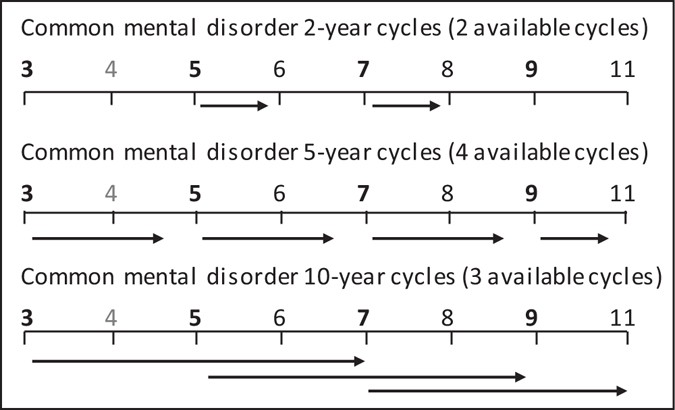
Intake of sweet food, beverages and added sugars has been linked with depressive symptoms in several populations. Aim of this study was to investigate systematically cross-sectional and prospective associations between sweet food/beverage intake, common mental disorder (CMD) and depression and to examine the role of reverse causation (influence of mood on intake) as potential explanation for the observed linkage. We analysed repeated measures (23,245 person-observations) from the Whitehall II study using random effects regression. Diet was assessed using food frequency questionnaires, mood using validated questionnaires. Cross-sectional analyses showed positive associations. In prospective analyses, men in the highest tertile of sugar intake from sweet food/beverages had a 23% increased odds of incident CMD after 5 years (95% CI: 1.02, 1.48) independent of health behaviours, socio-demographic and diet-related factors, adiposity and other diseases. The odds of recurrent depression were increased in the highest tertile for both sexes, but not statistically significant when diet-related factors were included in the model (OR 1.47; 95% CI: 0.98, 2.22). Neither CMD nor depression predicted intake changes. Our research confirms an adverse effect of sugar intake from sweet food/beverage on long-term psychological health and suggests that lower intake of sugar may be associated with better psychological health.
Opinion | Can Celiac Disease Affect the Brain? (Published 2014)
Some scientists have linked gluten with neurological symptoms.

Train Your Brain to Eat Less Sugar
A recent study led by Evan Forman, PhD, a psychology professor in Drexel University's College of Arts and Sciences, shows that a computer game can be used to train its players to eat less sugar, as way of reducing their weight and improving their health.

Highly processed foods can be considered addictive like tobacco products
Can highly processed foods be addictive? It's a question that researchers have debated for years as unhealthy diets are often fueled by foods loaded with refined carbohydrates and added fats. Study (PDF): Highly Processed Foods Can Be Considered Addictive Substances Based on Established Scie

Brains of overweight people ‘ten years older’ than lean counterparts at middle-age
Our brains naturally shrink with age, but scientists are increasingly recognising that obesity – already linked to conditions such as diabetes, cancer and heart disease – may also affect the onset and progression of brain ageing; however, direct studies to support this link are lacking.

Sugar 'has similar effect on brain as cocaine'
Withdrawal from chronic sugar consumption would be similar to going 'cold turkey' from drugs, say Australian scientists
The magical thing eating chocolate does to your brain
There's a remarkable difference between people who eat chocolate and people who don't.
