


If someone knows even a little about Spanner, the first question they have is: "How does CockroachDB provide external consistency without atomic clocks?"
New Clock May End Time As We Know It
Scientists working to create the perfect atomic clock have a fundamental problem: Right now, on the ceiling, time is passing just a bit faster than it is on the floor.

Atomic Commit In SQLite
An important feature of transactional databases like SQLite is "atomic commit". Atomic commit means that either all database changes within a single transaction occur or none of them occur. With atomic commit, it is as if many different writes to different sections of the database file occur instantaneously and simultaneously. Real hardware serializes writes to mass storage, and writing a single sector takes a finite amount of time. So it is impossible to truly write many different sectors of a database file simultaneously and/or instantaneously. But the atomic commit logic within SQLite makes it appear as if the changes for a transaction are all written instantaneously and simultaneously.
Spanner, the Google Database That Mastered Time, Is Now Open to Everyone
About a decade ago, a handful of Google's most talented engineers started building a system that seems to defy logic.
Rust Atomics and Locks by Mara Bos
Low-level Concurrency in Practice. This practical book helps Rust programmers of all levels gain a clear understanding of low-level concurrency. You'll learn everything about atomics and …

Honker
Durable queues, streams, pub/sub, and time-trigger scheduling on SQLite. One file, zero servers.

The Consistent Histories Approach to Quantum Mechanics
The consistent histories, also known as decoherent histories, approachto quantum interpretation is broadly compatible with standard quantummechanics as found in textbooks. However, the concept ofmeasurement by which probabilities are introduced in standardquantum theory no longer plays a fundamental role. Instead,all quantum time dependence is probabilistic (stochastic),with probabilities given by the Born rule or its extensions. Byrequiring that the description of a quantum system be carried outusing a well-defined probabilistic sample space (called a“framework”) this approach resolves many well-knownquantum paradoxes of quantum foundations. In particular, quantummechanics is local and consistent with special relativity. Classicalmechanics emerges as a useful approximation to the more fundamentalquantum mechanics under suitable conditions. The price to be paid forthis is a set of rules for reasoning resembling, but very much simplerthan, those of quantum logic. An important philosophical implicationis the absence of a single universally-true state of affairs at eachinstant of time. However, there is a correspondence limit in which thenew quantum logic becomes standard logic in the macroscopic world ofeveryday experience, and the laws of classical mechanics emerge as agood approximation to an underlying, and in principle more exact,quantum description.
A Critique of the CAP Theorem
The CAP Theorem is a frequently cited impossibility result in distributed systems, especially among NoSQL distributed databases. In this paper we survey some of the confusion about the meaning of CAP, including inconsistencies and ambiguities in its definitions, and we highlight some problems in its formalization. CAP is often interpreted as proof that eventually consistent databases have better availability properties than strongly consistent databases; although there is some truth in this, we show that more careful reasoning is required. These problems cast doubt on the utility of CAP as a tool for reasoning about trade-offs in practical systems. As alternative to CAP, we propose a "delay-sensitivity" framework, which analyzes the sensitivity of operation latency to network delay, and which may help practitioners reason about the trade-offs between consistency guarantees and tolerance of network faults.

Living with two clocks
Staying with unbearable thoughts, and searching for a politics that’s equal to these times.

SQLite: How it works, by Richard Hipp
On the Hardness of Detecting Macroscopic Superpositions
When is decoherence "effectively irreversible"? Here we examine this central question of quantum foundations using the tools of quantum computational complexity. We prove that, if one had a quantum circuit to determine if a system was in an equal superposition of two orthogonal states (for example, the $|$Alive$\rangle$ and $|$Dead$\rangle$ states of Schrödinger's cat), then with only a slightly larger circuit, one could also $\mathit{swap}$ the two states (e.g., bring a dead cat back to life). In other words, observing interference between the $|$Alive$\rangle$and $|$Dead$\rangle$ states is a "necromancy-hard" problem, technologically infeasible in any world where death is permanent. As for the converse statement (i.e., ability to swap implies ability to detect interference), we show that it holds modulo a single exception, involving unitaries that (for example) map $|$Alive$\rangle$ to $|$Dead$\rangle$ but $|$Dead$\rangle$ to -$|$Alive$\rangle$. We also show that these statements are robust---i.e., even a $\mathit{partial}$ ability to observe interference implies partial swapping ability, and vice versa. Finally, without relying on any unproved complexity conjectures, we show that all of these results are quantitatively tight. Our results have possible implications for the state dependence of observables in quantum gravity, the subject that originally motivated this study.
THE ADJACENT POSSIBLE | Edge.org
An autonomous agent is something that can both reproduce itself and do at least one thermodynamic work cycle. It turns out that this is true of all free-living cells, excepting weird special cases. They all do work cycles, just like the bacterium spinning its flagellum as it swims up the glucose gradient. The cells in your body are busy doing work cycles all the time.
Time-lock puzzle
A time-lock puzzle, or time-released cryptography, encrypts a message that cannot be decrypted until a specified amount of time has passed. The concept was first described by Timothy C. May,[1] and a solution first introduced by Ron Rivest, Adi Shamir, and David A. Wagner in 1996.[2] Time-lock puzzle are useful in cases where confidentiality of information is determined by time, such as a diarist who does not want their views released until 50 years after their death, an auction where bids are sealed until the bidding period is closed, electronic voting, and contract signing.[1][3] They can additionally be used in creating further cryptographic primitives, such as verifiable delay functions and zero knowledge proofs.[3]
The Forgetting Problem: Persistence Architectures and What They Cost - Astral's Blog
The Lost History of One of the World’s Strangest Science Experiments (Published 2019)
The hummingbirds were dying. Cockroaches were everywhere. And then Steve Bannon showed up.

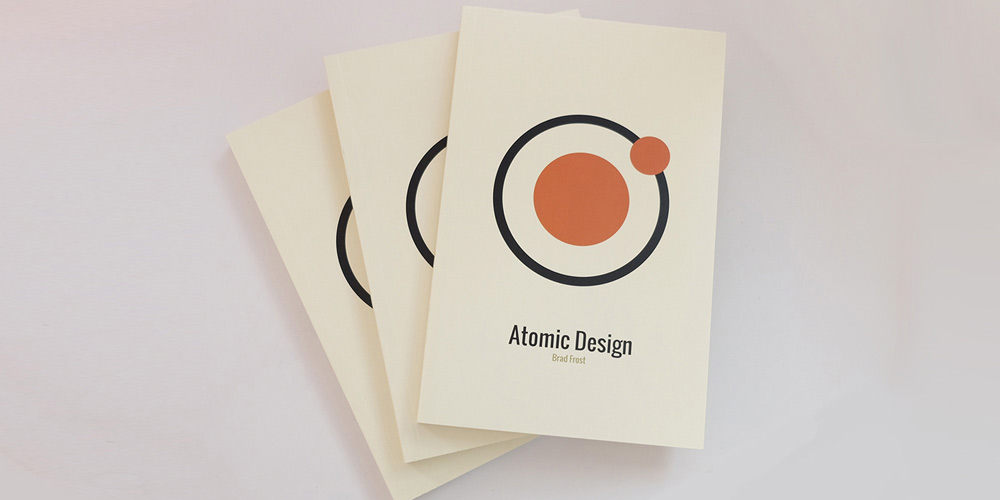
Atomic Design | Atomic Design by Brad Frost
Learn how to create and maintain digital design systems, allowing your team to roll out higher quality, more consistent UIs faster than ever before.
Building a mental model for async programs
In my experience writing async programs in Dart and Rust, I have built up a model in my head to avoid bugs caused by async. These bugs are usually hard to find and reproduce, so there is a lot of value in taking preventive measures to avoid them. I hope to improve this model in my head by writing this post and to share them with anyone who might find it helpful.