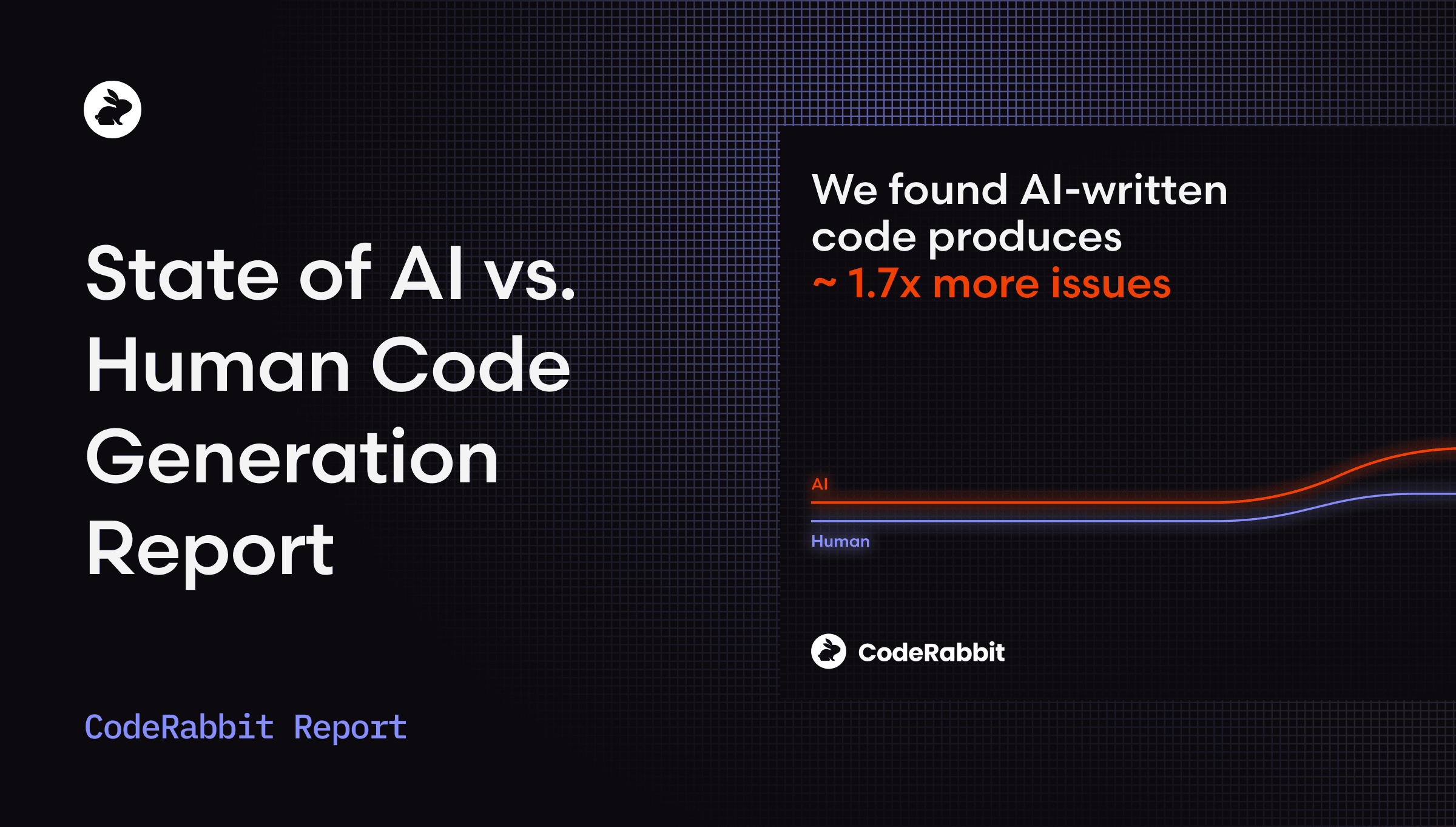
We analyzed 470 open-source GitHub pull requests, using CodeRabbit’s structured issue taxonomy and found that AI generated code creates 1.7x more issues.
AI Code Reviews | CodeRabbit | Try for Free.
AI-first pull request reviewer with context-aware feedback, line-by-line code suggestions, and real-time chat.
Git AI - Track AI Code all the way to production
Cross-agent observability from prompt to production. Track AI-generated code from Cursor, Claude Code, GitHub Copilot, Gemini, and more through the entire SDLC.
Study finds AI tools made open source software developers 19 percent slower
Coders spent more time prompting and reviewing AI generations than they saved on coding.

AI Coding Agents: Adoption Trends - The JetBrains Blog
How many developers use AI coding agents (Claude Code, Codex, Cursor, JetBrains Junie, and others)? Evidence from the Developer Ecosystem Survey 2026.
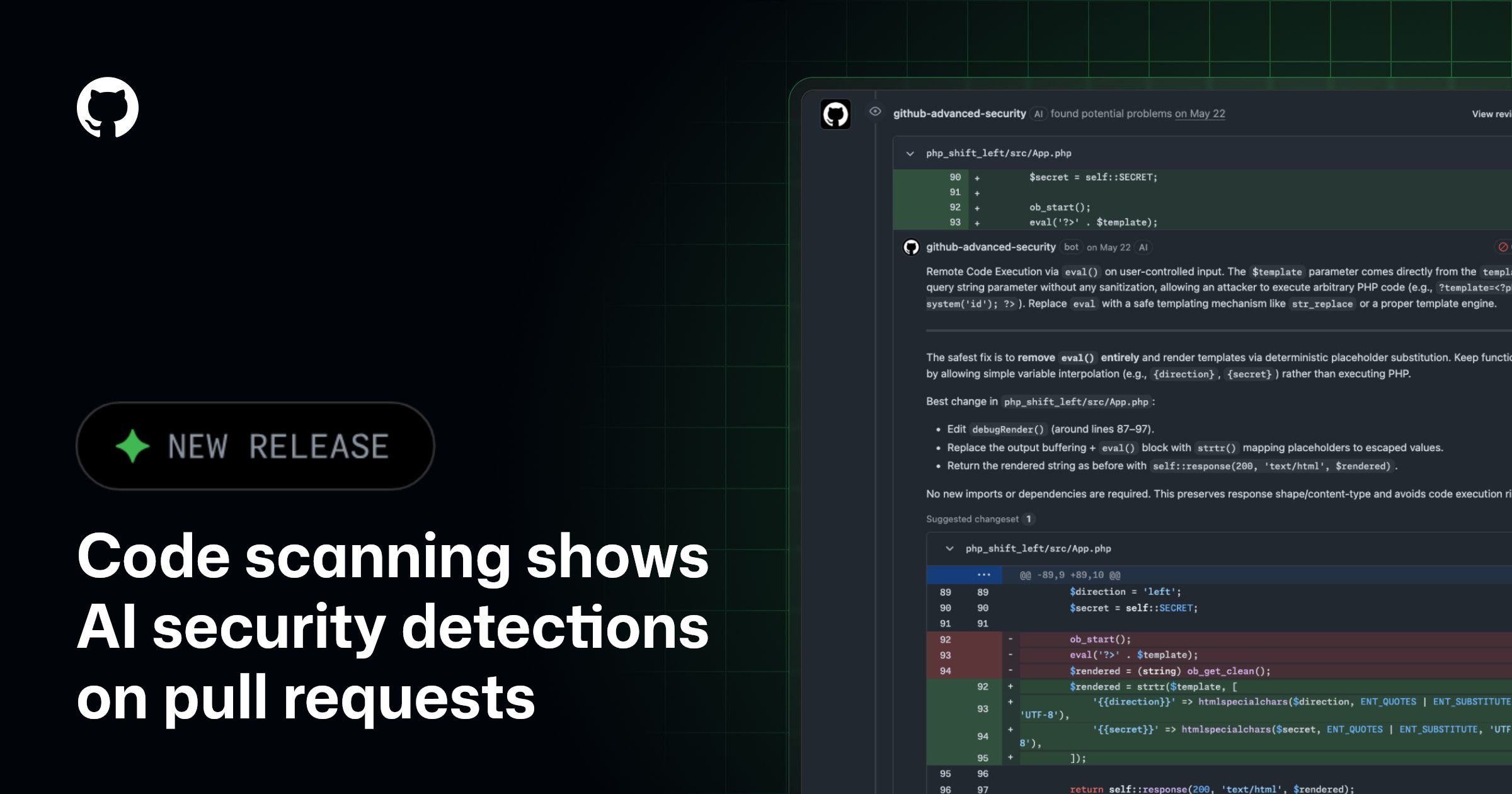
Code scanning shows AI security detections on pull requests - GitHub Changelog
GitHub code scanning now surfaces AI-powered security detections directly on pull requests, expanding vulnerability coverage to languages and frameworks not currently supported by CodeQL. These detections help teams identify and…
AI Tools Accelerates Coding, but Not Overall Software Delivery, GitLab Research Finds
GitLab's 2026 AI Accountability Report highlights an AI Paradox: although 78% of developers say they code faster, overall software delivery has not accelerated due to downstream testing and review bottlenecks and new challenges for enterprise governance and traceability.
Usage, Effects and Requirements for AI Coding Assistants in the Enterprise: An Empirical Study
The rise of large language models (LLMs) has accelerated the development of automated techniques and tools for supporting various software engineering tasks, e.g., program understanding, code generation, software testing, and program repair. As CodeLLMs are being employed toward automating these tasks, one question that arises, especially in enterprise settings, is whether these coding assistants and the code LLMs that power them are ready for real-world projects and enterprise use cases, and how do they impact the existing software engineering process and user experience. In this paper we survey 57 developers from different domains and with varying software engineering skill about their experience with AI coding assistants and CodeLLMs. We also reviewed 35 user surveys on the usage, experience and expectations of professionals and students using AI coding assistants and CodeLLMs. Based on our study findings and analysis of existing surveys, we discuss the requirements for AI-powered coding assistants.

Measuring the Impact of Early-2025 AI on Experienced Open-Source...
Despite widespread adoption, the impact of AI tools on software development in the wild remains understudied. We conduct a randomized controlled trial (RCT) to understand how AI tools at the...
How Do AI Coding Agents Contribute to Software Development? an Empirical Study of Agentic Pull Requests
Recent advances in large language models and their rapid adoption across software engineering tasks have made Artificial Intelligence (AI) coding agents an integral component of modern software development workflows. While developers increasingly benefit from these coding agents, their impact on software quality remains insufficiently understood. In particular, how agentic contributions evolve across the software development lifecycle has not been thoroughly investigated. This study aims to characterize agentic pull requests (PR) in comparison to human generated PRs and to examine how their properties change across different stages of the development lifecycle. Using the AIDev dataset, we first analyze how differences in merge rates between agentic and human generated PRs vary over time. We then identify the types of development tasks where AI coding agents are predominantly applied and investigate how these task distributions evolve across development quarters. Finally, we compare a set of key characteristics of agentic and human generated PRs, focusing on their implications for software quality and their temporal dynamics. Overall, our findings provide an empirical and longitudinal perspective on the role of AI coding agents in software development, offering a more nuanced understanding of their benefits and limitations in real-world practices.
How Do AI Coding Agents Contribute to Software Development? an Empirical Study of Agentic Pull Requests
Recent advances in large language models and their rapid adoption across software engineering tasks have made Artificial Intelligence (AI) coding agents an integral component of modern software development workflows. While developers increasingly benefit from these coding agents, their impact on software quality remains insufficiently understood. In particular, how agentic contributions evolve across the software development lifecycle has not been thoroughly investigated. This study aims to characterize agentic pull requests (PR) in comparison to human generated PRs and to examine how their properties change across different stages of the development lifecycle. Using the AIDev dataset, we first analyze how differences in merge rates between agentic and human generated PRs vary over time. We then identify the types of development tasks where AI coding agents are predominantly applied and investigate how these task distributions evolve across development quarters. Finally, we compare a set of key characteristics of agentic and human generated PRs, focusing on their implications for software quality and their temporal dynamics. Overall, our findings provide an empirical and longitudinal perspective on the role of AI coding agents in software development, offering a more nuanced understanding of their benefits and limitations in real-world practices.
AI Code Is Producing a Quality Crisis Nobody Wants to Talk About
The productivity numbers look great. AI coding tools are everywhere.

AI coding agents generate more code, but not more software
Study finds coding efficiency gains get "absorbed" by human review "bottleneck."

Has This Report EXPOSED THE TRUTH About AI Assisted Software Development?
Vibe Coding Failures: Documented AI Code Incidents
A curated directory of real-world incidents where AI-generated code failed in production.
AI | 2025 Stack Overflow Developer Survey
84% of respondents are using or planning to use AI tools in their development process, an increase over last year (76%). This year we can see 51% of professional developers use AI tools daily.