


In the late modern world something like socialism is the only possible way of embodying Christian love in concrete political practices.
Towards a Planetary Theology
Every political innovation requires, first of all, a corresponding transformation in the cosmos. To remake globalization from a gangster racket into a genuine political society, we must recognize theology’s foundational role in shaping political order.

Market Socialism
The Paper Pilot's digital garden of thoughts on philosophy, politics, and sociology. Reading time: ~4 minute read | Published: Jan 1, 2025 | Updated: Nov 16, 2025

Volunteer – Socialists
We are a people-powered movement - we depend on the energy and enthusiasm of our supporters to get our message out. Every contribution, even the smallest, will make a difference.
Tracing the Roots of the Christian Nationalist Movement That’s Influencing Modern Politics
The Christian right has become an increasingly powerful force in American politics at every level, from school boards to the presidency. Its roots trace back decades.

Secularization Comes for the Religion of Technology: Or, how to make sense of techno-optimist manifestos, the Open Ai/Altman affair, EA/e-acc movements, and the general sense of cultural stagnation
The Convivial Society: Vol. 5, No. 3


American Fascists: The Christian Right and the War on A…
Twenty-five years ago, when Pat Robertson and other rad…

Inside the fundamentalist Christian movement that wants to remake Canadian politics | CBC News
A fundamentalist Christian movement that gained momentum in Canada by challenging pandemic public health restrictions is now increasingly trying to become involved in electoral politics.

The Pagan and Occult Fascist Connection and How to Fix It
This essay was adapted from a lecture titled Toward Progressive Magicks: Identifying Obstacles, Dismantling Frameworks delivered at the…
Religion matters for economic growth through various channels
Standard models of economic growth depict physical capital, human capital, population/labour, and total factor productivity as proximate determinants of economic growth. But their deeper determinants are poorly understood. This column argues that religion – as one of the most ubiquitous social phenomena – can spur or impair economic growth by affecting each of these four elements of the macroeconomic production function.

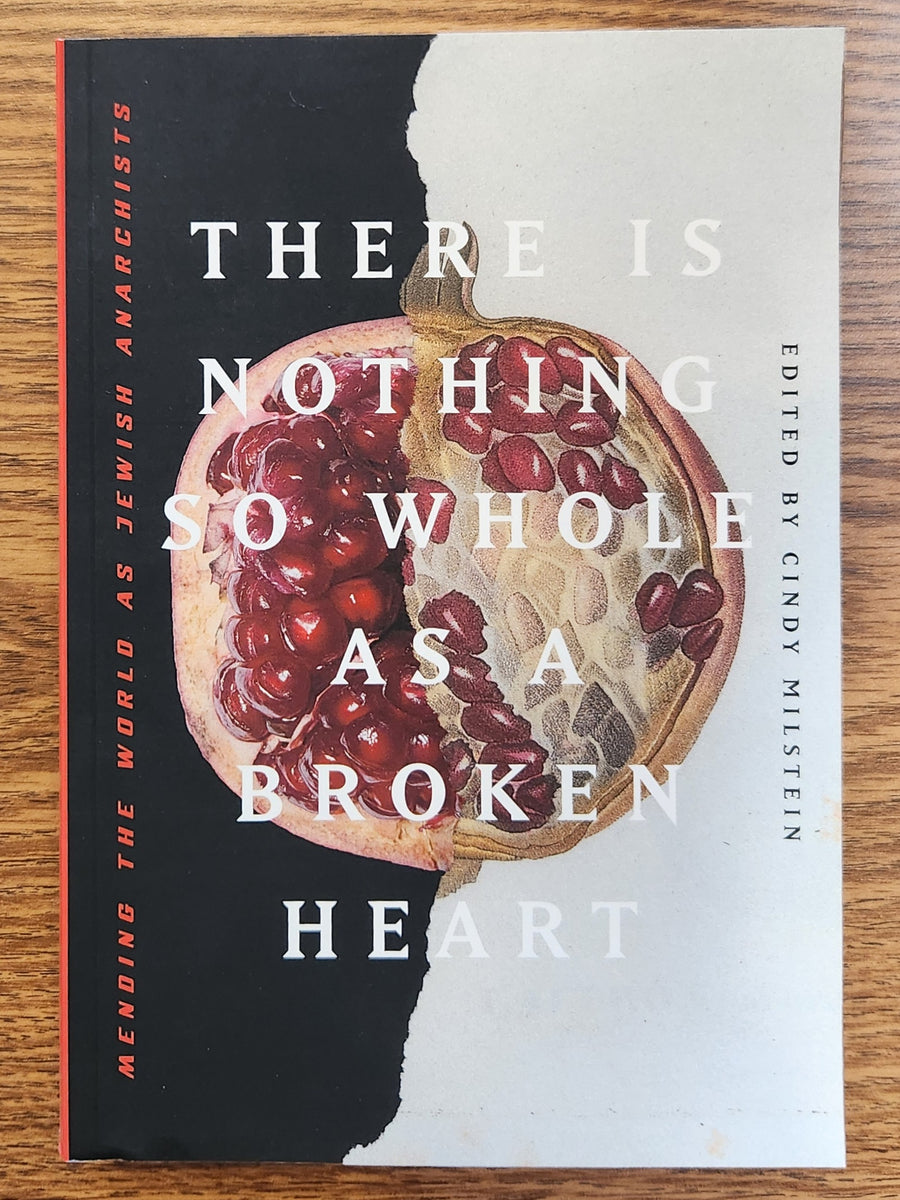
There Is Nothing So Whole as a Broken Heart
By Cindy Milstein Published by AK Press, 2021 392 pages, paperback The contemporary renewal of Jewish anarchism draws on a history of enslavement, displacement, white supremacy, and genocide as well as ancestral resistance, strength, imagination, and humor—wisdom that is sorely needed today. Through stories at once poetic and poignant, There Is Nothing So Whole as a Broken Heart offers a powerful elixir for all who rebel against systemic violence and injustice. The contemporary renewal of Jewish anarchism draws on a history of suffering, ranging from enslavement and displacement to white nationalism and genocide. Yet it also pulls from ancestral resistance, strength, imagination, and humor—all qualities, and wisdom, sorely needed today. These essays, many written from feminist and queer perspectives, journey into past and contemporary trauma in ways that are humanizing and healing. They build bridges from bittersweet grief to rebellion and joy. And via concrete illustrations of how Jewish anarchists lovingly transform their own ritual, cultural, and political practices, they clearly illuminate the path toward mending ourselves and the world. Praise for There Is Nothing So Whole as a Broken Heart... "There Is Nothing So Whole as a Broken Heart is a breathtaking kaddish to everyone living the revolutionary vision that Jewish radicals dreamed was possible. It drives to the heart of a tradition that we must rediscover, a story that is simultaneously particular and universal: we can survive if we do it together." —Shane Burley, author of Why We Fight: Essays on Fascism, Resistance, and Surviving the Apocalypse "In this moment of resurgent fascism and authoritarianism, the foundational relationship between antisemitism and anti-Blackness is more stark and apparent than ever. The vibrancy of this collection articulates not only a foundation for solidarity in shared struggles against white supremacy but also the vast imaginaries and world-making potential in the diversity of Jewish cultural expression and radical—specifically anarchist—thought. As a Black anarchist, I could not be more grateful for the generosity, vulnerabilities, and fierce, unwavering love for humanity shared within these pages." —Zoé Samudzi, coauthor of As Black as Resistance: Finding the Conditions for Liberation “The texts collected here are striking in their literary richness and emotional openness, awakening both pain and solace, insights and further questions . . . A highly rewarding reading experience that will appeal well beyond the Jewishanarchist intersection.” —Uri Gordon, co-editor of The Routledge Handbook of Radical Politics "There Is Nothing So Whole as a Broken Heart offers an ardent new archive of Jewish anarchism. These voices expand a defiant tradition: they speak of the disruptiveness of care, the labor of grief, and the pleasures of survival. As fascism and antisemitism rise, these poets, rabbis, and organizers urgently reach for another world through this one." —AE Torres, author of Horizons Blossom, Borders Vanish: Anarchism and Yiddish Literature "This book asks how modern generations of Jewish anarchists are wrestling with rising fascism, white supremacy, and antisemitism, and lifts up the specific cultural tools we bring to the work of mending (or maybe reimagining) the ever-shattering world. Today the book is a mirror; tomorrow, a new window into the archive of Jewish anarchists throughout history." —Ezra Berkley Nepon, author of Justice, Justice Shall You Pursue: A History of New Jewish Agenda "As leftist Jewish thought and organizing today witnesses a resurgence, this collection provides an important document of its anarchist current." —Treyf Podcast “A poem and a love note, a prayer song and a protest, an attempt to mend a burning world with the best of Jewish, anarchist, and Jewish anarchist traditions.” —Dan Berger, author of Captive Nation: Black Prison Organizing in the Civil Rights Era "There is Nothing So Whole as a Broken Heart is a powerful celebration of ritual—both Jewish and anarchist."—Gabriel Moshenska for Jewish Socialist
Masculist pushback: the threatened extinction of the great, white Judeo-Christian male
A political ideology rooted in fear is remaking the world in its own image and dragging us with it

Anarchism
Geoffrey Ostergaard Anarchism 1993 Published in The Blackwell Dictionary of Modern Social and Political Thought, pp. 12–14.

The Alternative to Capitalism Nobody Talks About | Eleanor Finley & Camila Vergara
American Socialist: The Life and Legacy of Eugene V. Debs
Before Bernie Sanders, before Zohran Mamdani, America’s favorite socialist was Eugene Debs.In 1912, some 1,200 Socialists held elected office across the United States. Wisconsin had a Socialist congressman in Washington, and ministers in Oklahoma preached the gospel of “Christian socialism” at revival-style gatherings come summertime. The leader of this vibrant movement? One Eugene V. Debs—part working-class agitator, part radical prophet, a man who made it feel like being an American and a socialist was the most natural thing in the world. Even opponents would describe Debs as Christlike. Born in Indiana in 1855, he’d dropped out of school at fourteen to work on the railroad. Elected to the state legislature in his twenties, he’d seemed a rising star in the Democratic Party: an optimistic moderate who urged respectability and compromise. But this was the Gilded Age: an era of corporate tycoons and outrageous sums of money in politics, of grueling hours and few rights for workers (if any). And when, in 1894, the president sent in thousands of troops to break a nationwide railroad strike Debs helped organize, Debs was radicalized. He emerged from a six-month prison sentence as a crusader, a stirring orator who would soon see all forms of unaccountable power—rich over poor, men over women, white over Black, colonizer over colonized—as poisonous to human freedom. Cofounding the Socialist Party of America, Debs would run for president five times and spend the rest of his life convincing ordinary workers that, together, they could create a political movement strong enough to transform the world. It wouldn’t be easy. He would suffer from chronic illness, lose friends and enrage allies, risk his marriage to a woman he loved, and receive a decade-long prison sentence for opposing World War I. And yet, countless Americans—not just in his lifetime, but in ours—would heed Debs’s righteous call for human solidarity. When Debs ran for president in 1920 from behind bars, he received almost a million votes. A rousing, poignant, intimately human tale of struggle against the odds, American Socialist is a stunning portrait of one man’s radicalization—and of the country he radicalized in turn. It’s a story that speaks powerfully to our own Gilded Age, when the very wealthy again rule America’s political and economic life and millions are looking for an alternative.
How can we let it be known far & wide that there's a religion in Silicon Valley (longtermism/effective altruism & similar) that has convinced itself that the best thing to do for "all of humanity" is to throw as much money as possible to the
How can we let it be known far & wide that there's a religion in Silicon Valley (longtermism/effective altruism & similar) that has convinced itself that the best thing to do for "all of humanity" is to throw as much money as possible to the problem of "AGI"...— @timnitGebru (@dair-community.social/bsky.social) (@timnitGebru) April 30, 2022