

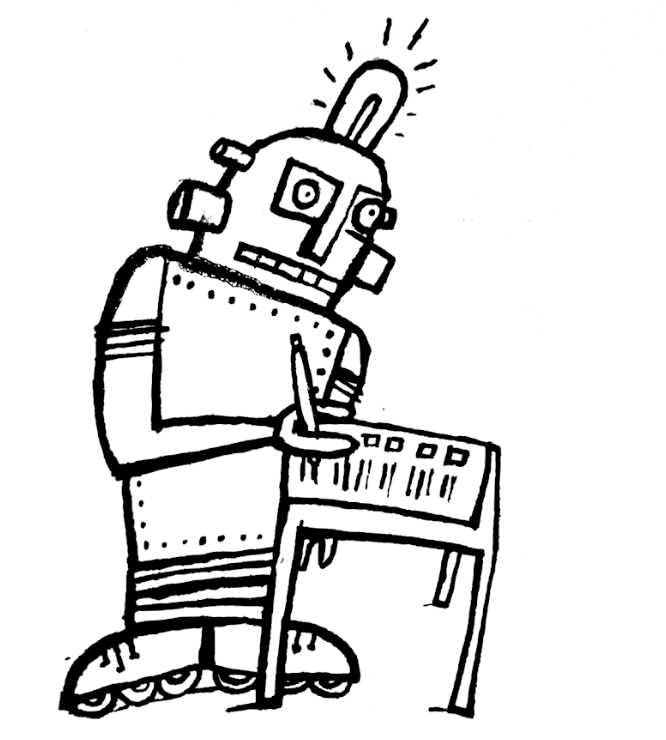
In the decade since the neural architecture version of Google Translate and the invention of transformer architecture for neural networks, we have experienced the most rapid technological breakthroughs since at least World War II, and possibly ever.
The Great A.I. Awakening (Published 2016)
How Google used artificial intelligence to transform Google Translate, one of its more popular services — and how machine learning is poised to reinvent computing itself.

The Illustrated Transformer
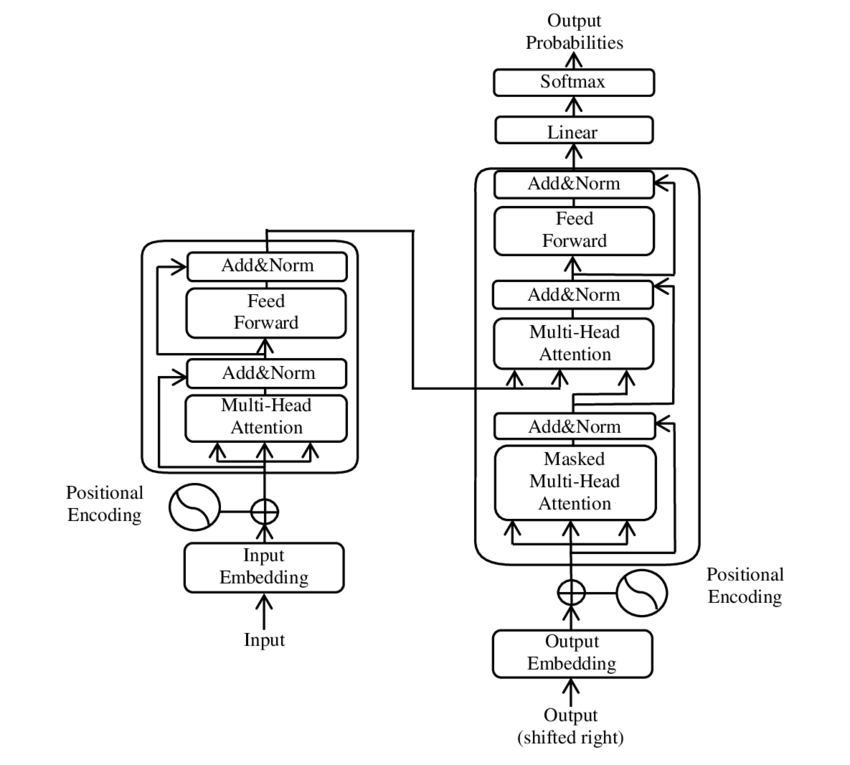
Discussions: Hacker News (65 points, 4 comments), Reddit r/MachineLearning (29 points, 3 comments) Translations: Arabic, Chinese (Simplified) 1, Chinese (Simplified) 2, French 1, French 2, Italian, Japanese, Korean, Persian, Russian, Spanish 1, Spanish 2, Vietnamese Watch: MIT’s Deep Learning State of the Art lecture referencing this post Featured in courses at Stanford, Harvard, MIT, Princeton, CMU and others Update: This post has now become a book! Check out LLM-book.com which contains (Chapter 3) an updated and expanded version of this post speaking about the latest Transformer models and how they've evolved in the seven years since the original Transformer (like Multi-Query Attention and RoPE Positional embeddings). In the previous post, we looked at Attention – a ubiquitous method in modern deep learning models. Attention is a concept that helped improve the performance of neural machine translation applications. In this post, we will look at The Transformer – a model that uses attention to boost the speed with which these models can be trained. The Transformer outperforms the Google Neural Machine Translation model in specific tasks. The biggest benefit, however, comes from how The Transformer lends itself to parallelization. It is in fact Google Cloud’s recommendation to use The Transformer as a reference model to use their Cloud TPU offering. So let’s try to break the model apart and look at how it functions. The Transformer was proposed in the paper Attention is All You Need. A TensorFlow implementation of it is available as a part of the Tensor2Tensor package. Harvard’s NLP group created a guide annotating the paper with PyTorch implementation. In this post, we will attempt to oversimplify things a bit and introduce the concepts one by one to hopefully make it easier to understand to people without in-depth knowledge of the subject matter. 2025 Update: We’ve built a free short course that brings the contents of this post up-to-date with animations: A High-Level Look Let’s begin by looking at the model as a single black box. In a machine translation application, it would take a sentence in one language, and output its translation in another.
Neural Computer: A New Machine Form Is Emerging
A research essay on Neural Computer: how it differs from agents, world models, and conventional computers; what runtime and CNC would mean; what current prototypes already show; and how software and hardware might change.
Intelligence Rising
Artificial Intelligence (AI) is expected to be one of the most transformative technologies in human history.

What we can’t measure about AI – yet | Aeon Essays
The costs of transformative innovations are immediately clear: it’s the longterm gains that are hardest to understand

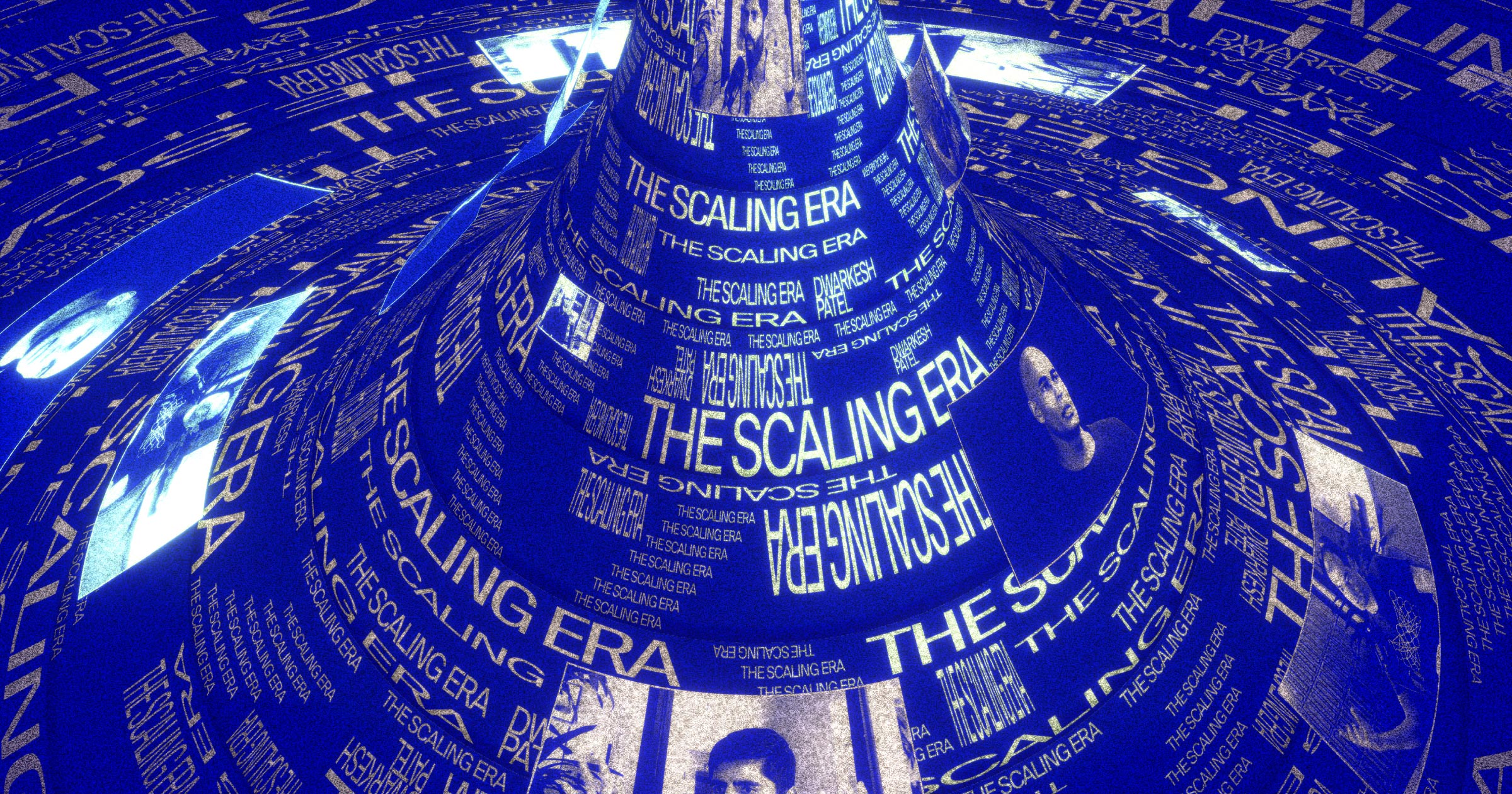
The Scaling Era: An Oral History of AI, 2019–2025
An inside view of the AI revolution, from the people an…

An Introduction to Transformers
The transformer is a neural network component that can be used to learn useful representations of sequences or sets of data-points. The transformer has driven recent advances in natural language processing, computer vision, and spatio-temporal modelling. There are many introductions to transformers, but most do not contain precise mathematical descriptions of the architecture and the intuitions behind the design choices are often also missing. Moreover, as research takes a winding path, the explanations for the components of the transformer can be idiosyncratic. In this note we aim for a mathematically precise, intuitive, and clean description of the transformer architecture. We will not discuss training as this is rather standard. We assume that the reader is familiar with fundamental topics in machine learning including multi-layer perceptrons, linear transformations, softmax functions and basic probability.

The Scaling Era: An Oral History of AI, 2019–2025
An inside view of the AI revolution, from the people and companies making it happen.

Attention Is All You Need
"Attention Is All You Need" is a 2017 research paper in machine learning authored by eight scientists and engineers working at Google. The paper introduced a new deep learning architecture known as the transformer, based on the attention mechanism proposed in 2014 by Bahdanau et al. The transformer approach it describes has become the main architecture of a wide variety of artificial intelligence systems, including large language models. At the time, the focus of the research was on improving Seq2seq techniques for machine translation, but the authors go further in the paper, foreseeing the technique's potential for other tasks like question answering and what is now known as multimodal generative AI.
The Thoughts The Civilized Keep
The hype around a new AI language generator reveals the sterility of mainstream thinking on AI today — and indeed on how we think about thinking itself.



Automated Architecture Synthesis via Targeted Evolution | Liquid AI
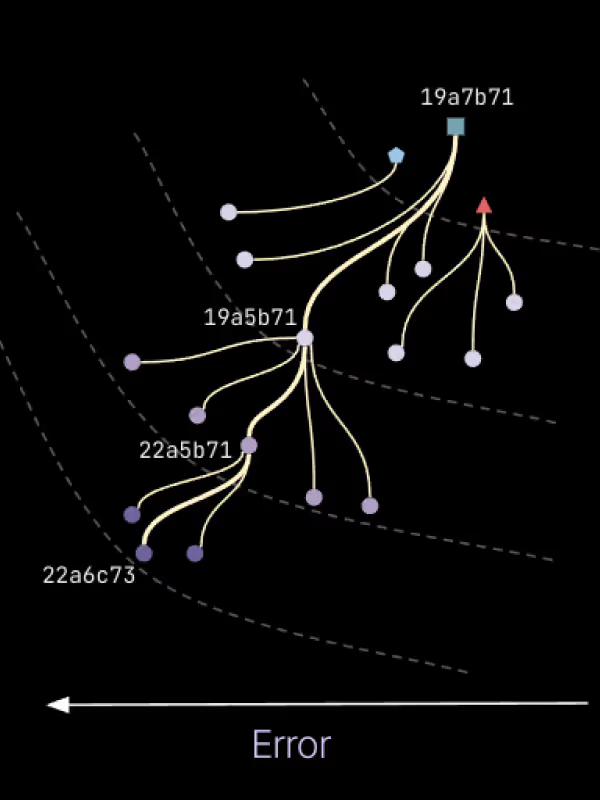
Today, we report advances in automated neural network architecture design and customization. We developed algorithms for the synthesis of tailored architectures (STAR), based on evolutionary algorithms applied to a numerical representation for model architectures derived from a new design theory. STAR automates the process of architecture discovery and optimization, turning it into an end-to-end process. With these methods, we have been able to tailor architectures to custom tasks, metrics, and hardware. We used STAR to synthesize hundreds of different designs that outperform strong Transformer and hybrid architectures in quality, with smaller caches and number of parameters.
Why Can't Transformers Learn Multiplication?...
Language models are increasingly capable, yet still fail at a seemingly simple task of multi-digit multiplication. In this work, we study why, by reverse-engineering a model that successfully...
Why Can't Transformers Learn Multiplication?...
Language models are increasingly capable, yet still fail at a seemingly simple task of multi-digit multiplication. In this work, we study why, by reverse-engineering a model that successfully...