

STAMINA Working Group - Social Tech And ModellIng for kNowledge & Action
Outline – Team knowledge base & wiki
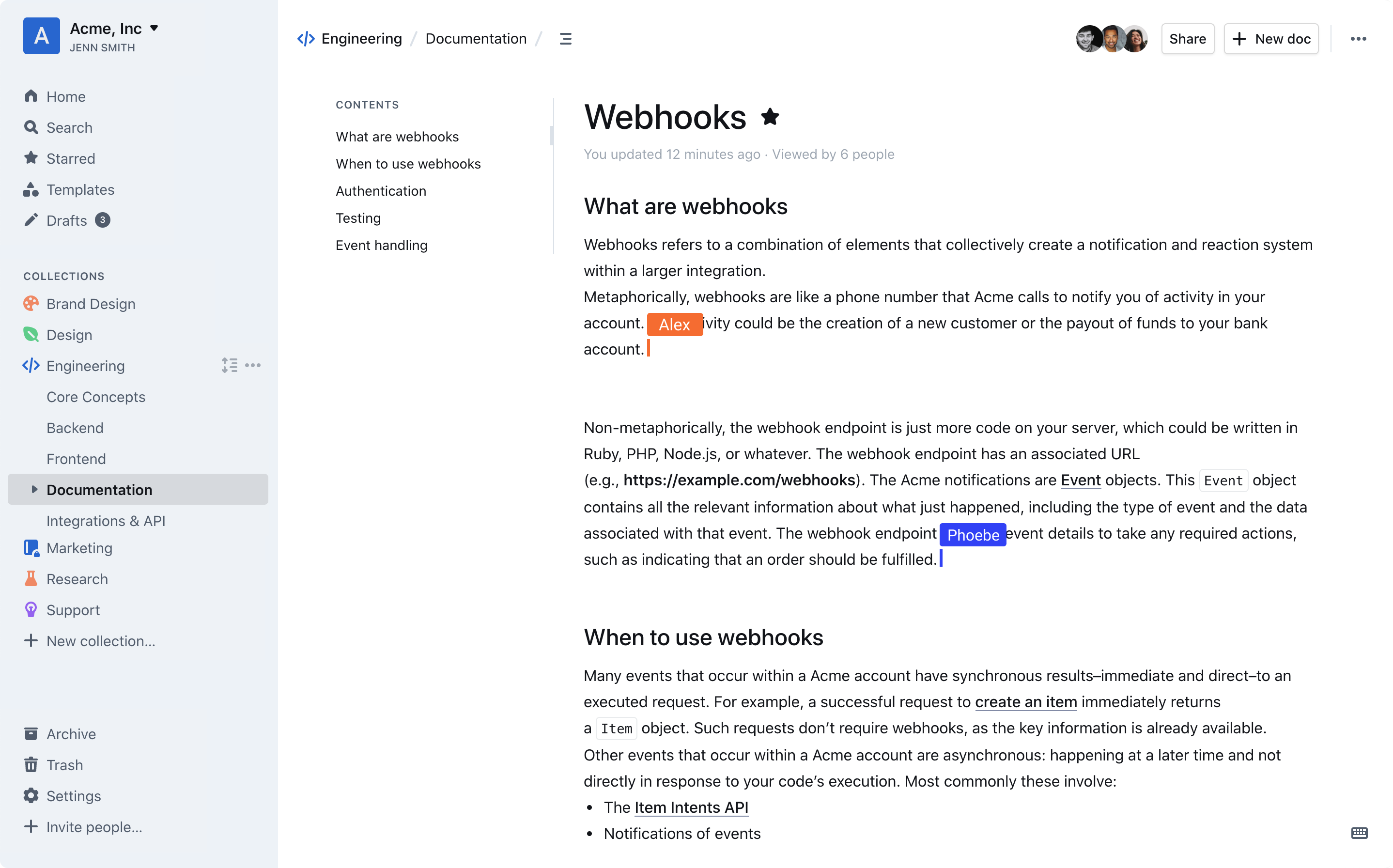
A modern team knowledge base for your internal documentation, product specs, support answers, meeting notes, onboarding, & more…
A model for nesting connected groups with communities of practice
In the new edition of my book, Building Successful Communities of Practice, I share insights into community size and interactions. I've been using this theory with clients to create nested layers that include communities of practice that serve as a model for their organisation.

Facilitation Techniques and Workshop Activities | Library
Hundreds of group facilitation activities for workshops, meetings and training sessions. Find the best team building activities, energisers, process facilitation and leadership development...
The Skill of Org Design
Building effective organisations is a remarkably useful, if rare, skill. This is what it looks like, what it consists of, and how to tell if someone has it.
Free Knowledge Institute
Building social capacity through shared knowledge and technology
A Department of Methodology: A feasible framework to integrate the applied practice of multidisciplinary support teams
High performance sport organisations employ multidisciplinary sport science teams to develop athlete preparation and performance. However, challenges have been identified with respect to cohesion, communication, integration, ineffective knowledge translation, role clarity, confusing language, and conflicting methodologies. A Department of Methodology (DoM) has been proposed as a conceptual framework seeking to address these issues. To move the DoM beyond conceptualisation towards professional practice, this study aimed to establish expert consensus for the implementation of a DoM within applied high performance contexts. Eighty professionals with expertise in multidisciplinary teams completed a three-round, online Delphi survey. In Round One, participants answered 16, open-ended questions across four categories: (1) Coordinating activity through shared principles and language; (2) Communicating coherent ideas; (3) Designing practice landscapes; and (4), General questions of feasibility. Results highlight the importance of building a shared language, establishing common principles, working collaboratively, facilitating continuous knowledge exchange, and designing practice tasks collaboratively. New knowledge is contributed for advancing conceptualisation of a DoM framework by exploring consensus on a range of theoretical- and practitioner-informed recommendations for the successful implementation of a DoM in high-performance sports organisations.

Stigmergic Collaboration: A Theoretical Framework for Mass Collaboration
"This thesis presents an application-oriented theoretical framework for generalised and specific collaborative contexts with a special focus on Internet-based mass collaboration. The proposed framework is informed by the author's many years of collaborative arts practice and the design, building and moderation of a number of online collaborative environments across a wide range of contexts and applications. The thesis provides transdisciplinary architecture for describing the underlying mechanisms that have enabled the emergence of mass collaboration and other activities associated with 'Web 2.0' by incorporating a collaboratively developed definition and general framework for collaboration and collective activity, as well as theories of swarm intelligence, stigmergy, and distributed cognition. "Accompanying this creative arts thesis is a DVD-Rom which includes offline versions of the three Internet based collaborative environments designed, built and implemented in accordance with the frameworks for digital stigmergy and mass collaboration developed in the written work. The creative works in conjunction with the written thesis help to explore and more rigorously define the collaborative process in general, while testing the theory that stigmergy is an inherent component of collaborative processes which incorporate collective material production. "Supported by a range of contemporary examples of Internet activity, including the accompanying creative works, it is found that stigmergy is a deeply rooted mechanism inherent in not only traditional material collaborative processes, but a range of emerging online practices which may be broadly categorised as digital stigmergic cooperation and collaboration. This latter class enables the extreme scaling seen in mass collaborative projects such as Wikipedia.org, open source software projects and the massive, multiplayer environment, Second Life. This scaling is achieved through a range of attributes which are examined, such as the provision of a localised site of individualistic engagement which reduces demands placed upon participants by the social negotiation of contributions while increasing capacity for direct and immediate creative participation via digital workspaces. Also examined are a range of cultural, economic and sociopolitical impacts which emerge as a direct result of mass collaboration's highly distributed, non-market based, peer-production processes, all of which are shown to have important implications for the further transformation of our contemporary information and media landscape."
Commons Computer
A modern team knowledge base for your internal documentation, product specs, support answers, meeting notes, onboarding, & more…
Avoiding Digital Productivity Traps - Cal Newport
Last week in this newsletter, I summarized some interesting results from a study that analyzed the behavior of 164,000 knowledge workers. It found that introducing ... Read more

The Social Construction of Facts and Artefacts: or How the Sociology of Science and the Sociology of Technology might Benefit Each Other
The need for an integrated social constructivist approach towards the study of science and technology is outlined. Within such a programme both scientific facts and technological artefacts are to be understood as social constructs. Literature on the sociology of science, the science-technology relationship, and technology studies is reviewed. The empirical programme of relativism within the sociology of scientific knowledge and a recent study of the social construction of technological artefacts are combined to produce the new approach. The concepts of `interpretative flexibility' and `closure mechanism', and the notion of `social group' are developed and illustrated by reference to a study of solar physics and a study of the development of the bicycle. The paper concludes by setting out some of the terrain to be explored in future studies.
Habits of High-Functioning Teams
I often struggle to explain what it means to be part of a high-functioning software team. Sure, there are mountains of literature, and an entire genre of LinkedIn thought leadership that professes all kinds of guidelines and heuristics about what makes teams work, but in my experience, it’s hard to internalize these ideas and follow someone else’s model if you’ve never seen what good looks like.
Lab knowledge base on Semble spotted in the wild 👀 @stamina-workgroup.bsky.social
A group from work decided to challenge each other to the #256fes challenge. I modeled a Frieren for it
STAMINA Slides

References mentioned in the talk at STAMINA lab at McGill University (April 28, 2026)
Garden and the Stream - thoughts
Overcoming information overload with circular attention economies

(PDF) The sensemaking process and leverage points for analyst technology as identified through cognitive task analysis

From Users to (Sense)Makers: On the Pivotal Role of Stigmergic...

