

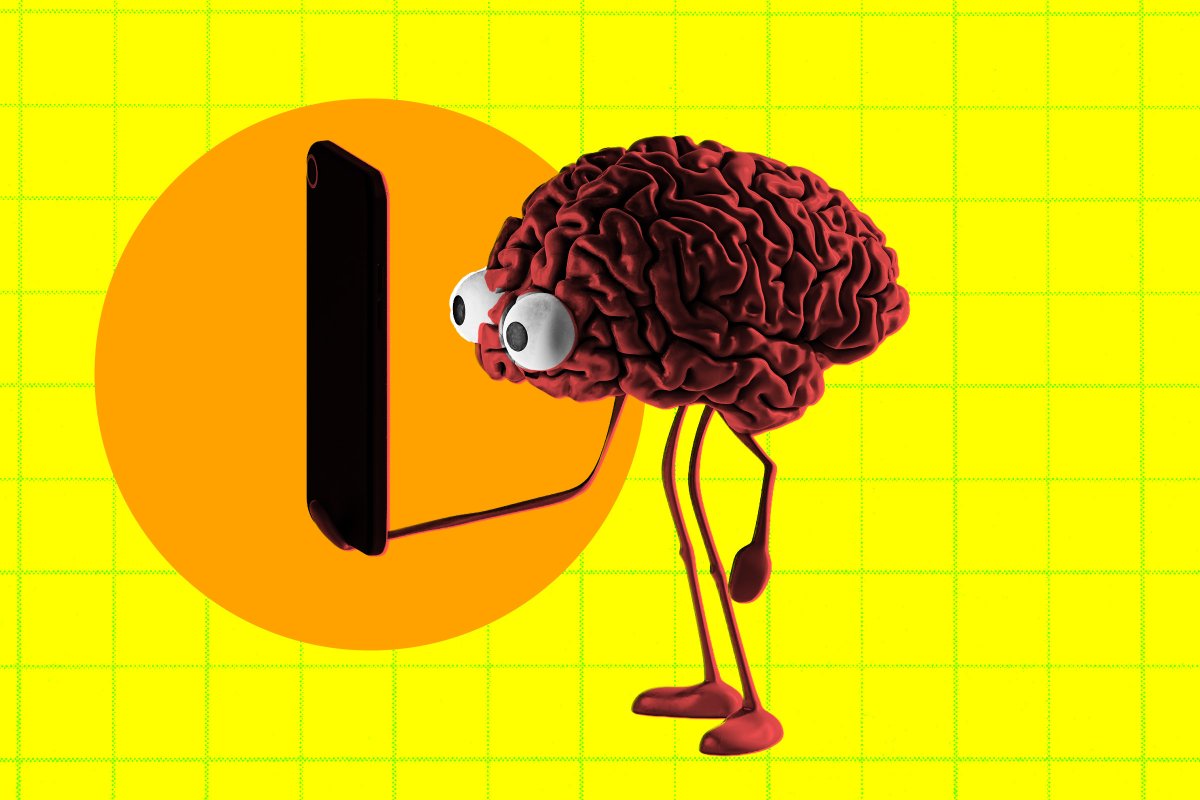
The allure of AI lies predominantly in its unmatched potential for efficiency, convenience, and accuracy. However, this unprecedented convenience brings with it a hidden yet profound threat: the subtle erosion of human capacity for critical thinking through cognitive offloading.
Are we offloading too much of our thinking to AI?
Reflections on autonomy and the value of thinking for ourselves

AI Tools in Society: Impacts on Cognitive Offloading and the Future of Critical Thinking
The proliferation of artificial intelligence (AI) tools has transformed numerous aspects of daily life, yet its impact on critical thinking remains underexplored. This study investigates the relationship between AI tool usage and critical thinking skills, focusing on cognitive offloading as a mediating factor. Utilising a mixed-method approach, we conducted surveys and in-depth interviews with 666 participants across diverse age groups and educational backgrounds. Quantitative data were analysed using ANOVA and correlation analysis, while qualitative insights were obtained through thematic analysis of interview transcripts. The findings revealed a significant negative correlation between frequent AI tool usage and critical thinking abilities, mediated by increased cognitive offloading. Younger participants exhibited higher dependence on AI tools and lower critical thinking scores compared to older participants. Furthermore, higher educational attainment was associated with better critical thinking skills, regardless of AI usage. These results highlight the potential cognitive costs of AI tool reliance, emphasising the need for educational strategies that promote critical engagement with AI technologies. This study contributes to the growing discourse on AI’s cognitive implications, offering practical recommendations for mitigating its adverse effects on critical thinking. The findings underscore the importance of fostering critical thinking in an AI-driven world, making this research essential reading for educators, policymakers, and technologists.

AI Tools in Society: Impacts on Cognitive Offloading and the Future of Critical Thinking
The proliferation of artificial intelligence (AI) tools has transformed numerous aspects of daily life, yet its impact on critical thinking remains underexplored. This study investigates the relationship between AI tool usage and critical thinking skills, focusing on cognitive offloading as a mediating factor. Utilising a mixed-method approach, we conducted surveys and in-depth interviews with 666 participants across diverse age groups and educational backgrounds. Quantitative data were analysed using ANOVA and correlation analysis, while qualitative insights were obtained through thematic analysis of interview transcripts. The findings revealed a significant negative correlation between frequent AI tool usage and critical thinking abilities, mediated by increased cognitive offloading. Younger participants exhibited higher dependence on AI tools and lower critical thinking scores compared to older participants. Furthermore, higher educational attainment was associated with better critical thinking skills, regardless of AI usage. These results highlight the potential cognitive costs of AI tool reliance, emphasising the need for educational strategies that promote critical engagement with AI technologies. This study contributes to the growing discourse on AI’s cognitive implications, offering practical recommendations for mitigating its adverse effects on critical thinking. The findings underscore the importance of fostering critical thinking in an AI-driven world, making this research essential reading for educators, policymakers, and technologists.
The Impact of Generative AI on Critical Thinking: Self-Reported Reductions in Cognitive Effort and Confidence Effects From a Survey of Knowledge Workers
As part of the Digital Library's transition to Open Access, new features for researchers are available in the Premium Edition. Click here to learn more.

The Impact of Generative AI on Critical Thinking: Self-Reported Reductions in Cognitive Effort and Confidence Effects From a Survey of Knowledge Workers
As part of the Digital Library's transition to Open Access, new features for researchers are available in the Premium Edition. Click here to learn more.
Artificial intelligence, cognitive offloading and implications for education
This report investigates a profound new challenge driven by rapidly expanding use of artificial intelligence (AI) in schooling: the risk that students will outsource too much of the cognitive work that is crucial to establishing the knowledge, skill and ‘thinking infrastructure’ that enables both schooling success and lifelong capacity for ongoing learning and understanding.There is a growing body of evidence that using AI can short-circuit the cognitive effort required for sustainable, deep learning, with potentially long-term consequences. This cognitive offloading from human to AI is especially risky for school students (‘novice’ learners who are building foundational knowledge and skills) when they turn to AI as a tempting substitute, not an amplifier, increase their dependency on the tool and lose access to deeper learning and critical thinking capabilities. It also introduces extra equity risks for disadvantaged students.The report reviews the cognitive science behind this concerning shift and the growing evidence of its impact. It also outlines how these harmful effects can be counteracted through specific teaching and learning strategies and effective design of AI education technology, anchored on bolstering the central role of teachers. It includes specific recommendations for policy and teaching and learning strategies.
The Impact of Artificial Intelligence on Human Thought
This research paper examines, from a multidimensional perspective (cognitive, social, ethical, and philosophical), how AI is transforming human thought. It highlights a cognitive offloading effect: the externalization of mental functions to AI can reduce intellectual engagement and weaken critical thinking. On the social level, algorithmic personalization creates filter bubbles that limit the diversity of opinions and can lead to the homogenization of thought and polarization. This research also describes the mechanisms of algorithmic manipulation (exploitation of cognitive biases, automated disinformation, etc.) that amplify AI's power of influence. Finally, the question of potential artificial consciousness is discussed, along with its ethical implications. The report as a whole underscores the risks that AI poses to human intellectual autonomy and creativity, while proposing avenues (education, transparency, governance) to align AI development with the interests of humanity.

Artificial intelligence, cognitive offloading and implications for education
This report investigates the challenge driven by the rapidly expanding use of artificial intelligence (AI) in schooling: the risk that students will outsource too much of the cognitive work that is crucial to establishing knowledge, skill and ‘thinking infrastructure’. The report includes specific recommendations for policy and teaching and learning strategies.
The Impact of Generative AI on Critical Thinking: Self-Reported Reductions in Cognitive Effort and Confidence Effects From a Survey of Knowledge Workers
The rise of Generative AI (GenAI) in knowledge workflows raises questions about its impact on critical thinking skills and practices. We survey 319 knowledge workers to investigate 1) when and how they perceive the enaction of critical thinking when using GenAI, and 2) when and why GenAI affects their effort to do so. Participants shared […]
Microsoft Study Finds AI Makes Human Cognition “Atrophied and Unprepared”
Researchers find that the more people use AI at their job, the less critical thinking they use.

Microsoft Study Finds AI Makes Human Cognition “Atrophied and Unprepared”
Researchers find that the more people use AI at their job, the less critical thinking they use.
Study Finds AI Use Eats Away at Users’ Confidence in Their Own Brains
A new study out of Middlesex University argues that the ultimate effects on an AI users' brain come down to how they use it.
AI as a Tool for the Mental Load | Brittany Ellich | Offprint
AI didn't make me faster at tasks. It took over the tracking, the invisible remembering that runs a household, and gave me back creative energy I forgot I had

AI overuse could spark "brain fry," new research finds
The mental strain associated with AI carries "significant costs," researchers find.

AI deskilling is a structural problem
Many artificial intelligence tools replace or stand to replace human activity, via automated decision-making, recommender systems and content generation. The more artificial intelligence (AI) replaces valuable human activity, the more it risks deskilling humans of their human capacities. This paper argues for applying a structural perspective to this phenomenon. It introduces the concept of ‘capacity-hostile environments’ to identify instances where AI mediation impedes human capacity cultivation. The analysis moves beyond individual responsibility that agents have to cultivate their human capacities, demonstrating how AI’s influence creates systemic conditions that could inhibit the development and exercise of human capacities by undermining the process of capacity cultivation. Drawing on the philosophy of skill as well as social epistemology, this paper argues that capacity cultivation (skilling) includes acquiring agential control over the capacities, inculcated through a long, gradual process of habituation. Habituation, in turn, depends on learning from others: the ‘know how’ of the skill, as well as a shared understanding of the value of the skill. AI mediation risks undermining the quality of the conditions for capacity habituation, leading to capacity impoverishment. By exploring the role of AI in mediating human activity, the paper highlights the need to evaluate AI applications based on their conduciveness or hostility to capacity cultivation. Ultimately, it calls for a critical reflection on the values inherent in AI socio-technical systems and emphasizes the societal obligation to foster capacity-conducive environments in the age of AI.
Everybody needs a personal AI policy. Just ask Hank Green.
How can we reap AI’s benefits without melting our brains in the process?
