


It’s long been believed the constantly rising costs of new home construction, and lackluster improvements in construction productivity more generally, are fundamentally a problem of production methods.
Victorian Labor
That's why a re-elected Carroll Labor Government will build 25,600 new homes and reserve them for first home buyers.
Almost nowhere in California is building enough, according to the state. Here’s why
California ordered cities and counties to plan for 2.5 million new homes by 2030. Only five jurisdictions are on track to hit their numbers.

Labor’s $1 billion housing plan does nothing to make homes more affordable for first home buyers | The Australian Greens
The Victorian Greens say Labor's latest housing announcement fails to address the biggest barrier facing young Victorians trying to buy their first home - the skyrocketing cost of housing.
Digital Construction Week | Innovation in the built environment
The UK’s leading event for innovation and technology in the built environment. Explore the latest developments in digital construction.
AI for Construction · Industry Report 2026 - ZACUA VENTURES
Executive Summary: The Intelligence Era of Construction The global construction industry is at a $15 trillion inflection point. While contributing over 13% of annual GDP, the sector has long been...

Railway raises $100M Series B to unburden the builders
Railway has raised $100M to unburden the builders, unlock the creatives, and unleash human potential

Home - Industrialised Construction
Industrialised Construction explores both the physical and digital dimensions of construction, covering innovations in platform-based design, kits of parts, design for manufacture and assembly (DfMA) and offsite production, as well as emerging digital capabilities including robotics, augmented and virtual reality, automation, data-driven tools, connectivity and the Internet of Things.

Information Salience and Mispricing in Housing
Making the purchase price fully salient to consumers has been shown to affect demand and equilibrium prices in various markets. Using a setting where part of the home acquisition price is in the form of nonsalient debt, we show this can happen in housing—a market where a typical household makes its largest acquisition. A regulation that made the debt and the total price salient for homebuyers eliminated a large mispricing caused by consumers’ inattention to the debt before the regulation. An average homebuyer would lose about $13,300 by acquiring a dwelling with one-standard deviation ($51,000)-higher debt, but this is nearly eliminated after the regulation. To shed light on the underlying channels, we use administrative data and show that young, financially inexperienced, and first-time homebuyers used to overpay the most. The results are not driven by rational channels based on liquidity constraints and adverse selection. Our findings imply that making all-inclusive house price and mortgage features salient at the time of advertising the sale can help avoid unintentional borrowing. This paper was accepted by David Simchi-Levi, finance. Supplemental Material: The online appendix is available at https://doi.org/10.1287/mnsc.2021.4253 .

What the Future of Working at Home May Look Like
Innovative home designs find ways to combine living and work spaces

The Housing Shortage Is a Major Driver of Poverty
Housing costs are usually the largest item in a household’s budget and can determine a family’s financial stability.

Why the Future of Work Is at Home
Even a cursory look at the social, environmental, and economic impacts of working from home indicates that even more people could and should be.

The Folk Economics of Housing
Why is housing supply so severely restricted in US cities and suburbs? Urban economists offer two primary hypotheses: homeowner self-interest and political fragmentation. Homeowners, who outnumber and have organizational advantages over renters, are said to lobby against development to protect their property values. The fragmentation hypothesis emphasizes that development's negative externalities are borne locally while most of the benefits accrue regionally or nationally, leading localities to block housing. This paper offers another explanation: ordinary people simply do not believe that adding more housing to the regional stock would reduce housing prices. Across three original surveys of urban and suburban residents, only a minority of respondents say that a large, positive, regional housing supply shock would reduce prices or rents. These beliefs are weakly held and unstable (suggesting people have given the issue little thought), but respondents do have stable views about who is to blame for high housing prices: developers and landlords. Large, bipartisan supermajorities support price controls, demand subsidies, and restrictions on putative bad actors, policies which they believe would be more effective than supply liberalization for widespread affordability. We discuss the implications of these findings for efforts to expand the supply of housing.

How buildings learn : what happens after they're built
Originally published: New York, NY : Viking, 1994; Includes bibliographical references (p. 224-229) and index; Flow -- Shearing layers -- "Nobody cares what you do in there": the low road --- Houseproud: the high road -- Magazine architecture: no road -- Unreal estate -- Preservation: a quiet, populist, conservative, victorious revolution -- The romance of maintenance -- Vernacular: how buildings learn from each other -- Function melts form: satisficing home and office -- The scenario-buffered building -- Built for change -- Appendix: The study of buildings in time

CIRCULAR ECONOMY IN CONSTRUCTION – MAXIMIZING RESOURCE EFFICIENCY AND MINIMIZING WASTE
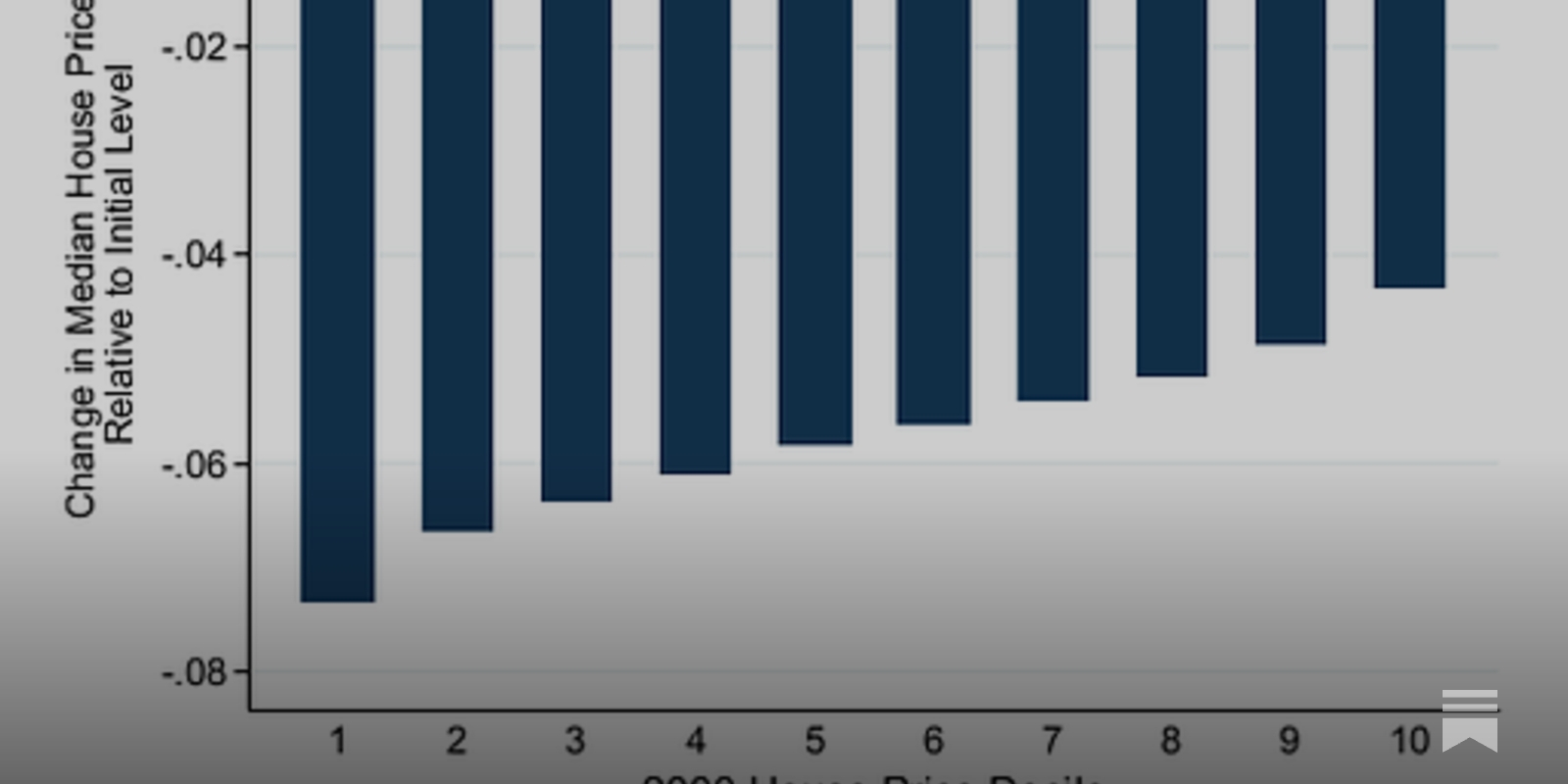
Housing ladder spillovers
Rich newcomers can raise low-end rents, and adding high-end homes can lower them
The case for environmentally sensitive housing
If we are serious about providing the best quality homes we must regenerate the empty built environment. Sustainability would be good too
