

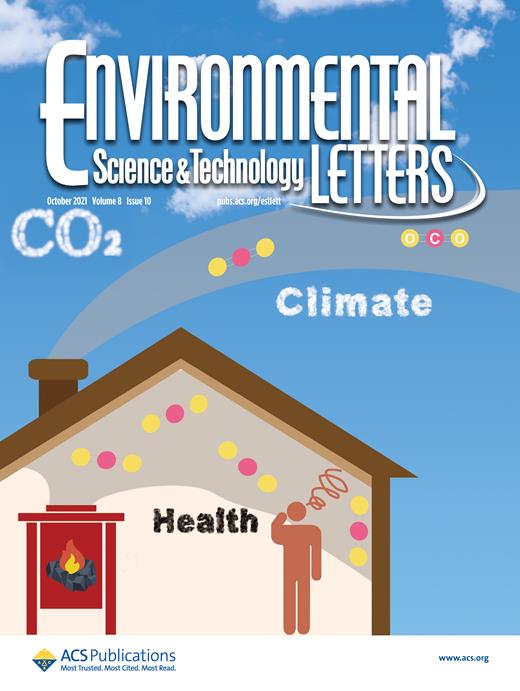
A growing body of research indicates there are potentially large health benefits to improving indoor air quality.
The story of CO2 is the story of everything: how carbon dioxide made our world
"How carbon dioxide, the world's most important substance, shaped the planet's past and present-and holds the key to our future Carbon dioxide: this seemingly simple and ubiquitous substance is fundamental to how our planet works. All life is made from CO2, and its behavior on this planet has kept Earth bizarrely habitable for hundreds of millions of years. In its workings lie both the splendor of our world and the potential for life's destruction. In short, it is the most important substance in history. But why is CO2 as essential to life on Earth as it is capable of destroying it? In The Story of CO2 Is the Story of Everything, award-winning science journalist Peter Brannen reveals carbon dioxide's fundamental role in the operation and maintenance of our planet. Starting at the beginning of time and working all the way up to our present reality, he illuminates how CO2 has been responsible for the planet's many deaths and rebirths, the evolution of life, and the development of modern human society. Carbon dioxide's movement through rocks, air, oceans, and life has kept our planet's climate livable, its air breathable, and its oceans hospitable to complex life for more than five hundred million years. And only by understanding CO2 in the context of deep Earth history can we see how it gave rise to today's industrial economy-and more clearly recognize what it means to be churning through hundreds of millions of years of old life in the form of fossil fuels and converting it all to carbon dioxide. With groundbreaking research and a clear-eyed perspective, Brannen shows how a deep exploration into the mechanics of the carbon cycle and the history of our planet can provide hope for averting environmental catastrophe in the future. It all starts with a richer understanding of the essential role of one substance"--

Sasha Luccioni, PhD 🦋🌎✨🤗 on Twitter / X
Man, this preprint is really the gift that keeps on giving.In case people missed my previous PSA : you can't compare the carbon emissions of people and objects. Humans are more than just the work that they do. (Also, that paper makes a lot of false assumptions in general) https://t.co/bZA414J9YI— Sasha Luccioni, PhD 🦋🌎✨🤗 (@SashaMTL) September 19, 2023
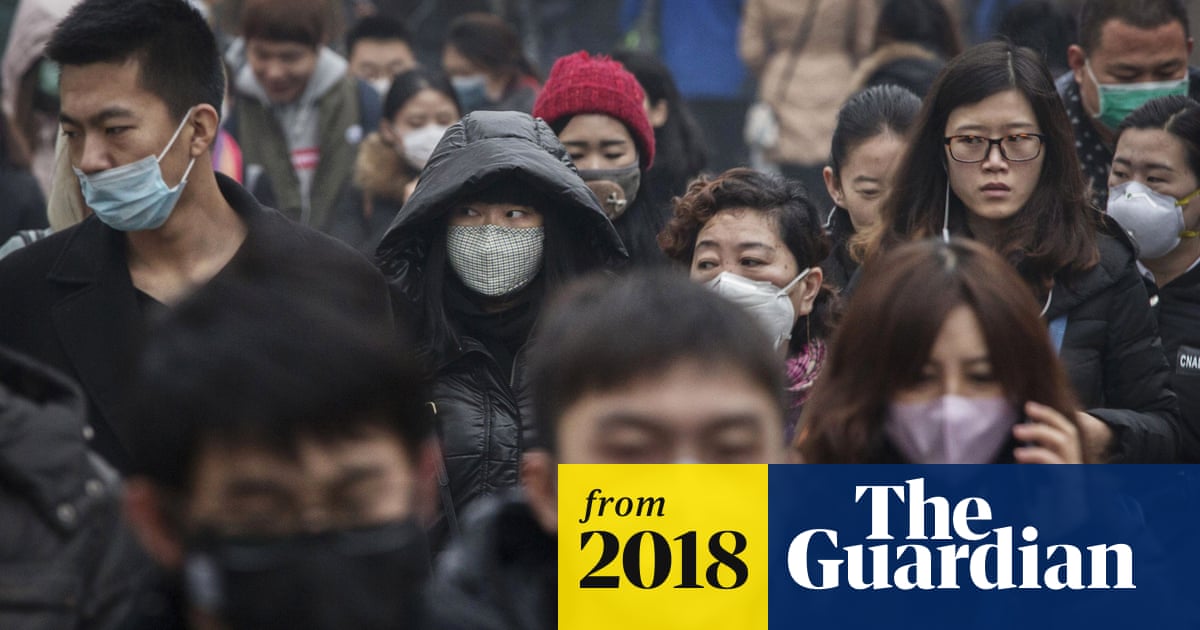
Air pollution causes ‘huge’ reduction in intelligence, study reveals
Impact of high levels of toxic air ‘is equivalent to having lost a year of education’
AI boom has caused same CO2 emissions in 2025 as New York City, report claims
Study author says tech companies are reaping benefits of artificial intelligence age but society is left to pay cost

AI’s energy usage is less than previously thought | Waterloo News
Contrary to popular belief, new research finds that the use of artificial intelligence has a minimal effect on global greenhouse gas emissions and may actually benefit the environment and the
The Air That We Breathe: Neutral and Volatile PFAS in Indoor Air
Abstract. Sources of exposure to per- and polyfluorinated alkyl substances (PFAS) include food, water, and, given that humans spend typically 90% of their
BBC Earth | Environment, Climate Change, AI, Food, Health, Social, & Technology
As we face the world’s greatest environmental challenges, BBC Earth brings you solutions in psychology, food, climate change, health, social trends, and technology that can make the world a more sustainable place.
BBC Earth | Environment, Climate Change, AI, Food, Health, Social, & Technology
As we face the world’s greatest environmental challenges, BBC Earth brings you solutions in psychology, food, climate change, health, social trends, and technology that can make the world a more sustainable place.
BBC Earth | Environment, Climate Change, AI, Food, Health, Social, & Technology
As we face the world’s greatest environmental challenges, BBC Earth brings you solutions in psychology, food, climate change, health, social trends, and technology that can make the world a more sustainable place.
The Misunderstood History of CO2: The Science Behind Earth's Most Controversial Molecule with Peter Brannen
Carbon Removal Technologies | YC Request for Startups
Climate change presents an existential threat to humanity. We are already seeing the effects and they are showing up faster and stronger than anticipated. A report by United Nations' scientific panel on climate change released this month expects the atmosphere-on our current trajectory-to warm up by 1.5 degrees Celsius by 2040. Even the effects of a 0.5 degrees increase will have far-reaching consequences. This research indicates that we are already past the tipping point; even if we significantly reduced emissions, climate change would continue (Source IPCC summary C3 section). We believe there's still time to make a change if we look both to renewal energy and CO2 removal.

i'm starting a diary on atmospheric login as a way to explore the topic in some depth. our login experience is how everyday folks will form their understanding of what the atmosphere even is—and the design space is super rich. the web may also have some tricks up its sleeve for us...

Atmospheric Login Diary 1: On the Button - the divy zone
divyzone.pckt.blogOur community has gathered around the concept of Atmosphere. There’s work to do in explaining, culture building, and the concrete task of rallying around a brand / logo, especially around login.

Boris
For anyone that has come to a meetup, event, or conference - it’s not faceless. As a community, our goal is to imbue the Atmosphere with feelings and alignment. Designing a logo and brand that grows to mean that is something we need to do together. No one company can carry our flag.


