

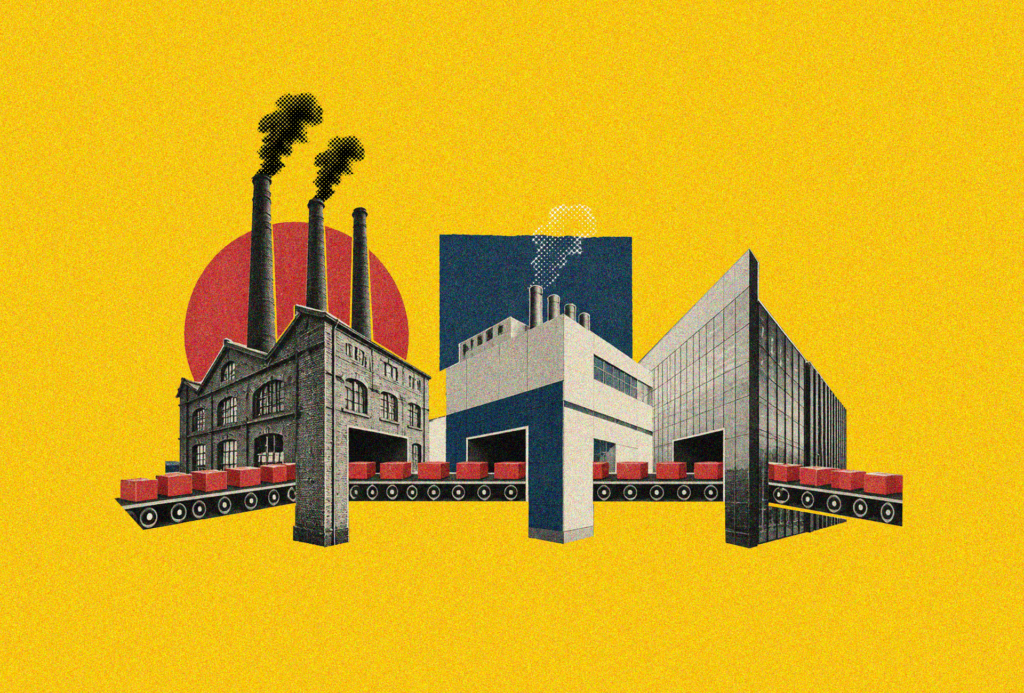
Karl Marx développa sa critique du capitalisme en étudiant les « sombres filatures sataniques »[1] d’Angleterre. Mais comme le montre ici David Harvey, Marx comprenait le capitalisme comme système global, générateur de polarisation et d’inégalités à l’échelle de la planète. L'eurocentrisme qui lui est souvent reproché de nos jours ne fait que suivre ce mouvement d’expansion mondiale du capital à partir de son foyer originel européen. S’il vivait aujourd’hui, il encouragerait les socialistes à s’intéresser autant à la Silicon Valley qu’à Shenzhen.
Mercantilisme et capitalisme de la finitude : aux origines de l’Empire Trump | Le Grand Continent
Les seigneurs de la Silicon Valley s'installent dans l'État américain : un nouveau pouvoir disrupte le libéralisme et la démocratie. Vivons-nous un moment inédit ? Il y a quatre cents ans, une start-up de la City – la Compagnie des Indes – se lançait déjà dans une entreprise de conquête mondiale similaire. Pour expliquer Trump et Musk, Arnaud Orain renoue avec les fils de cette histoire, en forgeant un concept : le capitalisme de la finitude.
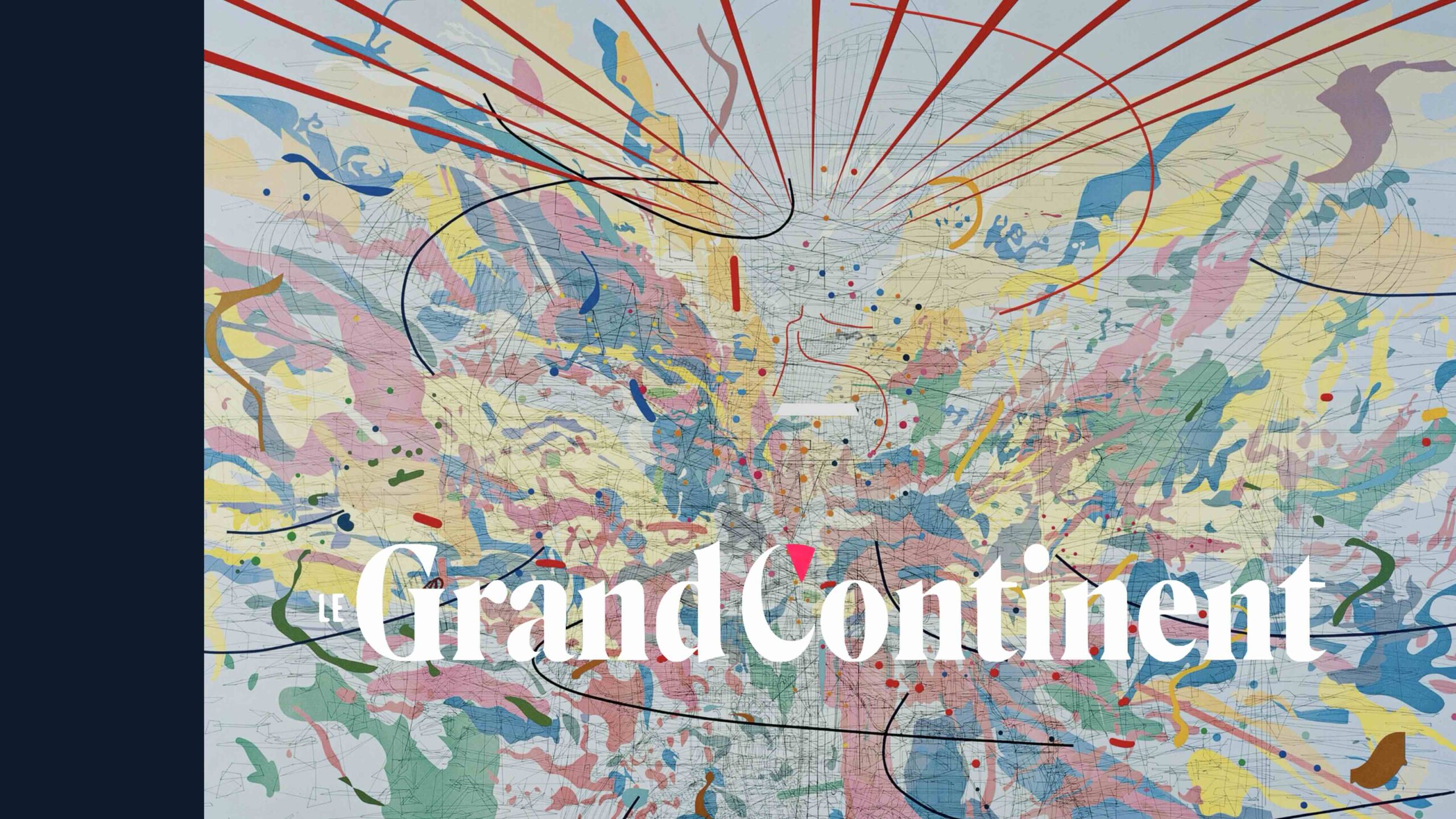
Chine, superpuissance tech et économique : quand le marxisme devient chinois et change le monde
Pour Branko Milanovic, l'économiste serbo-américain spécialiste de l'inégalité au niveau mondial, un marxisme sinisé, construit sur le succès économique et technologique de la Chine, exercera à l'avenir son influence sur l’Occident et d’autres parties du monde.
Capitalisme mondial : le taux de profit a-t-il baissé au cours des dernières décennies ? - Contretemps
La loi de la baisse tendancielle du taux de profit a constitué l’un des points fortement discutés des réflexions de Marx sur la dynamique du capitalisme. Dans la mesure où le capitalisme s’est étendu à l’ensemble des régions du globe, l’échelle mondiale est la plus pertinente pour la tester empiriquement. L’économiste Michael Roberts passe en revue les dernières estimations du taux de profit mondial et conclut que celui-ci tend effectivement à baisser depuis le milieu du 20e siècle.

Le nouveau capitalisme (1/3)
Traduction de "New capitalism in America. Richest capitalists and richest workers are increasingly the same people" de Branko Milanovic

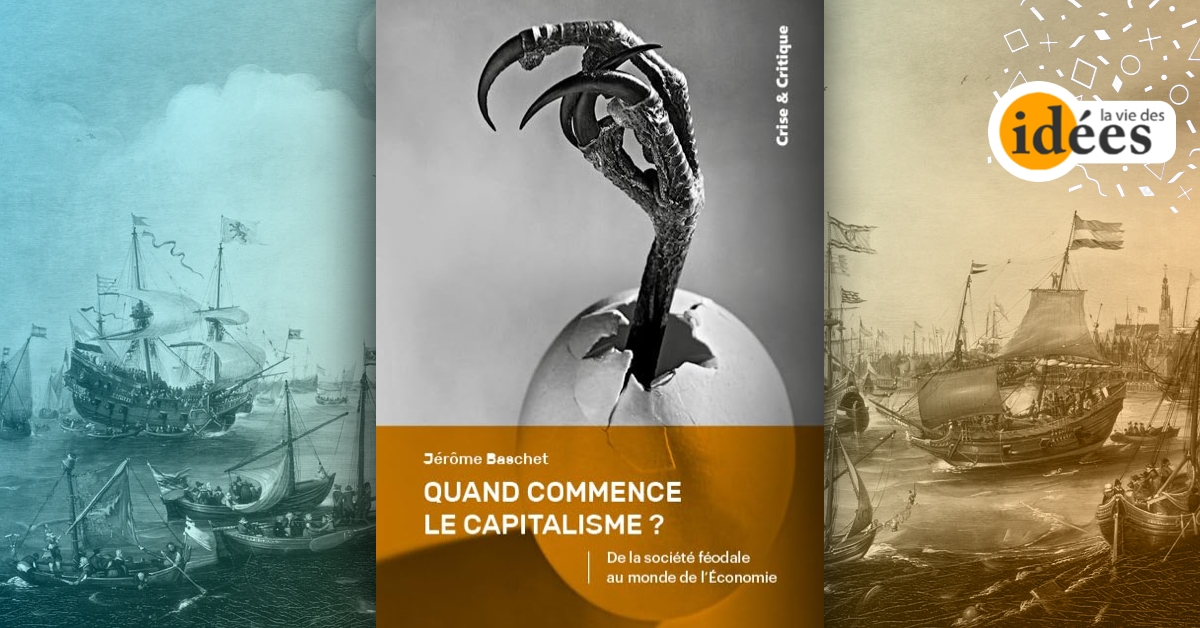
Le grand basculement capitaliste
À propos de : Jérôme Baschet, Quand commence le capitalisme ? De la société féodale au monde de l'économie, Crise et critique
Marx et l’histoire de la nature
À propos de : Frédéric Monferrand, La nature du capital. Politique et ontologie chez le jeune Marx, Éditions Amsterdam
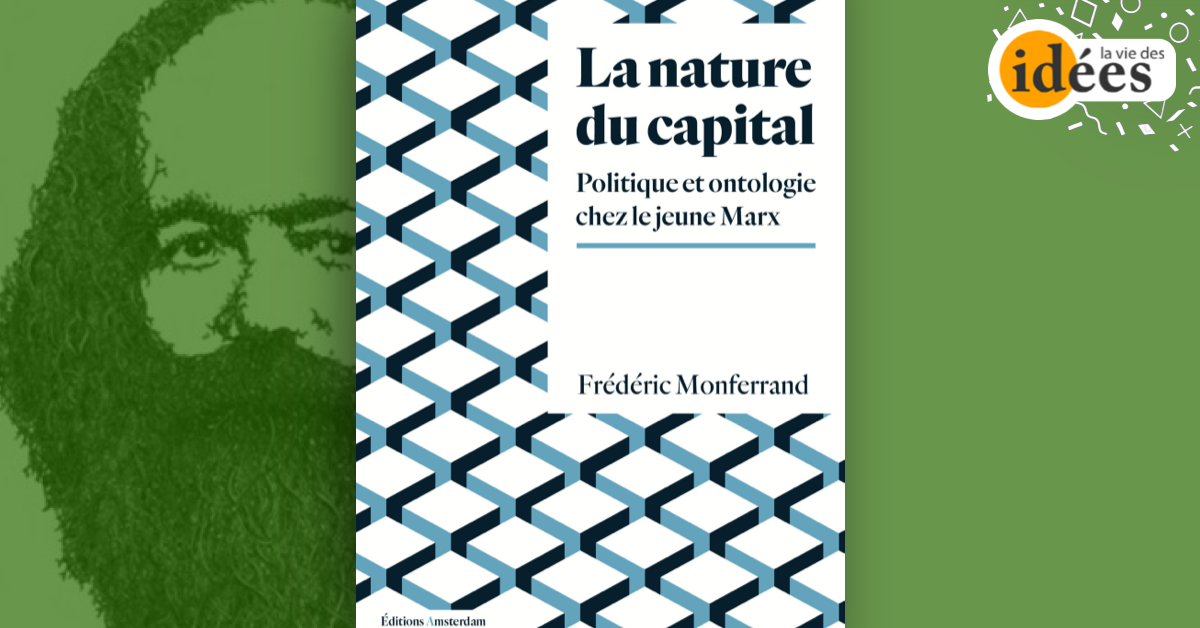
Le capitalisme d’enclaves et la fin de la démocratie
À propos de : Quinn Slobodian, Crack-Up Capitalism. Market Radicals and the Dream of a World Without Democracy, Metropolitan Books
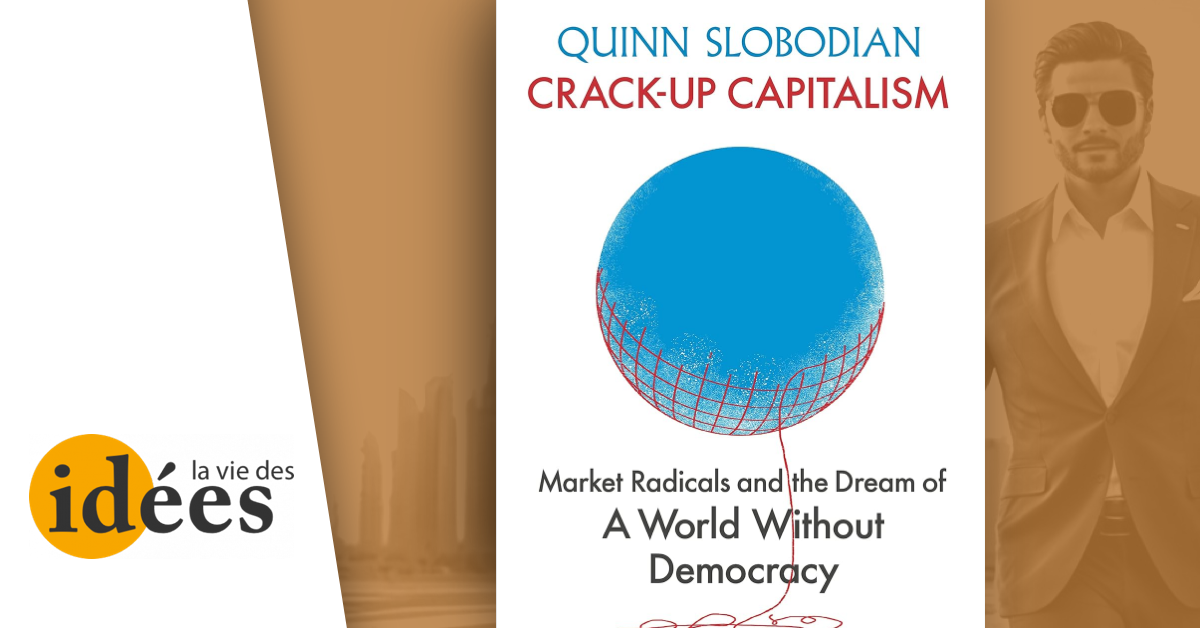
Le nouveau capitalisme (2/3) : inégalités compositionnelles versus inégalités de revenu
Traduction de "New capitalism II: Compositional vs income inequality. Are all class-based societies unequal?" de Branko Milanovic

annotations: Un bref essai sur les différences entre Marx et Keynes
Traduction française de "A short essay on the differences between Marx and Keynes" de Branko Milanovic
Les origines néolibérales de la mondialisation : retour sur l’émergence d’un ordre géopolitique aujourd’hui menacé
Le néolibéralisme est progressivement parvenu à redéfinir l’ordre mondial lors du siècle dernier. Ses principes sont aujourd’hui remis en cause aussi bien aux États-Unis que par de nombreuses voix en Europe et ailleurs dans le monde.
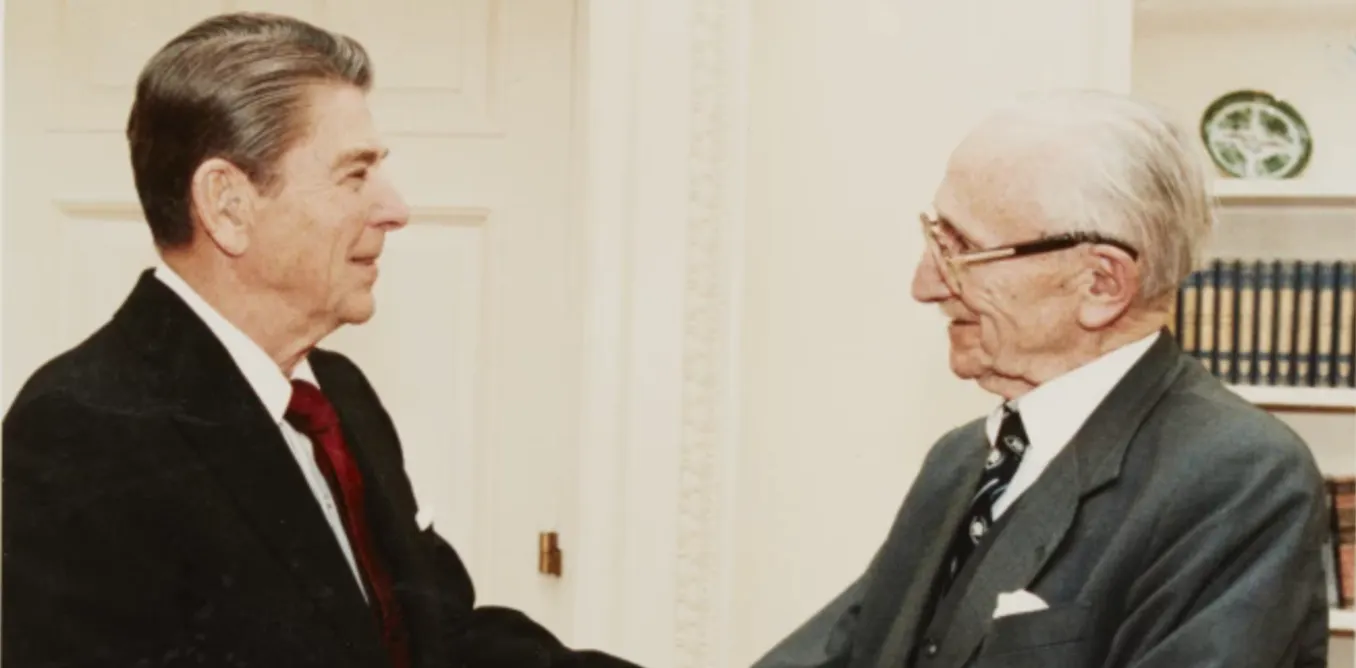
Le mythe du marché
RésuméBeaucoup prétendent que l’efficacité des marchés dépend de l’absence d’intervention étatique. Deux exemples fameux de transformation des marchés sont ici considérés dans le cadre des États-Unis : l’émergence de la « valeur actionnaire » comme conception du contrôle des entreprises et la création de la Silicon Valley. Il sera démontré qu’aucun de ces deux phénomènes ne peut être appréhendé hors du contexte socio-politique qui les a fait naître. Le gouvernement américain facilita le mouvement de fusions des années 1980, qui mena au développement de la « valeur actionnaire » comme conception de contrôle, en suspendant les lois antitrust et en réduisant substantiellement l’impôt sur les sociétés. Pour ce qui est de la Silicon Valley, l’État finança la recherche et la formation des ingénieurs, et se fit le principal acheteur de nombreuses innovations technologiques à l’époque de leur mise sur le marché. Il participa également à la création d’Internet et finança la recherche universitaire qui permit le développement de nombreux programmes informatiques nécessaires au fonctionnement d’Internet. Ainsi, l’État et les marchés sont intimement liés. Les entrepreneurs jouent un rôle, bien sûr, mais ils dépendent de l’État qui crée les conditions par lesquelles l’exploitation profitable d’un produit donné devient possible.
Imperialism, the Highest Stage of Capitalism
[1] Written in Zurich in January-June 1916. Lenin began to take note of new developments in capitalism long before the outbreak of the First World War. In several of his writings from 1895 to 1913—”Draft and Explanation of a Programme for the Social-Democratic Party” (1895-96); “The War in China” (1900); “The Lessons of the Crisis” (1901), “Review of Home Affairs” (1901); “Concentration of Production in Russia” (1912); “The Growth of Capitalist Wealth” (1913) “Backward Europe and Advanced Asia” (1913); “The Historical Destiny of the Doctrine of Karl Marx” (1913); “Concerning Certain Speeches by Workers’ Deputies” (1912), and others—Lenin pointed out and analysed some characteristic aspects of the imperialist epoch— the concentration of production and the growth of monopoly; the export of capital; the struggle for new markets and spheres of influence; the internationalisation of economic relations; the parasitism and decay of capitalism; the growth of contradictions between labour and capital and the sharpening of the class struggle; and the creation of the material conditions for the transition to socialism. He devoted special attention to exposing predatory colonial policy, the fight for a division and redivision of the world, and the preparation of imperialist wars of aggrandisement. In his article, “Marxism and Revisionism”, written in 1908, he came out against the attempts to revise Marxism and undermine it from inside under the pretext of amending and correcting the theory in particular, Marx’s theory of crises. Lenin wrote: ‘The forms, the sequence, the picture of particular crises changed, but crises remained an inevitable component of the capitalist system. While uniting production, the cartels and trusts at the same time and in a way that was obvious to all, aggravated the anarchy of production, the insecurity of existence of the proletariat and the oppression of capital, thereby intensifying class antagonisms to an unprecedented degree. That capitalism is heading for a breakdown—in the sense both of individual political and economic crises and of the complete collapse of the entire capitalist system— has been made particularly clear, and on a particularly large scale, precisely by the new giant trusts” (see present edition, Vol. 15, pp. 35-36). Lenin kept abreast of all the latest writings on capitalism, as will be seen from his review of Hobson’s The Evolution of Modern Capitalism. In August 1904, Lenin began a translation of Hobson’s Imperialism, the manuscript of which has not yet been found. It was on the outbreak of the First World War that Lenin undertook a comprehensive study of the monopoly stage of capitalist development This was required by the working-class revolutionary struggle in Russia and other capitalist countries. In order to provide correct leadership for the revolutionary movement and combat the ideology of imperialist reaction and the reformist policy of conciliation with imperialists, it was necessary to see one’s way in the key economic question without a study of which there was no understanding of the assessment of modern war or modern politics, namely: the economic essence of imperialism”. Lenin must have started his close study of the writings on imperialism in mid-1915, when he was in Berne, for his first indexes of literature, plans, extracts, notes and summaries date to that period. The preparatory materials for Imperialism, the Highest Stage of Capitalism (Notebooks on Imperialism) make up about 800 printed pages. They contain extracts from 148 books (including 106 in German, 23 in French, 17 in English, and 2 translations into Russian), and 232 articles (of them 206 in German, 13 in French, and 3 in English) from 49 periodicals (34 German, 7 French and 8 English). In early January 1916, Lenin accepted an order for a book on imperialism from the legal Parus Publishers, founded in Petrograd in December 1915. Lenin wrote to Maxim Gorky on December 29, 1915 (January 11, 1916): “I am getting down to the writing of a pamphlet on imperialism” (see present edition, Vol. 35). In the early part of February 1916, he left Berne for Zurich, where he continued to collect and work on materials on imperialism. He worked at the Zurich Cantonal Library and ordered books from other towns. On June 19 (July 2), 1916 Lenin wrote to M. N. Pokrovsky, who was then living in France and editing for Parus a series of pamphlets about West-European countries during the First World War: “Today, I sent you a manuscript by registered mail” (see present edition, Vol. 35). The manuscript, which was mailed with the letter, did not reach Pokrovsky, and another copy had to be sent. Besides, the publishers suggested that the finished manuscript should be shortened from eighty to fifty pages, but Lenin objected because “it is absolutely impossible to cut it down once again and squeeze it into fifty pages” (ibid.). When the book reached the publishers, Menshevik elements among the management deleted from the book parts sharply criticising Kautsky and Martov, and made corrections in the text which not only distorted Lenin’s style but also his ideas. Thus, Lenin’s terms pererastaniye (capitalism growing into imperialism) was altered to prevrashcheniye (transformation); reaktstonny kharakter (reactionary nature of the theory of ultra-imperialism) to otstaly kharakter (backward character), etc. In mid-1917, the book was published under the title Imperialism, the Latest Stage of Capitalism(A Popular Outline) with a preface by Lenin, dated April 26, 1917.
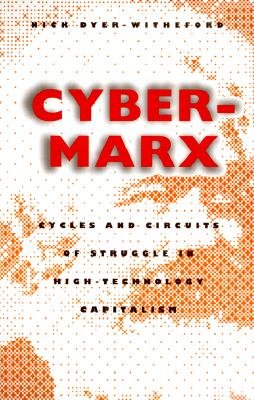
Cyber-Marx
In this highly readable and thought-provoking work, Nick Dyer-Witheford assesses the relevance of Marxism in our time and demonstrates how the information age, far from transcending the historic conflict between capital and its laboring subjects, constitutes the latest battleground in their encounter. Dyer-Witheford maps the dynamics of modern capitalism, showing how capital depends for its operations not just on exploitation in the immediate workplace, but on the continuous integration of a whole series of social sites and activities, from public health and maternity to natural resource allocation and the geographical reorganization of labor power. He also shows how these sites and activities may become focal points of subversion and insurgency, as new means of communication vital for the smooth flow of capital also permit otherwise isolated and dispersed points of resistance to connect and combine with one another. Cutting through the smokescreen of high-tech propaganda, Dyer-Witheford predicts the advent of a reinvented, "autonomist" Marxism that will rediscover the possibility of a collective, communist transformation of society. Refuting the utopian promises of the information revolution, he discloses the real potentialities for a new social order in the form of a twenty-first-century communism based on the common sharing of wealth.
Qué puede hacer la izquierda ante el capitalismo tecnológico
Los oligarcas de Silicon Valley están manipulando nuestra atención y abriendo paso en sus redes al autoritarismo populista de Trump y de la ultraderecha europea. ¿Qué se puede hacer desde el progresismo para frenar esta dictadura tecnológica y superar la dependencia de Estados Unidos?

Pourquoi une théorie de la valeur ? - Contretemps
Dans cet article, l'économiste marxiste Michel Husson rappelle pourquoi nous avons encore besoin d'une théorie de la valeur pour comprendre le système capitaliste, mais aussi pour le dépasser.
En est-ce fini du (néo)libéralisme ?
Histoire mondiale et grands enjeux de notre temps
