

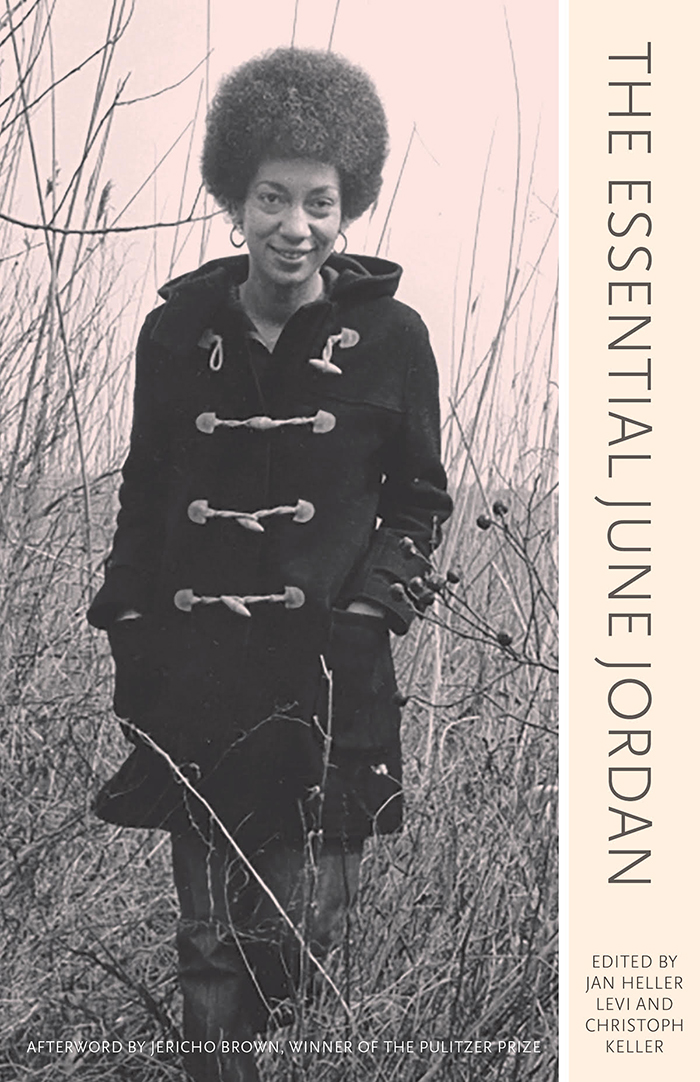
The Essential June Jordan honors the enduring legacy of a poet fiercely dedicated to building a better world. In this definitive volume, featuring an afterword by Pulitzer Prize-winner Jericho Brown, June Jordan’s generous body of poetry is distilled and curated to represent the very best of her works. Written over the span of several decades―from Some Changes in 1971 to Last Poems in 2001―Jordan’s poems are at once of their era and tragically current, with subject matter including racist police brutality, violence against women, and the opportunity for global solidarity amongst people who are marginalized or outside of the norm. In these poems of great immediacy and radical kindness, humor and embodied candor, readers will (re)discover a voice that has inspired generations of contemporary poets to write their truths. June Jordan is a powerful voice of the time-honored movement for justice, a poet for the ages.
Tradition and the Individual Talent
Poems, readings, poetry news and the entire 110-year archive of POETRY magazine.

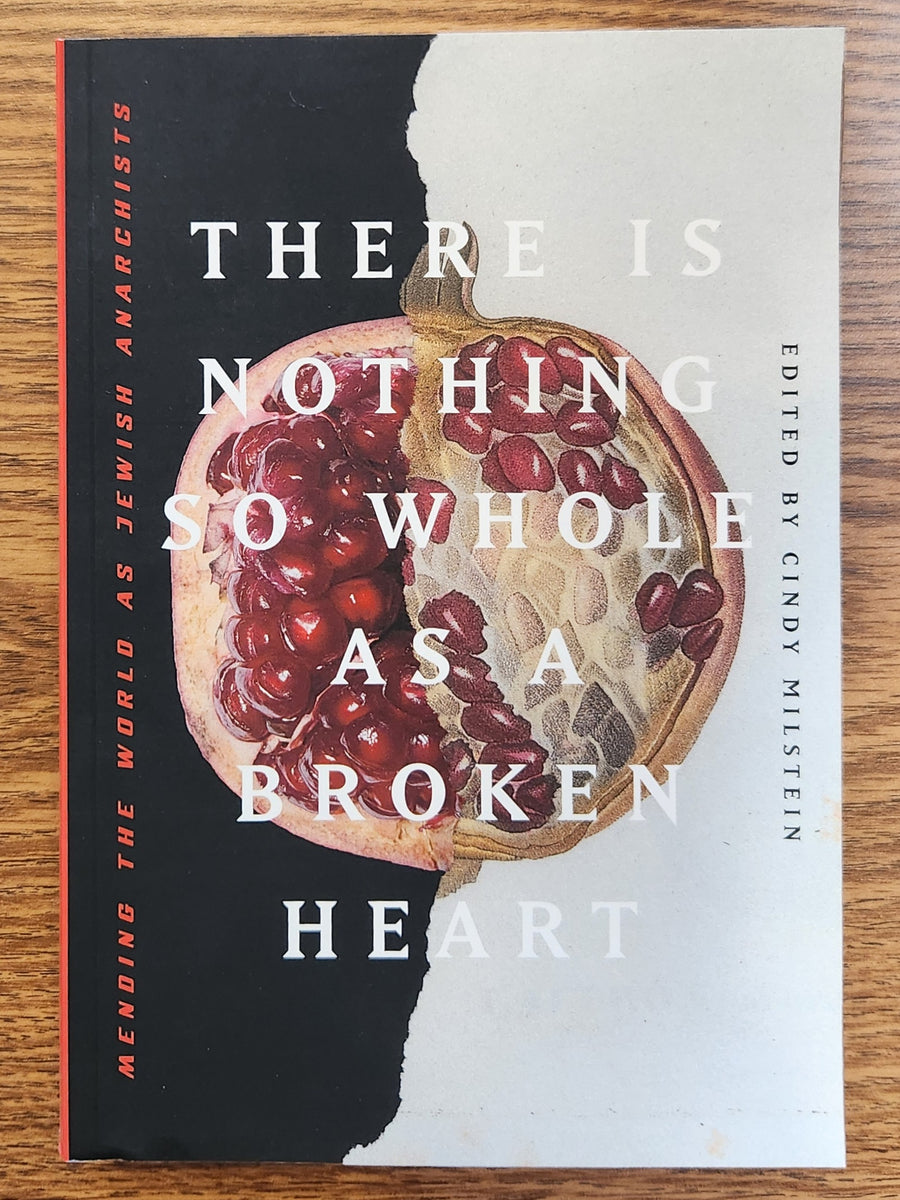
There Is Nothing So Whole as a Broken Heart
By Cindy Milstein Published by AK Press, 2021 392 pages, paperback The contemporary renewal of Jewish anarchism draws on a history of enslavement, displacement, white supremacy, and genocide as well as ancestral resistance, strength, imagination, and humor—wisdom that is sorely needed today. Through stories at once poetic and poignant, There Is Nothing So Whole as a Broken Heart offers a powerful elixir for all who rebel against systemic violence and injustice. The contemporary renewal of Jewish anarchism draws on a history of suffering, ranging from enslavement and displacement to white nationalism and genocide. Yet it also pulls from ancestral resistance, strength, imagination, and humor—all qualities, and wisdom, sorely needed today. These essays, many written from feminist and queer perspectives, journey into past and contemporary trauma in ways that are humanizing and healing. They build bridges from bittersweet grief to rebellion and joy. And via concrete illustrations of how Jewish anarchists lovingly transform their own ritual, cultural, and political practices, they clearly illuminate the path toward mending ourselves and the world. Praise for There Is Nothing So Whole as a Broken Heart... "There Is Nothing So Whole as a Broken Heart is a breathtaking kaddish to everyone living the revolutionary vision that Jewish radicals dreamed was possible. It drives to the heart of a tradition that we must rediscover, a story that is simultaneously particular and universal: we can survive if we do it together." —Shane Burley, author of Why We Fight: Essays on Fascism, Resistance, and Surviving the Apocalypse "In this moment of resurgent fascism and authoritarianism, the foundational relationship between antisemitism and anti-Blackness is more stark and apparent than ever. The vibrancy of this collection articulates not only a foundation for solidarity in shared struggles against white supremacy but also the vast imaginaries and world-making potential in the diversity of Jewish cultural expression and radical—specifically anarchist—thought. As a Black anarchist, I could not be more grateful for the generosity, vulnerabilities, and fierce, unwavering love for humanity shared within these pages." —Zoé Samudzi, coauthor of As Black as Resistance: Finding the Conditions for Liberation “The texts collected here are striking in their literary richness and emotional openness, awakening both pain and solace, insights and further questions . . . A highly rewarding reading experience that will appeal well beyond the Jewishanarchist intersection.” —Uri Gordon, co-editor of The Routledge Handbook of Radical Politics "There Is Nothing So Whole as a Broken Heart offers an ardent new archive of Jewish anarchism. These voices expand a defiant tradition: they speak of the disruptiveness of care, the labor of grief, and the pleasures of survival. As fascism and antisemitism rise, these poets, rabbis, and organizers urgently reach for another world through this one." —AE Torres, author of Horizons Blossom, Borders Vanish: Anarchism and Yiddish Literature "This book asks how modern generations of Jewish anarchists are wrestling with rising fascism, white supremacy, and antisemitism, and lifts up the specific cultural tools we bring to the work of mending (or maybe reimagining) the ever-shattering world. Today the book is a mirror; tomorrow, a new window into the archive of Jewish anarchists throughout history." —Ezra Berkley Nepon, author of Justice, Justice Shall You Pursue: A History of New Jewish Agenda "As leftist Jewish thought and organizing today witnesses a resurgence, this collection provides an important document of its anarchist current." —Treyf Podcast “A poem and a love note, a prayer song and a protest, an attempt to mend a burning world with the best of Jewish, anarchist, and Jewish anarchist traditions.” —Dan Berger, author of Captive Nation: Black Prison Organizing in the Civil Rights Era "There is Nothing So Whole as a Broken Heart is a powerful celebration of ritual—both Jewish and anarchist."—Gabriel Moshenska for Jewish Socialist
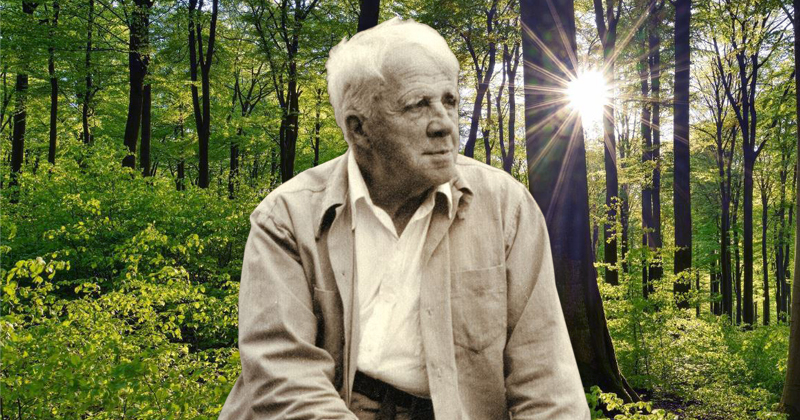
The best writing advice I’ve ever read comes from Robert Frost.
I write prose, not poetry, but the most helpful piece of advice I’ve ever read was written by a poet: Robert Frost, who was born 147 years ago today. In the second, expanded edition of his Co…
Poetry Lover — Oakland Public Library
Poetry Lover — Soto, Gary — Twenty years ago, when Silver Mendez was the youthful author of two published books of poetry, he bragged that he was the first Chicano to write in complete sentences. His career has been going steadily downhill ever since. But a letter from Spain may change his luck. Silver is invited to Madrid to participate in a conference on Chicano literature. Now all he needs is money - for a plane ticket, a new passport, and a place to stay. And oh, yes - he needs to be able to send e-mail to Spain. Silver, a poet without a job, a home, or even a typewriter to his name, has his work cut out for him. His old friend Al Sanchez, a body and fender man who used to play drums in a rock band, is tapped out and angry because Silver never repaid Al's last loan. But even in the face of these imposing obstacles, Silver is determined not to miss this chance at the life a poet should live.
The H.D. Book by Robert Duncan | East Bay Booksellers
This magisterial work, long awaited and long the subject of passionate speculation, is an unprecedented exploration of modern poetry and poetics by one of America’s most acclaimed and influential postwar poets.
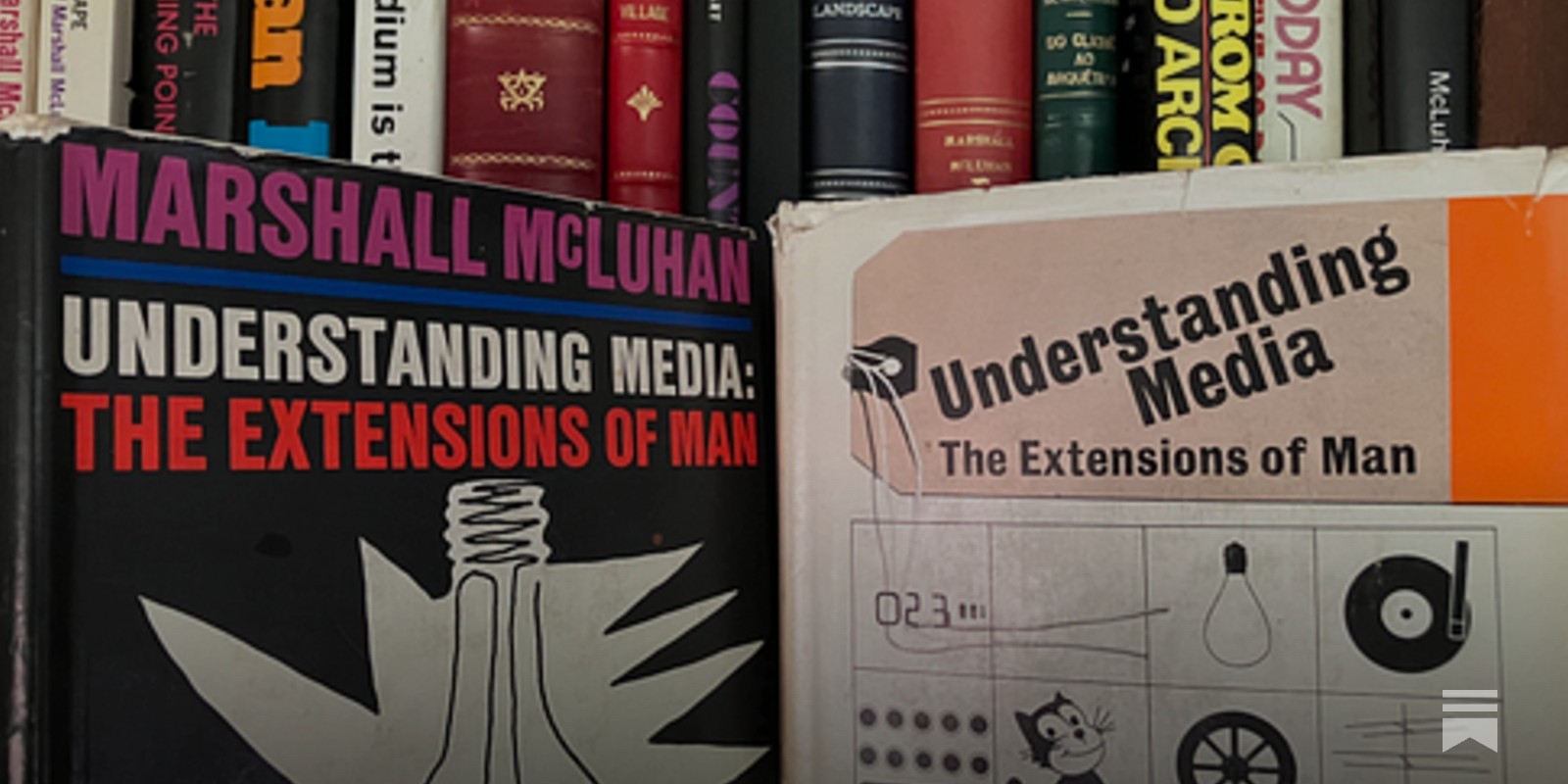
Reading, and Understanding Media
A guidebook, and poetry more than prose, Marshall McLuhan's 1964 work remains one of our best resources for exploring the nature and effects of new media. It's not an easy read, so I'm going to help.
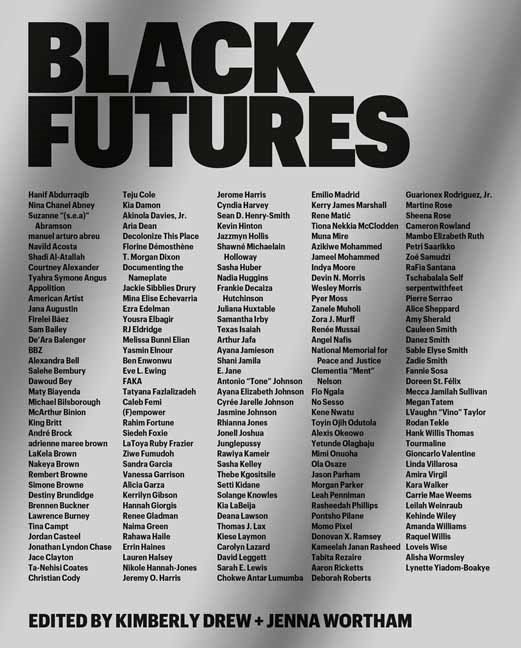
Black Futures
Check out Black Futures - <b><b>“A literary experience unlike any I’ve had in recent memory . . . a blueprint for this moment and the next, for where Black folks have been and where they might be going.”—<i>The New York Times Book Review</i> (Editors’ Choice)</b><br><br></b><i><b>What does it mean to be Black and alive right now?</b></i><br><br>Kimberly Drew and Jenna Wortham have brought together this collection of work—images, photos, essays, memes, dialogues, recipes, tweets, poetry, and more—to tell the story of the radical, imaginative, provocative, and gorgeous world that Black creators are bringing forth today. The book presents a succession of startling and beautiful pieces that generate an entrancing rhythm: Readers will go from conversations with activists and academics to memes and Instagram posts, from powerful essays to dazzling paintings and insightful infographics.<br><br> In answering the question of what it means to be Black and alive, <i>Black Futures</i> opens a prismatic vision of possibility for every reader. by Jenna Wortham and Kimberly Drew on Bookshop.org UK!
That Winter the Wolf Came — Oakland Public Library
That Winter the Wolf Came — Spahr, Juliana — <p>That Winter the Wolf Came is written for this era of global struggle. It finds its ferment at the intersection of ecological and economic catastrophe. Its feminist and celebratory energy is fueled by street protests and their shattered windows. Amid oil spills and austerity measures and shore birds and a child holding its mother’s hand and hissing teargas canisters, it reminds us exactly what we must fight to defend with a wild ferocity, and what we’re up against.</p><br /><p>"In her poems, love does not resist the world beyond; love lets it in. Politics demands feeling rather than denuding it." —<i>Los Angeles Review of Books</i></p><p>"Geography, economics, ecology, hydrology, local and international history; repetition, flat limited diction, lengthy chant; intersections of incompatible discourses, such as a field biologist’s checklist plus memoir, medical record plus ode, incantation plus site report: Spahr draws on these resources and procedures to make poems that feel like bizarre, careful essays, and essays that feel like sad, extended poems." —<i>The Nation</i></p><p>"...a work of crisp wit, bizarre conjunctions and ultimately enduring moral authority." —<i>Publisher’s Weekly</i></p><br /><br />Excerpt:<br /><br /> It was Non-Revolution. Or it was me. Or it was Non-Revolution and me. I was unsure what it really was. Maybe it was my thoughts. My thoughts at one minute about Non-Revolution. About the smell of Non-Revolution. Sweat, urine, sage, pot, rotting food, hay, all mixed together. Perhaps about Non-Revolution’s body. I am sure I am not the only one who has thought it exceptional, but I am also just as sure that by the standards of bodies, Non-Revolution’s is fine but not exceptional. That is the point. That is why Non-Revolution is called Non-Revolution, why they have revolution as a possibility in their name but it is a modified and thus negated possibility so as to suggest they are possibly neither good nor fucked. Still something about Non-Revolution’s smell and body had gotten into me.<br /><br/>Renewed poetry of struggle at the intersection of ecological and economic catastrophe—feminist, ferocious, and finally celebratory.<br />
Take Your Place: Rhetorical Healing and Black Womanhood in Tyler Perry’s Films
The unparalleled commercial sucessess that gospel-playwright-turned-screenwriter Tyler Perry has attained through converting his stage plays into films that depict black women overcoming personal crises raises questions about the intent behind his seemingly feminist-inspired representations of black womanhood. Through an analysis of the rhetoric of healing in Perry’s first two films, this essay reveals one of the suppressive pedagogical functions of Perry’s representation of black womanhood. Rhetorics of healing are a series of persuasive messages, performances, and literacy acts that writers deploy in order to convince readers that redressing or preventing crises requires them to follow the curriculum for ideological, communicative, and behavioral transformation that the writer considers essential to wellness. In Diary of a Mad Black Woman and Madea’s Family Reunion, Perry’s representation of rhetorical healing constructs black Christian women as students who must learn prescribed attitudes and behaviors to achieve, or remain in, states of wellness, and these lessons reinforce conservative gender ideologies and reify patriarchal constructions of the family and home. Given black women’s historically tenuous relationships with representations of themselves and their families in mainstream film, and given the ways in which their labor in the home is simultaneously desired and exploited, the popularity of Perry’s films does not suggest that his representations of healing foster black women’s self-empowerment. Rather, his popularity points to a moment where black women’s pain is a commodity and their instructive journeys to wellness are an exploited site where writers can carry out their own agendas.

Melissa Lozada-Oliva - Like Totally Whatever
'It's Hard to Know if We'll Endure': Israel's Leading Philosopher on …
archived 8 Aug 2026 00:21:44 UTC
William Blake: the scourge of the tyrants
Discover and share books you love on Goodreads.

NaPoWriMo
Well, we did it again, everybody! Another April — and another National/Global Poetry Writing Month — have come and gone.
Alexis King’s Blog
This is a blog post I have been considering writing for a long time.
Might I recommend this poem by Melissa Lozada-Oliva, which is a response to this sort of comment

Melissa Lozada-Oliva - Like Totally Whatever
youtu.be