


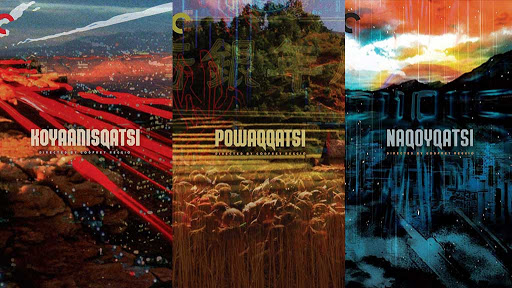
Godfrey Reggio takes on the digital revolution in the final chapter of his Qatsi Trilogy. Through a variety of cinematic techniques, including slow motion, time-lapse, computer- generated imagery, and found footage, the film tells of a world that has completed the transition from the natural to the artificial. Globalization has been accomplished, all of our interactions are technologically mediated, and all images are manipulated. From this (virtual) reality, Reggio sculpts a frenetic yet ruminative portrait of an era in which the cacophony of “communication” has rendered humankind effectively postlanguage.
The Qatsi Trilogy
A singular artist and activist, Godfrey Reggio is best known for the galvanizing films of The Qatsi Trilogy. Astonishingly photographed, and featuring unforgettable, cascading scores by Philip Glass, these are immersive sensory experiences that meditate on the havoc humankind’s obsession with technological advancement has wreaked on our world. From 1983’s Koyaanisqatsi to 1988’s Powaqqatsi to 2002’s Naqoyqatsi, Reggio takes us on a journey from the ancient to the contemporary, from nature to industry, exploring life out of balance, in transformation, and as war, all the while keeping our eyes wide with wonder.

Cultural Computing with Context-Aware Application: ZENetic Computer
We offer Cultural Computing as a method for cultural translation that uses scientific methods to represent the essential aspects of culture. Including images that heretofore have not been the focus of computing, such as images of Eastern thought and Buddhism, and the Sansui paintings, poetry and kimono that evoke these images, we projected the style of communication developed by Zen schools over hundreds of years into a world for the user to explore – an exotic Eastern Sansui world. Through encounters with Zen Koans and haiku poetry, the user is constantly and sharply forced to confirm the whereabouts of his or her self-consciousness. However, there is no "right answer" to be found anywhere.

Interface Aesthetics: An Introduction
Rhizome champions born-digital art and culture through commissions, exhibitions, scholarship, and digital preservation.

Technopoly: The Surrender of Culture to Technology
A witty, often terrifying that chronicles our transform…

Amelie Lens | Adscendo, a Digital Introduction
Escaping the Calculating Machine
Rhizome champions born-digital art and culture through commissions, exhibitions, scholarship, and digital preservation.

Life out Balance: the QATSI trilogy.
The Qatsi trilogy: The Qatsi trilogy is the informal name given to a series of non-narrative films produced by Godfrey Reggio and scored by Philip Glass: Koyaanisqatsi: Life Out of Balance (1982) P…
Resonite
A novel digital universe with infinite possibilities. Whether you resonate with people around the world in a casual conversation, playing games and socializing. Or you riff off each other when creating anything from art to programming complex games, you'll find your place here.
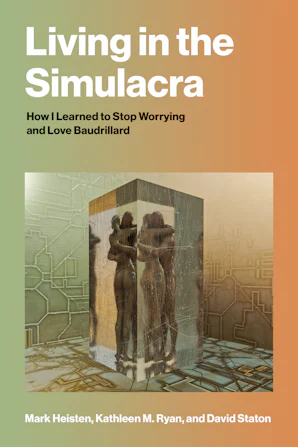
Living in the Simulacra
Despite a twenty-first-century plethora of images and our collective understanding that digital tools may alter the truth, human beings have a strong belief ...
Clarkesworld Magazine - Science Fiction & Fantasy
The Animator and the Glazer by Ju Chu, translated by S. Qiouyi Lu

Interface Realisms: The Interface as Aesthetic Form
Until now, digital arts have largely been understood to belong in traditional genres or forms of art: we are said to have electronic literature, net.art, or electronic, techno music. Sometimes interesting discussions have arisen concerning the very ontology of digital art, and questions such as whether net.art should be seen within the tradition of the visual arts or as a form of literature connecting it to the different traditions and questions regulating these arts.[1] While it is not my intent to disconnect digital art from traditional art, or to argue for the irrelevance of the traditional forms of art, I will in the following establish the interface as an aesthetic and critical framework for digital art.
The Social Meaning of the Personal Computer: Or, Why the Personal Computer Revolution Was No Revolution
This essay presents a processual model of the personal computing movement that depicts the PC's birth within the context of complex and often contradictory social strategies, each of which used the meaning of computer technology in a distinctive way. It suggests that innovators are constrained by such processes to depict new artifacts in culturally meaningful ways, so that it is difficult for them to conceive of their technologies in radical terms. The rhetoric of "revolution" aside, innovators found it expedient to draw from the stock of meanings at hand as they created new meaning-frameworks for their artifacts. The result is that the new artifacts did not express a coherent or effective political vision and failed to have the intended social effects. This study implies that new technologies frequently reproduce existing social and meaning systems; if they do bring about social change, the changes may differ from those intended by the innovators.
The Social Meaning of the Personal Computer: Or, Why the Personal Computer Revolution Was No Revolution
This essay presents a processual model of the personal computing movement that depicts the PC's birth within the context of complex and often contradictory social strategies, each of which used the meaning of computer technology in a distinctive way. It suggests that innovators are constrained by such processes to depict new artifacts in culturally meaningful ways, so that it is difficult for them to conceive of their technologies in radical terms. The rhetoric of "revolution" aside, innovators found it expedient to draw from the stock of meanings at hand as they created new meaning-frameworks for their artifacts. The result is that the new artifacts did not express a coherent or effective political vision and failed to have the intended social effects. This study implies that new technologies frequently reproduce existing social and meaning systems; if they do bring about social change, the changes may differ from those intended by the innovators.
After Cybernetics: Treatise for Future Urbanisms — Against Catastrophe
Since 2014, Zaha Hadid Virtual Reality Group, part of Hadid Partners Architecture Firm, has had a focus on cybernetic architecture. This architecture involves what they label the ‘metaverse’. The metaverse integrates physical with digital worlds seamlessly. In industry parlance it is a world populated by what are euphemistically titled ‘cyber-physical’ assets.

my internet home
Rupert Manfredi is a software developer & product designer with an eye on how emerging tech interacts with human culture.
Amelie Lens | Tomorrowland 2022 - WE3