

There is a "top 100" of mathematical theorems on the web, which is a rather arbitrary list (and most of the theorems seem rather elementary), but still is nice to look at. On the current page I keep track of which theorems from this list have been formalized. Currently the fraction that already has been formalized seems to be
Mathematics with large language models as provers and verifiers
During 2024 and 2025 the discussion about the theorem-proving capabilities of large language models started reporting interesting success stories, mostly to do with difficult exercises (such as problems from the International Mathematical Olympiad), but also with conjectures [Feldman & Karbasi, arXiv:2509.18383v1] formulated for the purpose of verifying whether the artificial intelligence could prove it. In this paper we report a theorem proving feat achieved by ChatGPT by using a protocol involving different prover and verifier instances of the gpt-5 model working collaboratively. To make sure that the produced proofs do not suffer from hallucinations, the final proof is formally verified by the lean proof assistant, and the conformance of premises and conclusion of the lean code is verified by a human. Our methodology is by no means complete or exact. It was nonetheless able to solve five out of six 2025 IMO problems, and close about a third of the sixty-six number theory conjectures in [Cohen, Journal of Integer Sequences, 2025].

Mathematics with large language models as provers and verifiers
During 2024 and 2025 the discussion about the theorem-proving capabilities of large language models started reporting interesting success stories, mostly to do with difficult exercises (such as problems from the International Mathematical Olympiad), but also with conjectures [Feldman & Karbasi, arXiv:2509.18383v1] formulated for the purpose of verifying whether the artificial intelligence could prove it. In this paper we report a theorem proving feat achieved by ChatGPT by using a protocol involving different prover and verifier instances of the gpt-5 model working collaboratively. To make sure that the produced proofs do not suffer from hallucinations, the final proof is formally verified by the lean proof assistant, and the conformance of premises and conclusion of the lean code is verified by a human. Our methodology is by no means complete or exact. It was nonetheless able to solve five out of six 2025 IMO problems, and close about a third of the sixty-six number theory conjectures in [Cohen, Journal of Integer Sequences, 2025].
Gödel's incompleteness theorems
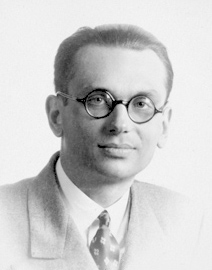
Gödel's incompleteness theorems are two theorems of mathematical logic that are concerned with the limits of provability in formal axiomatic theories. These results, published by Kurt Gödel in 1931, are important both in mathematical logic and in philosophy of mathematics. The theorems are interpreted as showing that Hilbert's program to find a complete and consistent set of axioms for all mathematics is impossible.
Formalising mathematics: an introduction.
An introduction to the TCC course “Formalising Mathematics”

. · openai/ten-proofs@d0e1ae7
Lean certificates accompanying proofs in mathematics and theoretical computer science - . · openai/ten-proofs@d0e1ae7
. · openai/ten-proofs@e9dce9a
Lean certificates accompanying proofs in mathematics and theoretical computer science - . · openai/ten-proofs@e9dce9a
fermats-last-theorem/FinalCheck.lean at aa2d8b34692b16c70f699536de0d8e75b9a3e9ef · anthropics/fermats-last-theorem
Contribute to anthropics/fermats-last-theorem development by creating an account on GitHub.
Bartosz Naskręcki on Twitter / X
Congrats to @LechMazur for the solution and to Terence Tao for the digestion and storytelling. You see the trend. Mathematicians are still needed if we want to make any sense of the formal proofs. For now... Maybe the next gen LLMs will simply read allthe blogs of Terry and… https://t.co/yXiISCrNAF— Bartosz Naskręcki (@nasqret) August 13, 2026
Formalizing the Real Numbers in Homotopy Type Theory with Cubical Agda
Real numbers in constructive mathematics have always seemed to require compromises of one form or another. Classical proofs of Cauchy completeness require countable choice, Bishop's setoid construction introduces persistent bookkeeping overhead on every definition and theorem, and Dedekind cuts force cumbersome universe-level tracking in predicative type theory. The Homotopy Type Theory (HoTT) book presents an alternative construction of the Cauchy real numbers as a higher inductive-inductive type family, avoiding all three compromises. We formalize the HoTT book reals in Cubical Agda, a proof assistant whose native support for higher inductive types allows the construction to be expressed directly. The code type-checks without postulates or holes, providing a foundation for further machine-assisted work in constructive analysis.
TheoremGraph: Bridging Formal and Informal Mathematics
Mathematical knowledge is organized around statements and their dependencies, but this structure is exposed unevenly: informal papers cite mostly at the document level, while formal libraries record fine-grained dependencies over a much smaller body of mathematics. We introduce TheoremGraph, a unified statement-level dependency graph spanning both informal and formal mathematics. On the informal side, we parse 11.7M theorem-like environments from mathematics arXiv and recover 18.3M candidate directed dependencies, each labeled by the extractor that proposed it so downstream users can trade coverage for precision. On the formal side, we release LeanGraph, a Lean 4 elaborator-level extractor producing 388,105 declaration nodes and 11.3M typed edges across 25 Lean projects. We bridge the two graphs by embedding generated natural-language slogans into a shared semantic space, linking related statements across papers and across the informal/formal divide; an LLM judge affirms 47,952 such matches above a 0.8 cosine floor, with the judge-acceptance rate rising from 48% across the floor to 87% in the >=0.9 tier. On formal concept retrieval, our name-and-signature representation with graph expansion comes within 0.5pp of LeanSearch v2's reranked Recall@10 (0.775 vs. 0.780) without an LM reranker. We release the dataset, extractors, HTTP API, and MCP interface as infrastructure for mathematical search, attribution, and retrieval-augmented reasoning, available at theoremsearch.com and huggingface.co/datasets/uw-math-ai/theorem-matching.
. · openai/ten-proofs@5a102c1
Lean certificates accompanying proofs in mathematics and theoretical computer science - . · openai/ten-proofs@5a102c1
. · openai/ten-proofs@94bc0fe
Lean certificates accompanying proofs in mathematics and theoretical computer science - . · openai/ten-proofs@94bc0fe
Theory Beyond Theorems and Proofs: A Guest Post
Scott’s foreword: I’m extremely grateful to my brilliant colleagues, Pravesh Kothari, Raghu Meka, and Prasad Raghavendra, for sharing the guest post below about how theoretical computer…

Cological Words