

From Metamagical Themas: Questing for the Essence of Mind and Pattern by Douglas R. Hofstadter, Basic Books, 1985. (Original web version: http://www.bloomington.in.us/~abangert/person.html)
Gödel, Escher, Bach: An Eternal Golden Braid
Douglas Hofstadter's book is concerned directly with th…

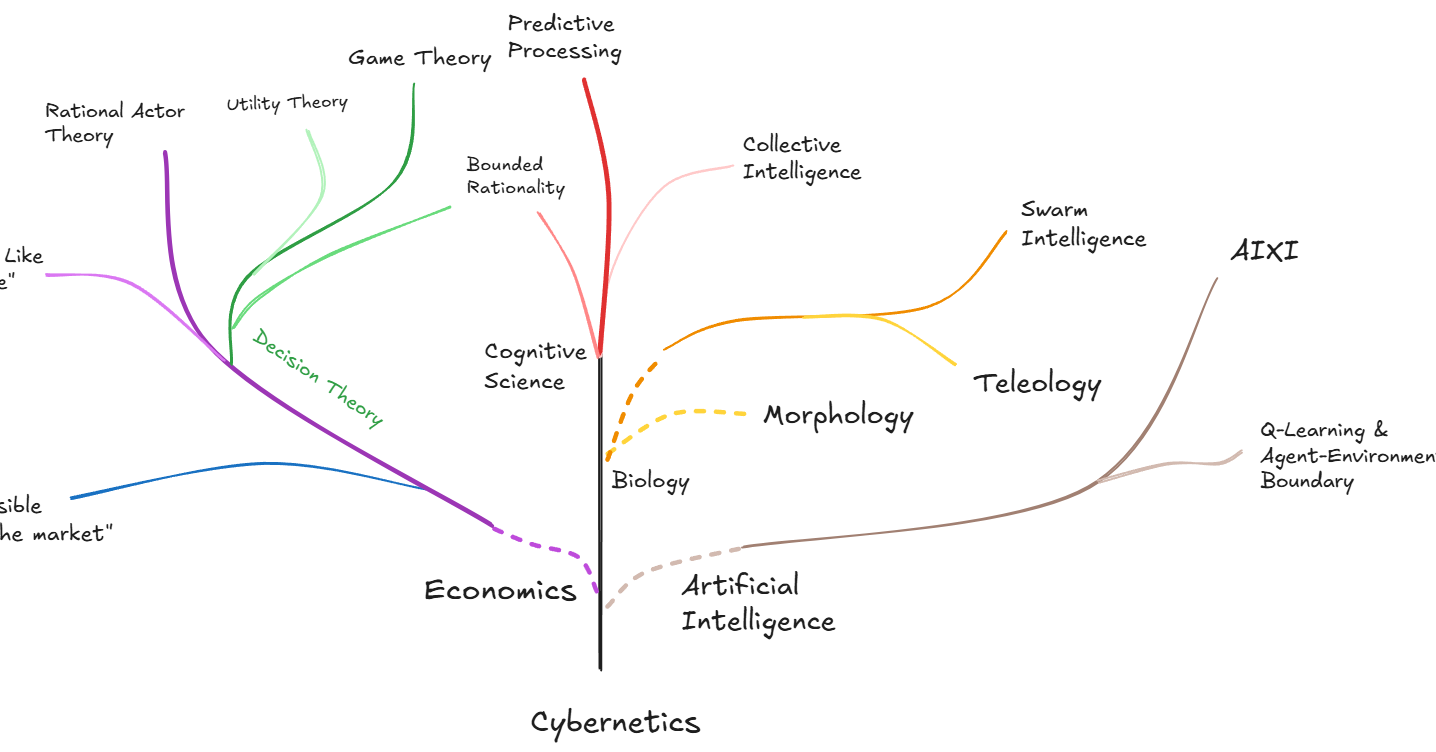
A Phylogeny of Agents — LessWrong
In Douglas Hofstadter's "Gödel, Escher, Bach," he explores how simple elements give rise to complex wholes that seem to possess entirely new properti…
MAiD, ableism, cognitive accessibility, and more
This one took a bit to write. The first piece is long (1,600+ words), and intense. But it needed to be said. I'll be interested to hear what you think. You...

Noam Chomsky - "The machine, the ghost, and the limits of understanding"
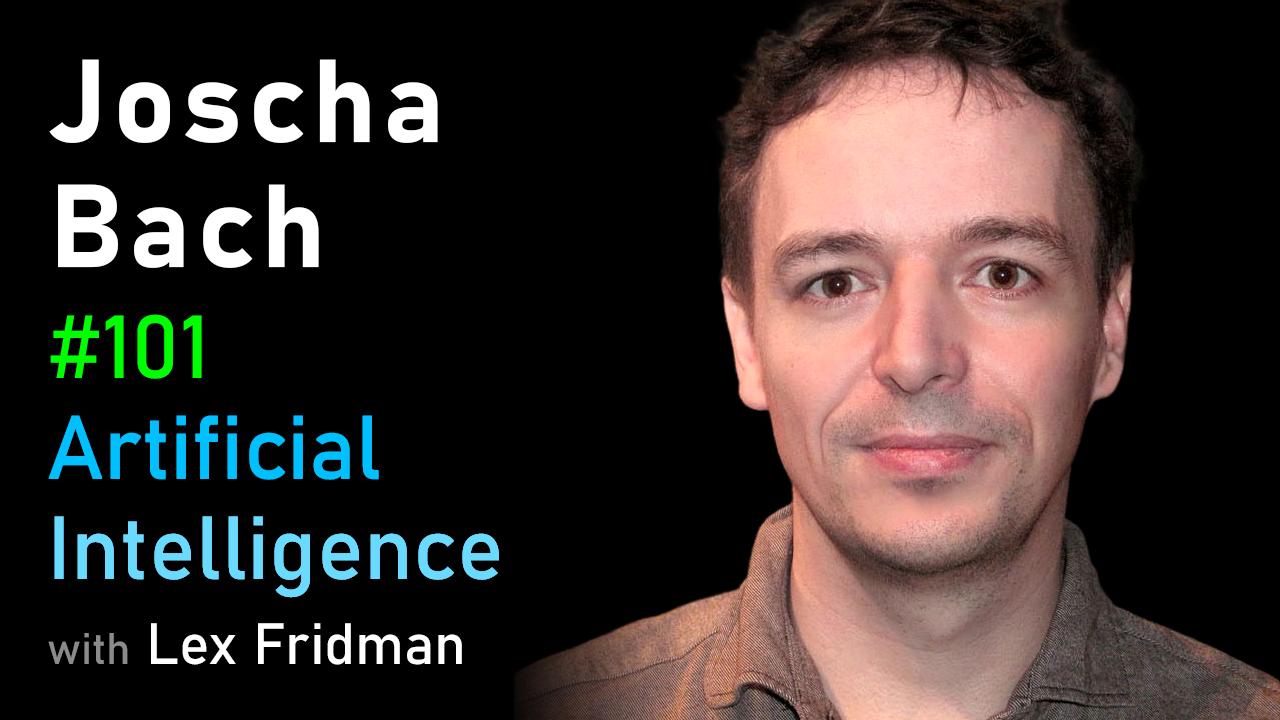
#101 - Joscha Bach: Artificial Consciousness and the Nature of Reality | Lex Fridman Podcast
Joscha Bach is the VP of Research at the AI Foundation, previously doing research at MIT and Harvard. Joscha work explores the workings of the human mind, intelligence, consciousness, life on Earth, and the possibly-simulated fabric of our universe. Support this podcast by supporting these sponsors: – ExpressVPN at https://www.expressvpn.com/lexpod – Cash App – use code “LexPodcast” and download: – Cash App (App Store): https://apple.co/2sPrUHe – Cash App (Google Play): https://bit.ly/2MlvP5w This conversation is part of the Artificial Intelligence podcast. If you would like to get more information about this podcast go to https://lexfridman.com/ai or connect with @lexfridman on Twitter, LinkedIn,
LLMs and self-referentiality
I woke up yesterday with the following thoughts, which are probably either obvious or dumb. A central thesis that many readers, including me, took from Douglas Hofstadter’s Gödel Escher Bach when y…

A Multiscale Logic of Collective Intelligence" by Donald Hoffman and Chetan Prakash
Keating — The Hyperteacher
Socratic AI that forces you to reconstruct understanding from memory. No hand-holding. No spoon-feeding. Free and open source.

The Breath of the Author
The palpable presence of someone else's mind in our best writing should give us pause about the encroachment of AI text

Ultra-Processed Minds: The End of Deep Reading and What It Costs Us
A reflection on the reading life. What formed it, what threatens it, and what remains.

Gödel, Escher, Bach: An Interesting Triad and an incredibly Complex Book
Book Review


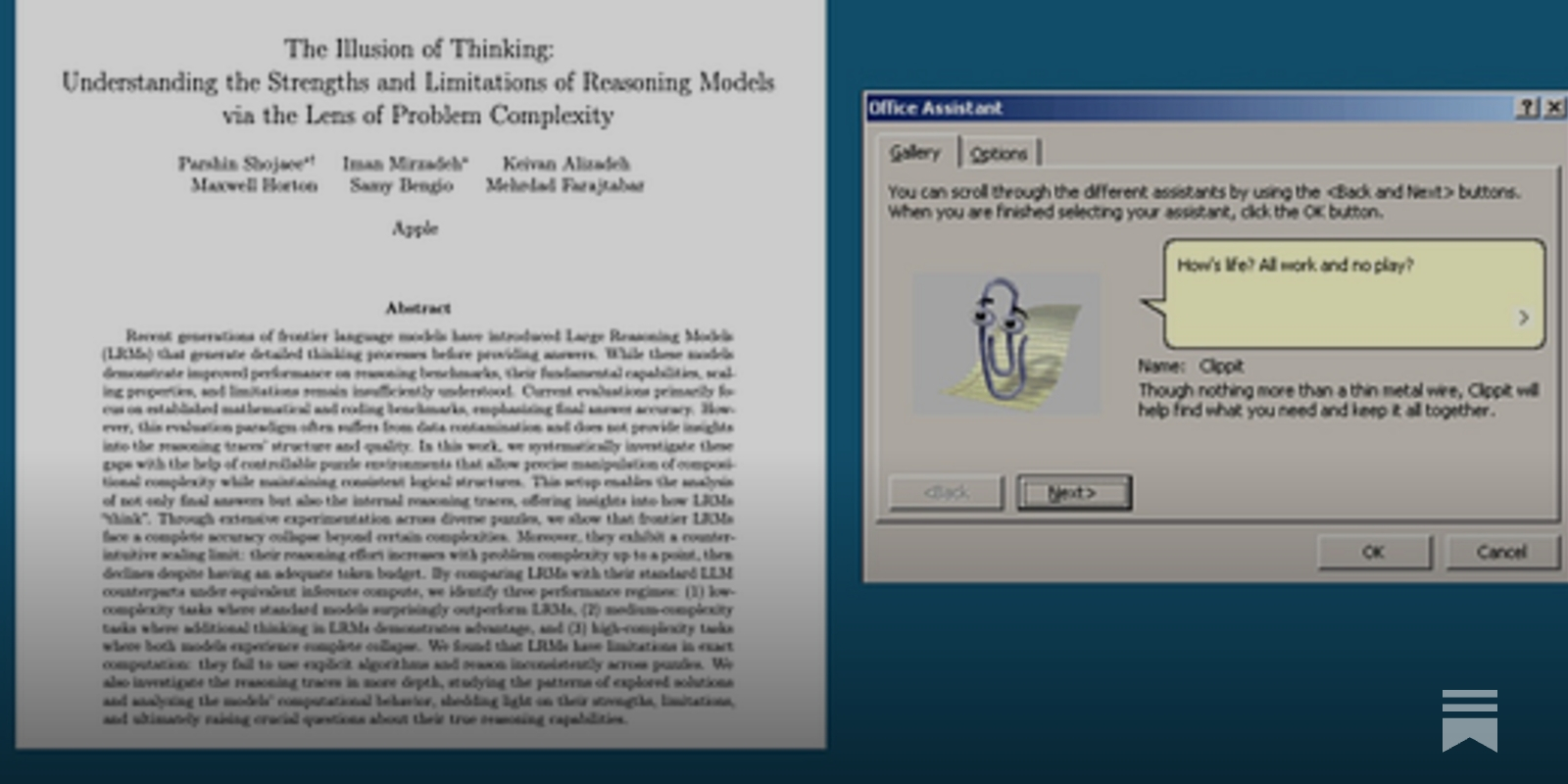
233. "The Illusion of Thinking" — Thoughts on This Important Paper
This is a fantastic paper. I just love it. tl;dr AI is not human. Anthropomorphization has been bad for AI, LLMs, and Chat. Clippy walked so today's AI could run.
Movements of the Mind: A Theory of Attention, Intention and Action
Abstract. Movements of the Mind explains what it is to be an agent. Focusing on mental agency, the book’s eponymous topic, it investigates an agent’s doing
Deconstructing the algorithmic sublime
This special theme contextualizes, examines, and ultimately works to dispel the feelings of “sublime”—of awe and terror that overrides rational thought—that much of the contemporary public discourse on algorithms encourages. Employing critical, reflexive, and ethnographic techniques, these authors show that while algorithms can take on a multiplicity of different cultural meanings, they ultimately remain closely connected to the people who define and deploy them, and the institutions and power relations in which they are embedded. Building on a conversation we began at the Algorithms in Culture conference at U.C. Berkeley in December 2016, we collectively study algorithms as culture (Seaver, this special theme), fetish (Thomas et al.), imaginary (Christin), bureaucratic logic (Caplan and boyd), method of governance (Coletta and Kitchin; Lee; Geiger), mode of inquiry (Baumer), and mode of power (Kubler). [Box: see text]

