

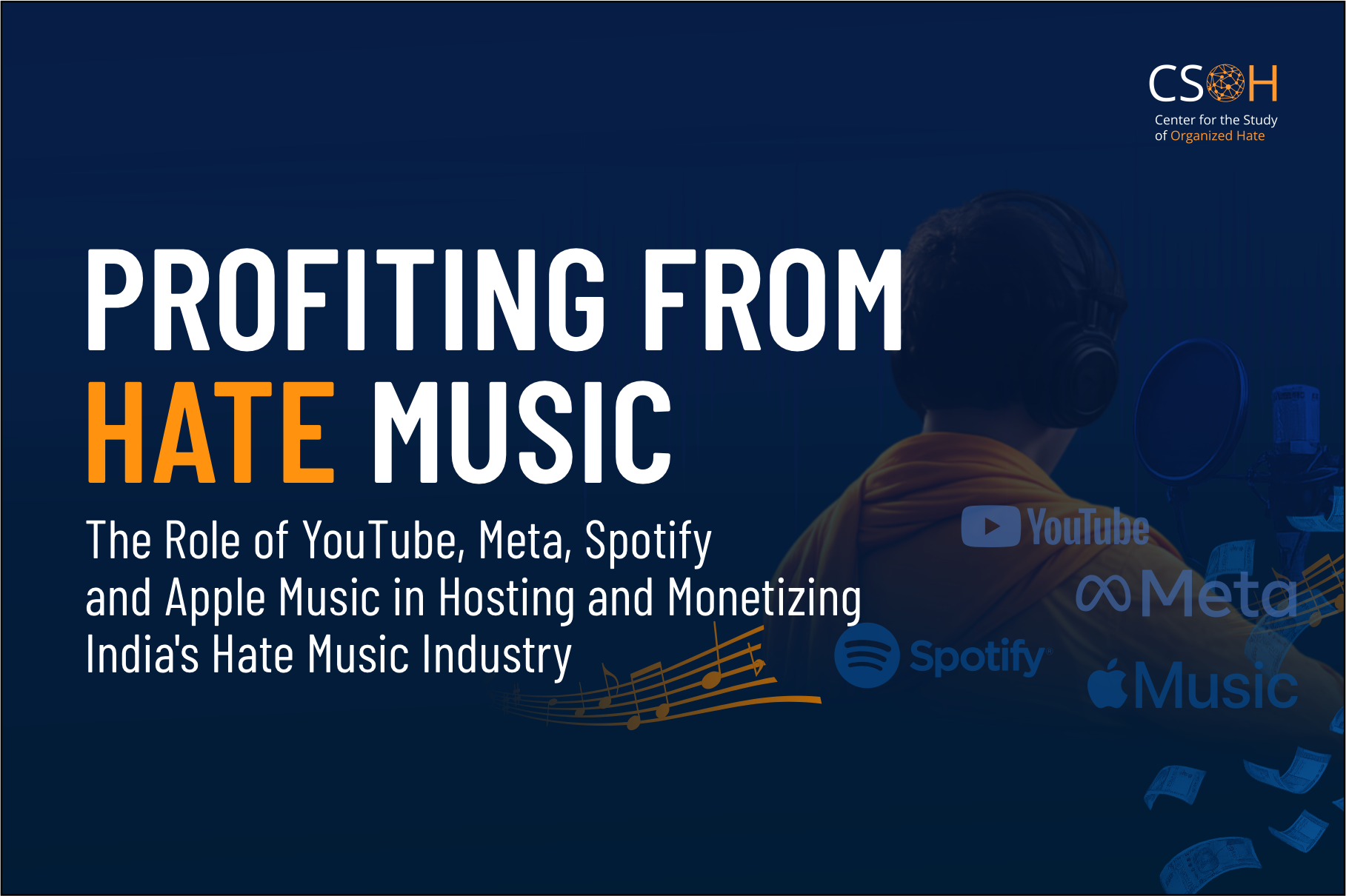
This report maps how the world's largest digital platforms and music streaming services host, amplify, monetize, and profit from a growing genre of Indian music that dehumanizes Muslims and Christians and incites violence against them.
Indiemusi.ch
The current state of social media leaves us with a lot of questions. How can we stay united as music players amidst of platform monopolies?
Soulless: List of AI Artists Hiding on Spotify
Soulless: AI music is stealing from real artists. AI music analyzer (open source).
Soulless: List of AI Artists Hiding on Spotify
Soulless: AI music is stealing from real artists. AI music analyzer (open source).
Owning media again - Kedara.eu
This year, one of my aspirations is to rely less on the big streaming services for my entertainment. Why? Well, for one thing, if we give too much power to large corporations by getting overly …

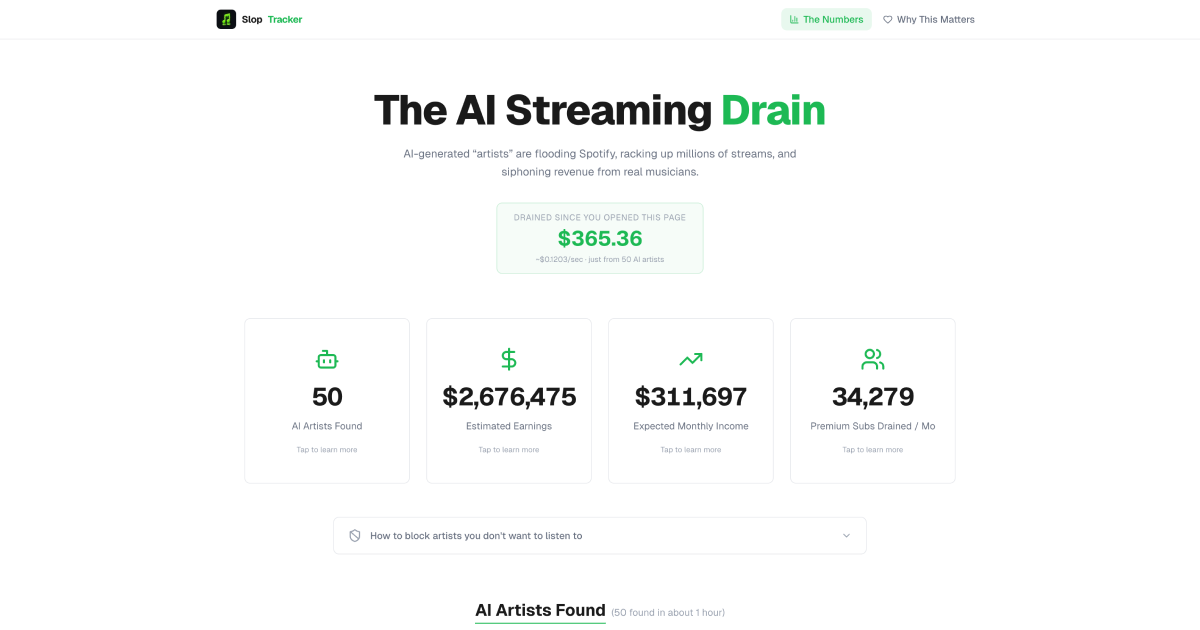
SlopTracker — Exposing AI-Generated Artists on Spotify
AI-generated artists are flooding Spotify, racking up millions of streams, and siphoning revenue from real musicians. See the receipts.
How Solarpunk Could Solve Capitalism's Major Greed Problem

Experimental Study of Inequality and Unpredictability in an Artificial Cultural Market
Hit songs, books, and movies are many times more successful than average, suggesting that “the best” alternatives are qualitatively different from “the rest”; yet experts routinely fail to predict which products will succeed. We investigated this paradox experimentally, by creating an artificial “music market” in which 14,341 participants downloaded previously unknown songs either with or without knowledge of previous participants' choices. Increasing the strength of social influence increased both inequality and unpredictability of success. Success was also only partly determined by quality: The best songs rarely did poorly, and the worst rarely did well, but any other result was possible.

Experimental Study of Inequality and Unpredictability in an Artificial Cultural Market
Hit songs, books, and movies are many times more successful than average, suggesting that “the best” alternatives are qualitatively different from “the rest”; yet experts routinely fail to predict which products will succeed. We investigated this paradox experimentally, by creating an artificial “music market” in which 14,341 participants downloaded previously unknown songs either with or without knowledge of previous participants' choices. Increasing the strength of social influence increased both inequality and unpredictability of success. Success was also only partly determined by quality: The best songs rarely did poorly, and the worst rarely did well, but any other result was possible.
Subvert - The Collectively Owned Music Marketplace
“Subvert goes beyond hopetimism with a meticulously built, actionable framework. Very exciting!”

Subvert - The Collectively Owned Music Marketplace
“Subvert goes beyond hopetimism with a meticulously built, actionable framework. Very exciting!”
Last.fm | Play music, find songs, and discover artists
The world's largest online music service. Listen online, find out more about your favourite artists, and get music recommendations, only at Last.fm

Spotify raises $1 billion in debt with devilish terms to fight Apple Music | TechCrunch
On-demand streaming music is inevitable, so Spotify is taking whatever fuel it can get to win the race against Apple. Whoever can sign up customers faster

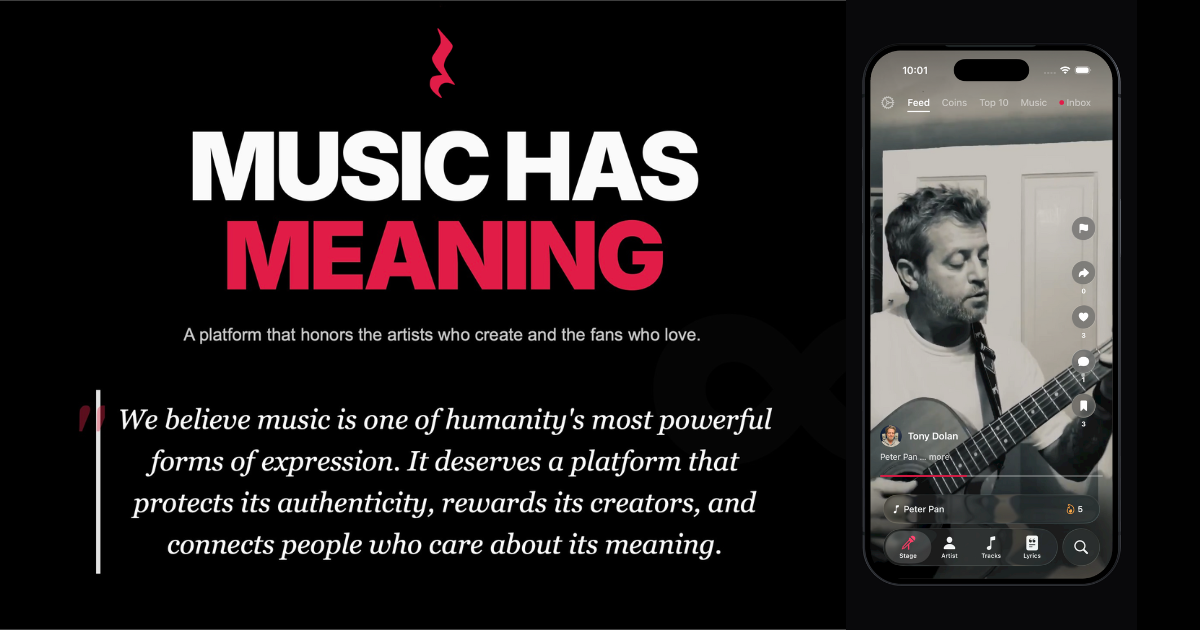
Music has Meaning
The social platform for discovering music, collecting tracks, and supporting artists directly. Only verified artists post.
Leading the Herd Astray: An Experimental Study of Self-fulfilling Prophecies in an Artificial Cultural Market
Individuals influence each others' decisions about cultural products such as songs, books, and movies; but to what extent can the perception of success become a “self-fulfilling prophecy”? We have explored this question experimentally by artificially inverting the true popularity of songs in an online “music market,” in which 12,207 participants listened to and downloaded songs by unknown bands. We found that most songs experienced self-ful- filling prophecies, in which perceived—but initially false—popularity became real over time. We also found, however, that the inversion was not self-fulfilling for the market as a whole, in part because the very best songs recovered their popularity in the long run. Moreover, the distortion of market information reduced the correlation between appeal and popularity, and led to fewer overall downloads. These results, although partial and speculative, suggest a new approach to the study of cultural markets, and indicate the potential of web-based experiments to explore the social psychological origin of other macrosocio- logical phenomena.
