CSPI's Chemical Cuisine database rates additives—used to preserve foods or affect their taste, texture, or appearance—from 'safe' to 'avoid.'
Regulatory Status of Color Additives
This database lists the status of color additives for use in foods, drugs, cosmetics, and some medical devices in the U.S. The list includes color additives permanently listed and those that once were provisionally listed, but then removed from the list (“delisted”) and are no longer permitted for use. This database will be updated periodically as amendments are made to the color additive regulations.
Dietary Habits Related to Food Packaging and Population Exposure to PFASs
Abstract Background: Per- and polyfluoroalkyl substances (PFASs) are common industrial and consumer product chemicals with widespread human exposures that have been linked to adverse health effects. PFASs are commonly detected in foods and food-contact materials (FCMs), including fast food packaging and microwave popcorn bags. Objectives: Our goal was to investigate associations between serum PFASs and consumption of restaurant food and popcorn in a representative sample of Americans. Methods: We analyzed 2003–2014 serum PFAS and dietary recall data from the National Health and Nutrition Examination Survey (NHANES). We used multivariable linear regressions to investigate relationships between consumption of fast food, restaurant food, food eaten at home, and microwave popcorn and serum levels of perfluorooctanoic acid (PFOA), perfluorononanoic acid (PFNA), perfluorodecanoic acid (PFDA), perfluorohexanesulfonic acid (PFHxS), and perfluorooctanesulfonic acid (PFOS). Results: Calories of food eaten at home in the past 24 h had significant inverse associations with serum levels of all five PFASs; these associations were stronger in women. Consumption of meals from fast food/pizza restaurants and other restaurants was generally associated with higher serum PFAS concentrations, based on 24-h and 7-d recall, with limited statistical significance. Consumption of popcorn was associated with significantly higher serum levels of PFOA, PFNA, PFDA, and PFOS, based on 24-h and 12-month recall, up to a 63% (95% CI: 34, 99) increase in PFDA among those who ate popcorn daily over the last 12 months. Conclusions: Associations between serum PFAS and popcorn consumption may be a consequence of PFAS migration from microwave popcorn bags. Inverse associations between serum PFAS and food eaten at home—primarily from grocery stores—is consistent with less contact between home-prepared food and FCMs, some of which contain PFASs. The potential for FCMs to contribute to PFAS exposure, coupled with concerns about toxicity and persistence, support the use of alternatives to PFASs in FCMs. https://doi.org/10.1289/EHP4092
ChinaCosIng - Chinese Cosmetic Ingredient Regulatory Database
‘The Dorito Effect,’ by Mark Schatzker (Published 2015)
Food producers focus on factors such as yield, at the expense of flavor.

A Feast of Poison
How would I go if I tried to convince you that most food contains poison? You might nod and agree but I am not talking about processed junk laced with manmade chemicals, but rather this is all abou…

Simple Rules for Healthy Eating (Published 2015)
There’s a lot of advice out there about what kinds of food you should be avoiding. Here’s a more positive approach.

Cosmetics - Guidance, Law & Regulations - Food and Drug Administration, Department of Health
List of Ingredients Restricted in Cosmetic Products (amended list shall become effective from 1 October 2027)
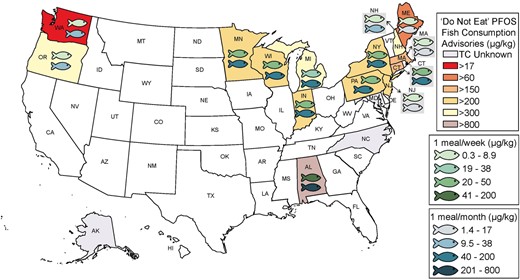
Considerations and challenges in support of science and communication of fish consumption advisories for per‐ and polyfluoroalkyl substances
Abstract. Federal, state, tribal, or local entities in the United States issue fish consumption advisories (FCAs) as guidance for safer consumption of loca
Prohibited & Restricted Ingredients in Cosmetics
Summary of cosmetic product ingredients that are prohibited or restricted by FDA regulations.
How Well Do Product Labels Indicate the Presence of PFAS in Consumer Items Used by Children and Adolescents?
Abstract. PFAS are persistent and toxic chemicals used in many commercial and industrial applications that are often added to consumer products, including
Stress Is Edible. Here's How We Can Avoid It In Our Food System | Worth
Stress hormones in our diet may be a missing link between food and wellness.

Smoked foods are tastier, less harmful with a tip from the auto industry
Infusing foods with smoke can impart delicious nuanced flavors, but could also come with an unwelcome side of carcinogens. To reduce the carcinogen content of smoked foods, researchers took a lesson from the automobile industry, running the smoke through a zeolite filter to remove harmful compounds. It worked, and with a happy bonus: superior smoke flavor.

Skin Care Ingredient Dictionary | Paula's Choice
Find everything you need to know about the benefits and safety of thousands of skin care and cosmetics ingredients in the world's most well-researched database.
Open Food Facts - world
A collaborative, free and open database of ingredients, nutrition facts and information on food products from around the world

Open Food Facts - world
A collaborative, free and open database of ingredients, nutrition facts and information on food products from around the world
Development and Evaluation of Aquatic and Terrestrial Food Web Bioaccumulation Models for Per- and Polyfluoroalkyl Substances
Abstract. There is a need for reliable models to predict the food web bioaccumulation and assess ecological and human health risks of per- and polyfluoroal