Cutting through bad arguments, distractions, and euphemisms to see murder for what it is.
Metaphor and the Political War
Metaphor and the Political War

Guide to Responsible, Strategic Reporting on Hate and Extremism
Recommendations for researchers, journalists and others on how to avoid unintentionally bolstering extremists and causing additional harm.

Homepage - J-Source
The past two years have seen a record number of media workers killed Continue Reading If killing journalists is a war crime, why isn’t anyone stopping it?

Decapitation and the End of Politics
How Targeted Killings Are Reshaping Modern Warfare

Investigating War Crimes: Interviewing Victims and Survivors
The Dart Center's Gavin Rees discusses best practices for interviewing victims and survivors of war crimes and armed conflict.

A quote by Garry Kasparov
The point of modern propaganda isn't only to misinform or push an agenda. It is to exhaust your critical thinking, to annihilate truth.

On Western Terrorism: From Hiroshima to Drone Warfare
In On Western Terrorism Noam Chomsky, world renowned dissident intellectual, discusses Western power and propaganda with filmmaker and investigative journalist Andre Vltchek. The discussion weaves together a historical narrative with the two men's personal experiences which led them to a life of activism. The discussion includes personal memories, such as the New York newsstand where Chomsky began his political education, and broadens out to look at the shifting forms of imperial control and the Western propaganda apparatus. Along the way the discussion touches on many countries of which the authors have personal experience, from Nicaragua and Cuba, to China, Chile, Turkey and many more. A blast of fresh air which blows away the cobwebs of propaganda and deception, On Western Terrorism is a powerful critique of the West's role in the world which will inspire all those who read it to think independently and critically.
Manufacturing Consent: The Political Economy of the Mass Media
A bold and eye-opening exposé on how power and propaganda distort the news, now more relevant than ever • With an updated introduction“[A] compelling indictment of the news media’s role in covering up errors and deceptions in American foreign policy.”—The New York Times Book Review Renowned scholars Edward S. Herman and Noam Chomsky reveal how U.S. news media, far from being independent watchdogs, often function as tools of elite influence. With probing analysis, they present their Propaganda Model, a framework that explains how systemic bias shapes the stories we’re told, the voices we hear, and the truths that remain hidden.Through deeply researched case studies, from the Vietnam War to coverage of “worthy” vs. “unworthy” victims, Manufacturing Consent exposes the structural forces that drive news organizations to reinforce power rather than question it. It’s a sobering portrait of a media system more interested in maintaining order than informing the public.This edition includes an introduction updating key examples and expanding the Propaganda Model’s relevance to issues like the coverage of NAFTA, the media’s treatment of global protests, and environmental regulation.Manufacturing Consent is a powerful assessment of how propagandistic the U.S. mass media are, how they systematically fail to live up to their self-image as providers of the kind of information that people need to make sense of the world, and how we can understand their function in a radically new way.Whether you’re a student, activist, or citizen looking to see beyond the headlines, this book will transform how you understand the media—and the world around you.

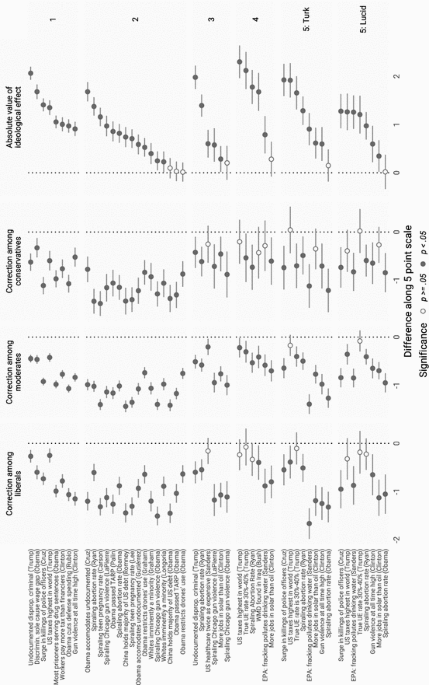
The Elusive Backfire Effect: Mass Attitudes’ Steadfast Factual Adherence
Can citizens heed factual information, even when such information challenges their partisan and ideological attachments? The “backfire effect,” described by Nyhan and Reifler (Polit Behav 32(2):303–330. https://doi.org/10.1007/s11109-010-9112-2, 2010), says no: rather than simply ignoring factual information, presenting respondents with facts can compound their ignorance. In their study, conservatives presented with factual information about the absence of Weapons of Mass Destruction in Iraq became more convinced that such weapons had been found. The present paper presents results from five experiments in which we enrolled more than 10,100 subjects and tested 52 issues of potential backfire. Across all experiments, we found no corrections capable of triggering backfire, despite testing precisely the kinds of polarized issues where backfire should be expected. Evidence of factual backfire is far more tenuous than prior research suggests. By and large, citizens heed factual information, even when such information challenges their ideological commitments.
YouTube and Facebook Are Removing Evidence of Atrocities, Jeopardizing Cases Against War Criminals
After claiming to be forces for accountability in the Arab Spring, social media these days routinely remove war crimes evidence, human rights groups say.
npj on Twitter / X
> The genocide hasn’t jolted the West into either awareness or guilt; there is only the instinct for self-preservation. It’s similar to what Karl Kraus observed about the First World War: “What is revealing is not the occurrence itself, but the numbing that supports and allows… https://t.co/Q0i4dex0Fh— npj (@TiltingatM3) April 30, 2026
Lessons on media policy at the slaughter-bench of history
Contemplating the purpose of the press after the Trump revolution.
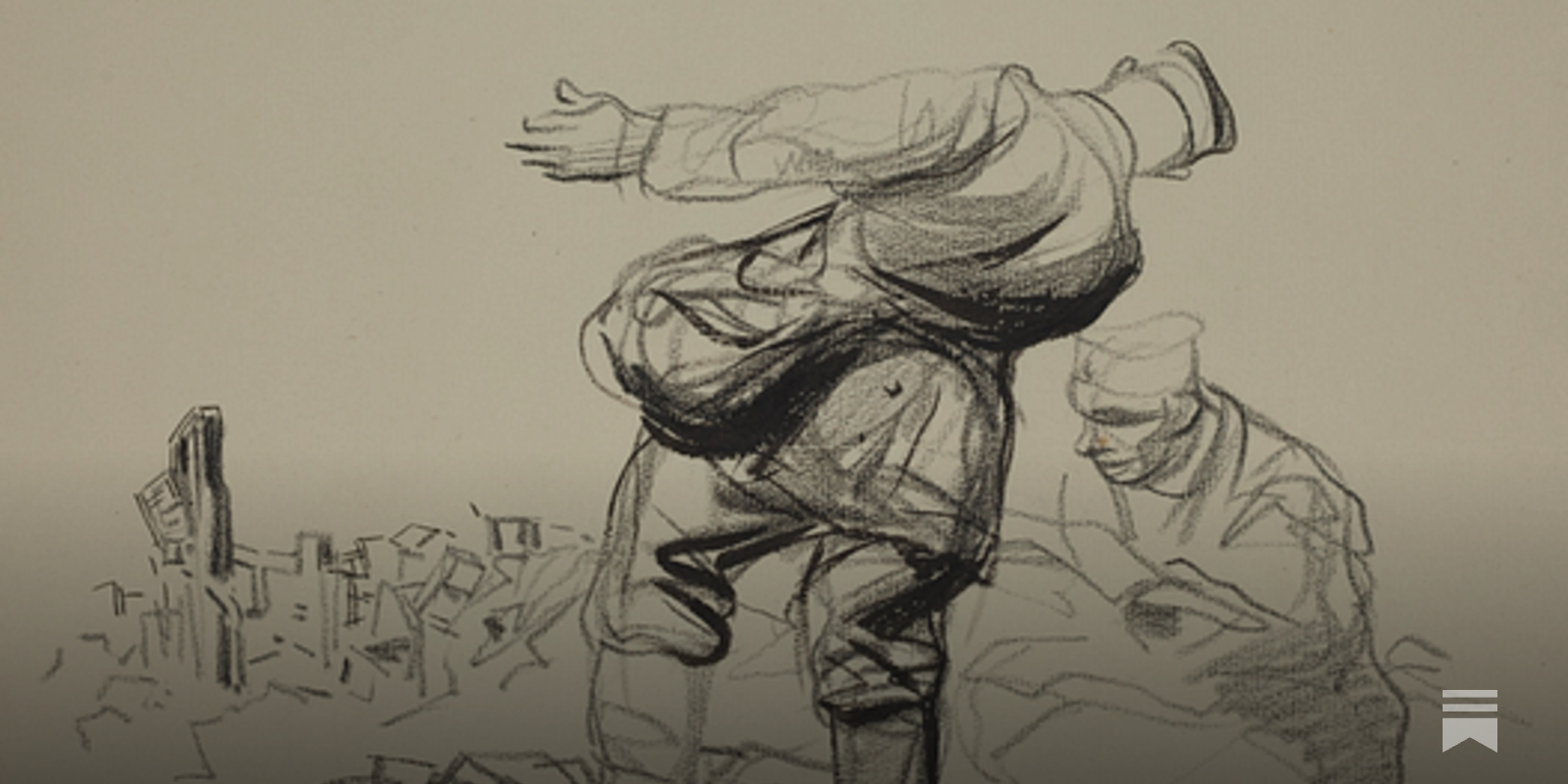

Russia’s FPV drone campaign in Ukraine institutionalizes intentional civilian harm as a tool of war
Russia's use of FPV drones to strike civilian targets in Ukraine indicates a culture seeking to weaponize civilian harm as a tool of war.