

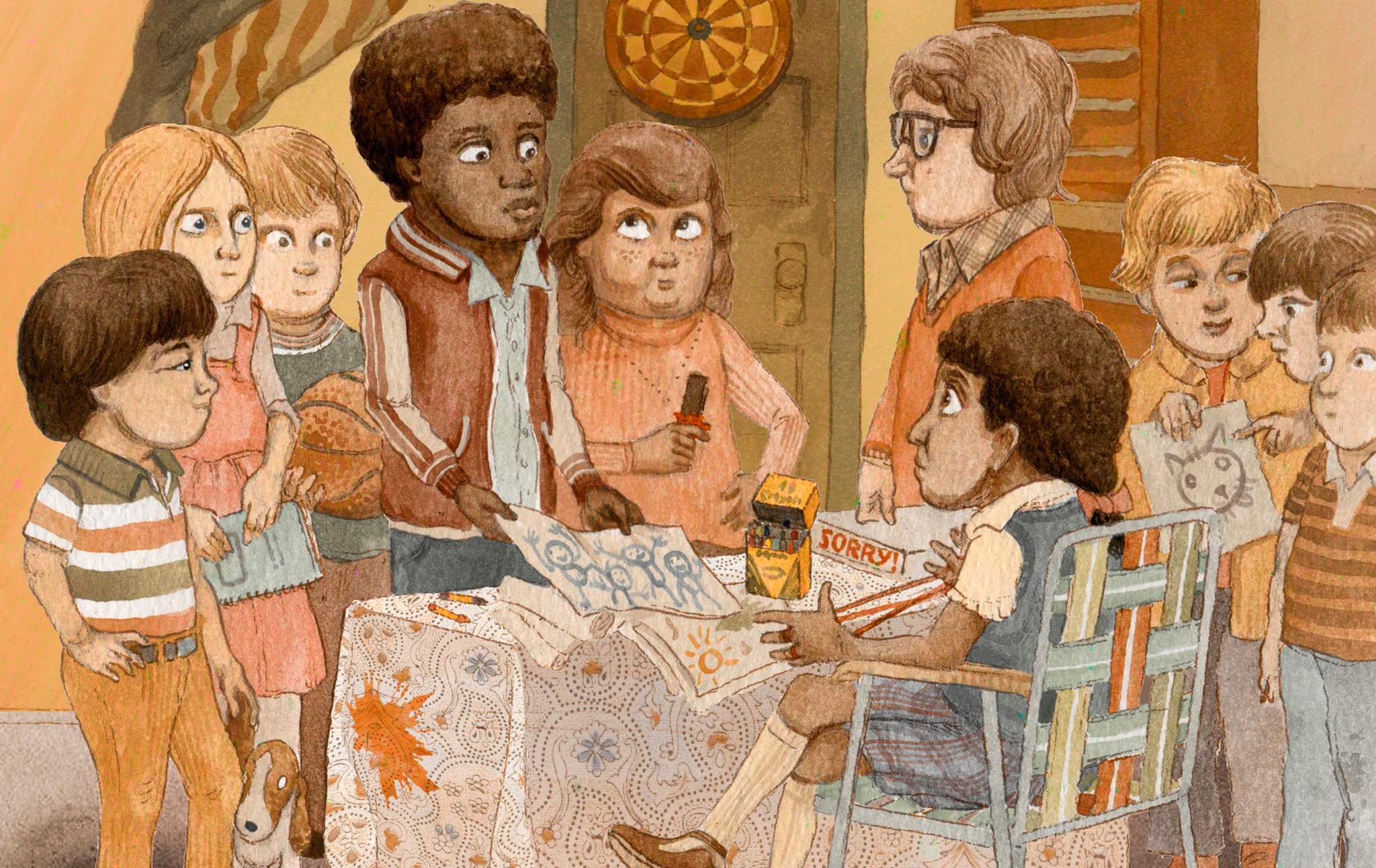
Children's liberation movements have challenged the notion that limited responsibilities for young people must come with limited rights.
Child Liberation | The Paper Pilot
The Paper Pilot's digital garden of thoughts on philosophy, politics, and sociology
What "Parents' Rights" REALLY Means
It's okay if child liberation & family abolition make you uncomfortable.
Ask questions, acknowledge your feelings -- these are the growing pains of considering a radically new idea.
The Harms of Social Media Restrictions and Bans for Minors
How Age-Based Social Media Bans and Restrictions can Negatively impact Youth. The Benefits of Social Media for Youth - Education, Activism & Creating Community

A Rule is to Break
Simply celebrating childhood: the joy, the wonder of discovery, the spontaneity, and strong emotions Wild Child is free to do as she pleases. <i>A Rule Is To Break: A Child's Guide to Anarchy</i> follows Wild Child as she learns about just being herself and how that translates into kid autonomy. It presents the ideas of challenging societal expectations and tradition and expressing yourself freely in kid-terms that are both funny and thought provoking—it even functions as a guidebook for adults to understand what it is to be a critically thinking, creative individual. Wild Child is <i>the</i> role model for disobedience that is sometimes civil.<br><br> Mostly pictures (that are cute!) and a little text, and looks good, but don't expect much of a lesson in real anarchy! For ages 4 and up!

Why Does Everyone Hate Children?
Why Does Everyone Hate Children?
Children’s Sense of Fairness as Equal Respect
One influential view holds that children’s sense of fairness emerges at age 8 and is rooted in the development of an aversion to unequal resource distributions. Here, we suggest two amendments to this view. First, we argue and present evidence that children’s sense of fairness emerges already at age 3 in (and only in) the context of collaborative activities. This is because, in our theoretical view, collaboration creates a sense of equal respect among partners. Second, we argue and present evidence that children’s judgments about what is fair are essentially judgments about the social meaning of the distributive act; for example, children accept unequal distributions if the procedure gave everyone an equal chance (so-called distributive justice). Children thus respond to unequal (and other) distributions not based on material concerns, but rather based on interpersonal concerns: they want equal respect.
Solutions Privilege: How privilege shapes the expectations of solutions, and why it’s bad for our work addressing systemic injustice
Hi everyone, quick disclaimers. Game of Thrones is back, and it runs on Sunday nights, when I’m usually doing my writing, so the next several blog posts will likely decrease in quality and coherence. The last few days also found my kids with food poisoning. I will spare you

We Do This 'Til We Free Us
New York Times Bestseller “Organizing is both science and art. It is thinking through a vision, a strategy, and then figuring out who your targets are, always being concerned about power, always being concerned about how you’re going to actually build power in order to be able to push your issues, in order to be able to get the target to actually move in the way that you want to.” What if social transformation and liberation isn’t about waiting for someone else to come along and save us? What if ordinary people have the power to collectively free ourselves? In this timely collection of essays and interviews, Mariame Kaba reflects on the deep work of abolition and transformative political struggle. With a foreword by Naomi Murakawa and chapters on seeking justice beyond the punishment system, transforming how we deal with harm and accountability, and finding hope in collective struggle for abolition, Kaba’s work is deeply rooted in the relentless belief that we can fundamentally change the world. As Kaba writes, “Nothing that we do that is worthwhile is done alone.”
Know Your Rights: Five Things Parents Detained by ICE Should Know
Read our latest KYR, created in partnership with CLASP, on things parents should know if they are ever detained by ICE.

How the KOSA and KIDS Acts will Harm Vulnerable Teenagers
KOSA & the KIDS Act harm vulnerable teenagers by cutting them off from online communities & support systems, & could be used to censor LGBTQ content for minors.

Social Media Bans & Restrictions for Minors: Laws & Policies
State Laws restricting minors on social media. Social media platforms restricting minors. Harms of Social Media bans for minors. Benefits of social media for youth

HRW warns right to protest ’under attack’ in UK
Human Rights Watch says the UK has “severely restricted the right to protest” and is expanding repressive measures against peaceful demonstrators.
