Sometimes things are so clear that they are almost self-evident. For credit unions it is clear that the credit union business model is transforming in front of our eyes. For most of the 20th Century consumer financial services were offered on a local scale by community banks and credit unions. There was a simple set
Credit union
A credit union is a member-owned nonprofit cooperative financial institution. It may offer financial services equivalent to those of commercial banks, such as share accounts, share draft accounts, credit cards, credit, share term certificates, and online banking. Normally, only a member of a credit union may deposit or borrow money. In several African countries, a credit union is commonly referred to as a SACCO.

The Third Age of credit | TechCrunch
Society is beginning to wake up to a tremendous shift in one of the most fundamental underpinnings to how we live our lives: the credit system. Even though it’s not commonly known, credit infrastructure has existed about as long as civilization itself. In one way or another, credit systems have always formalized the one essential basis for relationships between people: trust.

Financial innovation is actually happening
The future has already arrived: tech and finance joined forces to make core financial services better for consumers.

Let’s talk about money
When we were building the first version of Open Collective, we found that communities and their members often had a complex relationship…

Financial Modeling for Startups: An Introduction | Fivecast Financial
Founders and executives of new companies, particularly those seeking to raise capital, will inevitably be confronted with the prospect of building a financial model. The goal of this guide is to give you an idea of what a financial model is, why you might want one, and how to go about building one.
This New Cooperative Business Model Could Change Everything
Business Model Innovation - an overview | ScienceDirect Topics
Aligning Business Models to Markets - kwokchain
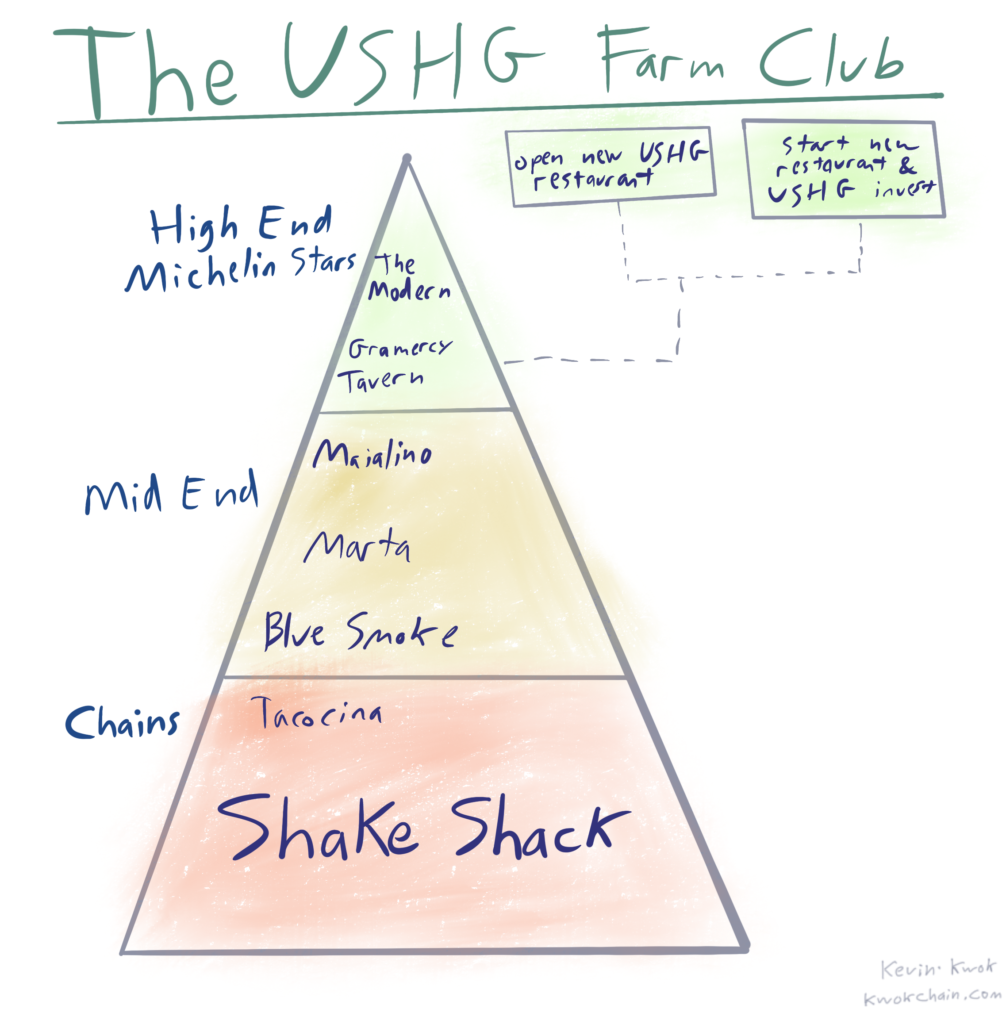
Why Shake Shack and Super Duper have great Service. And what that means for tech. Danny Meyer opened Union Square Cafe in 1985. Since then, his Union Square Hospitality Group (USHG) has expanded to nearly 20 restaurants, encompassing Michelin-starred fine dining at The Modern to casual barbecue at Blue Smoke. The USHG empire also spawned Shake Shack, now publicly traded with … Continue reading Aligning Business Models to Markets →
Co-ops Financing Co-ops
There are limited options when looking to finance a co-op, especially a worker co-op. Aside from co-operative loan funds (like the Cooperative Fund of New England {see article by Micha Josephy in this issue}, Workers Revolving Loan Fund and Northcountry Co-operative Fund) and the rare credit union that lends to businesses, financial institutions do not understand co-operatives. Most lenders are completely unfamiliar with the Co-operative Principles and how they influence our business practices. It is not just that funders don't share our values, it is that we aren't using our values to create our own funding.

Business account for solopreneurs and teams | Holvi Europe
Online business banking ✔︎ Invoicing ✔︎ Bookkeeping ✔︎ Debit, credit and virtual cards ✔︎ Receipt scanning ✔︎ Expense management. Simplify work life.

About Us | Connect Ventures
About Connect Ventures. Who we are, what we do, and how we partner with teams to build and scale durable businesses.

Purpose Pledge
Uniting companies committed to cultivating right relationship, upholding mutual accountability, and accelerating the shift to authentic stakeholder capitalism.

The Society for Worldwide Interbank Financial Telecommunication (SWIFT): Cooperative governance for network innovation, standards, and community
A PDF version of this book is available for free in open access via www.tandfebooks.com as well as the OAPEN Library platform, www.oapen.org. It has been made available under a Creative Commons Attribution-Non Commercial-No Derivatives 3.0 license and is part of the OAPEN-UK research project. This book traces the history and development of a mutual organization in the financial sector called SWIFT, the Society for Worldwide Interbank Financial Telecommunication. Over the last forty years, SWIFT has served the financial services sector as proprietary communications platform, provider of products and services, standards developer, and conference organizer ("Sibos"). Founded to create efficiencies by replacing telegram and telex (or ‘wires’) for international payments, SWIFT now forms a core part of the financial services infrastructure. It is widely regarded as the most secure trusted third party network in the world serving 212 countries and over 10,000 banking organizations, securities institutions and corporate customers. Through every phase of its development, SWIFT has maintained the status of industry cooperative thus presenting an opportunity to study broader themes of globalization and governance in the financial services sector. In this book the authors focus on how the design and current state of SWIFT was influenced by its historical origins, presenting a comprehensive account in a succinct form which provides an informative guide to the history, structure, activities and future challenges of this key international organization. This work will be of great interest to students and scholars in a wide range of fields including IPE, comparative political economy, international economics, business studies and business history.

The Co-Holding Puzzle: New Evidence from Transaction-Level Data
The tendency of consumers to hold low-yield liquid savings while simultaneously holding high-cost unsecured credit on revolving credit lines is a long standing

There is NO Open Source Business Model
Preface: It has been brought to my attention by friends and trusted advisors that a valid interpretation of my point below is that open…