

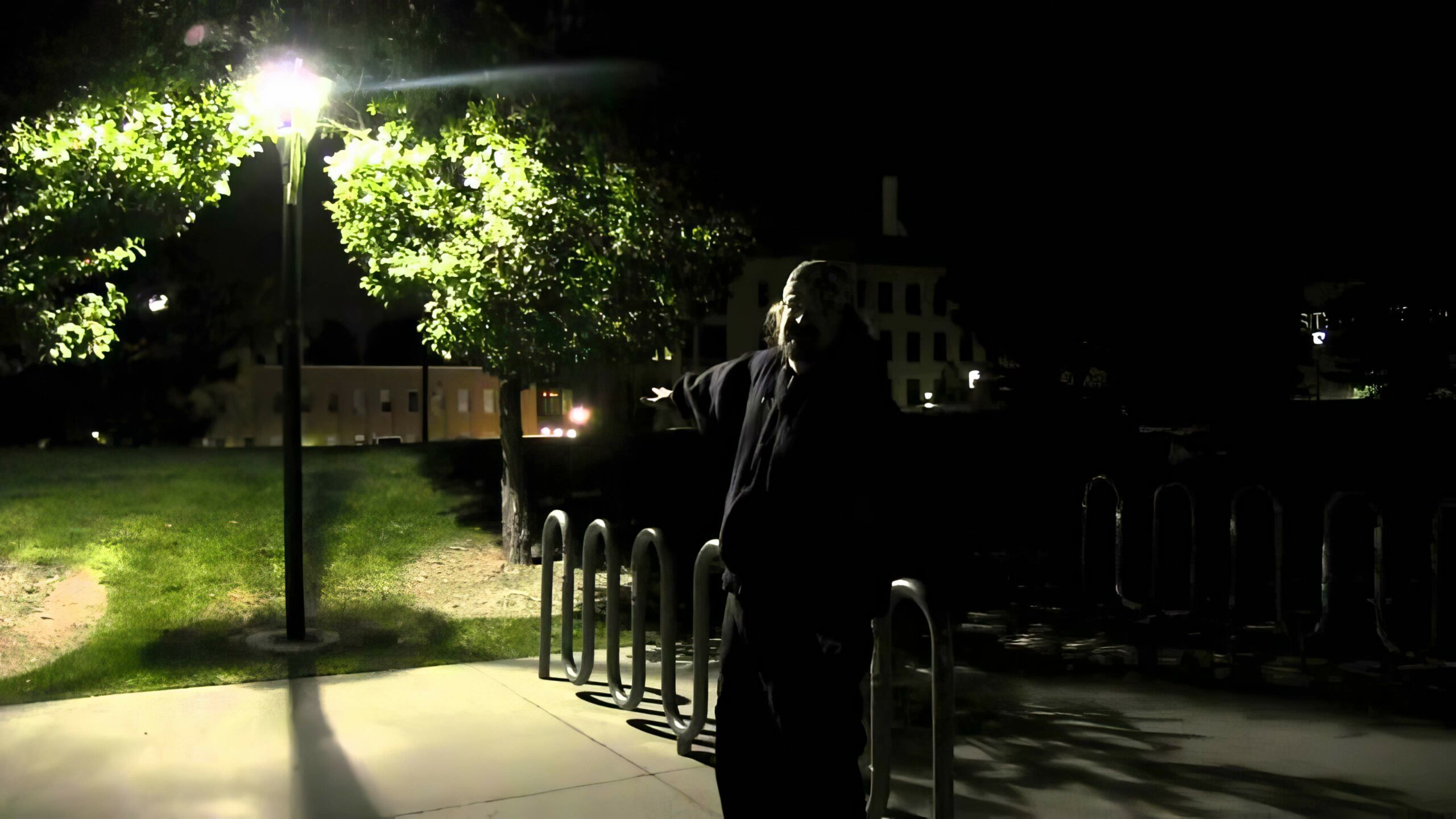
There is no clear scientific evidence that increased outdoor lighting deters crimes. It may make us feel safer, but it has not been shown to make us safer. A 2015 study published in the Journal of…
We’re Squandering LEDs’ Potential to Save Our Night Skies
Bad decisions have turned efficient technology into a driver of light pollution. There is a better way

Personal night light exposure predicts incidence of cardiovascular diseases in >88,000 individuals
Importance Light at night causes circadian disruption, which is a known risk factor for adverse cardiovascular outcomes. However, it is not well understood whether personal light exposure patterns predicts and individual’s risk of cardiovascular diseases. Objective To assess whether day and night light exposure predicts incidence of cardiovascular diseases, and whether relationships of light with cardiovascular diseases differ according to genetic susceptibility, sex, and age. Design Prospective cohort study. Setting United Kingdom. Participants N=88,905, age (M±SD) = 62.4±7.8 years, 56.9% female. Exposure Approximately 13 million hours of personal light exposure data, tracked by wrist-worn light sensors (one week each). Main Outcomes and Measures Incidence of coronary artery disease, myocardial infarction, heart failure, atrial fibrillation, and stroke, derived from UK National Health Service records, across a 9.5-year follow-up after light tracking. Results People with the brightest nights (90-100th percentiles) had significantly higher risks of developing coronary artery disease (adjusted-HR range: 1.23-1.32), myocardial infarction (aHRs: 1.42-1.47), heart failure (aHRs: 1.45-1.56), atrial fibrillation (aHRs: 1.28-1.32), and stroke (aHRs: 1.28-1.30), compared to people with dark nights (0-50th percentiles). These relationships were robust after adjusting for established risk factors for cardiovascular health, including physical activity, smoking, alcohol, diet, sleep duration, socioeconomic status, and polygenic risk. Relationships of night light with risk of heart failure and coronary artery disease were stronger for women, and relationships of night light with risk of heart failure and atrial fibrillation were stronger for younger individuals in this cohort. Conclusions and Relevance Night light exposure was a significant risk factor for developing cardiovascular diseases in this cohort. In addition to current preventative measures, avoiding light at night may be a useful strategy for reducing risks of cardiovascular diseases. Question Does personal light exposure predict incidence of cardiovascular diseases? Findings In this study of ∼89,000 adults aged >40 years, exposure to brighter light at night predicted higher incidence of coronary artery disease, myocardial infarction, heart failure, atrial fibrillation, and stroke, independent of established cardiovascular risk factors. Meaning Avoiding exposure to night light may lower risk for cardiovascular diseases. ### Competing Interest Statement Conflicts of Interest Disclosures: M.K.R. has consulted for Eli Lilly and has modest stock ownership in GSK. M.K.R. disclosures are not related to the current work. F.A.J.L.S. served on the Board of Directors for the Sleep Research Society and has received consulting fees from the University of Alabama at Birmingham and Morehouse School of Medicine. F.A.J.L.S. interests were reviewed and managed by Brigham and Women's Hospital and Partners HealthCare under their conflict-of-interest policies. F.A.J.L.S. consultancies are not related to the current work. S.W.C. has consulted for Dyson. A.J.K.P. and S.W.C. are co-founders and co-directors of Circadian Health Innovations PTY LTD. A.J.K.P. and S.W.C. have received research funding from Versalux and Delos. S.W.C. has received research funding from Beacon Lighting. D.P.W, A.C.B., J.M.L., and R.S. have no conflicts of interest to disclose. ### Funding Statement Funding/Support: D.P.W. was supported by the Australian Research Council (DP210102924 and DP220102812). J.M.L. was supported by National Institutes of Health (NIH) grants R35-GM146839 and R01-HG012810. F.A.J.L.S. partly supported by NIH grants R01-HL140574, R01-HL153969, R01-HL164454, and R01-HL167746. Role of the Funder/Sponsor: Funding sources did not play a role in the design and conduct of the study; collection, management, analysis, or interpretation of the data; preparation, review, or approval of the manuscript; or the final decision to submit the manuscript for publication. ### Author Declarations I confirm all relevant ethical guidelines have been followed, and any necessary IRB and/or ethics committee approvals have been obtained. Yes The details of the IRB/oversight body that provided approval or exemption for the research described are given below: This research was conducted using UK Biobank data (Project ID: 6818), and ethical approval was granted by the North West Multi-centre Research Ethics Committee. The Monash University Human Research Ethics Committee of Monash University also gave ethical approval for this work. I confirm that all necessary patient/participant consent has been obtained and the appropriate institutional forms have been archived, and that any patient/participant/sample identifiers included were not known to anyone (e.g., hospital staff, patients or participants themselves) outside the research group so cannot be used to identify individuals. Yes I understand that all clinical trials and any other prospective interventional studies must be registered with an ICMJE-approved registry, such as ClinicalTrials.gov. I confirm that any such study reported in the manuscript has been registered and the trial registration ID is provided (note: if posting a prospective study registered retrospectively, please provide a statement in the trial ID field explaining why the study was not registered in advance). Yes I have followed all appropriate research reporting guidelines, such as any relevant EQUATOR Network research reporting checklist(s) and other pertinent material, if applicable. Yes All data used in the present work are available upon application to the UK Biobank team. <https://biobank.ndph.ox.ac.uk/showcase/>

DarkSky International
DarkSky International restores the nighttime environment and protects communities from the harmful effects of light pollution through outreach, advocacy, and conservation.

New Artificial Lighting Tricks Human Brain into Seeing Sunlight
Access to natural daylight has long been one of the biggest limiting factors in building design – some solutions involve reflecting real daylight from the outdoors, but until now no solution …

High-tech farmers are using LED lights in ways that seem to border on science fiction
The latest lights can be used to alter how plants grow, how they taste and how nutritious they are. And in some cases, scientists say, they’re better at the job than the sun.

Exposure to air pollution is linked to an increase in violent crime
Dirty air may be even more dangerous than previously thought

Things That Go Bump in the Literature: An Environmental Appraisal of “Haunted Houses”
This paper contains a narrative overview of the past 20-years of environmental research on anomalous experiences attributed to “haunted houses.” This exercise served as a much-needed update to an anthology of noteworthy overviews on ghosts, haunts, and poltergeists (Houran & Lange, 2001b). We also considered whether new studies had incorporated certain recommendations made in this anthology. Our search revealed a relative paucity of studies (n = 66) on environmental factors that ostensibly stimulate haunt-type experiences. This literature was diverse and often lacked methodological consistency and adherence to the prior suggestions. However, critical consideration of the content revealed a recurring focus on six ambient variables: embedded (static) cues, lighting levels, air quality, temperature, infrasound, and electromagnetic fields. Their relation to the onset or structure of witness reports showed mostly null, though sometimes inconsistent or weak outcomes. However, such research as related to haunts is arguably in its infancy and new designs are needed to account better for environmental and architectural phenomenology. Future studies should therefore address four areas: (i) more consistent and precise measurements of discrete ambient variables; (ii) the potential role of “Gestalt influences” that involve holistic environment-person interactions; (iii) individual differences in attentional or perceptual sensitivities of percipients to environmental variables; and (iv) the role of attitudinal and normative influences in the interpretation of environmental stimuli. Focused scrutiny on these issues should clarify the explanatory power of evolutionary-environmental models for these and related anomalous experiences.

What Did Ancient Humans Do at Night?
Home - Globe At Night
Globe at Night is an international citizen-science campaign to raise public awareness of the impact of light pollution by inviting citizen-scientists to measure & submit their night sky brightness observations.
Opinion | The Internet of Way Too Many Things (Published 2015)
You may be able to get your phone to project bright colors if your window sensor detects a burglar, but what is protecting you from your phone?

Over 80 Percent of Dark-Web Visits Relate to Pedophilia, Study Finds
A surprising new study indicates that an overwhelming majority of Dark Web traffic is driven by the darkest activity: the sexual abuse of children.

Why sunlight is vital to our physical and mental health | Psyche Notes to Self
The new book ‘In Defense of Sunlight’ argues that our concerns about the sun’s risks lead us to overlook its benefits

Those blinding high-intensity headlights everywhere: Are they legal in B.C.?
Despite elaborate rules on what is allowed, cracking down on hyper-bright new LED lights is 'complicated,' police say.

Dark mode & accessibility myth by Stéphanie Walter - UX Researcher & Designer.
Dark mode isn't always better for accessibility, you need to let users chose. And if you build a dark theme, make it accessible!
This style of light doesn't really appear in animation anymore. You know it when you see it -- it's bright, hot and almost dangerous. Our new issue explores the tricks behind it, and how one artist has revived the look for the digital age: animationobsessive.substack.com/p/dangerous-light
