

I teach the full range of Middle Eastern history since the rise of Islam, and I participate in Davidson's Humanities Program. My research and writing focus on Islamic religious culture and medieval Egypt and Syria.
Shari L. Lowin
Biography My research centers on the interplay between Judaism and Islam in the early and early medieval Islamic periods, c. 800-1200 CE, focusing mainly on the development of Jewish and Muslim exegetical narratives. I am particularly interested in…
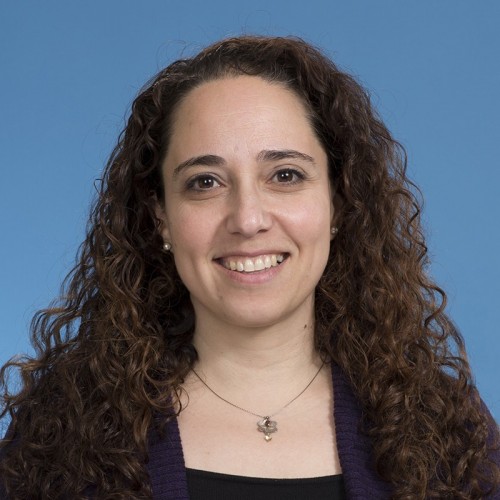
Lorenzo Kamel
He held teaching and research positions in several universities in the Middle East, the United States, and Europe, including the Albert-Ludwigs-Universität Freiburg, where he served as a Marie Curie Experienced Researcher,[4] and Harvard University, where, among other appointments, he was a postdoctoral fellow for two years with a project entitled "Artificial Nations? The Sykes-Picot and the Islamic State's narratives in a historical perspective".[5] He holds a two-year M.A. in Israeli society and politics from the Hebrew University of Jerusalem, a Ph.D. in history from the University of Bologna, and lived for years in several countries in the Middle East, including, with visiting appointments, Egypt ('Ain Shams University), the Palestinian Territories (Birzeit University), Israel (Hebrew University), and Turkey (Bilkent University).
Philip Jenkins
I work in several quite diverse fields. Broadly, my major current interests include the study of global Christianity, past and present; of new and emerging religious movements; and of Late Modern US history, chiefly post-1975.
Internet History Sourcebooks: Medieval Sourcebook
Home | Ancient History Sourcebook | Medieval Sourcebook | Modern History Sourcebook | Byzantine Studies Page Other History Sourcebooks: African | East Asian | Indian | Islamic | Jewish | Lesbian and Gay | Science | Women's | Global
Shari Lowin - International Quranic Studies Association
Shari L. Lowin is Professor of Islamic and Jewish Studies in the Religious Studies Department of Stonehill College. Her research centers on the interplay between Islamic and Jewish texts in the early and early medieval Islamic periods, focusing mainly on exegetical narratives. She is the author of The Making of a Forefather: Abraham in Islamic

It Can Be Lonely to Have a Middle-of-the Road Opinion on the Middle East (Published 2024)
Some college students and faculty members are seeking space for nuanced perspectives on the Israel-Hamas war on deeply divided campuses.

Fred M. Donner | Middle Eastern Studies
Pick Hall for International Studies 5828 South University Ave., Room 301 Chicago, Illinois 60637
Remote Origins: Translation, Genealogy, and Alterity in Medieval Castile (1252-circa 1390)
This dissertation analyzes selected examples of thirteenth- and fourteenth-century written culture to show their engagement with the religious alterity of Islam as an integral part of the origins of the kingdom of Castile. Following an interdisciplinary methodology, it addresses how medieval ideas about astrology, geography, history, medicine, race, and religion participated in creating discourses about origins that recognized the intellectual and political authority of al-Andalus. It argues that early Castilian vernacular texts conceptualized the translation of Arabic sources as an instrument for creating, transforming, and superseding the alterity of Islam while recognizing the cultural and political authority of Andalusi traditions. The first chapter serves as an introduction explaining the historical and theoretical framework of the dissertation. To do so, it provides an overview of Castilian ideas about genealogy, historiography, authority, and translatio, and translation. Then, through close reading and ample historicization, chapters two, three, and four analyze the impact of Andalusi textual traditions, cultural practices, and human population in three interrelated fields of medieval science, literature, and history. Chapter 2 explores the political implications of King Alfonso X’s (r. 1252-1284) dedication to the translation of Arabic sciences by focusing on the translation of a treatise of astrology titled Libro de las cruzes (1259). The chapter traces the cultural and political context that accompanied the transmission of the book in al-Andalus alongside the content of its Arabic and Castilian prologues. In light of ideas about the transference of knowledge (translatio studii) shared by Christian and Muslim scholars, I conclude that deployment of a twofold origin in the Libro de las cruzes illustrates the strategies and motivations of Alfonso X’s broader engagement with Arabic sources. The third chapter turns to the early fourteenth-century romance Libro del caballero Zifar with a double focus on its forged origin as a translation from caldeo (Chaldean) and the prominence of cursed lineages. Regarding lineage, the chapter explores the representation of exemplary virtues by the protagonists of the romance as enacting ideas about the transformable character of lineage and the capabilities of the individual to unmake inherited negative traits. Likewise, the textual strategy of the forged translation enables the inclusion of Arabic and Asian referents at the origin of a profoundly Christian text. In chapter 4, literature meets historiography in the analysis of the Crónica de Flores y Blancaflor. Being the result of intertwining a Castilian chronicle—Alfonso X’s Estoria de Espanna—and a French romance, this text narrates the love story between an Andalusi Muslim prince and the daughter of a captive Christian noble. The chapter focuses on Berta, the captive woman, to show the implications of her decision to nurture Flores and Blancaflor with her milk. Considering Christian and Muslim ideas about milk and wet nursing along with the tenets of Castilian historiography, the chapter shows the limits of dominant ideas about dynastic origins among the Christian elites of Castile while evidencing the existence of an alternative discourse that—coming from within Castilian historiography—incorporates maternal and non-Christian kinship as an essential part of the origins and possibilities of the kingdom. A short final chapter serves as a conclusion, suggesting paths for expanding the results of this dissertation within and the thirteenth and fourteenth centuries covered by its contents.
A New Introduction to Islam, 4th Edition
A globally expanded, critically engaged introduction to Islam thoroughly updated Now in its Fourth Edition, A New Introduction to Islam combines...
Philip Jenkins
Philip Jenkins (born April 3, 1952) is an American professor of history at Baylor University in the United States, and co-director for Baylor's Program on Historical Studies of Religion in the Institute for Studies of Religion.[1] He is also the Edwin Erle Sparks Professor of Humanities Emeritus at Pennsylvania State University (PSU). He was professor (from 1993) and a distinguished professor (from 1997) of history and religious studies at the same institution; and also assistant, associate and then full professor of criminal justice and American studies at PSU, 1980–93.[2]
Ilkka Lindstedt | Senior Lecturer in Islamic Theology
Ilkka Lindstedt is Senior Lecturer in Islamic theology at the Faculty of Theology, Helsinki. He holds a PhD and title of docent in Arabic and Islamic Studies at the University of Helsinki. He specializes in early Islam, Arabic historiography, and Arabic epigraphy.
Lawrence of Arabia
During World War I, English officer Thomas Edward 'T.E.' Lawrence sets out to unite and lead the diverse, often warring, Arab tribes to fight the Turks.

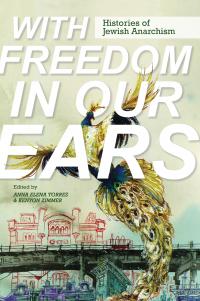
With Freedom in Our Ears
Contributors bring to light the presence and persistence of Jewish anarchism throughout histories of radical labor, women's studies, political theory, multilingual literature, and ethnic studies.
The Rise and Fall of the Palestinian-Arab Middle Class Under the British Mandate, 1920–39
The Palestinian-Arab middle class under the Mandate may be characterized as bourgeois and educated, similarly to bourgeois classes that have developed in the West in the Modern era. The bourgeois characteristics of the Palestinian-Arab middle class, and their influence on its historical trajectory during the Mandate era, have not been studied in depth yet. This article aims to focus on a local aspect of the rise of the middle class in the region in that period: the rise of the Palestinian-Arab middle class under the Mandate, until the Palestinian-Arab Revolt (1936–9). The main hypothesis is that particular bourgeois social and cultural characteristics prevented the middle class full incorporation into the Palestinian-Arab National Movement, and even led to estrangement between the middle class and the national leadership, as well as members of lower strata, especially the villagers. Members of the middle class, mostly Christians but Muslims as well, espoused in their daily life modern habits, ideas, and customs, as a means to distinguish between themselves and other classes, similarly to their parallels in the West, and like their contemporaries elsewhere in the Eastern Mediterranean, as has demonstrated by Watenpaugh. Those gaps reached their climax during the years of revolt.
Collections: Teaching Paradox, Crusader Kings III, Part IIb: Cracks in the House of Islam
This is the back half of the second part of a four part series (I, IIa, IIb, III, IV) examining the historical assumptions behind the popular medieval grand strategy game Crusader Kings III, made b…

Created a @standard.site aggregator for biblical studies publications. So far, @joelwerner.me and I are the only active authors I've found using compatible platforms. More are welcome! longform.sermon.garden
Atmospheric Exegesis
longform.sermon.garden