The official newsletter of the of Rational Examination Association of Lincoln Land
The History of Information - Chris Haughton
disinformation, chris haughton, information, noam chomsky

Housing Research Needs a Credibility Revolution
YIMBY papers receive a disproportionate share of citations
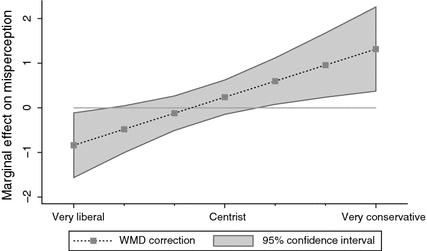
When Corrections Fail: The Persistence of Political Misperceptions
An extensive literature addresses citizen ignorance, but very little research focuses on misperceptions. Can these false or unsubstantiated beliefs about politics be corrected? Previous studies have not tested the efficacy of corrections in a realistic format. We conducted four experiments in which subjects read mock news articles that included either a misleading claim from a politician, or a misleading claim and a correction. Results indicate that corrections frequently fail to reduce misperceptions among the targeted ideological group. We also document several instances of a “backfire effect” in which corrections actually increase misperceptions among the group in question.
Forgetting History and the Humanities in the American University
Reflections on recent news from the University of Oregon, Virginia Tech, and the University of Chicago

The phony comforts of useful idiots
On Casey Newton and the shallowness of anti-skepticism.

Turns Out The DOGE Bros Who Killed Humanities Grants Are Kinda Sensitive About It
Much of last week I had been working on a different article than the one this became. The American Historical Association, the Modern Language Association, and the American Council of Learned Socie…

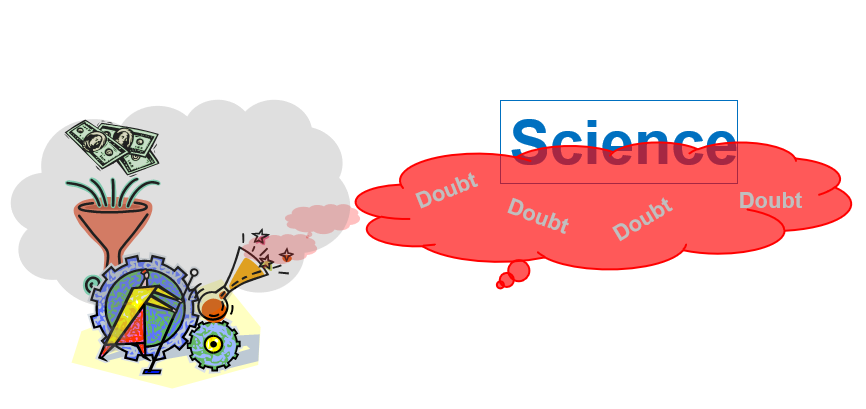
Dark-Moneyed Denialists Are Running 'Fixing Science' Symposium of Doubt
The “Fixing Science” symposium, which is hosted by the National Association of Scholars and kicks off today in Oakland, California, includes credible speakers who want to improve some areas of science hurt by the use of poor statistical methods or making irreproducible claims. Unfortunately, they are outnumbered by people who have often cast doubt on mainstream climate, environmental, and health sciences. For […]
Howtown
NewsBench: Expert-Grounded Evaluation of Epistemic Quality in AI News Reporting
As frontier AI systems increasingly serve as sources of political and current-events information, evaluating the epistemic quality of their responses is now especially consequential. Existing evaluations often focus narrowly on ideological alignment, rely on measures not validated for this setting, or depend on reference labels derived from public opinion or non-expert annotation, potentially producing misleading or miscalibrated results. To address these limitations, we introduce NewsBench, an expert-grounded benchmark that reframes evaluation around editorial standards developed by senior practitioners in journalism, policy, and intelligence analysis. NewsBench operationalizes quality across three dimensions, source quality, factuality, and neutrality, using a two-phase pipeline in which domain experts first define and calibrate evaluation guidelines, which are then transferred to automated AI judges validated against expert-adjudicated gold labels. The benchmark includes approximately $3,000$ evaluation prompts, with roughly $500$ refreshed monthly to capture emerging current events, roughly $2,500$ human expert-annotated items for calibration and validation, and a suite of AI judges designed to enable scalable evaluation. To validate our methodology, we report both inter-rater reliability among human experts and AI judge--human agreement across all three dimensions. Finally, we apply NewsBench to four frontier models, revealing distinct and non-overlapping failure profiles in sourcing, factuality, and neutrality.

NewsBench: Expert-Grounded Evaluation of Epistemic Quality in AI News Reporting
As frontier AI systems increasingly serve as sources of political and current-events information, evaluating the epistemic quality of their responses is now especially consequential. Existing evaluations often focus narrowly on ideological alignment, rely on measures not validated for this setting, or depend on reference labels derived from public opinion or non-expert annotation, potentially producing misleading or miscalibrated results. To address these limitations, we introduce NewsBench, an expert-grounded benchmark that reframes evaluation around editorial standards developed by senior practitioners in journalism, policy, and intelligence analysis. NewsBench operationalizes quality across three dimensions, source quality, factuality, and neutrality, using a two-phase pipeline in which domain experts first define and calibrate evaluation guidelines, which are then transferred to automated AI judges validated against expert-adjudicated gold labels. The benchmark includes approximately $3,000$ evaluation prompts, with roughly $500$ refreshed monthly to capture emerging current events, roughly $2,500$ human expert-annotated items for calibration and validation, and a suite of AI judges designed to enable scalable evaluation. To validate our methodology, we report both inter-rater reliability among human experts and AI judge--human agreement across all three dimensions. Finally, we apply NewsBench to four frontier models, revealing distinct and non-overlapping failure profiles in sourcing, factuality, and neutrality.
Announcing Ibis, the federated Wikipedia Alternative — ibis.wiki
Wikipedia is the most popular online encyclopedia, and millions of people rely on it every day to provide trustworthy information on a wide variety of topics. It is not well known but there have been numerous scandals which put this trust into question. For example in 2012, a trustee of the Wikimedia Foundation UK used his position to place his PR client on Wikipedia's front page 17 times within a month. Wikipedia founder Jimmy Wales made extensive edits to the article about himself, removing mentions of co-founder Larry Sanger. In 2007, a prolific editor who claimed to be a graduate professor and was recruited by Wikipedia staff to the Arbitration Committee was revealed to be a 24-year-old college dropout. These are only a few examples, journalist Helen Buyniski has collected much more information about the the rot in Wikipedia.
Errors in the research of Emmanuel Saez and Gabriel Zucman - Marginal REVOLUTION
AI issues its judgment: 138 papers audited 2,035 problems found 147 serious enough to change a headline number 69% of papers have at least one 97% of major and moderate errors with a clear direction overstate the paper’s claim And on the method: Two independent audits of each paper. One by Claude Opus 5.5, one […]


A Failure, But Not Of Prediction
I. Vox asks What Went Wrong With The Media’s Coronavirus Coverage? They conclude that the media needs to be better at “not just saying what we do know, but what we don’t know”. This rai…

Mikel Artetxe on Twitter / X
3/4 papers I reviewed and 2/3 reviews I got this ARR cycle were AI slop. Fraudsters are already outnumbering honest researchers. Unless drastic measures are urgently adopted, conference publications will have zero value or even become negative signal, and academia will be toast.— Mikel Artetxe (@artetxem) September 19, 2026
UNLOCKED: A Bad History of What Happened Five Years Ago
Faulty reporting, overdetermined analysis, and foregone conclusions mark the latest plea for liberality in American politics and public discourse.