

The Ethical Tech Giving Guide replaces DRM-laden software and devices that trample user freedom and privacy with products and programs that you can trust.
You Can't Destroy the Village to Save It: W3C vs DRM, Round Two
The World Wide Web Consortium (W3C), the nonprofit body that maintains the Web's core standards, made a terrible mistake in 2013: they decided to add DRM—the digital locks that train your computer to
DRM's Dead Canary: How We Just Lost the Web, What We Learned from It,
EFF has been fighting against DRM and the laws behind it for a decade and a half, intervening in the US Broadcast Flag, the UN Broadcasting Treaty, the European DVB CPCM standard, the W3C EME
Yes, All DRM
Everybody knows that the digital locks of DRM on the digital media you own is a big problem. If you’ve bought a digital book, album, or movie, you should be able to do what you want with it—whether

“Paper Trail” Podcast: Microsoft’s “Digital Escorts” Left DOD Vulnerable to Chinese Hackers — ProPublica
A little-known Microsoft program allowed China-based engineers to service the U.S. government’s sensitive computer systems — until reporter Renee Dudley found out about it.

the power of software compels you! - n8
most people do not care about the atproto moral claim
Tim Berners-Lee just gave us an opening to stop DRM in Web standards | Defective by Design
This week, the chief arbiter of Web standards, Tim Berners-Lee, decided not to exercise his power to extend the development timeline for the Encrypted Media Extensions (EME) Web technology standard. The EME standardization effort, sponsored by streaming giants like Google and Netflix, aims to make it cheaper and more efficient to impose Digital Restrictions Management (DRM) systems on Web users. The streaming companies' representatives within the World Wide Web Consortium (W3C) were unable to finish EME within the time allotted by the W3C, and had asked Berners-Lee for an extension through next year.
2.0 The Ethical Resolution Method (ERM)- A Procedural Framework
# The Ethical Resolution Method (ERM): A Procedural Framework for Evaluating and Stabilizing Moral Norms in Sociotechnical and AI Systems ## Abstract Contemporary artificial intelligence systems increasingly operate within domains governed by moral norms that are inherited, asserted, or enforce...

Histomat of F/OSS: We should reclaim LLMs, not reject them
A few days ago, I came across a blog post titled On FLOSS and training LLMs that articulates a growing frustration within the free and open source software…
Can You Trust Your Computer? - GNU Project - Free Software Foundation
Who should your computer take its orders from? Most people think their computers should obey them, not obey someone else. With a plan they call “trusted computing,” large media corporations (including the movie companies and record companies), together with computer companies such as Microsoft and Intel, are planning to make your computer obey them instead of you. (Microsoft's version of this scheme is called Palladium.) Proprietary programs have included malicious features before, but this plan would make it universal.
The Medium is the Message: How Non-Clinical Information Shapes Clinical Decisions in LLMs | Proceedings of the 2025 ACM Conference on Fairness, Accountability, and Transparency
There has been a growing interest in the HCI community to study Health, with particular focus in understanding healthcare practices and designing technologies to support and to enhance these practices. A majority of current health studies in HCI have ...

DIDComm
DIDComm lets people and software use DIDs to communicate securely and privately over many channels: the web, email, mobile push notifications, QR codes, Bluetooth, message queues, sneakernet, and more.

Google’s nightmare “Web Integrity API” wants a DRM gatekeeper for the web
It's just a "proposal," but it's also being prototyped inside Chrome right now.

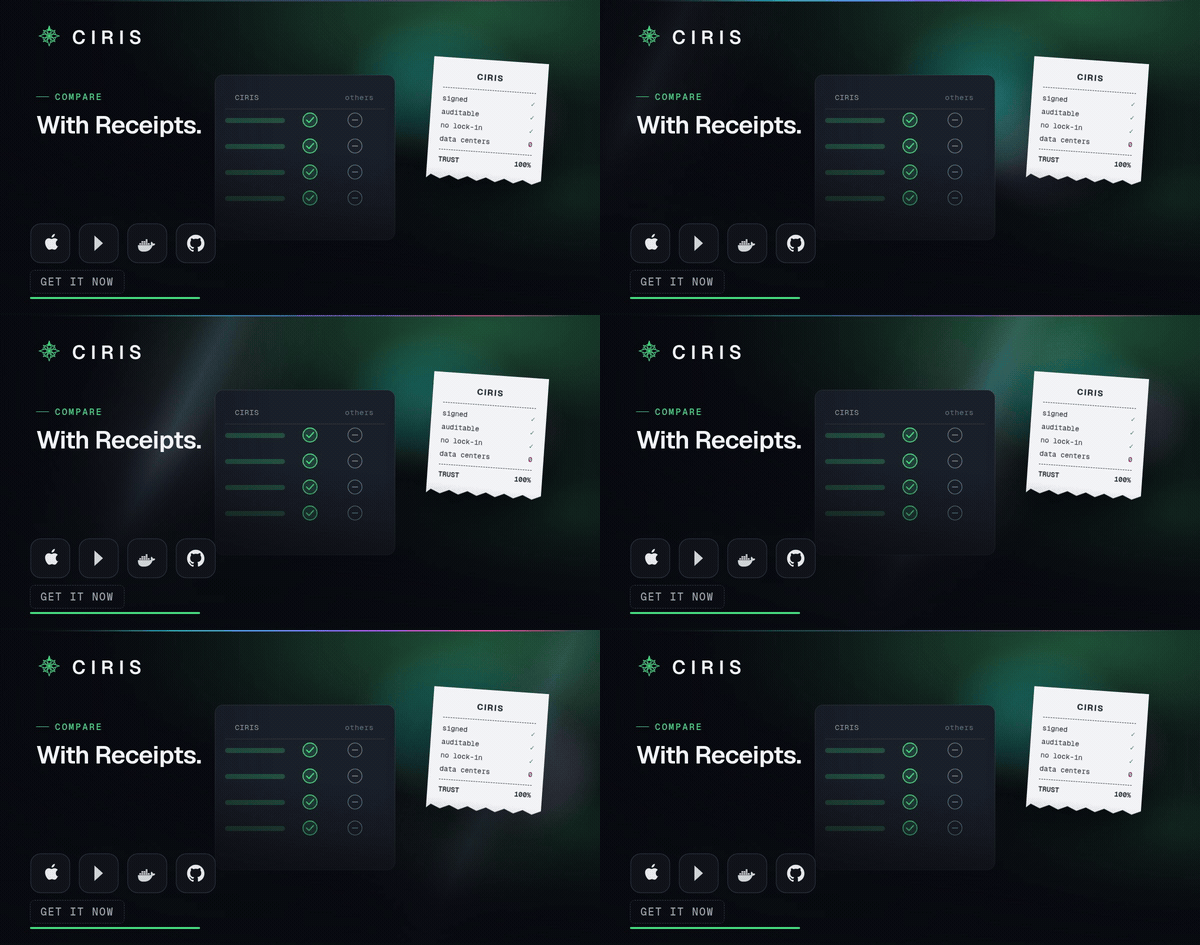
Compare CIRIS: Verifiable Ethical AI vs the Alternatives, With Receipts
How CIRIS's signed, on-device, checkable ethical AI stacks up against the alternatives — the safety case, with receipts.
Sensitive data + tool use + LLMs + app-centric security model = danger. LLMs turn any text into potentially executable instructions, exploding the attack surface of traditional security models.

Simon Willison
Just blogged my hunch that the Apple intelligence Siri delay is because of security concerns around prompt injection here simonwillison.net/2025/Mar/8/delaying-personali…
