


Pankaj Mishra’s new book, The World After Gaza: A History, was written as a response to the “vast panorama of violence, disorder and suffering that we’re seeing today,” says the author. In Part 1 of our interview with the award-winning Indian writer, Mishra shares why he “felt compelled” to respond to what he sees as a return to the 19th-century model of “rapacious imperialism” in the Western world, signified by global complicity in Israel’s genocide in Gaza.
'Zionism Led to Genocide. It Must Disappear': Omer Bartov's New Book …
archived 25 Apr 2026 07:22:14 UTC

Anti-Zionism: A Jewish History
A sweeping and revelatory history of the hidden tradition of Jewish thinkers who opposed Zionism, from Pulitzer Prize winner Benjamin Moser.In Anti-Zionism: A Jewish History, Benjamin Moser uncovers a suppressed tradition that has shaped Jewish thought for generations. Through a cast of artists, rabbis, poets, lawyers, activists, journalists, and politicians—from Europe and Africa and Asia and Latin America—Moser traces a lineage of Jewish dissenters who confronted Zionism’s moral and political stakes—often at devastating personal cost, including censorship, exile, and death.Their lives form a sweeping, global narrative that dismantles a powerful myth: that anti-Zionism is synonymous with antisemitism. Spanning continents and centuries, these voices—people from the right and the left, Reform and Orthodox, Ashkenazic and Sephardic, men and women, gay and straight—differ sharply in belief and background, yet converge on a shared warning about the consequences of a nationalist project built on exclusion. What emerges is not only a rediscovered tradition of Jewish moral thought, but a startling reappraisal of Zionism itself.Moser’s work restores the full scale and depth of Jewish ethical imagination, affirming that Judaism is older and larger than any single political project. Lucid, unsparing, and deeply humane, Anti-Zionism cements Moser’s place as one of our foremost Jewish writers and presents a framework through which this history—and its meanings—will be understood for years to come.
The Ethnic Cleansing of Palestine | Oneworld
Renowned Israeli historian, Ilan Pappe’s groundbreaking work on the formation of the State of Israel. ‘Along with the late Edward Said, Ilan Pappe is the most eloquent writer of Palestinian history.’ NEW STATESMAN Between 1947 and 1949, over 400 Palestinian villages were deliberately destroyed, civilians were massacred and around a million men, women, and […]

The Palestinian Nakba and its Continuous Repercussions
Adel Manna', The Palestinian Nakba and its Continuous Repercussions, Israel Studies, Vol. 18, No. 2, Summer 2013, Shared Narratives—A Palestinian-Israeli Dialogue / Guest Editors: Paul Scham, Benjamin Pogrund, and As'ad Ghanem
NYT: Boycott, Divest, Unsubscribe — WRITERS AGAINST THE WAR ON GAZA
The New York Times is not unique among media outlets in manufacturing consent for war, for exploitation, for genocide. It is, rather, exemplary. The Times’ reputation for liberalism, for rigor, for non-partisan independence is precisely what makes it so dangerous, because it hides what it really is: a publication that exists to serve the interests of U.S. imperialism.
A/81/249: Report of the Special Rapporteur on the situation of human rights in the Palestinian territories occupied since 1967, Francesca Albanese - Truth under the rubble: media in the time of genocide
SummaryThis report examines how the destruction of truth has become integral to the destruction of a people.
Habermas as an ethnic thinker Par Excellence: on critique, Palestine and the role of intellectuals
Taking Habermas’ 2023 statement on Palestinians-Israel as the point of entry, this article examines his concept of critique. Against the dominant view of him as a philosopher of ‘universalism’ and ...

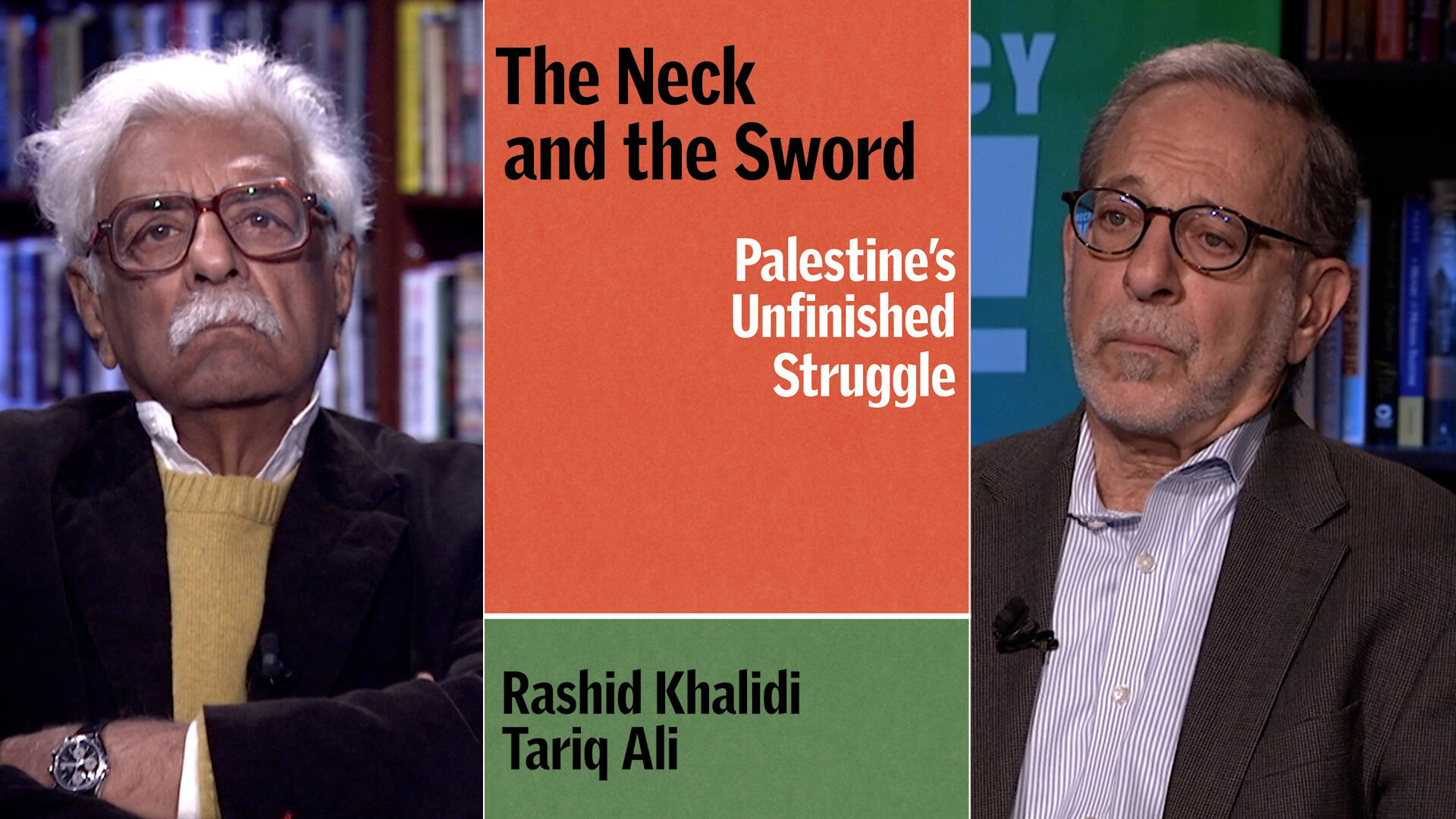
Israeli Elections to Global Movements: Tariq Ali, Rashid Khalidi on New Book “The Neck and the Sword”
We get analysis of the Israeli elections, the upcoming U.S. midterms, the pro-Palestine movement and more from Palestinian American scholar Rashid Khalidi and Pakistani British writer Tariq Ali. They are co-authors of the new book The Neck and the Sword: Palestine’s Unfinished Struggle. The book, an extended conversation between Khalidi and Ali over two years, offers an overview of Palestinian intellectual and political history, drawing its title from a famous phrase used by the renowned Palestinian writer Ghassan Kanafani to describe the futility of “peace talks” between occupier and occupied, saying it was akin to a “conversation between the sword and the neck.” Kanafani was assassinated by Israel in 1972, “murdered simply because his words were too dangerous for Israel to tolerate,” says Khalidi. Public opinion about Israel has grown increasingly negative in the United States and across much of the world in the wake of the genocide in Gaza, and it’s “not going to shift back,” says Khalidi. “People have seen something that cannot be unseen. They’ve seen genocide. They’ve seen slaughter. And Israel has no defense.” “Even in countries with no history of a Palestine solidarity movement, suddenly the Palestine flag emerges,” says Ali. “Why? Because their governments are trying to stop dissent on this issue, so they are defying their governments.”
US Labor & Imperialism Pt. 2: Zionism w/ Jeff Schuhrke (Palestine Pt. 16)
With Freedom in Our Ears
Contributors bring to light the presence and persistence of Jewish anarchism throughout histories of radical labor, women's studies, political theory, multilingual literature, and ethnic studies.
Israel: What Went Wrong?
A leading Israeli American scholar of the Holocaust explores and explains his native country's intensifying turn toward violence and exclusion.The distinguished historian Omer Bartov was born on a kibbutz, grew up in Tel Aviv, and served in the Israel Defense Forces during the Yom Kippur War. He went on to become a leading scholar of the German army and the Holocaust, before turning his attention to his native country.In Israel: What Went Wrong?, Bartov sketches the tragic transformation of Zionism, a movement that sought to emancipate European Jewry from oppression, into a state ideology of ethno-nationalism. How is it possible, he asks, that a state founded in the immediate aftermath of the Holocaust, an event that gave legitimacy to a national home for the Jews, stands credibly accused of perpetrating large-scale war crimes? How do we come to terms with the fact that Israel’s war of destruction is being conducted with the support, laced with denial and indifference, of so many of its Jewish citizens?Tracing the roots of the violent events currently unfolding in Israel and the occupied territories, Bartov tracks his country's moral tribulations and considers the origins of Zionism, the intertwining of Israel’s independence with Palestinian displacement, the politics of the Holocaust, controversies over the term "genocide," and the uncertain future. The result is a searing and urgent critique that addresses today’s debates over Zionism and the future of Israel with rigor and depth.
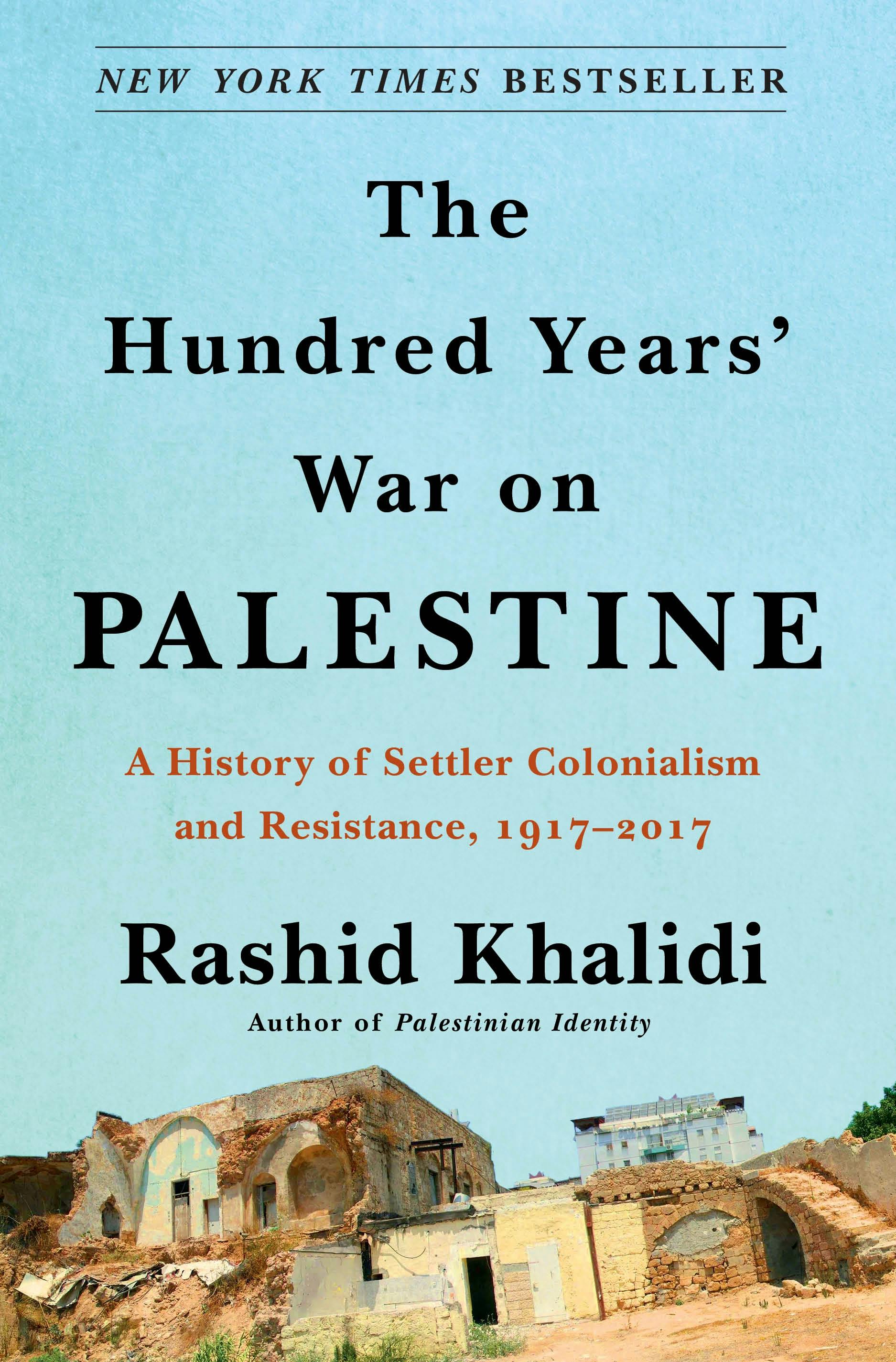
The Hundred Years' War on Palestine
A landmark history of one hundred years of war waged against the Palestinians from the foremost US historian of the Middle East, told through pivotal events ...
‘My life has become a rollercoaster’: Francesca Albanese on death threats, danger and dread after accusing Israel of genocide
When the UN special rapporteur published her report Anatomy of a Genocide in March 2024, she was lionised by some and demonised by the Trump government. She describes what happened next

A Genocide Scholar Asks “What Went Wrong” in Israel
Podcast Episode · The New Yorker Radio Hour · April 17 · 39m

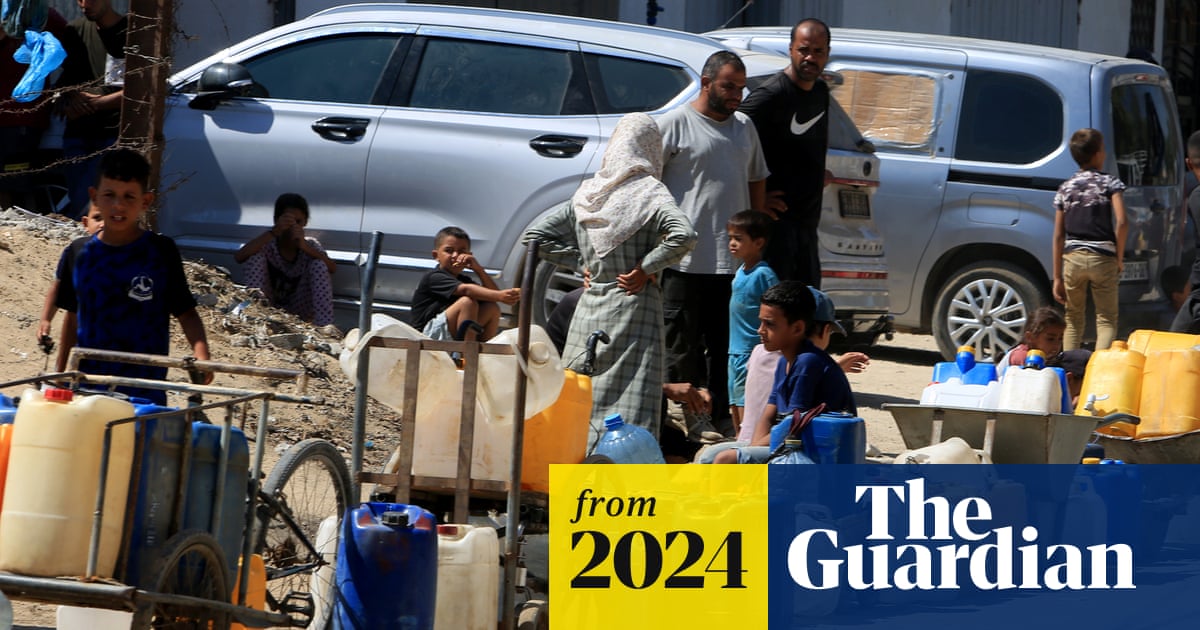
Global surge of water-related violence led by Israeli attacks on Palestinian supplies – report
A quarter of all incidents, such as destruction of dams, pipelines and treatment plants, seen in Gaza Strip and West Bank
Gaza genocide
The Gaza genocide is the ongoing, intentional, and systematic destruction of the Palestinian people in the Gaza Strip carried out by Israel during the Gaza war. It encompasses mass killings, the deliberate killing of children, deliberate starvation, infliction of serious bodily and mental harm, and prevention of births. Other acts include blockading, destroying civilian infrastructure, destroying healthcare facilities, killing healthcare workers and aid-seekers, causing mass forced displacement, committing sexual violence, and destroying educational, religious, and cultural sites. The genocide has been recognised by a United Nations special committee and commission of inquiry, the International Association of Genocide Scholars, multiple human rights groups, state governments, numerous genocide studies and international law scholars, and other experts.
