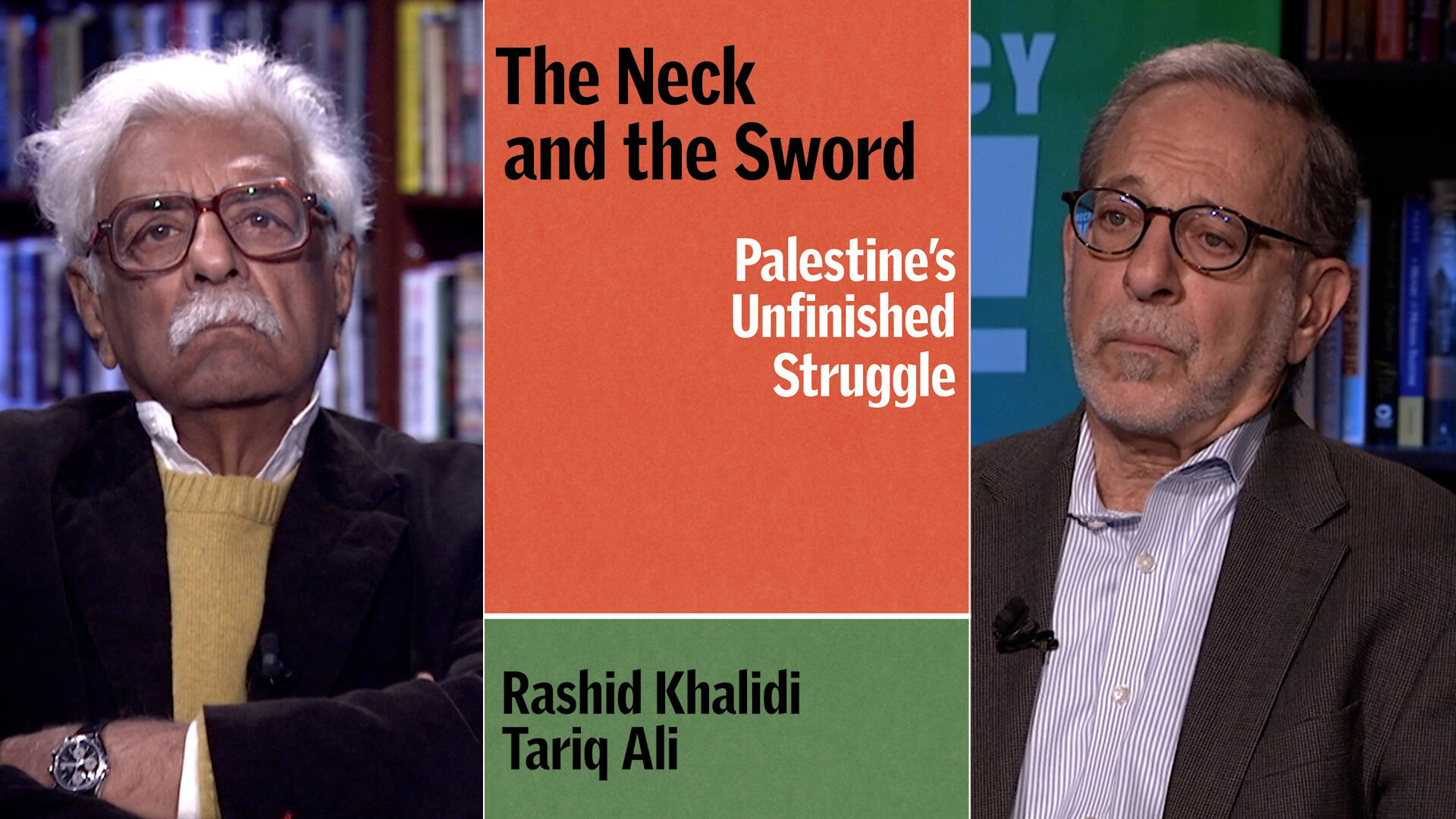
We get analysis of the Israeli elections, the upcoming U.S. midterms, the pro-Palestine movement and more from Palestinian American scholar Rashid Khalidi and Pakistani British writer Tariq Ali. They are co-authors of the new book The Neck and the Sword: Palestine’s Unfinished Struggle. The book, an extended conversation between Khalidi and Ali over two years, offers an overview of Palestinian intellectual and political history, drawing its title from a famous phrase used by the renowned Palestinian writer Ghassan Kanafani to describe the futility of “peace talks” between occupier and occupied, saying it was akin to a “conversation between the sword and the neck.” Kanafani was assassinated by Israel in 1972, “murdered simply because his words were too dangerous for Israel to tolerate,” says Khalidi. Public opinion about Israel has grown increasingly negative in the United States and across much of the world in the wake of the genocide in Gaza, and it’s “not going to shift back,” says Khalidi. “People have seen something that cannot be unseen. They’ve seen genocide. They’ve seen slaughter. And Israel has no defense.” “Even in countries with no history of a Palestine solidarity movement, suddenly the Palestine flag emerges,” says Ali. “Why? Because their governments are trying to stop dissent on this issue, so they are defying their governments.”
The Palestinian Nakba and its Continuous Repercussions
Adel Manna', The Palestinian Nakba and its Continuous Repercussions, Israel Studies, Vol. 18, No. 2, Summer 2013, Shared Narratives—A Palestinian-Israeli Dialogue / Guest Editors: Paul Scham, Benjamin Pogrund, and As'ad Ghanem
The Ethnic Cleansing of Palestine | Oneworld
Renowned Israeli historian, Ilan Pappe’s groundbreaking work on the formation of the State of Israel. ‘Along with the late Edward Said, Ilan Pappe is the most eloquent writer of Palestinian history.’ NEW STATESMAN Between 1947 and 1949, over 400 Palestinian villages were deliberately destroyed, civilians were massacred and around a million men, women, and […]

Israel: What Went Wrong?
A leading Israeli American scholar of the Holocaust explores and explains his native country's intensifying turn toward violence and exclusion.The distinguished historian Omer Bartov was born on a kibbutz, grew up in Tel Aviv, and served in the Israel Defense Forces during the Yom Kippur War. He went on to become a leading scholar of the German army and the Holocaust, before turning his attention to his native country.In Israel: What Went Wrong?, Bartov sketches the tragic transformation of Zionism, a movement that sought to emancipate European Jewry from oppression, into a state ideology of ethno-nationalism. How is it possible, he asks, that a state founded in the immediate aftermath of the Holocaust, an event that gave legitimacy to a national home for the Jews, stands credibly accused of perpetrating large-scale war crimes? How do we come to terms with the fact that Israel’s war of destruction is being conducted with the support, laced with denial and indifference, of so many of its Jewish citizens?Tracing the roots of the violent events currently unfolding in Israel and the occupied territories, Bartov tracks his country's moral tribulations and considers the origins of Zionism, the intertwining of Israel’s independence with Palestinian displacement, the politics of the Holocaust, controversies over the term "genocide," and the uncertain future. The result is a searing and urgent critique that addresses today’s debates over Zionism and the future of Israel with rigor and depth.
'Zionism Led to Genocide. It Must Disappear': Omer Bartov's New Book …
archived 25 Apr 2026 07:22:14 UTC

A/81/249: Report of the Special Rapporteur on the situation of human rights in the Palestinian territories occupied since 1967, Francesca Albanese - Truth under the rubble: media in the time of genocide
SummaryThis report examines how the destruction of truth has become integral to the destruction of a people.
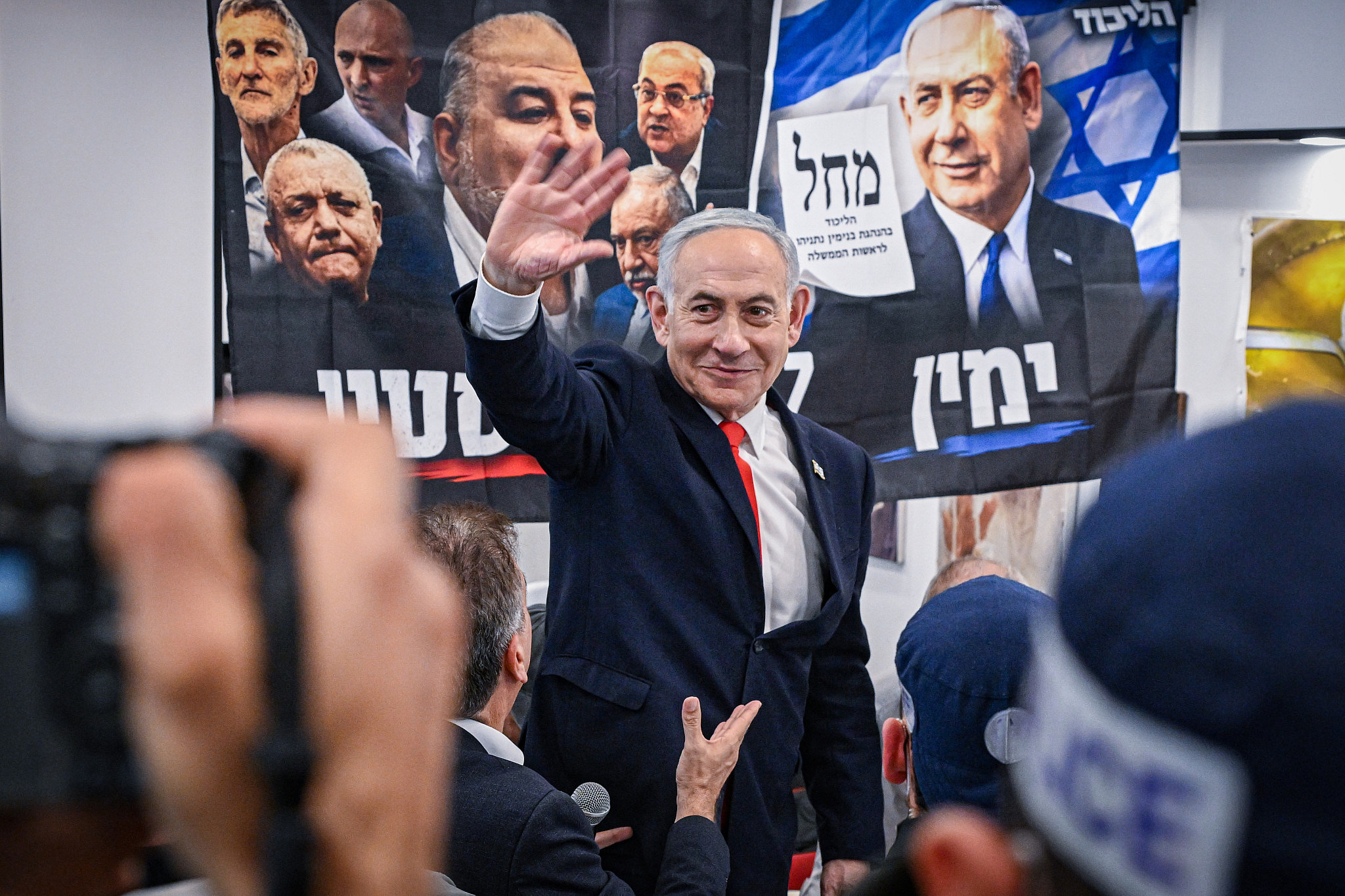
50 shades of right: An Israeli election primer
While Netanyahu’s bloc adds more extremists to its ranks, his opponents are impeding their own path to power by refusing to work with Arab parties.
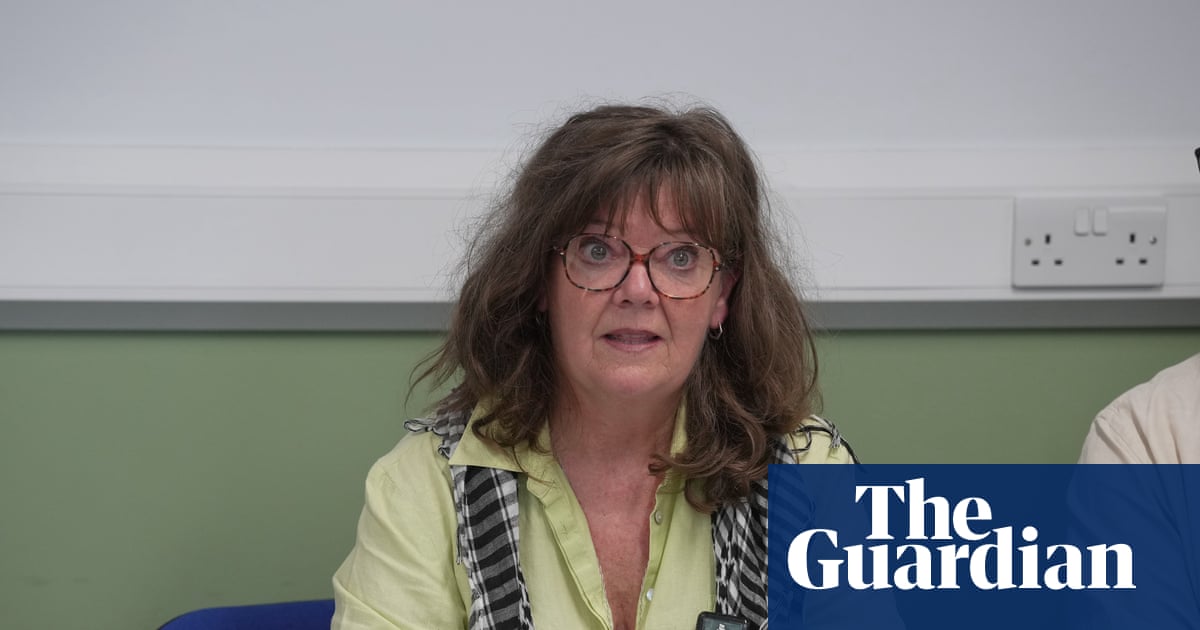
Pro-Palestine activists who were sentenced as terrorists launch appeal
Barrister representing four who smashed drones at Israeli arms factory says ruling of ‘terrorist connection’ led to heftier sentences
Anti-Zionism: A Jewish History
A sweeping and revelatory history of the hidden tradition of Jewish thinkers who opposed Zionism, from Pulitzer Prize winner Benjamin Moser.In Anti-Zionism: A Jewish History, Benjamin Moser uncovers a suppressed tradition that has shaped Jewish thought for generations. Through a cast of artists, rabbis, poets, lawyers, activists, journalists, and politicians—from Europe and Africa and Asia and Latin America—Moser traces a lineage of Jewish dissenters who confronted Zionism’s moral and political stakes—often at devastating personal cost, including censorship, exile, and death.Their lives form a sweeping, global narrative that dismantles a powerful myth: that anti-Zionism is synonymous with antisemitism. Spanning continents and centuries, these voices—people from the right and the left, Reform and Orthodox, Ashkenazic and Sephardic, men and women, gay and straight—differ sharply in belief and background, yet converge on a shared warning about the consequences of a nationalist project built on exclusion. What emerges is not only a rediscovered tradition of Jewish moral thought, but a startling reappraisal of Zionism itself.Moser’s work restores the full scale and depth of Jewish ethical imagination, affirming that Judaism is older and larger than any single political project. Lucid, unsparing, and deeply humane, Anti-Zionism cements Moser’s place as one of our foremost Jewish writers and presents a framework through which this history—and its meanings—will be understood for years to come.
A Genocide Scholar Asks “What Went Wrong” in Israel
Podcast Episode · The New Yorker Radio Hour · April 17 · 39m

“Ungrounding”: Eyal Weizman on Gaza Genocide & Israel’s “Permanent Architecture of Control”
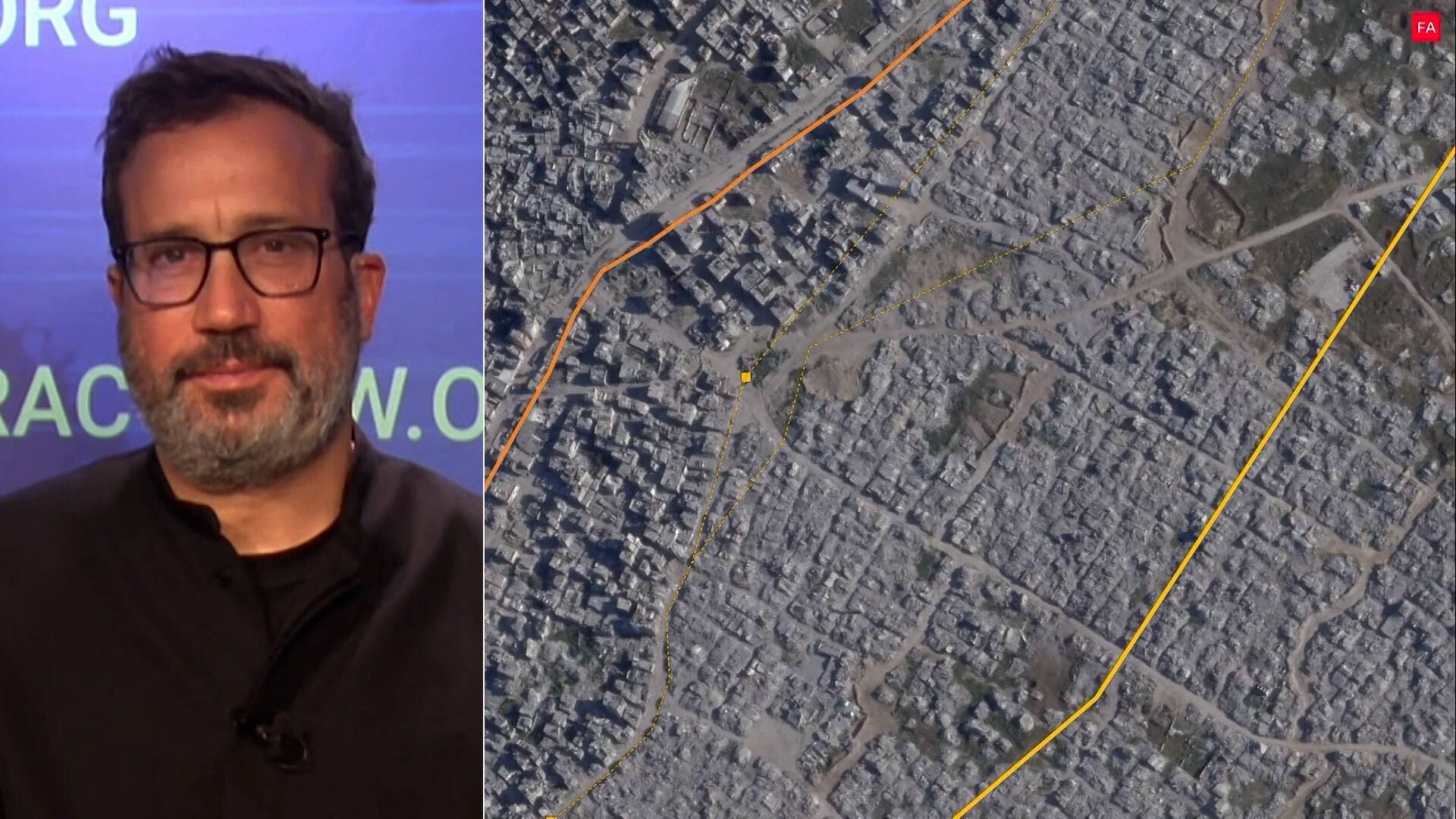
We speak with Forensic Architecture’s Eyal Weizman about his new book, Ungrounding: The Architecture of Genocide, a meticulous investigation into Israel’s genocide in Gaza, the physical destruction of the territory and its impact on the Palestinian people. Forensic Architecture was founded in 2010 as an interdisciplinary research group focused on investigating state violence and human rights violations. Since 2023, Forensic Architecture has focused on producing evidence for South Africa’s genocide case against Israel at the International Court of Justice. Weizman says “ungrounding” is “a kind of destruction that we have not seen anywhere else,” with Israeli bulldozers “terraforming” the landscape to erase all traces of Palestinian life. With thousands of bodies still unrecovered from under destroyed buildings, Israel’s flattening, extraction and reshaping of the rubble in Gaza is a continuation of its crimes, says Weizman. “Israel is actively and against court order, against the order of the ICJ, destroying the evidence of the genocide that it has perpetrated,” he says.
It Can Be Lonely to Have a Middle-of-the Road Opinion on the Middle East (Published 2024)
Some college students and faculty members are seeking space for nuanced perspectives on the Israel-Hamas war on deeply divided campuses.

Iyad el-Baghdadi | إياد البغدادي - The Arab Spring Manifesto
Where the Palestinian Political Project Goes from Here
For decades, Hamas and Israel have maintained a violent equilibrium. How will the war change that paradigm?
Habermas as an ethnic thinker Par Excellence: on critique, Palestine and the role of intellectuals
Taking Habermas’ 2023 statement on Palestinians-Israel as the point of entry, this article examines his concept of critique. Against the dominant view of him as a philosopher of ‘universalism’ and ...

Yasser Arafaft: Biography, Palestinian Political Leader, Facts
Yasser Arafat was chairman of the Palestine Liberation Organization from 1969 until his death in 2004, a tumultuous period in which clashes with neighboring Israel were prevalent.

Joe Kent’s Resignation Was Brave. His Analysis Is Faulty.
The former counterterrorism official’s assertion that Israel was responsible for US wars in Iraq and Syria is false, and evidence of a dangerously…