From Los Angeles to the nation, elected leaders need a vision
A Call for Democratic Digital Infrastructure
Today, together with over 40 civil society organizations, trade unions, and research centers, we pub

Democracy blindsides Silicon Valley’s power players looking to transform the world with AI
‘The push against datacenters speaks to the frustration of people who don’t feel they are making the choices in their lives’

Interoperable Sovereignty: The Democratic Alternative to Digital Authoritarianism
A Democratic Architecture for the Digital Age Digital sovereignty has become a central concern for governments worldwide, yet its meaning remains contested. Too often it is framed as...

Rethinking the Smart City: Democratizing Urban Technology - RLS-NYC
Following the celebration of the “creative city” (as described by Richard Florida), the “smart city” has become the new flavor of the month—and a brand. It makes clever use of resources, and it attracts money, corporate power, and private industries. Offering us cheap, effective solutions to social and political problems, the smart city is functional, […]

Data-owning Democracy or Digital Socialism?
This article contrasts two reform proposals articulated in recent debates about how to democratize the digital economy: data-owning democracy and digital socialism. A data-owning democracy is a political-economic regime character-ized by the
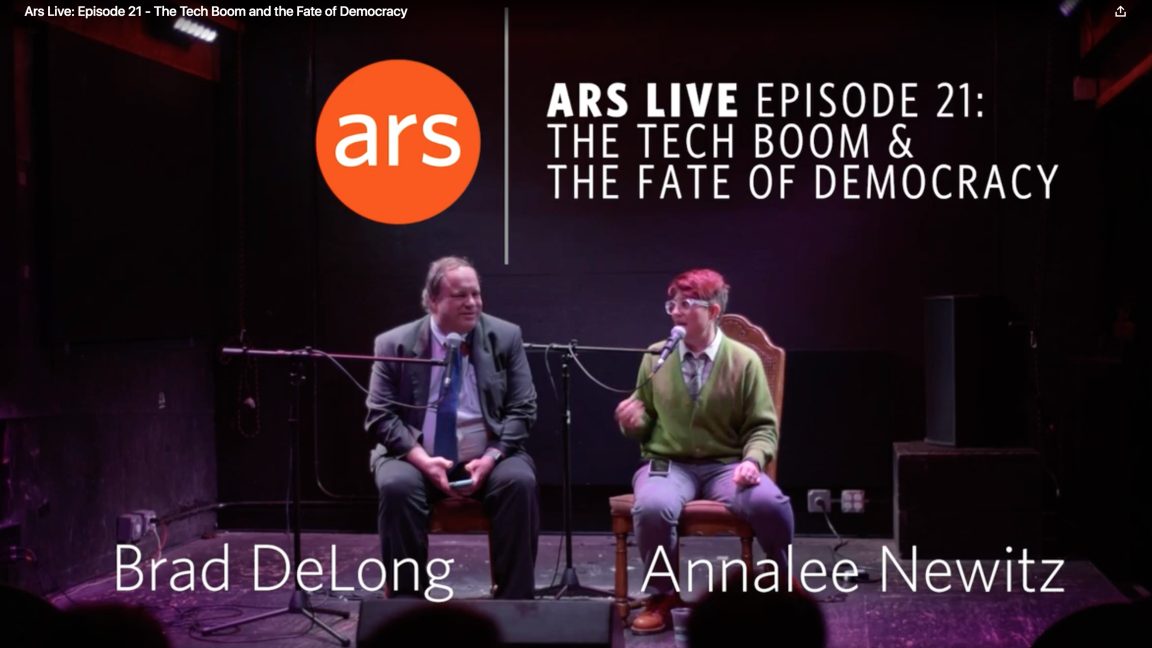
This isn’t the first time a tech boom has interfered with democracy
Video: Ars Live in conversation with economist Brad DeLong, an expert in tech revolutions.
Declaration of Digital Autonomy
We demand a world in which technology is created to protect and empower those who are impacted by it. Our technology must respect the rights and freedoms of those users. We need to take control for the purpose of collectively building a better world in which technology works in service to the good of human kind, protecting our rights and digital autonomy as individuals.
How to Save the Net: Take Ownership
We need to do more to develop and empower digital citizens.

Tech Power and the Crisis of Democracy
Announcing a new series, Jacob Metcalf and Meg Young examine how a small group of tech billionaires is pushing an anti-democratic agenda.

How Technology Is Shaping Modern Politics
Discover how technology is reshaping politics, from digital campaigns to AI, and the challenges of misinformation and election security.
The Infrastructure Shock
The explosion of digital infrastructure systems over the past thirty years may be the biggest but least recognised shock delivered by the internet. We need to develop the governance capacity to manage it and force it out of hands of the democracy-hostile corporations that control it today.

The City as Platform | David Bollier
In the age of ubiquitous Internet connections, smartphones and data, the future vitality of cities is increasingly based on their ability to use digital networks in intelligent, strategic ways. While we are accustomed to thinking of cities as geophysical places governed by mayors, conventional political structures and bureaucracies, this template of city governance is under great pressure to evolve. Urban dwellers now live their lives in all sorts of hyper-connected virtual spaces, pulsating with real-time information, intelligent devices, remote-access databases and participatory crowdsourcing. Expertise is distributed, not centralized. Governance is not just a matter of winning elections and assigning tasks to bureaucracies; it is about the skillful collection and curation of information as a way to create new affordances for commerce and social life.
‘If we don’t fight back, we don’t have a future’: the journalist taking on the ‘tech fascists’ of Silicon Valley
As Elon Musk, Peter Thiel and their peers have grown richer and more influential, Gil Durán argues they have all but abandoned democracy – and found the perfect government to enable them
NEW BOOK: Why AI Undermines Democracy and What to Do about It
Mark Coeckelbergh's "Why AI Undermines Democracy and What to Do about It" offers a philosophical critique of AI's impact on democratic principles. The book argues that the concentration of power in tech companies and governmental use of AI pose risks to democracy, potentially leading to digital totalitarianism. While light on novel solutions, it provides a concise overview of common concerns in AI ethics literature and calls for increased democratic input in AI design and global governance. The book serves as an accessible entry point for those new to the topic, offering a valuable, if pessimistic, perspective on AI's challenges to democracy.
Digital Democracy in the Age of AI
For many participants, this was their first interaction with AI in a deliberative context.

Old Tricks, New Tech: How Legacy Media Capture Fuels Today’s Digital Authoritarianism
Marius Dragomir and Minna Aslama Horowitz discuss how digital authoritarianism is rising as states and Big Tech align, threatening independent media.