

This talk is about using simple values (as opposed to complex objects) not just for holding data, but also as the boundaries between components and subsystems. It moves through many topics: functional programming; mutability's relationship to OO; isolated unit testing with and without test doubles; and concurrency, to name some. The "Functional Core, Imperative Shell" screencast mentioned at the end is available as part of season 4 of the DAS catalog.
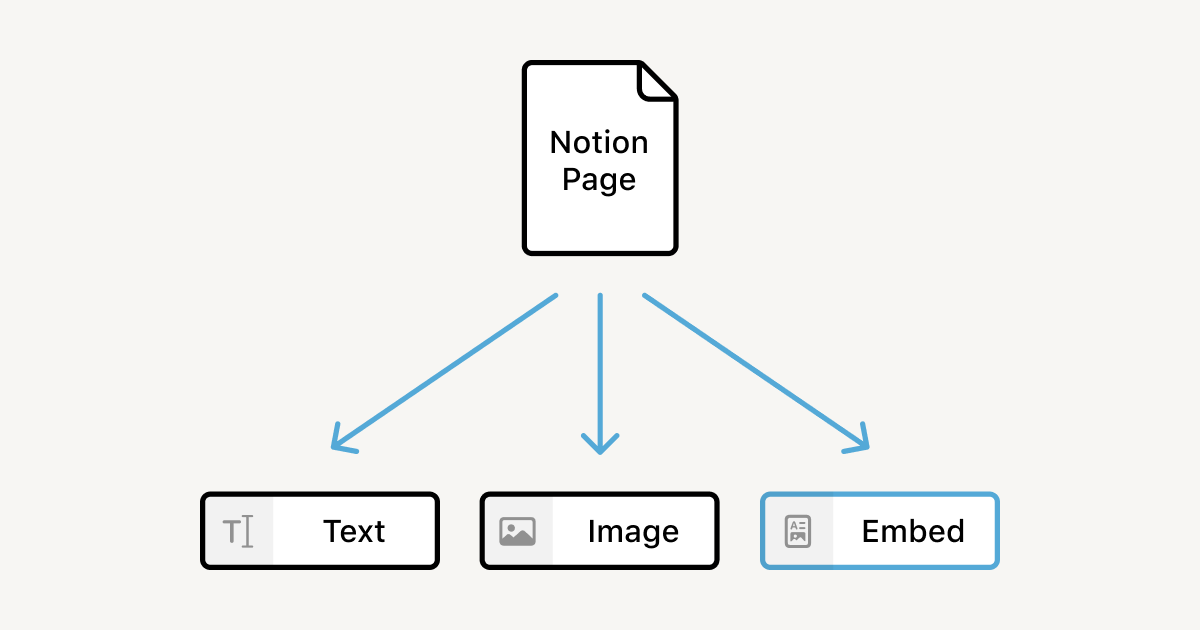
Exploring Notion's Data Model: A Block-Based Architecture | Notion
Notion’s data model enables the product’s most foundational component: blocks. Through blocks, we allow users more flexibility over their information.
Coeffects: a calculus of context-dependent computation
The notion of context in functional languages no longer refers just to variables in scope. Context can capture additional properties of variables (usage patterns in linear logics; caching requirements in dataflow languages) as well as additional resources or properties of the execution environment (rebindable resources; platform version in a cross-platform application). The recently introduced notion of coeffects captures the latter, whole-context properties, but it failed to capture fine-grained per-variable properties.We remedy this by developing a generalized coeffect system with annotations indexed by a coeffect shape. By instantiating a concrete shape, our system captures previously studied flat (whole-context) coeffects, but also structural (per-variable) coeffects, making coeffect analyses more useful. We show that the structural system enjoys desirable syntactic properties and we give a categorical semantics using extended notions of indexed comonad.The examples presented in this paper are based on analysis of established language features (liveness, linear logics, dataflow, dynamic scoping) and we argue that such context-aware properties will also be useful for future development of languages for increasingly heterogeneous and distributed platforms.

What is data oriented design?
I was reading this article, and this guy goes on talking about how everyone can greatly benefit from mixing in data oriented design with OOP. He doesn't show any code samples, however. I googled t...

Help Wanted: Research Questions in Rust - Aaron Turon - OPLSS 2018
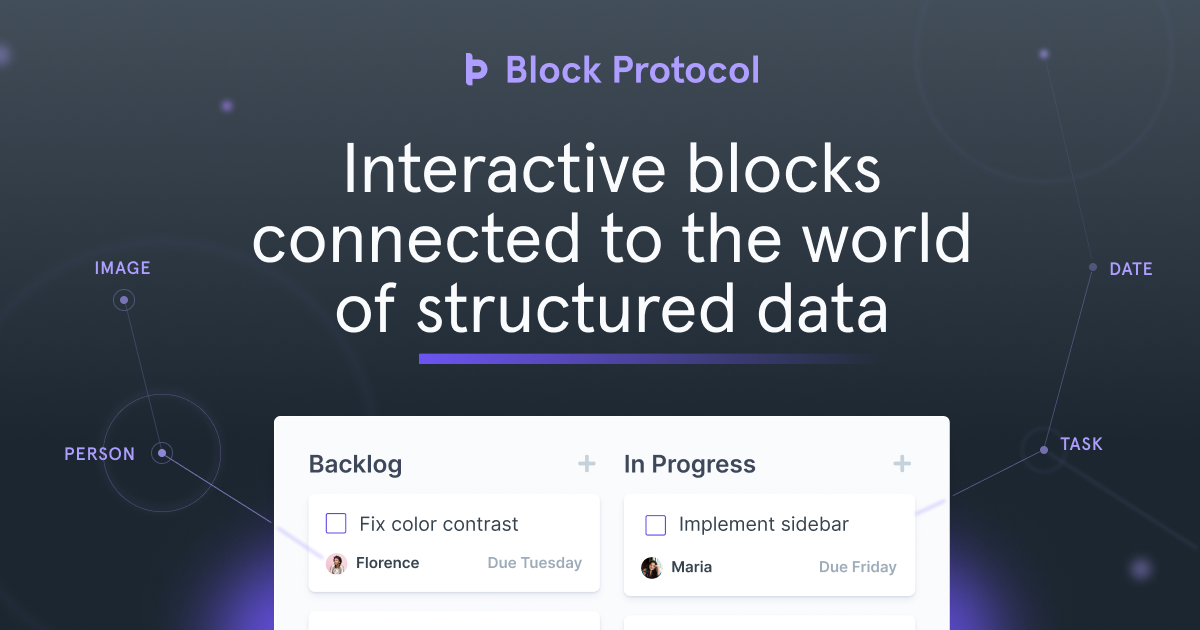
DASL — Data-Addressed Structures & Links
A small set of simple, standard primitives to work on content-addressed data.

DASL — Data-Addressed Structures & Links
A small set of simple, standard primitives to work on content-addressed data.
Show me the data - Design Notes
SOLID: The Software Design, Architecture & Testing Wiki
Learn to write testable, flexible, maintainable code with TypeScript.
Structure and Interpretation of Test Cases • Kevlin Henney • GOTO 2022
Solid Protocol
This document connects a set of specifications that, together, provide applications with secure and permissioned access to externally stored data in an interoperable way.
Data Mesh Architecture: Interoperability, Co-Operation, and Co-Regulation
This paper examines the emergence of data mesh architectures and data intermediaries as key components in emerging data economies. It explores how data mesh arc

Why Futhark?
A high-performance and high-level purely functional data-parallel array programming language that can execute on the GPU and CPU.
When Does a Specification Become a Program? - The Phoenix Architecture
A spec can contain prose, tests, schemas, formal models, even executable code. The useful boundary is not the syntax but, rather, what survives: if you throw the implementation away, what has to remain so you can build the next one?
private data unconf session at #atmosphereconf is packed really great to hear about the different approaches, use cases, concerns we don't have great language for describing topology and trade-offs in distributed architectures the "what is where, and why" often feels untangling vs compositional
