

The UK’s leading event for innovation and technology in the built environment. Explore the latest developments in digital construction.
Home - Industrialised Construction
Industrialised Construction explores both the physical and digital dimensions of construction, covering innovations in platform-based design, kits of parts, design for manufacture and assembly (DfMA) and offsite production, as well as emerging digital capabilities including robotics, augmented and virtual reality, automation, data-driven tools, connectivity and the Internet of Things.

Constructionism | The Paper Pilot
The Paper Pilot's digital garden of thoughts on philosophy, politics, and sociology
A corner of the web for builders.
My name is Will King, and I am a design engineer...among many other things. You can find all of that work below and if you see something you like then let's be friends.
Open source projects are a lot more exciting than roads and bridges
In July, the Ford Foundation released “Roads and Bridges: The Unseen Labor Behind Our Digital Infrastructure”, a report on the problem of…
AI for Construction · Industry Report 2026 - ZACUA VENTURES
Executive Summary: The Intelligence Era of Construction The global construction industry is at a $15 trillion inflection point. While contributing over 13% of annual GDP, the sector has long been...

How buildings learn : what happens after they're built
Originally published: New York, NY : Viking, 1994; Includes bibliographical references (p. 224-229) and index; Flow -- Shearing layers -- "Nobody cares what you do in there": the low road --- Houseproud: the high road -- Magazine architecture: no road -- Unreal estate -- Preservation: a quiet, populist, conservative, victorious revolution -- The romance of maintenance -- Vernacular: how buildings learn from each other -- Function melts form: satisficing home and office -- The scenario-buffered building -- Built for change -- Appendix: The study of buildings in time

CIRCULAR ECONOMY IN CONSTRUCTION – MAXIMIZING RESOURCE EFFICIENCY AND MINIMIZING WASTE
New Design Congress (@newdesigncongress@mastodon.world)
4 Posts, 7 Following, 128 Followers · An independent research group confronting the gap between what is said to be happening and what is actually happening in digitised societies.

Builder Workshop — B.C.'s Innovation Ecosystem, Mapped
46 players, 27 venues on the asset map, curated pathways, open data.

Reporting on the Development of a Web-Based Prototype Dashboard for Construction Design Managers, Achieved through Design Science Research Methodology (DSRM)
Construction Design Management (DM) involves the coordination of design processes and activities to ensure quality project design, yet it involves many challenges. This study reports on a collaborative Knowledge Transfer Partnership (KTP) project with a Case Study Organization (CSO) that tackled several issues faced by construction design managers. Employing a design science research methodology (DSRM), qualitative analysis of semi-structured interviews with purposefully identified design managers uncovered real-world concerns around design co-ordination and performance monitoring. To address these concerns, a web-based design management prototype dashboard was developed using typical project data to aid in the management of design coordination, task prioritization, and reporting functionalities. The web-based Design Management prototype dashboard enhances design management productivity in construction firms by monitoring design production, assessing designer performance trends, and focusing on Technical Queries (TQs) and Requests for Information (RFIs). Digitalizing selected design management processes improves efficiency and productivity. The visual reporting of the dashboard enables design production monitoring at project and portfolio levels, assesses trends in designer performance, and maintains focus on TQs and RFIs. Demonstrating how web-based Design Management dashboards can enhance productivity, this study emphasizes practical solutions derived from employing a design science research methodology. The development and application of the web-based dashboard contribute to the growing evidence that employing design science research methodology in construction can yield tangible solutions to address real-world construction concerns.

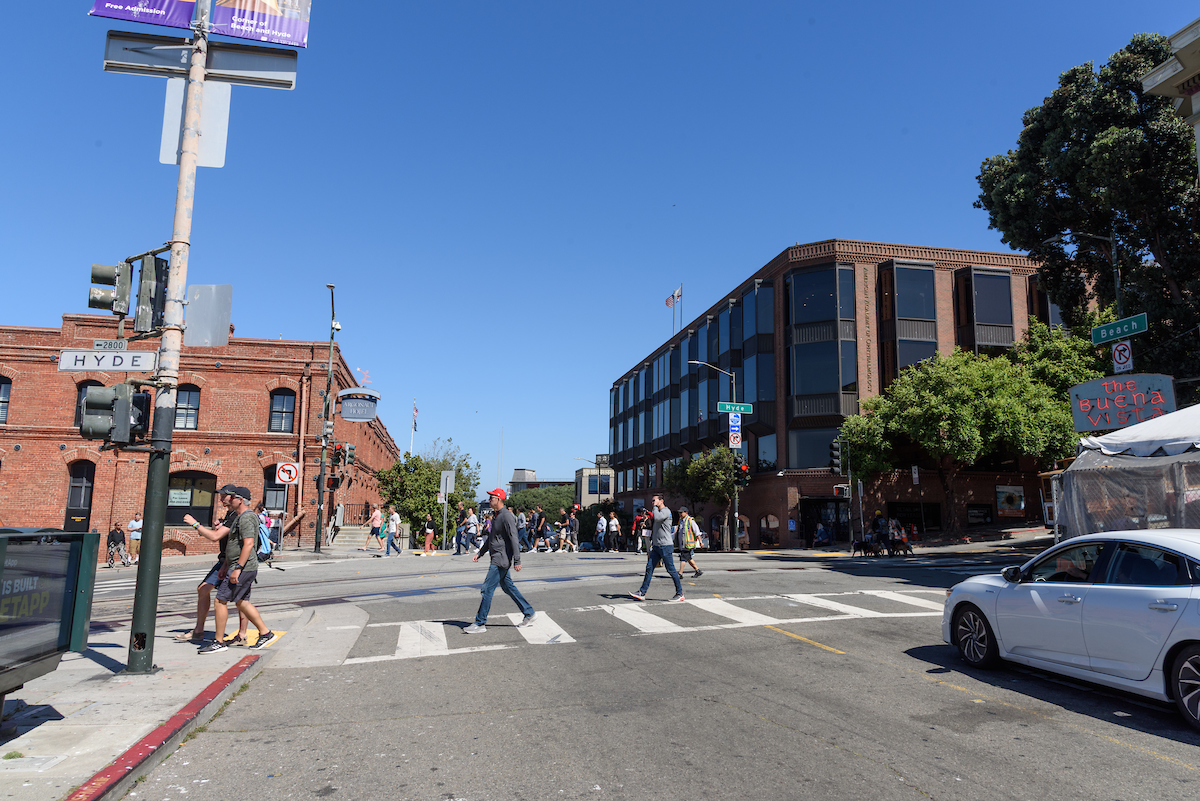
Beach Street Quick-Build Project
Construction for the Beach Street Quick-Build Project is substantially complete!What’s New
Fab City Prototypes — Designing and making for the real world
This article is the extract of the proposal submitted by the Fab City global initiative to the European Commission call for Circular…
Architecture and the Internet: Designing places in cyberspace
Cyberspace, as the information space is called, has become accessible in the past decade through the World Wide Web. And although it can only be experienced through the mediation of computers, it is quickly becoming an alternative stage for everyday economic, cultural, and other human activities. As such, there is a potential and a need to design it according to place–like principles. Making places for human inhabitation is, of course, what architects, landscape architects, and town planners have been doing in physical space for thousands of years. It is curious, therefore, that Cyberspace designers have not capitalized on the theories, experiences, and practices that have been guiding physical place–making. While most 3D environments closely mimic physical spaces, they are, by and large, devoid of the essential characteristics that differentiate a ‘place’ from mere ‘space.’ And only rarely are they sensitive to, and take advantage of, the peculiarities of Cyberspace. We believe that this state of affairs is temporary, characteristic of early adoption stages of new technologies. As the Web matures, and as it assumes more fully its role as a destination rather than as means of communication, there will be a growing need to design it according to place–making principles. By looking at physical architecture as a case study and metaphor for organizing space into meaningful places, this paper explores the possibility of organizing Cyberspace into spatial settings that not only afford social interaction, but, like physical places, also embody and express cultural values. At the same time, because Cyberspace lacks materiality, is free from physical constraints, and because it can only be ‘inhabited’ by proxy, these ‘places’ may not necessarily resemble their physical counterparts.
What to build first: the house or the front door?
Join the conversation to stay on top of trends and opportunities in the platform engineering community.

Thanks to AI-powered tools, coding is more accessible than ever, but that doesn’t mean builders have decentralized tech know-how. Grey Area is offering an online course called “Beyond Big Tech” for community builders and designers building alternative tech futures! Apply by September 24th

Beyond Big Tech: Building Alternative Futures for Personal Data and Infrastructure
grayarea.org