Discovery Loop is building AI systems that automate the experimental loops of science and engineering. Continuous Exploration.
Wilson Sonsini Advises Discovery Loop on Launch and Initial Funding
On August 5, 2026, a founding team comprised of some of the world’s leading experts in artificial intelligence and distributed computing—Jeff Dean, Sanjay Ghemawat, Quoc Le, and Oriol Vinyals…
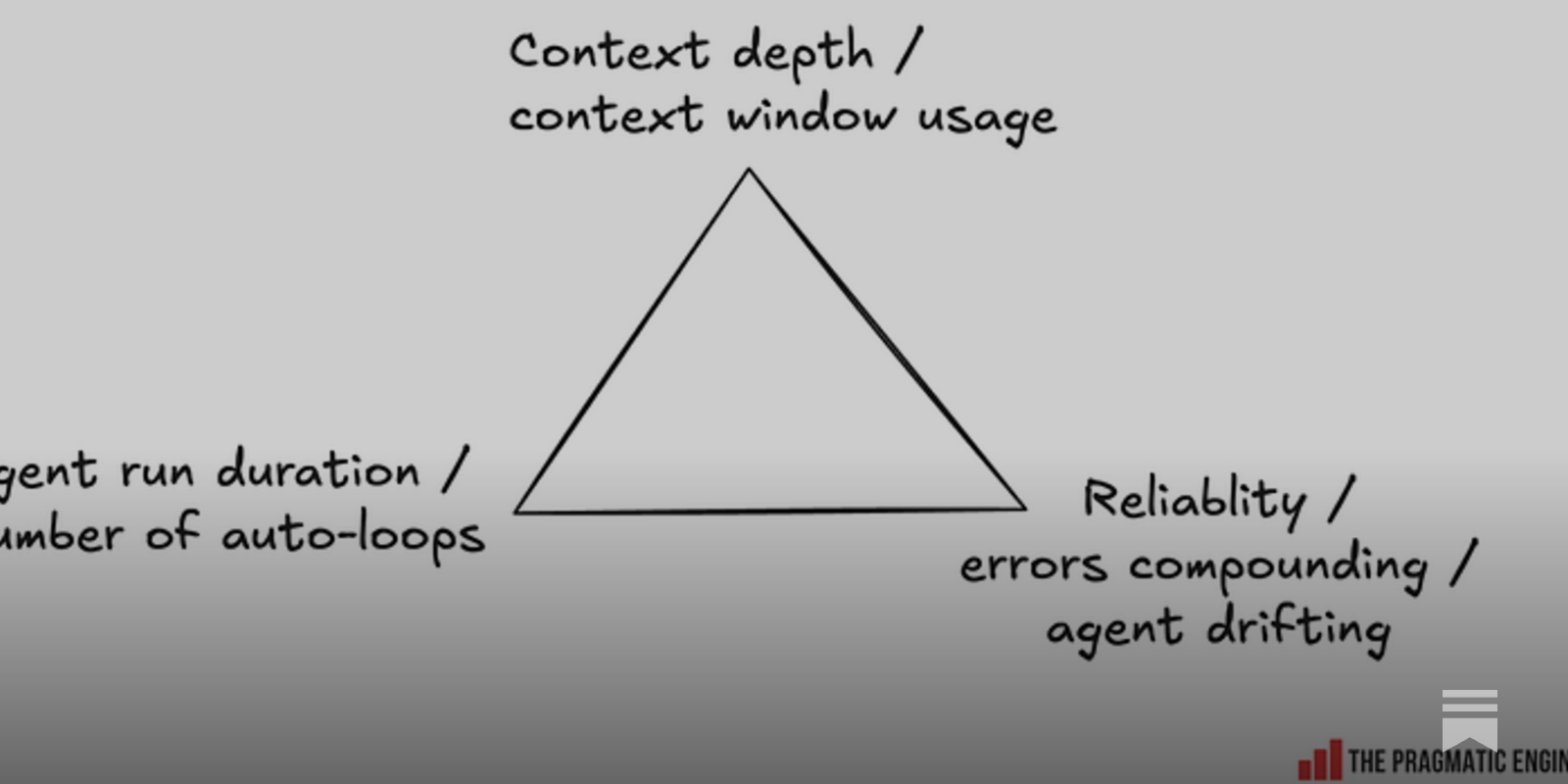
What is “loop engineering?”
There’s talk about loop engineering, but what is it exactly? I looked into it, and found triggers, cron jobs, AI slop & more. Is it a “here today, gone tomorrow” trend?
Fulcrum - Leverage for Discovery
We place AI engineers with research labs working on hard scientific problems.
Gemini for Science: AI experiments and tools for a new era of discovery
Gemini for Science is a new collection of science tools and experiments to expand the scale and precision of scientific exploration.

Agentic Laboratories of the Future: Towards World Models for Scientific Discovery
Scientific discovery is fundamentally a problem-solving process involving distributed intelligence. Human intuition, computational reasoning, and experimental execution are distributed across people, instruments, and software systems, limiting the speed and scale of discovery. Although automation, high-throughput experimentation, foundation models, and cloud infrastructure have accelerated individual stages of the scientific workflow, they have not unified the discovery process. We hypothesize that the next generation of laboratories will be agentic: environments in which scientists, AI systems, and robotic platforms operate as collaborative discovery partners, with humans contributing the parts of discovery that remain hardest to make explicit: asking the right questions and holding provisional mechanistic models of how a system works. The key missing layer is an agentic harnessing layer that continuously integrates hypothesis, literature-derived evidence, experimental data, uncertainty, and experimental state into a shared “laboratory world model”—a dynamic representation of the scientific system and its evolving context. By maintaining and updating this lab world model, the agentic harnessing layer enables coordinated decision-making, adaptive planning, and increasingly autonomous scientific workflows across humans and machines. A central challenge is that much of the scientific research process remains inaccessible to machines, including tacit knowledge, human observations, adaptive decision-making, and evolving experimental context. Advances in multimodal AI and immersive interfaces may help bridge this gap, allowing humans, agents, and robotic systems to collaborate seamlessly in scientific discovery rather than simply automating isolated tasks. Agentic laboratories could provide a new architecture for science, integrating human, artificial, and physical intelligence into a unified discovery system.

4 of Google’s Top AI Brains Are Leaving—and Launching Their Own AI Startup
Jeff Dean and other high-profile Google executives have founded Discovery Loop, a startup that will seek AI-powered breakthroughs in everything from drug discovery to chip design.

Can Current Agents Close the Discovery-to-Application Gap? A Case Study in Minecraft
Discovering causal regularities and applying them to build functional systems--the discovery-to-application loop--is a hallmark of general intelligence, yet evaluating this capacity has been hindered by the vast complexity gap between scientific discovery and real-world engineering. We introduce SciCrafter, a Minecraft-based benchmark that operationalizes this loop through parameterized redstone circuit tasks. Agents must ignite lamps in specified patterns (e.g., simultaneously or in timed sequences); scaling target parameters substantially increases construction complexity and required knowledge, forcing genuine discovery rather than reliance on memorized solutions. Evaluating frontier models including GPT-5.2, Gemini-3-Pro, and Claude-Opus-4.5 under a general-purpose code agent scaffold, we find that all plateau at approximately 26% success rate. To diagnose these failures, we decompose the loop into four capacities--knowledge gap identification, experimental discovery, knowledge consolidation, and knowledge application--and design targeted interventions whose marginal contributions serve as proxies for corresponding gaps. Our analysis reveals that although the general knowledge application capability still remains as the biggest gap across all models, for frontier models the knowledge gap identification starts to become a major hurdle--indicating the bottleneck is shifting from solving problems right to raising the right problems for current AI. We release SciCrafter as a diagnostic probe for future research on AI systems that navigate the full discovery-to-application loop.

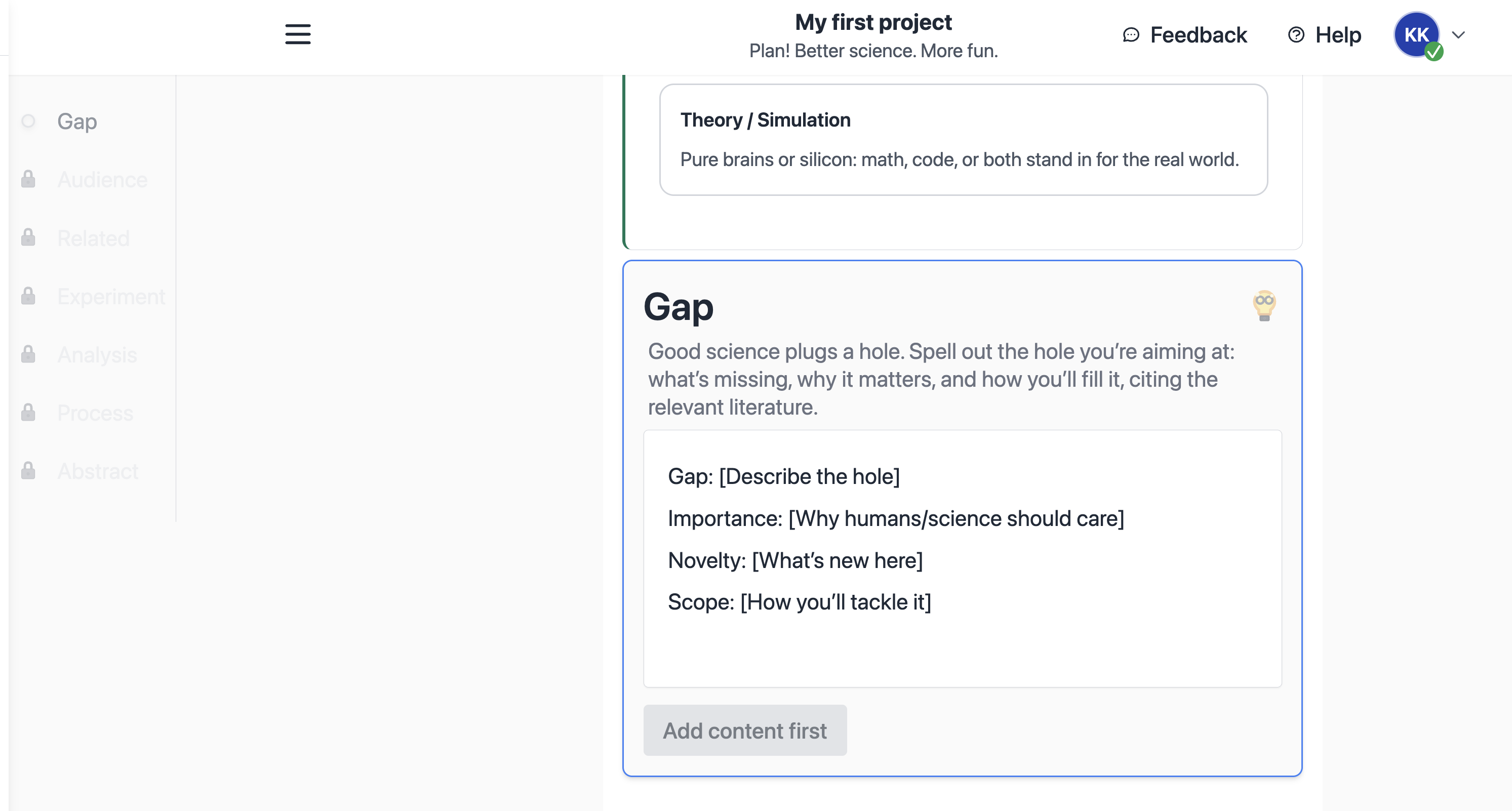
Scientific Paper Planner - AI Research Planning
Structure your scientific research with AI-powered guidance
Bending the Curve: How AI is Transforming Scientific Discovery
Discover how researchers use LLMs and specialized AI models like AlphaFold as complementary tools to accelerate innovation and expand the scientific frontier.

ScientistTwo: Pioneering the Human Knowledge Frontier with Autonomous AI
Scientific discovery is defined by the ability to identify the boundaries of existing knowledge and venture into unexplored territory. The ultimate vision for AI in science is problem-driven autonomous research: given a fundamental challenge by a human expert, the AI independently navigates the scientific landscape, uncovers theoretical and empirical bottlenecks, and systematically expands the frontier of knowledge. In this paper, we introduce ScientistTwo, a fully autonomous multi-agent framework designed to realize this vision. Specifically, ScientistTwo takes an initial problem as input, establishes state-of-the-art baselines, formulates novel hypotheses, and coordinates specialized agents to orchestrate an end-to-end discovery cycle without human intervention. Moreover, the framework rigorously conducts experiments using diverse datasets and metrics, refines methodologies through automated ablation studies, and validates research findings via a closed-loop simulated peer-review rebuttal engine. To evaluate ScientistTwo's capabilities against the highest standards of human scientific achievement, we benchmark it across papers accepted at top-tier conferences such as ICLR, ICML, and NeurIPS. As a result, ScientistTwo autonomously generates expert-level, publishable papers and fully verified, executable codebases. Its solutions consistently outperform human state-of-the-art models, and achieve higher average review ratings than human-authored papers under automated AI review agents. These results show that ScientistTwo is not merely an assistive tool but an autonomous scientific pioneer capable of pushing the frontiers of human discovery. Project website: https://scientist-two.github.io/
Infinite Researchers | AI-Powered Scientific Discovery
What happens to the speed of discovery if we have infinite researchers? Explore AI experiments accelerating breakthroughs.

AI scientists are changing research — institutions, funders and publishers must respond
The ability to automate the discovery process in some areas of scientific inquiry raises unanswered questions about how research should be conducted.
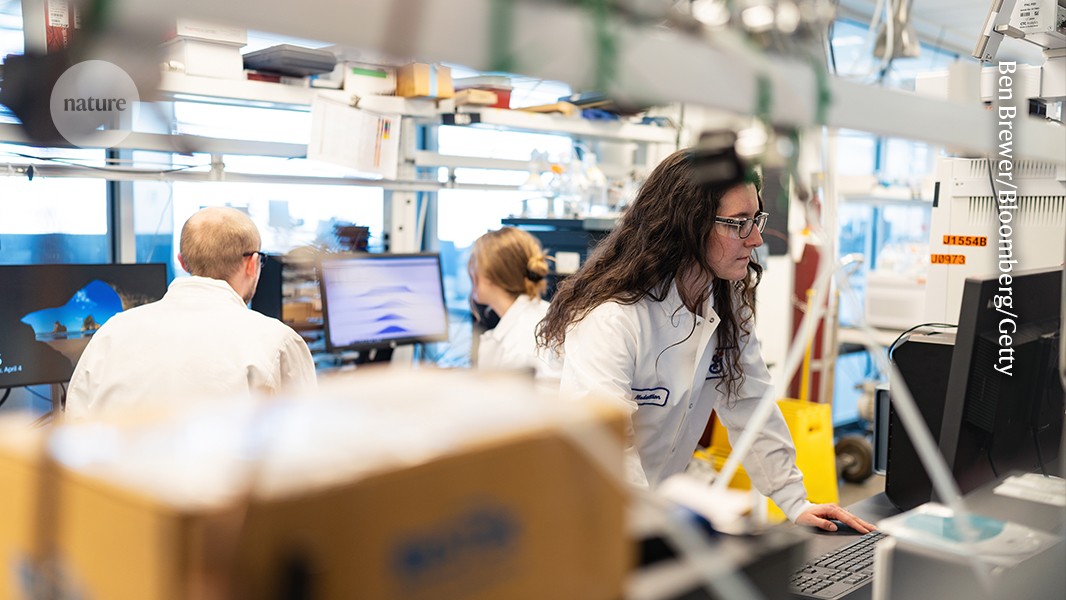
AI for science needs reasoning, not just data
AI agents that can model the human process of research will accelerate discoveries in science.

On the Value of Doing a PhD in the Age of AI
Many students who are just now embarking on a PhD in AI are understandably anxious. It feels like our field is zooming forward ever faster. Our clever methods are often surpassed before they are published. Our deep insights seem less critical to frontier lab progress. AI is automating aspects of the research process that used to require years of specialized training.
Rethinking AI for Science Funding
As science stands at an inflection point, how do we organize capital to shape the future of discovery?
Loop Engineering | AddyOsmani.com
You don't really need to be good at prompting anymore. The thing to get good at is the loop that does the prompting for you. It's five building blocks plus s...