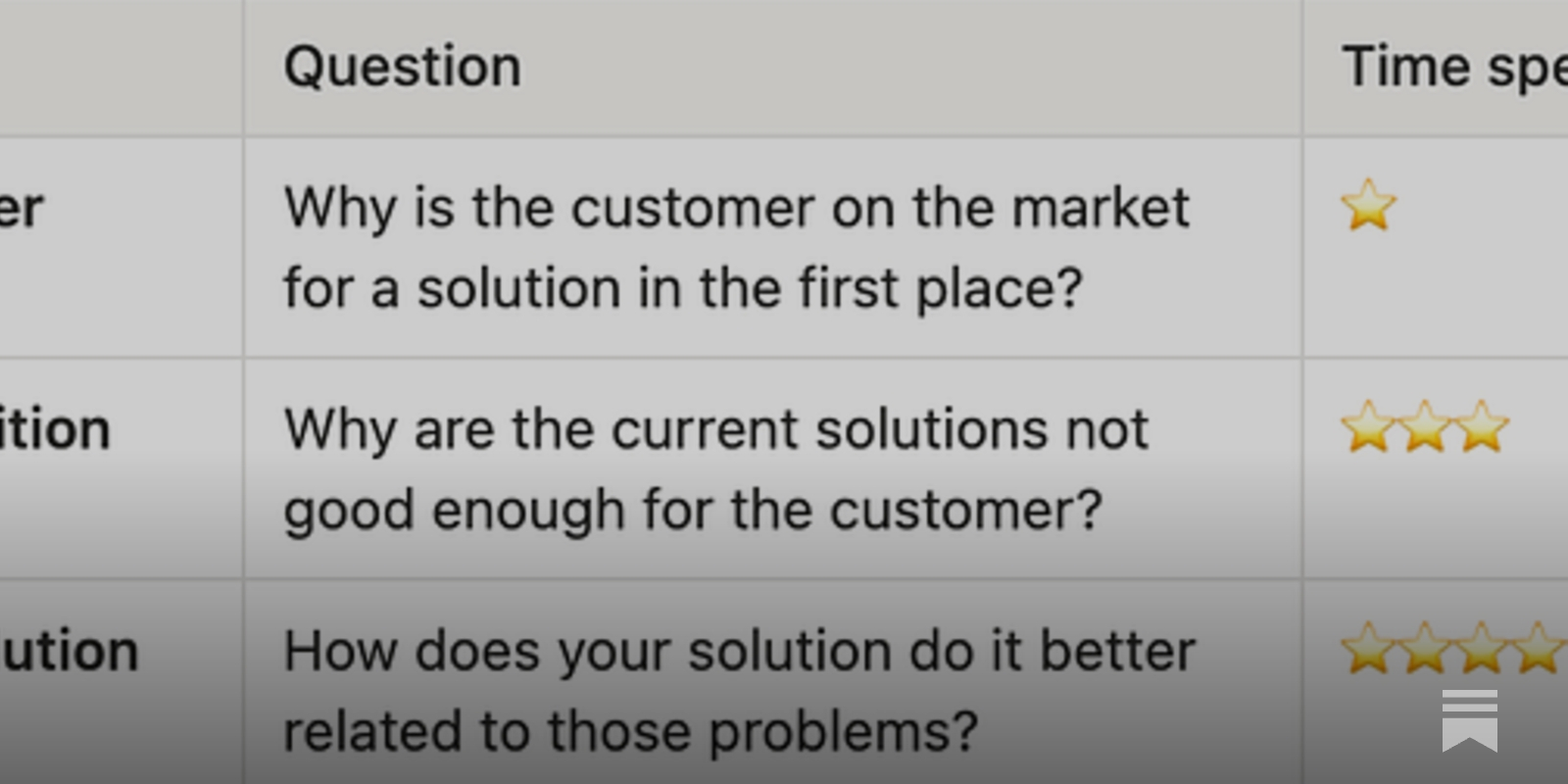
Stress test your product-market fit with these three simple questions
Interviews with Failed & Successful Startup Founders
+200 interviews with the brains behind shut down and active startups. Learn from their wins and their mistakes and become a better founder.
Lecture 16 - How to Run a User Interview (Emmett Shear)
The Interview Question Bank for Engineering Managers
Organised by theme, and every question comes with a short thinking prompt
When to Fold: The Cost of Failing Slow in a Startup
Failing Slow: Why One Founder Regretted Keeping His Startup Alive

The Startup Marketing Checklist
I tried dozens of side projects before starting Draft.dev, and now I’ve worked with hundreds of early-stage startups and established enterprises to help with growth marketing. So, a lot of founders ask me how to get started in marketing when your marketing budget is small and your product is new. I created this list to […]
Idea Generation
The most common question prospective startup founders ask is how to get ideas for startups. The second most common question is if you have any ideas for their startup. But giving founders an idea...
Open Sourcing our Company Handbook: read on to know why
In this post we’re explaining the reasons we decided to open s...
Why Founders Market Their Products Too Late
Founders predictably underestimate the importance of hiring marketers. Here’s why many startups don’t get round to marketing their product…

40 Tips for B2B Customer Development Interviews - SKMurphy, Inc.
This post on B2B customer development interviews offers my lessons learned from several thousand interviews over the last 16 years.

The Phases Product Teams Go Through, From Product/Market Fit to Hypergrowth
Former Credit Karma CPO Nikhyl Singhal shares the phases a product org goes through as a startup matures — and his tips for transitioning between them gracefully. From the mistakes that are too easy to make to what to look for when hiring, his playbook helps founders and product leaders build teams capable of finding product/market fit and handling hypergrowth.

How Superhuman Built an Engine to Find Product/Market Fit
Superhuman founder and CEO Rahul Vohra walks us through the framework his startup used to make product/market fit more actionable, detailing the survey and four-step process that were key to measuring and optimizing it.

Product-Market Fit (2026): What, Why and How [+ Pyramid] - Gust de Backer
Do you already have a Product-Market Fit (PMF)? I've been hearing it more and more lately, the question of whether someone has a PMF yet. Maybe you're already familiar with the term, you already have it or you just want to know how to get it… I'm going to explain to you: What a Product-Market Fit (PMF) is How to…

Startup Mistakes: First-Hand Lessons from 80+ Failed Startups
We've analyzed why +80 startups have failed and identified some of their common mistakes. Here're our findings!
Introduction to Market Sizing - MaRS Startup Toolkit
Explore our full library for topics and insights beyond the bundled categories.

The Four Big Risks | Silicon Valley Product Group
In the first edition of my book, INSPIRED, I discussed how successful products are valuable, usable and feasible, where I defined “valuable” as both valuable to customers and valuable to your business. While it’s easy to remember these three attributes, over the years I’ve come to believe that it was obscuring some pretty serious risks and...