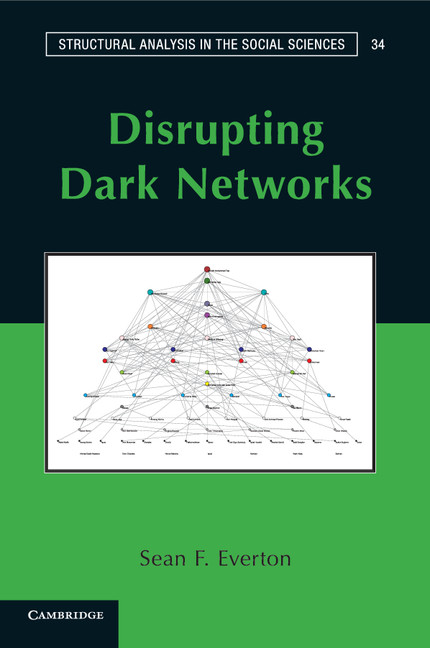
Disrupting Dark Networks focuses on how social network analysis can be used to craft strategies to track, destabilize and disrupt covert and illegal networks. The book begins with an overview of the key terms and assumptions of social network analysis and various counterinsurgency strategies. The next several chapters introduce readers to algorithms and metrics commonly used by social network analysts. They provide worked examples from four different social network analysis software packages (UCINET, NetDraw, Pajek and ORA) using standard network data sets as well as data from an actual terrorist network that serves as a running example throughout the book. The book concludes by considering the ethics of and various ways that social network analysis can inform counterinsurgency strategizing. By contextualizing these methods in a larger counterinsurgency framework, this book offers scholars and analysts an array of approaches for disrupting dark networks.
Uncovering Coordinated Networks on Social Media: Methods and Case Studies
Coordinated campaigns are used to influence and manipulate social media platforms and their users, a critical challenge to the free exchange of information online. Here we introduce a general, unsupervised network-based methodology to uncover groups of accounts that are likely coordinated. The proposed method constructs coordination networks based on arbitrary behavioral traces shared among accounts. We present five case studies of influence campaigns, four of which in the diverse contexts of U.S. elections, Hong Kong protests, the Syrian civil war, and cryptocurrency manipulation. In each of these cases, we detect networks of coordinated Twitter accounts by examining their identities, images, hashtag sequences, retweets, or temporal patterns. The proposed approach proves to be broadly applicable to uncover different kinds of coordination across information warfare scenarios.

Remotely Coerced Violence: 764, The Com Network, and the Hybridization of Threats - Combating Terrorism Center at West Point
Abstract: This article examines 764 and the wider Com Network as a case study in remotely coerced violence and the hybridization of contemporary terrorist and violent extremist threats. It argues that nihilistic violent extremism is best understood as a victim-driven, youth-centered online ecosystem in which status, belonging, and identity are earned through the production, circulation, … Continued
Digital Social Norm Enforcement: Online Firestorms in Social Media
Actors of public interest today have to fear the adverse impact that stems from social media platforms. Any controversial behavior may promptly trigger temporal, but potentially devastating storms of emotional and aggressive outrage, so called online firestorms. Popular targets of online firestorms are companies, politicians, celebrities, media, academics and many more. This article introduces social norm theory to understand online aggression in a social-political online setting, challenging the popular assumption that online anonymity is one of the principle factors that promotes aggression. We underpin this social norm view by analyzing a major social media platform concerned with public affairs over a period of three years entailing 532,197 comments on 1,612 online petitions. Results show that in the context of online firestorms, non-anonymous individuals are more aggressive compared to anonymous individuals. This effect is reinforced if selective incentives are present and if aggressors are intrinsically motivated.
Digital Social Norm Enforcement: Online Firestorms in Social Media
Actors of public interest today have to fear the adverse impact that stems from social media platforms. Any controversial behavior may promptly trigger temporal, but potentially devastating storms of emotional and aggressive outrage, so called online firestorms. Popular targets of online firestorms are companies, politicians, celebrities, media, academics and many more. This article introduces social norm theory to understand online aggression in a social-political online setting, challenging the popular assumption that online anonymity is one of the principle factors that promotes aggression. We underpin this social norm view by analyzing a major social media platform concerned with public affairs over a period of three years entailing 532,197 comments on 1,612 online petitions. Results show that in the context of online firestorms, non-anonymous individuals are more aggressive compared to anonymous individuals. This effect is reinforced if selective incentives are present and if aggressors are intrinsically motivated.
A General Method to Find Highly Coordinating Communities in Social Media through Inferred Interaction Links
Political misinformation, astroturfing and organised trolling are online malicious behaviours with significant real-world effects. Many previous approaches examining these phenomena have focused on broad campaigns rather than the small groups responsible for instigating or sustaining them. To reveal latent (i.e., hidden) networks of cooperating accounts, we propose a novel temporal window approach that relies on account interactions and metadata alone. It detects groups of accounts engaging in various behaviours that, in concert, come to execute different goal-based strategies, a number of which we describe. The approach relies upon a pipeline that extracts relevant elements from social media posts, infers connections between accounts based on criteria matching the coordination strategies to build an undirected weighted network of accounts, which is then mined for communities exhibiting high levels of evidence of coordination using a novel community extraction method. We address the temporal aspect of the data by using a windowing mechanism, which may be suitable for near real-time application. We further highlight consistent coordination with a sliding frame across multiple windows and application of a decay factor. Our approach is compared with other recent similar processing approaches and community detection methods and is validated against two relevant datasets with ground truth data, using content, temporal, and network analyses, as well as with the design, training and application of three one-class classifiers built using the ground truth; its utility is furthermore demonstrated in two case studies of contentious online discussions.
The spreading of misinformation online
Significance The wide availability of user-provided content in online social media facilitates the aggregation of people around common interests, worldviews, and narratives. However, the World Wide Web is a fruitful environment for the massive diffusion of unverified rumors. In this work, using a massive quantitative analysis of Facebook, we show that information related to distinct narratives––conspiracy theories and scientific news––generates homogeneous and polarized communities (i.e., echo chambers) having similar information consumption patterns. Then, we derive a data-driven percolation model of rumor spreading that demonstrates that homogeneity and polarization are the main determinants for predicting cascades’ size. , The wide availability of user-provided content in online social media facilitates the aggregation of people around common interests, worldviews, and narratives. However, the World Wide Web (WWW) also allows for the rapid dissemination of unsubstantiated rumors and conspiracy theories that often elicit rapid, large, but naive social responses such as the recent case of Jade Helm 15––where a simple military exercise turned out to be perceived as the beginning of a new civil war in the United States. In this work, we address the determinants governing misinformation spreading through a thorough quantitative analysis. In particular, we focus on how Facebook users consume information related to two distinct narratives: scientific and conspiracy news. We find that, although consumers of scientific and conspiracy stories present similar consumption patterns with respect to content, cascade dynamics differ. Selective exposure to content is the primary driver of content diffusion and generates the formation of homogeneous clusters, i.e., “echo chambers.” Indeed, homogeneity appears to be the primary driver for the diffusion of contents and each echo chamber has its own cascade dynamics. Finally, we introduce a data-driven percolation model mimicking rumor spreading and we show that homogeneity and polarization are the main determinants for predicting cascades’ size.

An analysis of social network-based Sybil defenses | Request PDF
Request PDF | An analysis of social network-based Sybil defenses | Recently, there has been much excitement in the research community over using social networks to mitigate multiple identity, or Sybil, attacks. A... | Find, read and cite all the research you need on ResearchGate
Data Feminism for AI
Attacks on women and trans people are not happening in a vacuum. Communications scholars W. Lance Bennett and Marianne Kneuer recently argued that we are witnessing the intensification of "illiberal public spheres" around the world (Bennett and Kneuer, 2023). These are characterized by a set of anti-democratic communications tactics that include the denigration and exclusion of minoritized people, targeted attacks on the press and political institutions, and transgression of norms of civil discourse. Such tactics are enabled and amplified by the social media platforms owned by Big Tech, whose business model elevates attention above all other metrics, such that they profit richly off extremism, threats, spectacle, and lies. The success of this corporate partnership with right-wing extremism is evident in the proliferation of book bans (Magnusson, 2024), the demonization of DEI and critical race theory (Crenshaw, 2022), and mob tactics to doxx, intimidate, misrepresent, and otherwise silence people that study misinformation, speak out against racial and gender violence, or rule against insurrectionists (Edmonds, 2024). At the same time, we have seen the continued work of feminists, including Latin American, Indigenous, and abolitionist feminists in the US and globally, doing the work of imagining alternate worlds (Cullors, 2021; Davis, 2022; Ricaurte, 2019; Simpson, 2017). This paper represents our own first attempt to imagine a more equitable, sustainable, feminist world for AI research.
Communications Infrastructure Is Not Terrorism
A living campaign hub for reporting, public letters, graphics, press coverage, social circulation, infrastructure status, and ways to act before September 25.

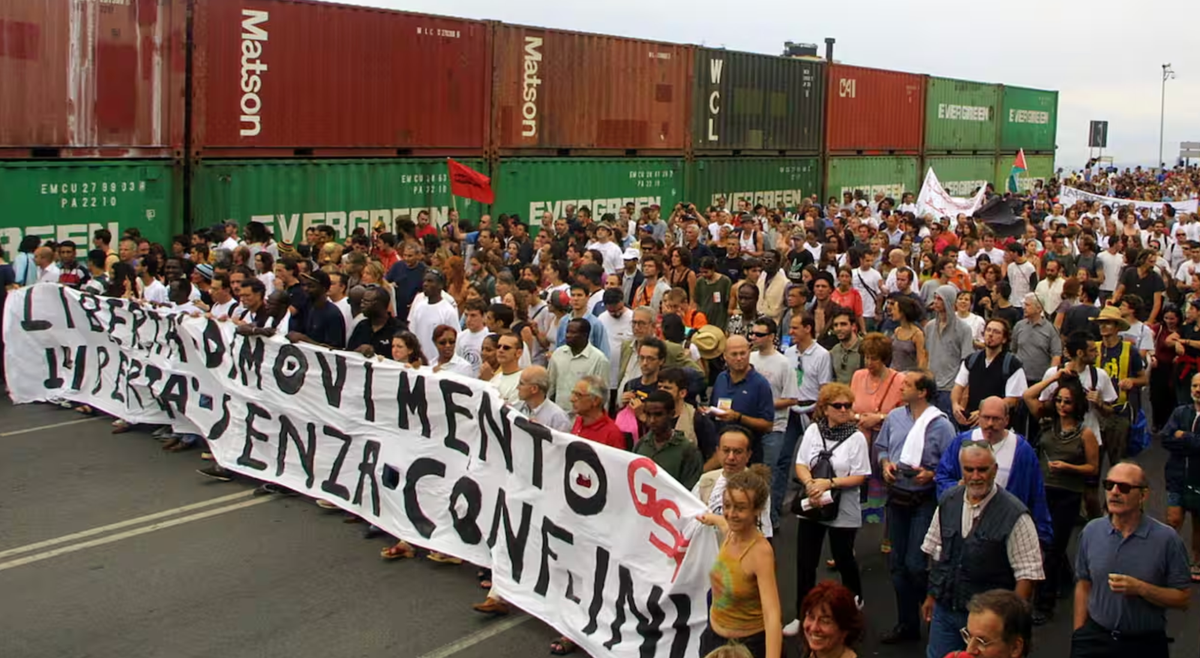
The Server Called Paranoia: Defend Autistici/Inventati
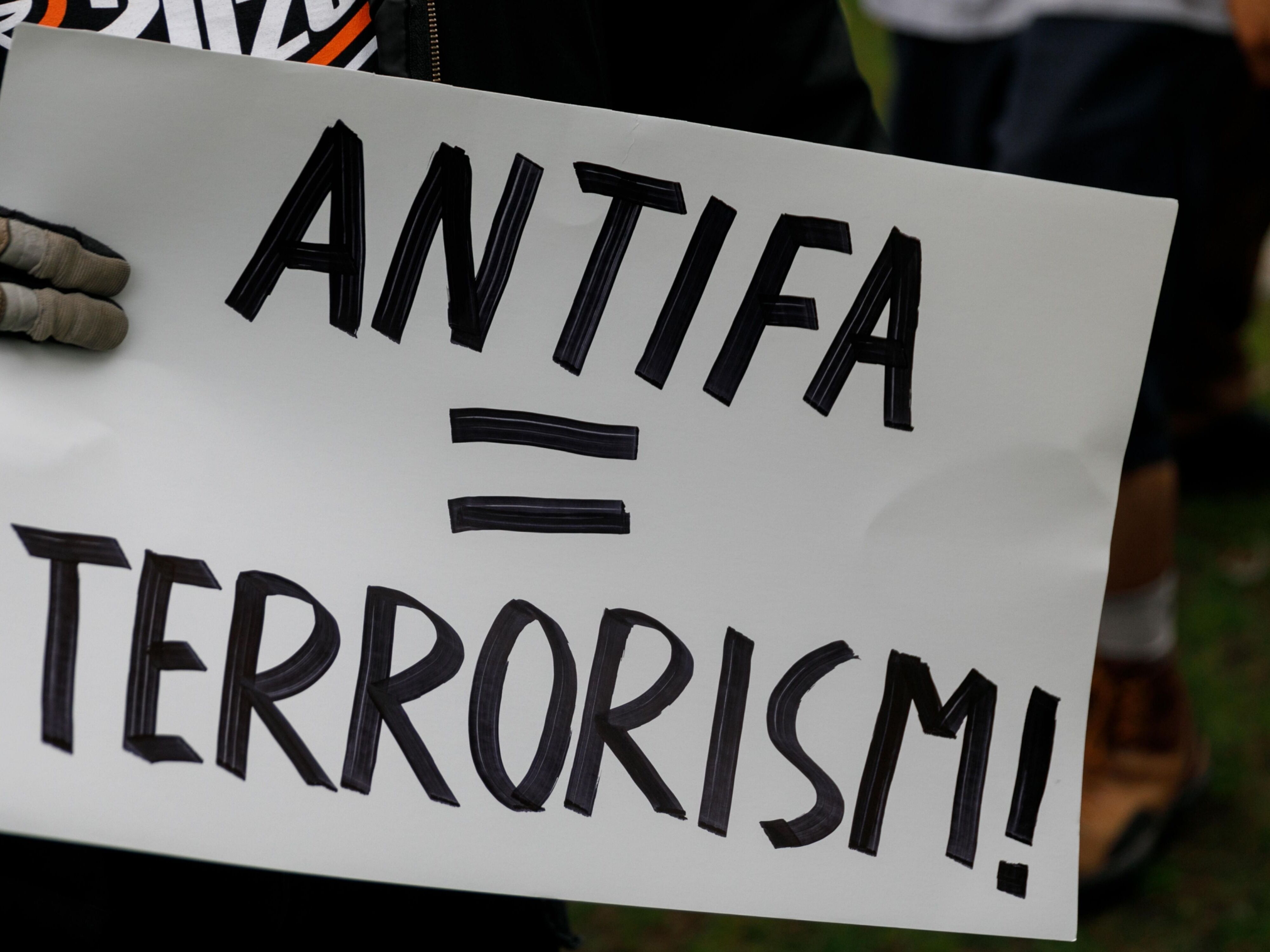
For twenty-five years, an Italian hacker collective has built communications infrastructure designed to survive censorship, surveillance and police raids. On August 26, the United States designated it a terrorist organization. On September 25, the wind-down period ends.
Social Media Effects: Hijacking Democracy and Civility in Civic Engagement
Perceived as an equalizing force for disenfranchised individuals without a voice, the importance of social networks as agents of change cannot be ignored. However, in some societies, social networks have evolved into a platform for fake news and propaganda, empowering disruptive voices, ideologies, and messages. Social networks such as Twitter, Facebook, and Google hold the potential to alter civic engagement, thus essentially hijacking democracy, by influencing individuals toward a particular way of thinking.

(PDF) Canal: Scaling Social Network-Based Sybil Tolerance Schemes
PDF | There has been a flurry of research on leveraging social networks to defend against multiple identity, or Sybil, attacks. A series of recent works... | Find, read and cite all the research you need on ResearchGate

25 years after 9/11, our definition of terrorism continues to expand : Code Switch
In the 25 years since 9/11, we've seen the definition of terrorism expand. The Trump administration has called more and more groups “terrorists,” from “narco-terrorists” in Ecuador to people who protest ICE to the entire Democratic party. This week, our conversation with Saher Selod, an expert on the surveillance of Muslims, about the effects of the war on terror after 9/11, and historian Alex Lubin about how the word “terrorist” has been used to enact violence and surveillance.Support public media with NPR+ and enjoy perks for over 25 podcasts like this one. This show’s perks include sponsor-free listening. Learn more at plus.npr.org.
What happened to the fight for the Internet? -- Dustycloud Brainstorms
At the moment I am writing this, bad internet bills are being proposed across the US, Canada, Europe, and the UK. They're using the usual tactics: they claim they're fighting for kids or fighting security risks, but in general, that's what surveillance and censorship bills have always claimed.
The Server Called Paranoia: Defend Autistici/Inventati Before September 25 – Sabot Media
For twenty-five years, an Italian hacker collective has built communications infrastructure designed to survive censorship, surveillance and police raids. On August 26, the United States designated it a terrorist organization. On September 25, the wind-down period ends.