


Since the launch of Sputnik in 1957, it has become impossible to comprehend the world solely through the lens of Hegel’s Berlin or Kojève’s Paris—even as nation-states continue to wrestle with their growing obsolescence. The planetary condition of human existence has also intensified a form of nihilism rooted in modernity: geographically through globalization, and cosmically through thermodynamics. If, in the twentieth century, reactionary politics sought to “overcome modernity” by returning to a notion of homeland (Heimat), the twenty-first century calls for a renewed framework—one that begins, perhaps, from the standpoint of Heimatlosigkeit.
The Standpoint of Heimatlosigskeit and the Planet
Since the launch of Sputnik in 1957, it has become impossible to comprehend the world solely through the lens of Hegel’s Berlin or Kojève’s Paris—even as nation-states continue to wrestle with their growing obsolescence. The planetary condition of human existence has also intensified a form of nihilism rooted in modernity: geographically through globalization, and cosmically through thermodynamics. If, in the twentieth century, reactionary politics sought to “overcome modernity” by returning to a notion of homeland (Heimat), the twenty-first century calls for a renewed framework—one that begins, perhaps, from the standpoint of Heimatlosigkeit.
The Origins Of <br>‘Planetary Realism’ And <br>‘Whole Earth’ Thinking | NOEMA
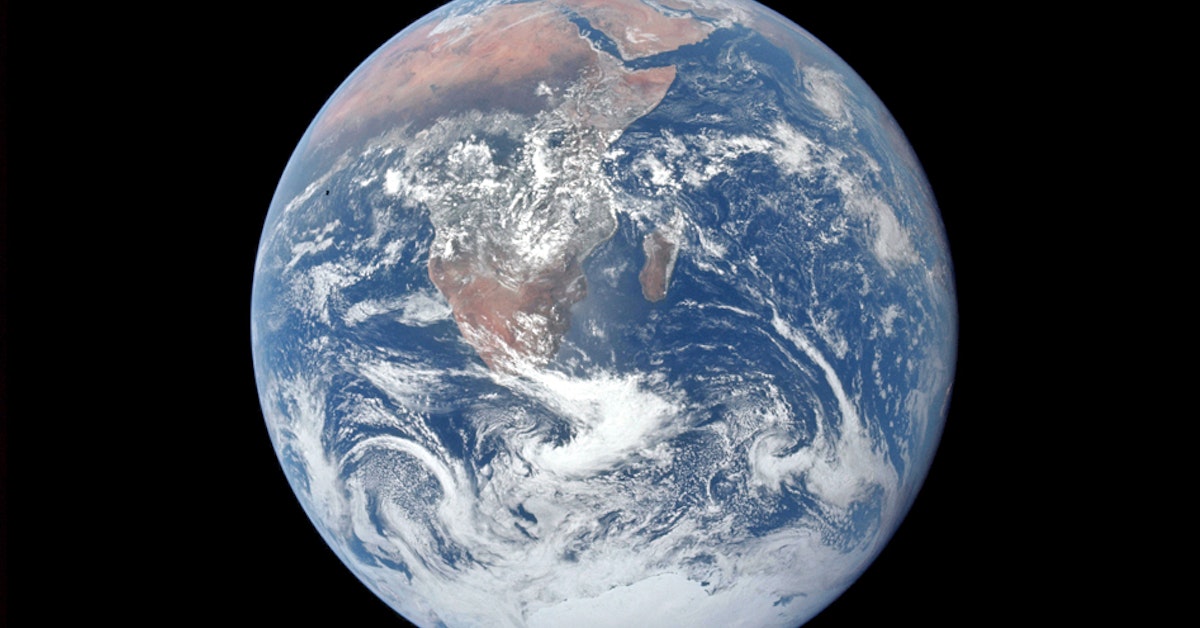
There is no escaping an interconnected world.
The New Planetary Nationalism
The realization of human embeddedness in Earth’s natural systems does not inevitably create a cosmopolitan politics oriented toward universal well-being.
The Climate of History in a Planetary Age
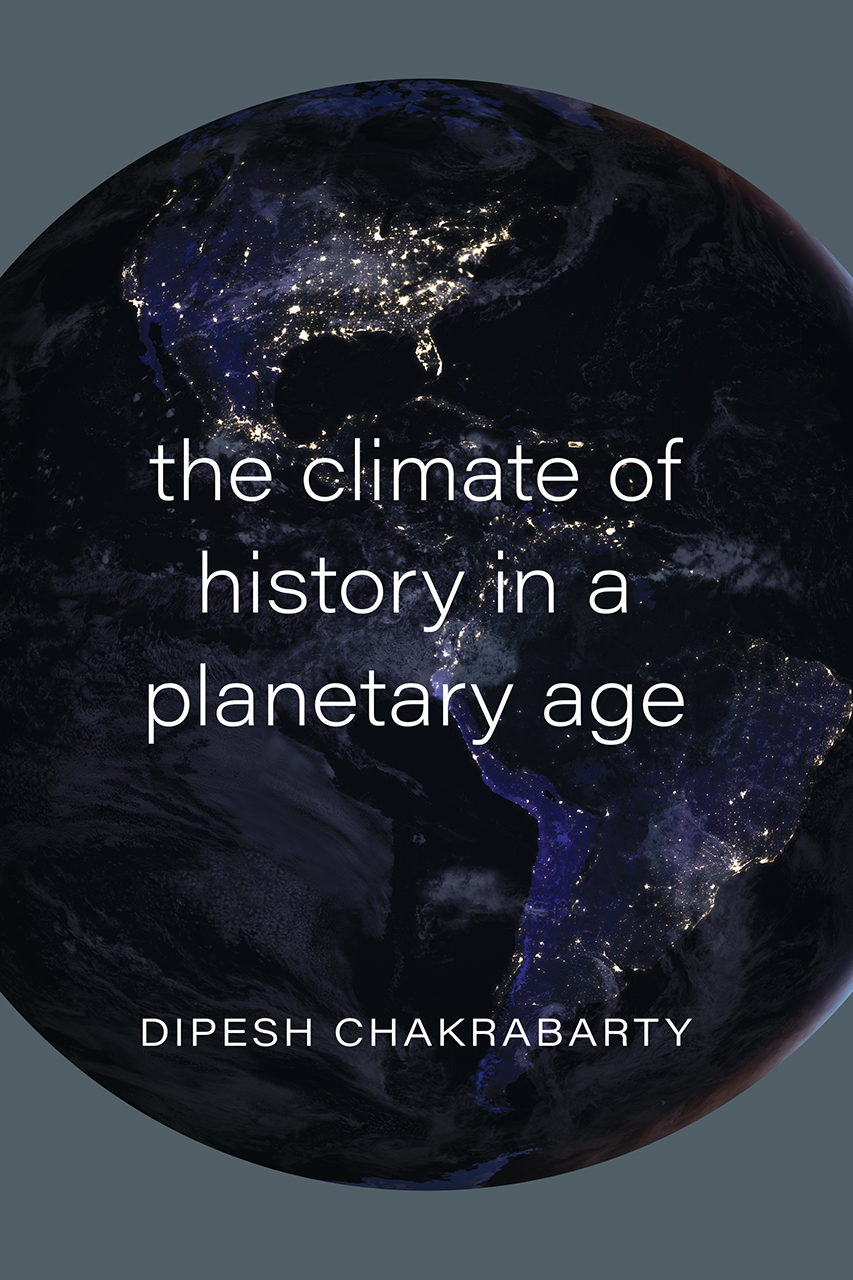
For the past decade, historian Dipesh Chakrabarty has been one of the most influential scholars addressing the meaning of climate change. Climate change, he argues, upends long-standing ideas of history, modernity, and globalization. The burden of The Climate of History in a Planetary Age is to grapple with what this means and to confront humanities scholars with ideas they have been reluctant to reconsider—from the changed nature of human agency to a new acceptance of universals. Chakrabarty argues that we must see ourselves from two perspectives at once: the planetary and the global. This distinction is central to Chakrabarty’s work—the globe is a human-centric construction, while a planetary perspective intentionally decenters the human. Featuring wide-ranging excursions into historical and philosophical literatures, The Climate of History in a Planetary Age boldly considers how to frame the human condition in troubled times. As we open ourselves to the implications of the Anthropocene, few writers are as likely as Chakrabarty to shape our understanding of the best way forward.
The Prospects of a Pluriversal Transition to a Post-Capitalist, Post-C
This book critically engages with a central dilemma facing counter-hegemonic movements as global crises intensify: how to foster systemic change while

The Human Condition: Second Edition
A classic work of political thought, more relevant today than ever The twenty-first century has seen a resurgence of interest in the political thinker Hannah Arendt, “the theorist of beginnings,” whose work probes the logics underlying unexpected transformations—from totalitarianism to revolution. A work of striking originality, The Human Condition is in many respects more relevant now than when it first appeared in 1958. In her study of the state of modern humanity, Hannah Arendt considers humankind from the perspective of the actions of which it is capable. The problems Arendt identified then—diminishing human agency and political freedom, the paradox that as human powers increase through technological and humanistic inquiry, we are less equipped to control the consequences of our actions—continue to confront us today. This new edition, published to coincide with the sixtieth anniversary of its original publication, contains Margaret Canovan’s 1998 introduction and a new foreword by Danielle Allen. A classic in political and social theory, The Human Condition is a work that has proved both timeless and perpetually timely.
Ecocivilization: making a world that works for all
""One of the greatest thinkers of our age" (The Guardian) presents a new way of living-one modeled on nature's design instead of capitalism's-for fans of Guns, Germs, and Steel and Doughnut Economics It has often been said that it is easier to imagine the end of the world than it is to imagine the end of capitalism-and yet that is what the historical moment urgently calls for. Climate change has reached an emergency state, inequality continues to grow, and, for many, the future has never seemed more bleak. Incremental policy improvements are no longer enough-we need a deep transformation of our current civilization to continue to survive. In Ecocivilization, leading thinker Jeremy Lent reimagines the basis of our civilization, and argues for a new global system of living, one based on life-affirming principles modeled after nature's own design. What enfolds is a robust framework incorporating Lent's own expertise, and the lived experiences of those on the ground already putting ecological civilization's core tenants into practice-justice, mutuality, diversity, and symbiosis. From the global economy to universal housing and income, from infrastructure to agriculture, every major aspect of our society could be redesigned to work together as a coherent whole, setting the conditions for all people to flourish. Ecocivilization shows how this future on a regenerated Earth is not only desirable, but entirely feasible"--

Humanity’s Endgame
A new history of societal collapse by an expert in existential risk argues that our globalized society is edging toward the precipice.

Planetary carambolage: The evolutionary political economy of technology, nature and work
The following editorial introduces the special issue (SI) on “Work, Environment and Planetary-scale Computation in Political-Economic Evolution”. Here, however, we go beyond an outline of what each contribution to the SI addresses, and attempt to draw a more pronounced shared embedding of the arguments that have come to the fore. The original idea of this SI was to synthesize a range of contemporary global political-economic challenges, i.e. (1) technology (esp. digital transformation), (2) nature (esp. ecological crisis) and (3) work (esp. precarization via the evolving platform economy). The main argument developed in this editorial reflection focuses on the common ground and origin of those processes found in the complex evolution of capitalist development. We frame the latter by assigning it a new term, i.e. “planetary carambolage”.

Beyond technofix: Thinking with Epimetheus in the anthropocene
The Prometheus myth has long now provided inspiration for those who envision solutions to environmental issues. Prometheus is the figure par excellence of human forethought and progress in the anthropocene. In this article, we introduce the concept of ambient Prometheanism to describe the way of thinking that foregrounds foresight and anticipation and advances technological solutions developed by capital and energy-intensive projects. We question this stance, arguing that ambient Prometheanism, with its emphasis on technofix, leads to the economisation and depoliticisation of planetary environmental issues. Following Bernard Stiegler, we recover from the myth the figure of Epimetheus, Prometheus’ brother, as well as his associated faculty, epimetheia to theorise what we call an ‘Epimethean politics’. Thinking the anthropocene from the perspective of ambient Prometheanism and Epimetheanism means to consider the role of technology in climate politics, and in particular to make the case for the importance of afterthought in face of unintended consequences and accumulated errors. To substantiate our argument, we outline the challenge posed by emerging solutions focussed on technological intensification (geoengineering) and socio-economic acceleration (green growth and accelerationism). An Epimethean politics of the climate requires to use reflexivity as a capacity to anticipate, but also to mobilise epimetheia to account for accidents and past mistakes. Such a politics builds from an alternative conception of technology, one that radically differs from ambient Prometheanism. Finally we read as actualisations of Epimethean politics contemporary eco-political struggles and their imperatives for multispecies living and convivial livelihoods.
Preface | The World After Capital
Since publishing the previous version of The World After Capital, I have met with people across the political spectrum to discuss the ideas from the book. When I present these in person, I emphasize that the ideas are neither left nor right but forward (credit to Scott Santens who first used this phrase about Universal Basic Income). My writing, however, at times has alienated readers who identify as being more on the right. In this new edition, I am therefore making an extra effort to emphasize how both my diagnosis of where we are at and my suggestions for how to move forward do not map onto the existing political divides. Instead this is a new way of understanding our challenges and opportunities that can be the basis for movements and parties that are not trapped in Industrial Age ideology.
The Predatory Hegemon
Ever since Donald Trump first became U.S. president, in 2017, commentators have searched for an adequate label to describe his approach to U.S. foreign relations. Writing in these pages, the political scientist Barry Posen suggested in 2018 that Trump’s grand strategy was “illiberal hegemony,” and the analyst Oren Cass argued last fall that its defining essence was a demand for “reciprocity.” Trump has been called a realist, a nationalist, an old-fashioned mercantilist, an imperialist, and an isolationist.

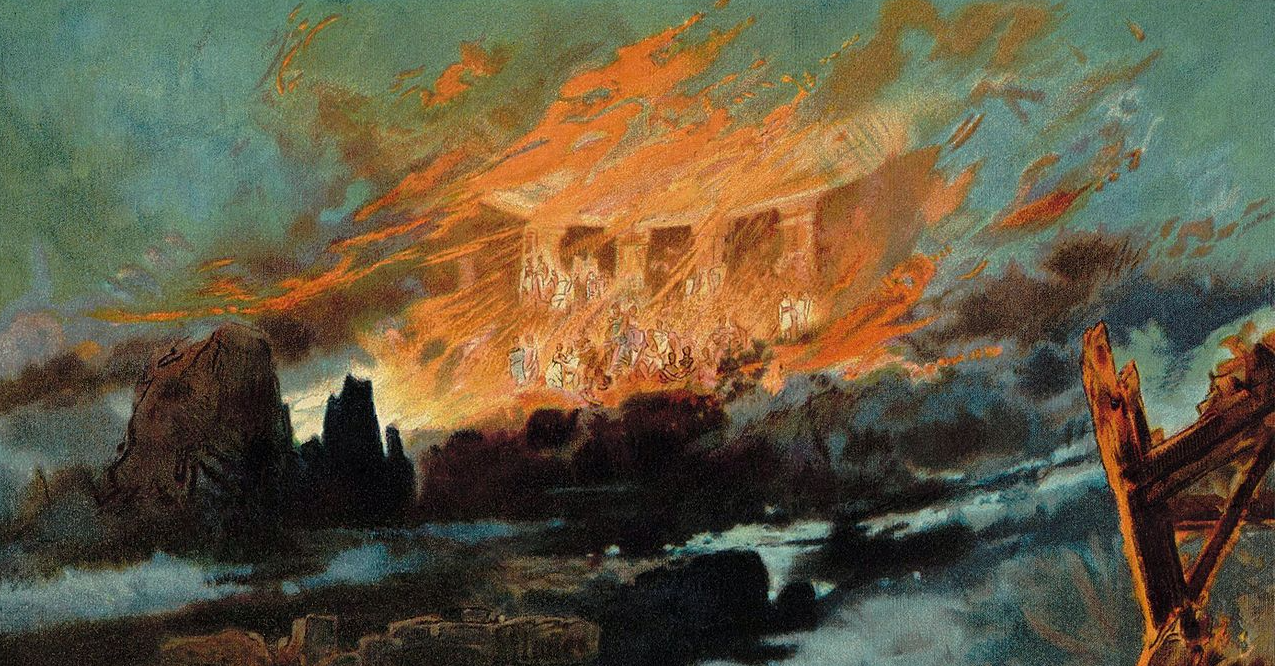
Apocalypse Now and Then • EQUATOR
Artificial intelligence is capitalism’s final destination

Daniel Christian Wahl: “Bioregional Futures: Reconnecting to Place for Planetary Health” - The Great Simplification
In the past century of abundant energy surplus, humanity’s globalized, large-scale approach to problem-solving
