


I’m going to mainly focus on a career in the private sector, doing applied work. If you want to know about government work, ask Maya Shankar or Owain Service. If what I’ve written doesn’t answer your questions, ask me. Just have something specific and interesting to ask about! But first, some screeners: Is this a long-term interest? Is this something you want to dedicate at least a decade to? It should be, otherwise you’ll get out-competed by others.
Opinion | Why Is Behavioral Economics So Popular? (Published 2018)
The recent vogue for this academic field is in part a triumph of marketing.

Personal Finance
Get the Business Insider take and compare the best savings accounts, best credit cards, best insurance policies, and more. Never feel like a financial outsider again.
Survey of Income and Program Participation (SIPP)
Provides comprehensive information on the dynamics of income, employment, household composition, and government program participation.
The ABCs of Financial Education: Experimental Evidence on Attitudes, Behavior, and Cognitive Biases
This paper uses a large-scale field experiment in India to study attitudinal, behavioral, and cognitive constraints that can stymie the link between financial education and financial outcomes. The study complements financial education with (i) financial incentives on a financial literacy test to affect participant motivation, (ii) financial goal setting to provide a psychological nudge, and (iii) personalized financial counseling to enhance the intensity of treatment. The analysis finds no impact of financial incentives on learning but significant effects of both goal setting and counseling on real financial outcomes. These results identify important complements to financial education that can bridge the gap between financial knowledge and behavior change. Data and the online appendix are available at https://doi.org/10.1287/mnsc.2017.2819 . This paper was accepted by Amit Seru, finance.

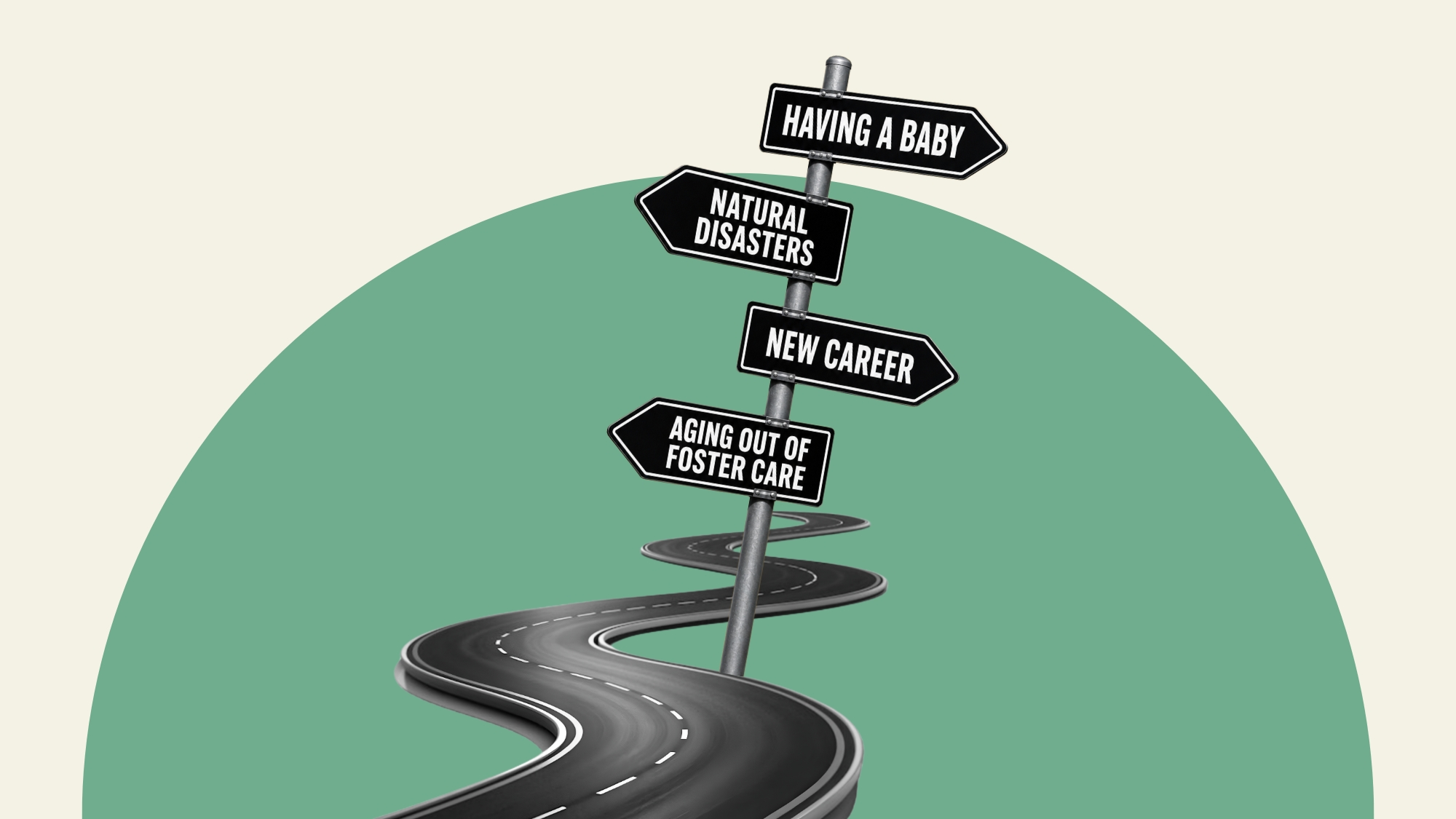
Right on Time: How Cash Helps Families Move Through Life's Transitions - Economic Security Project
Executive Summary Over the past decade, more than 250 guaranteed income pilots, programs that provide people with regular cash with no restrictions on how they use it, have run across 40 states and the District of Columbia. That research has revealed many learnings, and this report focuses on one clear takeaway: cash has its largest…
Five Books: The best books on Behavioural Economics, recommended by Dan Ariely
The best behavioral economics books, as discussed by the brilliant Professor of psychology and behavioral economics, Dan Ariely.
How the Economic Machine Works [Animation] by Ray Dalio
In this animation, Ray Dalio explains How The Economic Machine Works. He covers important points such as credit, interest rates, leveraging and deleveraging.
Moving Forward on Basic Income | Y Combinator
We have a few updates we want to share on our Basic Income Project [https://ycombinator.wpengine.com/basic-income]: Our Research Director Elizabeth Rhodes is joining Basic Income Project as our Research Director. She recently completed a joint PhD in Social Work and Political Science at the University of Michigan, where her research focused on health and education provision in slum communities in Nairobi. We received over 1000 applications for this position (including tenured professors from
Passive Income Ideas That Actually Work (No, You Don't Need to Be Rich First)
Explore practical passive income ideas that can generate revenue even while you sleep. Start today with the right approach.

Behaviorally Informed Policies for Household Financial Decisionmaking
Low incomes, limited financial literacy, fraud, and deception are just a few of the many intractable economic and social factors that contribute to the financial difficulties that households face today. Addressing these issues directly is difficult and costly. But poor financial outcomes also result from systematic psychological tendencies, including imperfect optimization, biased judgments and preferences, and susceptibility to influence by the actions and opinions of others. Some of these psychological tendencies and the problems they cause may be countered by policies and interventions that are both low cost and scalable. We detail the ways that these behavioral factors contribute to consumers’ fiancial mistakes and suggest a set of interventions that the federal government, in its dual roles as regulator and employer, could feasibly test or implement to improve household financial outcomes in a variety of domains: retirement, short-term savings, debt management, the take-up of government benefits, and tax optimization.

Wave: Small Business Software - Wave Financial
Create beautiful invoices, accept online payments, and make accounting easy—all in one place—with Wave’s suite of money management tools.

David Graeber: "Spotlight on the financial sector did make apparent just how bizarrely skewed our economy is in terms of who gets rewarded"
David Graeber explains why the more your job helps others, the less you get paid

Data occupations with rapid employment growth, projected 2021–31
Data are everywhere. And data could be the focus of your career in one of these fast-growing occupations.

Robin Berjon


"Private Government: How Employers Rule Our Lives (and Why We Don't Talk About It)" by Elizabeth Anderson A much-needed reframing to show that government can take place in private contexts too. She focuses on employers in the US, but it works well for tech monopolies in the digital space too.
I will be presenting in the NBER Household Finance Summer Institute session this Friday at 1pm on "Using AI in Household Finance Research: A Practical Guide." nber.org/conferences/si-2026-household…

SI 2026 Household Finance
www.nber.org