Project Drawdown drives meaningful climate action by advancing science-based solutions and strategies.
Home - ClimateAction.Tech
The climate crisis is happening all around us. As tech workers, we can use our skills to take and accelerate climate action.

How to solve climate change and make life more awesome
We already have all the tools we need to fix climate change. We just need to use them.

Offering experience, intelligence, and wisdom for climate action
A Necessary Response: The Climate Action Handbook for Urbanists is an impassioned and technically useful guide to taking action at the community level.

BBC - Science & Nature - Climate Challenge
A game where, as president, you must tackle climate change and stay popular with the voters.
Visualising Climate 2026 — Conference
A global conference on climate data visualization, storytelling, and science. Bologna, Italy • 4–6 November 2026.

GALLANT Gathering set to showcase success of ‘living lab’ research project
A pioneering project which is using Glasgow as a ‘living lab’ to explore new ways of making cities more resilient to the effects of climate change is celebrating five years of research with a sold-out three-day event at the University of Glasgow.
Correcting climate ‘misperceptions’ may not boost climate action - Carbon Brief
Most people "underestimate" general support for climate change and "overestimate" actual, real-world climate action.
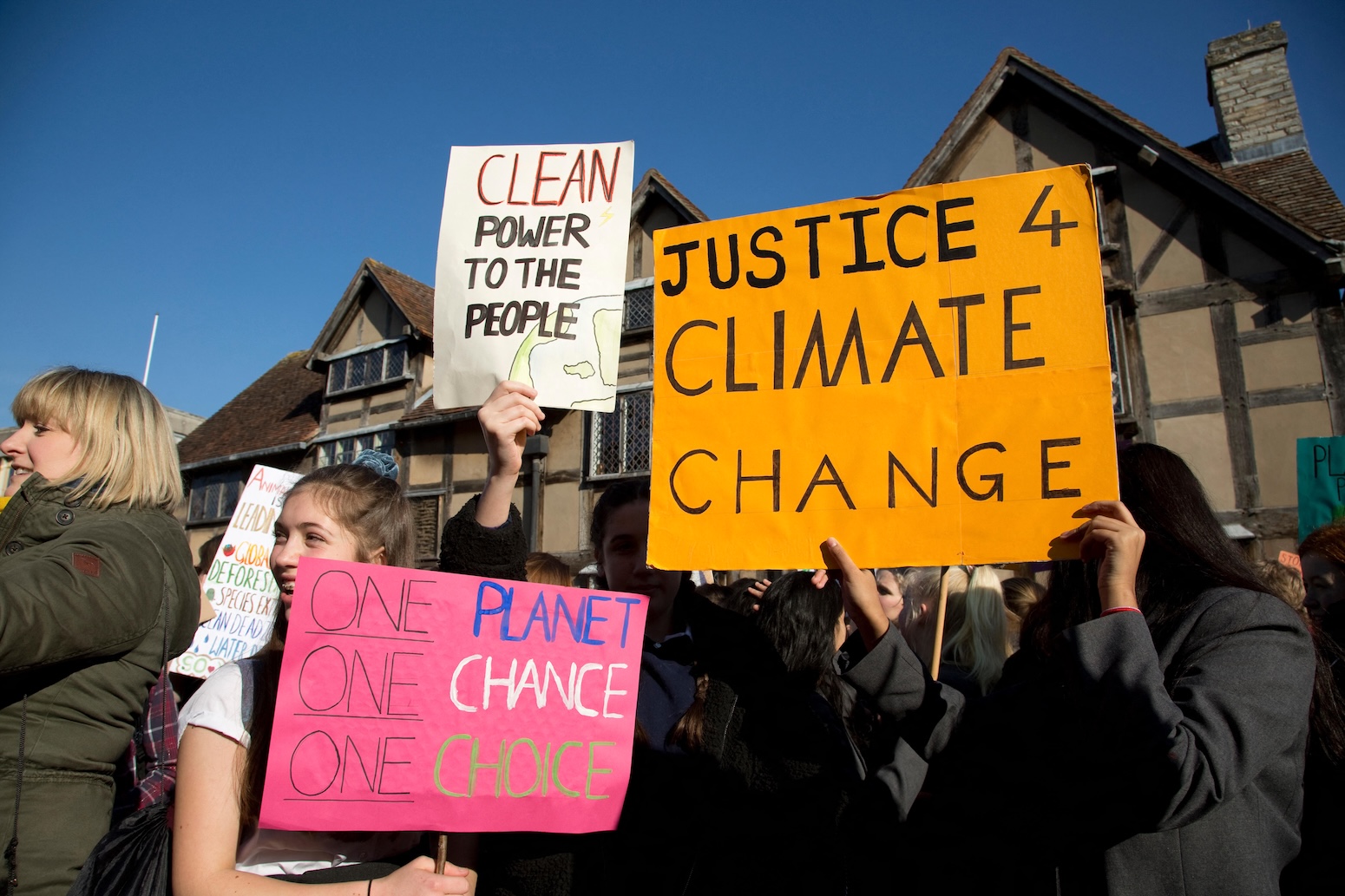
‘Hopeless and broken’: why the world’s top climate scientists are in despair
Exclusive: Survey of hundreds of experts reveals harrowing picture of future, but they warn climate fight must not be abandoned

Climate Change: Global Crisis To Local Action By Kevin Anderson
Ten ways to confront the climate crisis without losing hope | Rebecca Solnit
The long read presents Reconstruction after Covid: It’s easy to despair at the climate crisis, or to decide it’s already too late – but it’s not. Here’s how to keep the fight alive

Technological Optimism and the Unspoken Abandonment of Paris
On 7 October 2026, The Guardian published an article titled Scientists who put faith in technology are less likely to take climate action. The article reported on a study by the London School of Economics, which surveyed more than 9,000 scientists across 115 countries about their views on whether technology will largely solve the problems caused by climate change. The findings suggested that scientists expressing greater faith in technological solutions were less likely to engage in civic action or make significant changes to their own lifestyles.
Appropriate Technology, Permacomputing, Post Growth, and Ecomodernism.
To adapt to the changing climate, we need to radically rethink how and why we do the things we do. From technology, to social movements, to economics. The world is at stake. And we can change it.
Manage derailment risks to avoid Hothouse Earth
The risk of a ‘Hothouse Earth’ trajectory has become increasingly prominent in debates about Earth system stability and climate overshoot. Existing analyses primarily focus on biophysical feedbacks that may amplify warming beyond direct anthropogenic forcing. We argue the concept has not previously incorporated how social destabilisation lowers the effective threshold at which biophysical tipping dynamics become self-sustaining, independently of further anthropogenic forcing and so undermines the capacity for planetary stewardship. We define ‘derailment risk’ as the possibility that escalating Earth system disruption weakens the social, political, and economic conditions required to sustain mitigation, adaptation, and ecological restoration. Such risks emerge when climate impacts contribute to a wide range of challenges, including debt crises, institutional erosion, political fragmentation, supply-chain instability, and declining public support for environmental action. These reinforcing feedbacks may reduce humanity’s capacity to respond even before biophysical tipping thresholds are crossed. We therefore extend the Hothouse Earth framework by incorporating social dynamics into the Earth system stability landscape. We propose a three-stage framework for assessing and managing derailment risks: conceptual mapping of socio-biophysical feedbacks; anticipatory resilience-building interventions; responsive governance strategies for periods of escalating instability. We conclude that planetary stewardship should prioritise maintaining and expanding collective agency under worsening Earth system stress.
Climate solutions most likely to reach ‘positive tipping points’ revealed by scientists
Global shift towards clean electricity could trigger ‘cascade’ of progress, helping reduce air pollution, cut waste and revive oceans
Austerity and climate (in)action
In the wake of the 2008 global financial crisis, many governments implemented austerity policies aimed at reducing budget deficits through public spending cuts. This column examines the rollout of programme awarding grants for home energy efficiency upgrades in the UK examine the extent to which cuts to local government finances may have impacted efforts to promote climate action. The findings suggest that austerity, combined with poor digital skills, undermined local authorities’ efforts to effectively carry out a climate action policy that was centrally planned but locally administered.

Join the Action Network
COMMUNITYConnect with a statewide community taking action for climate justice. Meet people near you, build relationships, and be part of a network working together for real change.