


Independent news on politics and war. Click to read Drop Site News, a Substack publication with hundreds of thousands of subscribers.
Revealed: How Substack makes money from hosting Nazi newsletters
Exclusive: Site takes a cut of subscriptions to content that promotes far-right ideology, white supremacy and antisemitism

Revealed: How Substack makes money from hosting Nazi newsletters
Exclusive: Site takes a cut of subscriptions to content that promotes far-right ideology, white supremacy and antisemitism
Epstein and Israel | Drop Site News | Substack
Drop Site's exclusive series on Jeffrey Epstein’s role in Israeli intelligence operations. Click to read Drop Site News, a Substack publication with hundreds of thousands of subscribers.

Destacked: Why I Avoid Substack As Much as Possible - Jacky Alciné
From Substack LLC's attempt to capture the concept of a newsletter as a verb to their overt encouragement and support for Neo-Nazi content, don't expect me to post anything on that platform. I explain why.

Ground News
The biggest source for breaking news around the world. Compare headlines across the political spectrum using media bias ratings driven by data.

Substack writers, you need a website!
Substack is convenient, but treat it as a distribution tool for your content. Your content should live on an independently owned website, which has a domain name you control and own. This way, you …

Substack Writers Concerned as Subscriptions ‘Plummet’ Due to Follow Feature
Substack writers are expressing their concerns about the platform’s following feature on social media, which some argue is suppressing their subscription growth.

Substack Has a Nazi Problem
The newsletter platform’s lax content moderation creates an opening for white nationalists eager to get their message out.

Dropshipping journalism
<p>No one working at <i>Newsweek</i> can tell me why it still exists</p>

Politics News | Breaking Political News, Video & Analysis-ABC News
ABC News is your trusted source on political news stories and videos. Get the latest coverage and analysis on everything from the Trump presidency, Senate, House and Supreme Court.

Politics News | Breaking Political News, Video & Analysis-ABC News
ABC News is your trusted source on political news stories and videos. Get the latest coverage and analysis on everything from the Trump presidency, Senate, House and Supreme Court.
Do Not Research | Substack
DNR is a publishing platform for writing, visual art, internet culture and more. Click to read Do Not Research, a Substack publication.

The spreading of misinformation online
Significance The wide availability of user-provided content in online social media facilitates the aggregation of people around common interests, worldviews, and narratives. However, the World Wide Web is a fruitful environment for the massive diffusion of unverified rumors. In this work, using a massive quantitative analysis of Facebook, we show that information related to distinct narratives––conspiracy theories and scientific news––generates homogeneous and polarized communities (i.e., echo chambers) having similar information consumption patterns. Then, we derive a data-driven percolation model of rumor spreading that demonstrates that homogeneity and polarization are the main determinants for predicting cascades’ size. , The wide availability of user-provided content in online social media facilitates the aggregation of people around common interests, worldviews, and narratives. However, the World Wide Web (WWW) also allows for the rapid dissemination of unsubstantiated rumors and conspiracy theories that often elicit rapid, large, but naive social responses such as the recent case of Jade Helm 15––where a simple military exercise turned out to be perceived as the beginning of a new civil war in the United States. In this work, we address the determinants governing misinformation spreading through a thorough quantitative analysis. In particular, we focus on how Facebook users consume information related to two distinct narratives: scientific and conspiracy news. We find that, although consumers of scientific and conspiracy stories present similar consumption patterns with respect to content, cascade dynamics differ. Selective exposure to content is the primary driver of content diffusion and generates the formation of homogeneous clusters, i.e., “echo chambers.” Indeed, homogeneity appears to be the primary driver for the diffusion of contents and each echo chamber has its own cascade dynamics. Finally, we introduce a data-driven percolation model mimicking rumor spreading and we show that homogeneity and polarization are the main determinants for predicting cascades’ size.

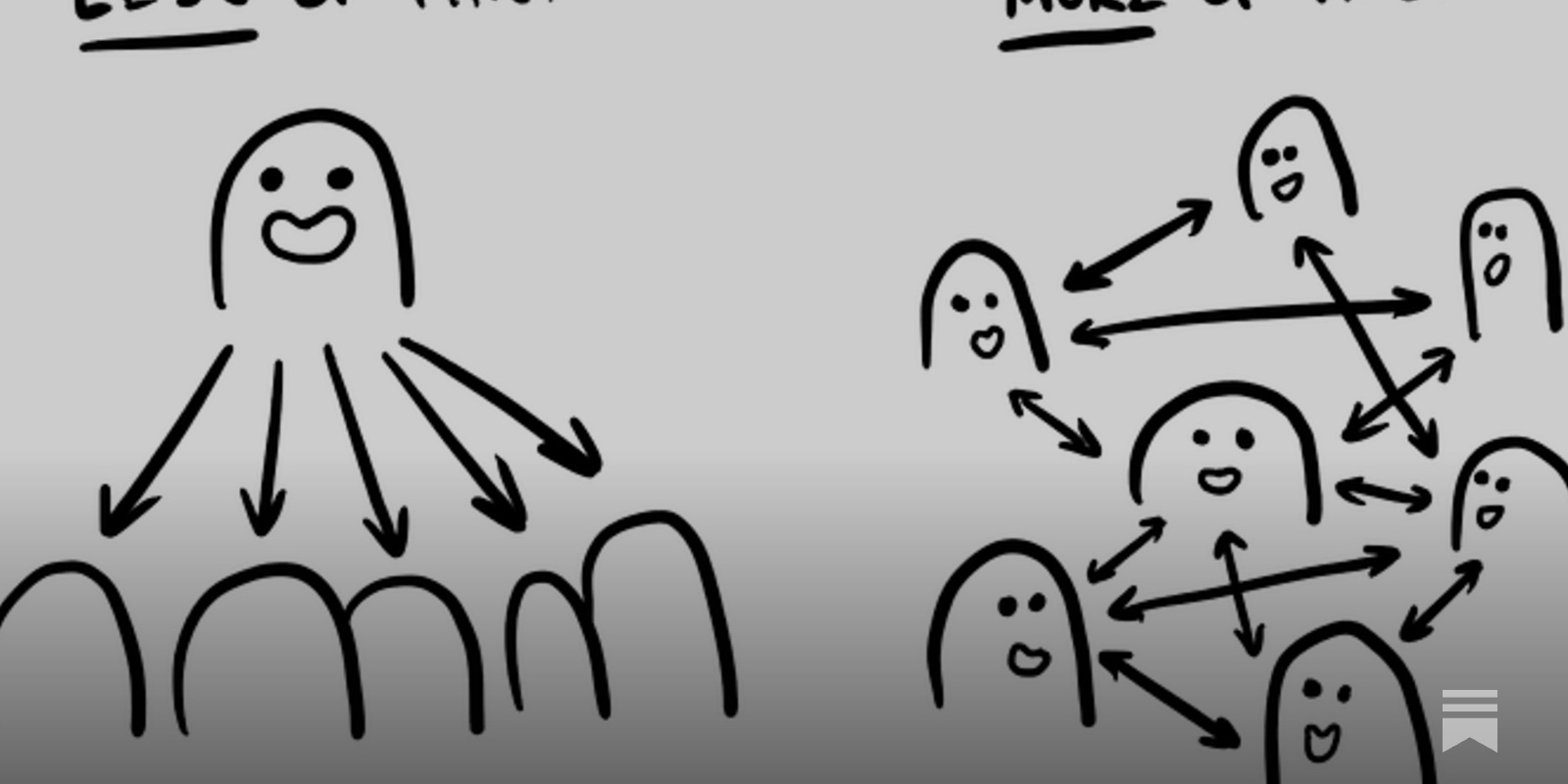
How to build community around your publication
Tips for building your community on Substack, courtesy of Bailey Richardson, who helped shape the communities around Instagram, IDEO, and Pop-Up Magazine.
Changes to the Facebook Algorithm Decreased News Visibility Between 2021-2024
Platforms, especially Facebook, are primary news sources in the US. In its widely criticized "War on News," Meta algorithmically deprioritized news and political content. We use data from 40 news organizations (5,243,302 Facebook posts, 7,875,372,958 user reactions) and 21 non-news pages (396,468 posts; 1,909,088,308 reactions) between January 1, 2016 and February 13, 2025 to examine how these changes influenced news visibility on the platform. Reactions to news declined by 78% between 2021 and 2024 while reactions to non-news pages increased, indicating targeted suppression of news visibility. Low-quality sources were especially suppressed, yet the 2025 end to "War on News" increased user reactions to news, especially low-quality ones. These changes do not reflect decreased news supply, Facebook user base, or interest in news over this period.
