


Facial feminization surgery is a group of procedures to help a person look more feminine. Some women are born with masculine features that make them feel unattractive, and, as women age they tend to look more masculine in general.
How to feminise your face with your eyebrows! | Trans Girl Advice
Achieving a NONBINARY look with TOP SURGERY
Overview of feminizing hormone therapy | Gender Affirming Health Program
The goal of feminizing hormone therapy is the development of female secondary sex characteristics, and suppression/minimization of male secondary sex characteristics. General effects include breast development (usually to Tanner stage 2 or 3), a redistribution of facial and body subcutaneous fat, reduction of muscle mass, reduction of body hair (and to a lesser extent, facial hair), change in sweat and odor patterns, and arrest and possible reversal of scalp hair loss. Sexual and gonadal effects include reduction in erectile function, changes in libido, reduced or absent sperm count and ejaculatory fluid, and reduced testicular size. Feminizing hormone therapy also brings about changes in emotional and social functioning. The general approach of therapy is to combine an estrogen with an androgen blocker, and in some cases a progestogen.
You can't "masculinity" your way out of oppression
Top Surgery for Non-Binary Patients: Common Techniques
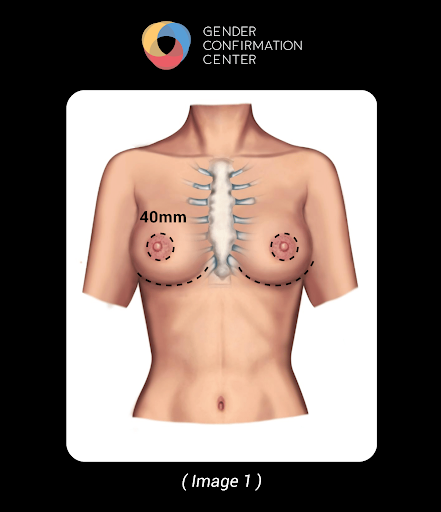
This is an overview of common surgical techniques, incisions and aesthetics requested by non-binary and gender fluid patients seeking top surgery.
In pursuit of 'Instagram face,' are we losing the imperfections that make us human?
Plastic surgery is becoming so normalized and undetectable, it's changing our relationship to reality. The New Yorker staff writer Jia Tolentino considers how beauty standards have dovetailed with AI.

Trans/Misogyny = TRUE
At its core, the Gender Binary–as well as Trans/Misogynistic-Bias–exists to create an oppressed class. This oppressed class is what we recognize as Women, and its oppression is facilitated by the logic of misogynistic-bias, which asserts that women are inherently lesser than those outside of the oppressed class (Women < Men = TRUE). The creation of an oppressed class carries with it the creation of a non-oppressed class, consisting of those who are not women. This non-oppressed class is what we recognize as Men. The classes of Women and Men are defined by the phenomena of femininity and masculinity. The traits which make up these phenomena differ between cultures, but they can be found in both the physical, such as shape and sound, and the abstract, such as behavior & thought. Trans/Misogynistic-Bias superimposes the classes of Women and Men over these phenomena, so that when traits which evoke femininity or masculinity are identified, the individuals who embody these traits are then classified as either Women or Men. Due to this superimposition, femininity and Women are synonymous within Gendered Reality. As such, traits associated with femininity are subject to the logic of misogynistic-bias. This leads to value neutral qualities such as softness or emotionalism–traits often associated with femininity–to be recognized as lesser. To embody these traits is to embody weakness itself. Conversely, traits which evoke masculinity become synonymous with strength and power. Further, since Trans/Misogynistic-Bias is perpetually looping in on itself, so too does this conditioning. Just as femininity is associated with weakness, weakness is associated with femininity. This leads to traits such as helplessness or naivety being viewed as aspects of femininity, while traits which evoke power, such as intelligence and wealth, become aspects of masculinity. Through this process, Trans/Misogynistic-Bias perpetuates the positioning of Women as being less than Men in every aspect.
homepage new
Board-certified surgeons specializing in gender-affirming care. Top surgery, FFS, and more. Book your free virtual or in-person consultation today.
Facial recognition service becomes a weapon against Russian porn actresses
FindFace" was created to find friends, but some are using it to harass women.

Selective Estrogen Receptor Modulators: A Potential Option For Non-Binary Gender-Affirming Hormonal Care?
Gender dysphoria describes the distress associated with having a gender identity that differs from one’s birth-assigned sex. To relieve this distress, transgender and gender diverse (henceforth, trans) individuals commonly undergo medical transition involving hormonal treatments. Current hormonal treatment guidelines cater almost exclusively for those who wish to transition from male to female or vice versa. In contrast, there is a dearth of hormonal options for those trans individuals who identify as non-binary and seek an androgynous appearance that is neither overtly male nor female. Though prolonged puberty suppression with gonadotrophin releasing hormone agonists (GnRHa) could in theory be gender-affirming by preventing the development of unwanted secondary sex characteristics, this treatment option would be limited to pre- or peri-pubertal adolescents and likely have harmful effects. Here, we discuss the theoretical use of Selective Estrogen Receptor Modulators (SERMs) for non-binary people assigned male at birth (AMAB) who are seeking an androgynous appearance through partial feminisation without breast growth. Given their unique range of pharmacodynamic effects, SERMs may represent a potential gender-affirming treatment for this population, but there is a lack of knowledge regarding their use and potentially adverse effects in this context.

Experimental feminizing HRT - Mad Gender Science!
The goal of this regimen is to allow AMAB people (specifically, people with testes and relatively little preexisting breast tissue) to develop feminine features without growing breasts.
An Introduction to Hormone Therapy for Transfeminine People
An Introduction to Hormone Therapy for Transfeminine People by Aly

Selective Estrogen Receptor Modulators: A Potential Option For Non-Binary Gender-Affirming Hormonal Care?
Gender dysphoria describes the distress associated with having a gender identity that differs from one’s birth-assigned sex. To relieve this distress, transgender, and gender diverse (henceforth, trans) individuals commonly undergo medical transition involving hormonal treatments. Current hormonal treatment guidelines cater almost exclusively for those who wish to transition from male to female or vice versa. In contrast, there is a dearth of hormonal options for those trans individuals who identify as non-binary and seek an androgynous appearance that is neither overtly male nor female. Though prolonged puberty suppression with gonadotrophin releasing hormone agonists (GnRHa) could in theory be gender-affirming by preventing the development of unwanted secondary sex characteristics, this treatment option would be limited to pre- or peri-pubertal adolescents and likely have harmful effects. Here, we discuss the theoretical use of Selective Estrogen Receptor Modulators (SERMs) for non-binary people assigned male at birth (AMAB) who are seeking an androgynous appearance through partial feminization without breast growth. Given their unique range of pharmacodynamic effects, SERMs may represent a potential gender-affirming treatment for this population, but there is a lack of knowledge regarding their use and potentially adverse effects in this context.

Gender-affirming endocrine care for youth with a nonbinary gender identity
Nonbinary individuals, or those who identify outside of the traditional gender binary, are currently present in up to 9% of the general population of youth or up to 55% of gender-diverse youth. Despite the high numbers of nonbinary individuals, this population continues to experience barriers to healthcare due to providers’ inability to see beyond the transgender binary and lack of competence in providing nonbinary care. In this narrative review, we discuss using embodiment goals to individualize care of nonbinary individuals, and review hormonal and nonhormonal treatment options for gender affirmation. Hormonal treatments include those often used in binary transgender individuals, such as testosterone, estradiol, and anti-androgens, but with adjustments to dosing or timeline to best meet a nonbinary individual’s embodiment goals. Less commonly used medications such as selective estrogen receptor antagonists are also discussed. For nonhormonal options, alterations in gender expression such as chest binding, tucking and packing genitalia, and voice training may be beneficial, as well as gender-affirming surgeries. Many of these treatments lack research specific to nonbinary individuals and especially nonbinary youth, and future research is needed to ensure safety and efficacy of gender-affirming care in this population.

Gender Shades: Intersectional Accuracy Disparities in Commercial Gender Classification
Recent studies demonstrate that machine learning algorithms can discriminate based on classes like race and gender. In this work, we present an approach to evaluate bias present in automated facial analysis algorithms and datasets with respect to phenotypic subgroups. Using the dermatologist approved Fitzpatrick Skin Type classification system, we characterize the gender and skin type distribution of two facial analysis benchmarks, IJB-A and Adience. We find that these datasets are overwhelmingly composed of lighter-skinned subjects (79.6% for IJB-A and 86.2% for Adience) and introduce a new facial analysis dataset which is balanced by gender and skin type. We evaluate 3 commercial gender classification systems using our dataset and show that darker-skinned females are the most misclassified group (with error rates of up to 34.7%). The maximum error rate for lighter-skinned males is 0.8%. The substantial disparities in the accuracy of classifying darker females, lighter females, darker males, and lighter males in gender classification systems require urgent attention if commercial companies are to build genuinely fair, transparent and accountable facial analysis algorithms.
ANPD manda suspender biometria facial de crianças em escolas do Paraná
Agência argumentou ausência de justificativa legal para programa de registro de frequência escolar e considerou imposição desproporcional, excessiva e sem transparência
