


“Emma Park demonstrates that the state in Kenya has been driven by both economic and political forces that continually cross the boundaries between private and public interests. At the same time, she argues that the infrastructures these entities cultivate have been deeply dependent on African knowledge workers whose expertise has rarely, if ever, been acknowledged or compensated by company and state officials. By linking infrastructure to the Kenyan state and to African knowledge workers, Park carves out new analytical insights while bringing African history into conversation with science and technology studies.” - Lynn M. Thomas, Giovanni and Amne Costigan Endowed Professor of History, University of Washington
“Colonial AI”: African Countries Seek Tech Sovereignty But Fear a New Digital Colonialism
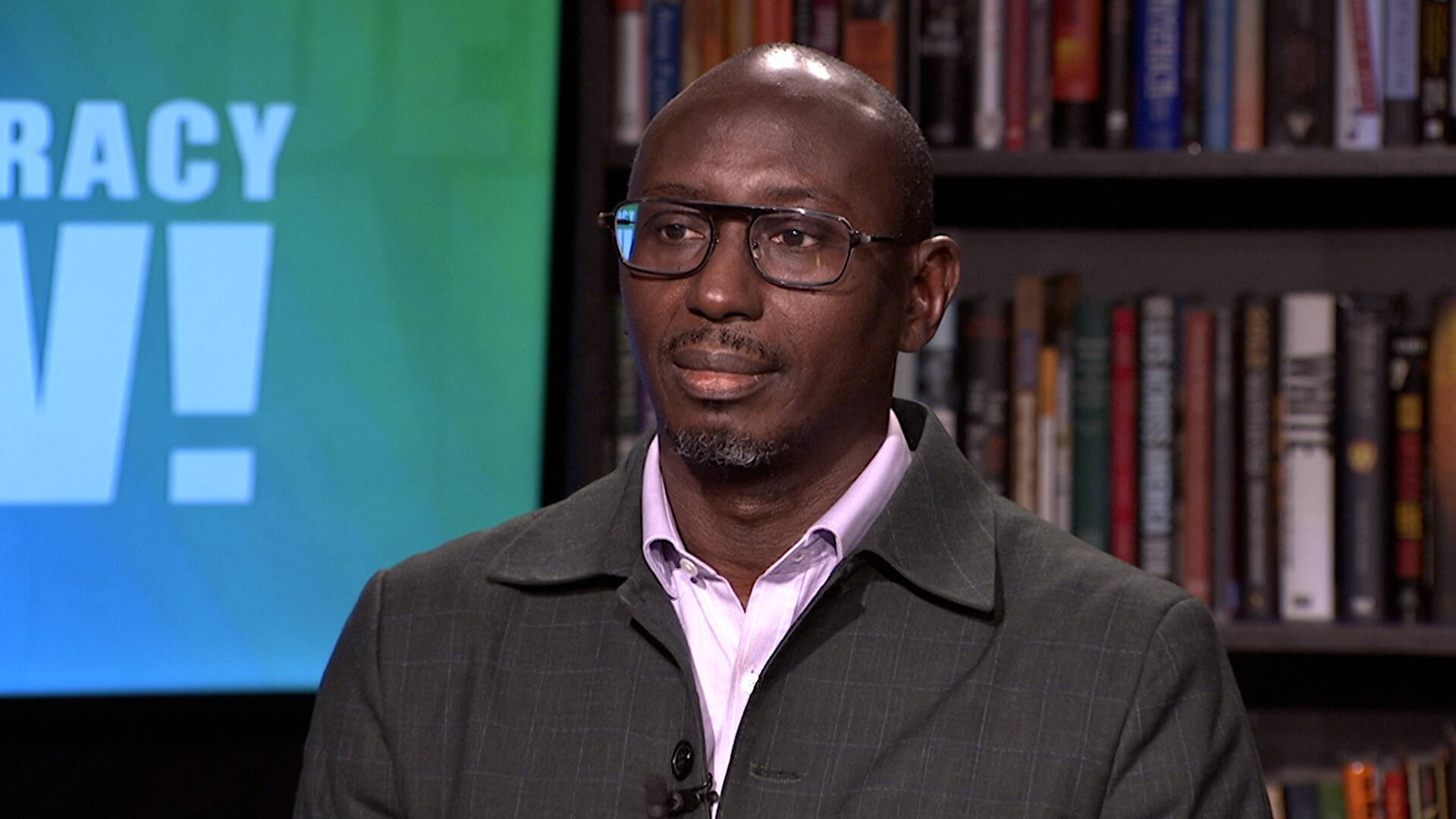
Seydina Moussa Ndiaye is a member of the Global Partnership on Artificial Intelligence, working on a strategy with the African Union to address the risks and benefits of AI for the continent. African countries face the threat of “colonial AI,” says Ndiaye. “When we talk about colonialism historically, that involves the control of resources, the control of knowledge and the control of terms of exchange, and we see that in Africa when we talk about AI.”
An MIT Technology Review Series: AI Colonialism
An investigation into how AI is enriching a powerful few by dispossessing communities that have been dispossessed before.

Why Big Tech pays poor Kenyans to teach self-driving cars
The data that powers the most cutting edge technology in Silicon Valley begins in Nairobi's slum.

Technology Colonialism
Technology companies today are increasingly colonial in their actions. This can be seen in the veneer of sovereignty they seek to cultivate, how they work across borders, their use of dominant culture as a weapon, and the clear belief that “superior” technology is a suitable excuse for lawlessness, exploitation and even violence.

Governance Archaeology: Research as Ancestry
Abstract. This essay presents the idea of governance archaeology, an approach to learning from the past to inform the politics of the future. By reporting on a prototype historical database, we outline a strategy for co-producing a global commons of collective governance practices that can inspire institutional learning and experimentation, particularly in the face of rapid technological change and vexing global crises. Embedded in our approach is an orientation of ancestry whereby practitioners cultivate relationships of accountability and responsibility to the legacies they learn from, recognizing the harm from past patterns of exploitation. By taking seriously a wide range of historical governance practices, particularly those outside the Western canon, governance archaeology seeks to expand the options available for the design of more moral political economies.
5 questions for Vilas Dhar
Hello, and welcome to today’s edition of the Future in Five Questions. Steven interviewed Vilas Dhar, president and trustee of the Patrick J. McGovern Foundation, a philanthropic organization spending millions of dollars to build artificial intelligence for the public good. Dhar argues there’s a power struggle between humans and machines, and that if we want humans to win, that means thinking beyond just regulations, and finding ways to strengthen human agency when it comes to technology. This conversation has been edited and condensed for clarity. Listen to an interview with Dhar on this week’s episode of the POLITICO Tech podcast, available on Apple, Spotify, Amazon or your preferred podcast player.

Every Space is Political - Dscout
Transformative justice is more crucial than ever. Sarah Fathallah believes researchers are primed to assist in this critical moment if we can "move at the speed of trust."

Infrastructure for Interdependence: Building technology in service of collective power - The Algo Rhythm by Blacksky
[This document serves as a memo for investors]
How Infrastructure Works: Transforming our shared systems for a changing world
'Pulsing with wisdom and humanity... a masterpiece' ED YONG'A hopeful, lyrical - even beautiful - hymn to the systems of mutual aid we embed in our material world' CORY DOCTOROW'An extraordinary book' MARK MIODOWNIK'You won't see the world the same after reading this book!' AUSTIN KLEONEvery day, we are granted the power to travel at high speeds, fly, see in the dark, summon water from distant mountains and electricity from the sun. The systems that run our world are invisible to us until they fail.Infrastructure enables lives of astounding ease and freedom that would have been unimaginable just a century ago. These technological systems - the most complex and vast ever created by humans - have allowed us to work collectively for the public good. But these systems are now beginning to fail us.Engineering professor Deb Chachra takes readers on a fascinating tour of these essential utilities, revealing how they work, what it takes to keep them running, and just how much they shape our lives - but also the price they extract, who pays it and in what ways, as well as the threats to our infrastructure in a changing world.From Snowdonia's Electric Mountain to a solar plant in southern India, Chachra shows how we can rebuild our shared infrastructure to be not just functional but also equitable, resilient, and sustainable. We need to learn how to see these systems and to transform them, together, because the cost of not being able to rely on them is unthinkably high.
Data Colonialism: Critiquing Consent and Control in “Tech for Social Change”
Lack of ethical processes around data collection and management, and ongoing Western control over data, continue the legacy of colonialism within aid work.

DIY Infrastructure Building for Power – Esther Han Beol Jang
Kawaakibi Foundation
Kawaakibi Foundation is an accelerator for thinkers and doers, with a focus on empowering communities across the Middle East and North Africa

annotations: Les mécanismes de la malédiction des ressources
traduction française du billet de blog "The economic nature of the resource curse: Mechanisms" de Daron Acemoglu & James Robinson
"I've got an idea!" On pluralism and resisting deskilling
A ramble around plural knowledges, data and AI, inspired by the wisdom from friends and colleagues in Nairobi and watching The Pitt. Plus! a random picture of an elephant

Atoosa Kasirzadeh on Twitter / X
I’m personally quite tired of these pretty much unbased universalist claims made by people with perhaps zero to super minimal knowledge of social sciences, history, and humanities. There are many forms of market organisation and employment, both existing and possible, that I’m… https://t.co/89Xqkzboce— Atoosa Kasirzadeh (@Dr_Atoosa) November 18, 2026

The Technological Republic: The Sunday Times bestseller from the great minds behind Palantir
The Sunday Times and #1 New York Times Bestseller‘The Technological Republic is far too important to ignore’ Times Literary SupplementSilicon Valley’s brightest minds once collaborated with governments to advance technologies, securing the West’s dominance on the global stage. But that relationship has corroded – with perilous repercussions for us all.Lifting the veil on tech giant Palantir and its broader political project, visionary co-founder and CEO Alexander C. Karp and his long-time deputy Nicholas W. Zamiska offer a searing critique of our collective culture of complacency. To regain geopolitical power and preserve our freedoms, we must tackle the world’s most pressing challenges – including the artificial intelligence arms race – together and head-on. Now is the time for the West to wake up.‘Bold and ambitious ... Essential reading’ Eric Schmidt‘Fascinating’ Financial Times‘A stirring manifesto’ Niall Ferguson‘Provocative and insightful’ Jamie Dimon