

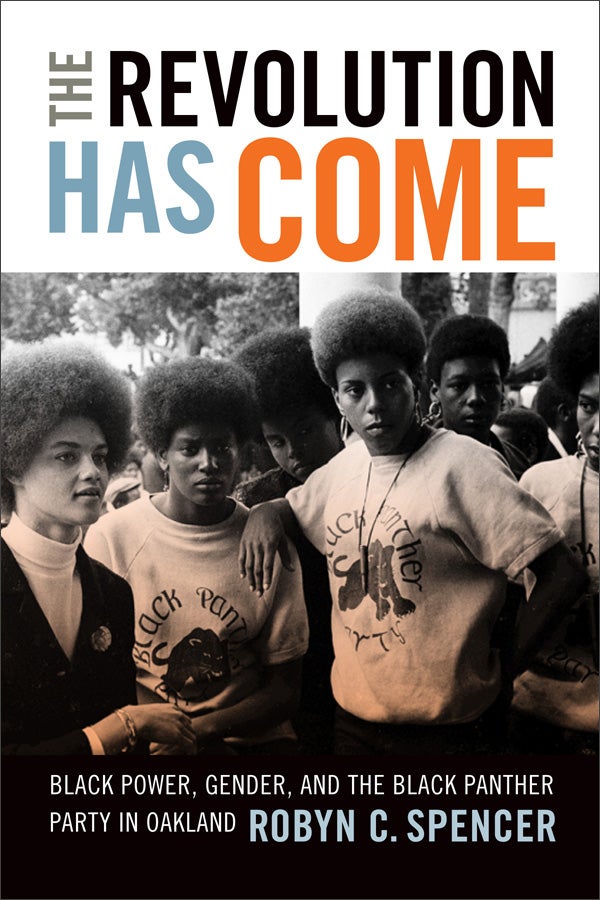
"Tearing down myths and distortions on virtually every page, The Revolution Has Come is the first substantive account of the Black Panther Party’s Oakland chapter—the iconic gathering that birthed the party and held on to its very last breath. Robyn C. Spencer’s incisive attention to gender, state repression, black radical alliances, philosophical and ideological debates, and the organization’s long decline makes this one of the most original studies of the Panthers to appear in years." - Robin D. G. Kelley, author of Freedom Dreams: The Black Radical Imagination
Revolution in Our Time: The Black Panther Party's Promise to the People
Kekla Magoon relays an essential account of the Black Panthers—as militant revolutionaries and human rights advocates.
American Babylon
A gripping portrait of black power politics and the struggle for civil rights in postwar Oakland

Black against Empire by Joshua Bloom | East Bay Booksellers
This timely special edition, published on the fiftieth anniversary of the founding of the Black Panther Party, features a new preface by the authors that places the Party in a contemporary political landscape, especially as it relates to Black Lives Matter and other struggles to fight police brutality against black communities.
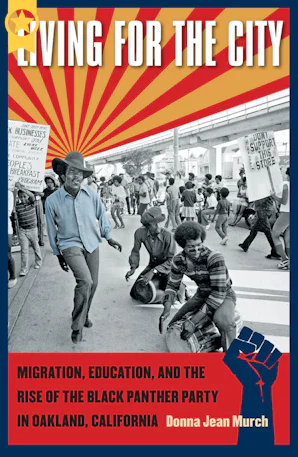
Living for the City
In this nuanced and groundbreaking history, Donna Murch argues that the Black Panther Party (BPP) started with a study group. Drawing on oral history and unt...
Revolutionary Suicide by Huey P Newton | East Bay Booksellers
The searing, visionary memoir of founding Black Panther Huey P. Newton, in a dazzling graphic package Tracing the birth of a revolutionary, Huey P. Newton's famous and oft-quoted autobiography is as much a manifesto as a portrait of the inner circle of America's Black Panther Party.
The Color of Power — Oakland Public Library
The Color of Power — Douzet, Frédérick — <p></p><p> <i>The Color of Power </i>is a fascinating examination of the changing politics of race in Oakland, California. Oakland has been at the forefront of California’s multicultural changes for decades. Since the 1960s, the city has been a shining example of a fruitful liberal black-and-white political partnership and the successful incorporation of black politicians into the political landscape. But over the past forty years, the balance of power has changed as a consequence of dramatic demographic trends and economic circumstances. The city’s formerly dominant biracial political machine has been challenged by the demands of new multiracial interests.</p><p></p><p>The city, once governed by a succession of black mayors and majority black city councils, must now accommodate rapidly growing Asian and Latino communities. While the black-led coalition still relies on white progressive support, this alliance has weakened due to a shift in the progressives’ agenda and the voting habits of the black community, the rise of a Hispanic-Asian coalition, and a strong demographic decline of the African American population. With similar demographic changes taking place across the nation, Oakland’s experience provides insight in to the multiracial future of other American cities.</p><p></p><p> <i>The Color of Power</i> investigates Oakland’s contemporary racial politics with a detailed study of conflicts over issues like education, elections and political representation, and crime. Trained as a journalist, a political scientist, and a geographer, the author provides a unique perspective supported by numerous maps and extensive interviews.</p><p>Winner of awards from the French Society of Geography and the French National Academy of Sciences</p><br/>Trained as a journalist, a political scientist, and a geographer, the author provides a unique perspective supported by numerous maps and extensive interviews.<p>Winner of awards from the French Society of Geography and the French National Academy of Sciences</p>
Oakland is a Vibe: Blackness, Cultural Framings and Emancipations of The Town
Author(s): Heitz, Kaily | Advisor(s): Scott Lewis, Jovan | Abstract: In this dissertation, I examine the ways that developers and Black community organizers in Oakland, California, utilize a situated concept of Black culture to produce value in the city. This value is constituted by a politics of Blackness rooted both in racial capitalism, shifting structures of community care, and their affective articulations. The affective qualities of Black Oakland – which includes a sense of relationality, creativity, and resistance – are understood colloquially as “vibe.” While representations of vibe are mobilized by both developers and community organizations to respectively advance and resist gentrification, I argue that the vibe of the city is constituted by a Black sense of place that cannot be reproduced through capitalist representations of cultural value alone. This study of vibe presents an opportunity to take seriously the invitation of Black geographic scholarship to work at the intersection of poetics and historical materialism by exploring relationality as a site that coproduces racialized space and experience. Where developers leverage notions of vibe to generate value through private investment, Black organizers utilize such representations in order to reclaim the physical space necessary to the very production of vibe. The latter strategy is, I suggest, an enactment of what I call “emancipatory framing,” in which hegemonic framing is mobilized in order to create alternative spaces for liberatory praxes. This dissertation explores vibe and emancipatory framing at three different scales: the Black body, the independent business, and the grassroots collective. I conclude that vibe as a material and metaphorical asset of Blackness, is at the root of contestations over place, and sometimes contradictory imaginaries of freedom.

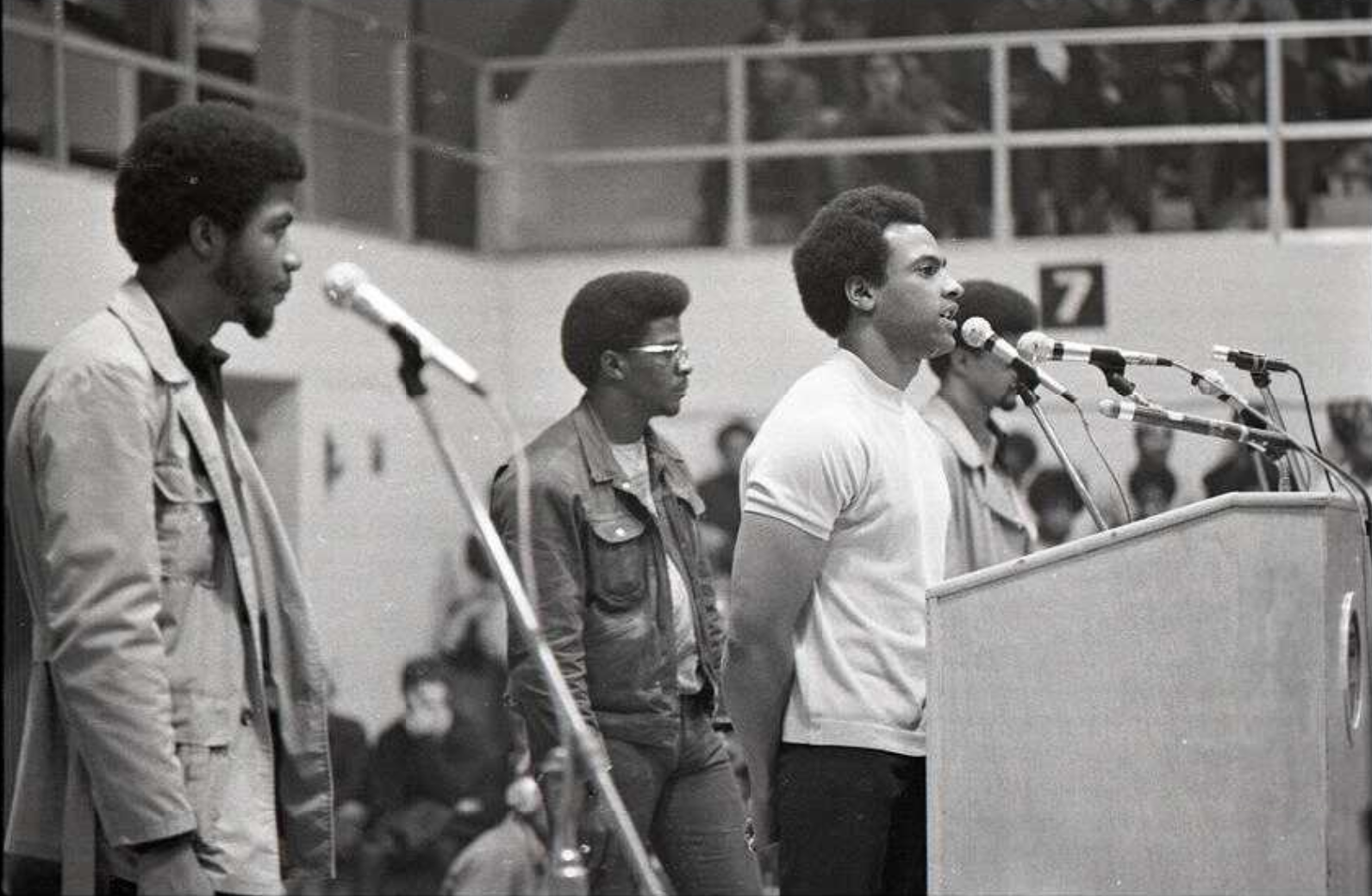
Huey Newton introduces Revolutionary Intercommunalism, Boston College, November 18 1970
In 1970 Huey Newton gave a speech at Boston college outlining a new ideological direction for the Black Panther Party, Revolutionary Intercommunalism. Newton described his rejection of the idea of black people being an internal colony in the US, that class struggle rather than national liberation was the only route to a communist society (describing the failure of liberation movements in Africa as 'neo-colonialism'), concerns around automation and the working class, and the impossibility of a socialist state in the US (against the position of the Progressive Labor Party), although he still described Vietnam and China as partially liberated.
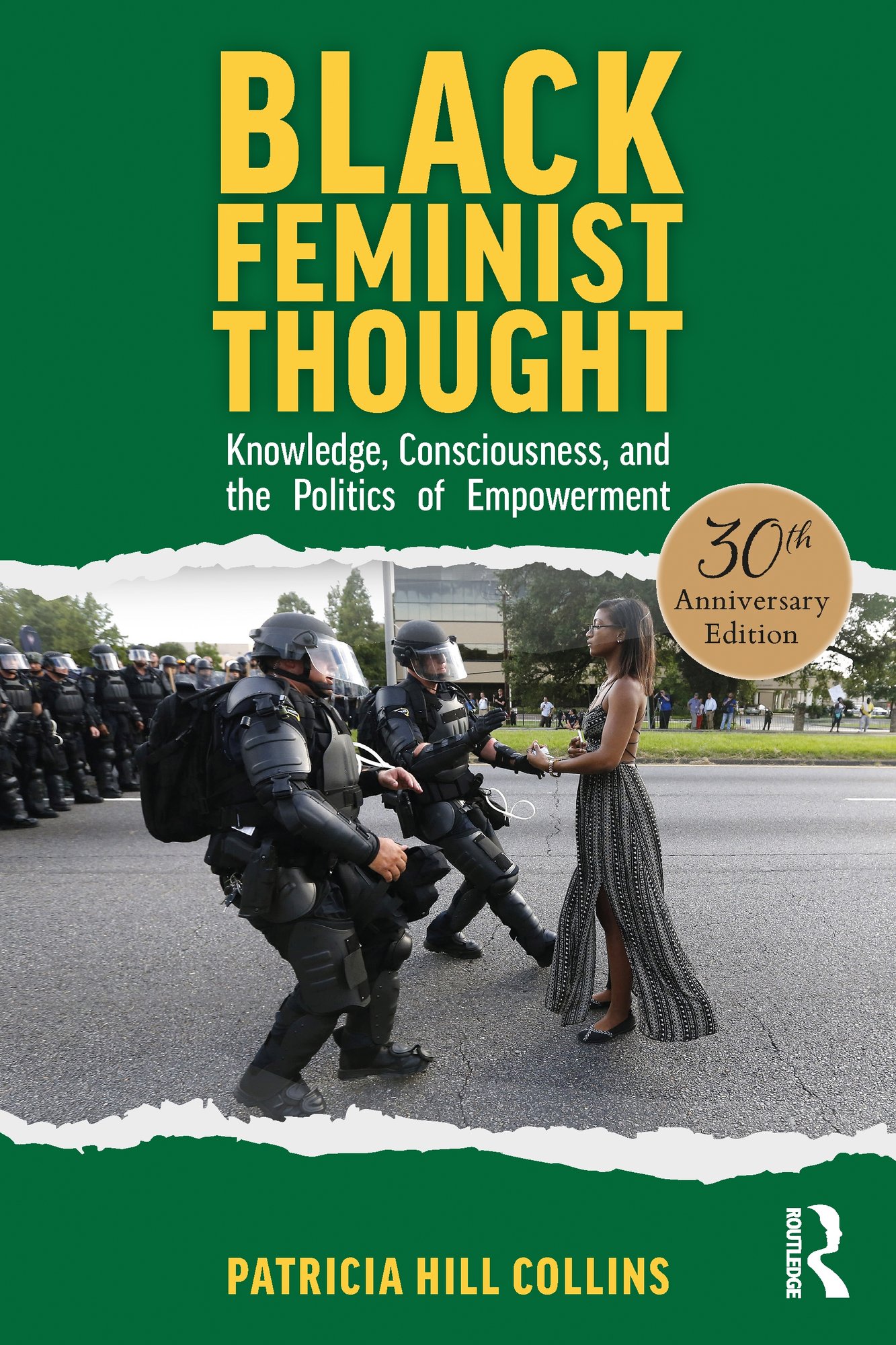
Black Feminist Thought, 30th Anniversary Edition: Knowledge, Consciousness, and the Politics of Empowerment
Knowledge, Consciousness, and the Politics of Empowerment
Black Marxism, Revised and Updated Third Edition by Cedric J Robinson | East Bay Booksellers
In this ambitious work, first published in 1983, Cedric Robinson demonstrates that efforts to understand Black people’s history of resistance solely through the prism of Marxist theory are incomplete and inaccurate.
What Happens When You Have a Choice? : A Breakdown of The People's Assembly and Blacksky's Vision for Democratic Tooling
Blacksky’s foundation is built on self-governance and self-determination. We took learnings from Black and Brown revolutionaries with our belief that everyone has the ability and the self-efficacy to do the things that are best for their community, but we also realize that that ability is something that is not seen as a right that everyone should be able to experience. Due to this, we sought out to create a solution, at least in the digital space, specifically for Blacksky.
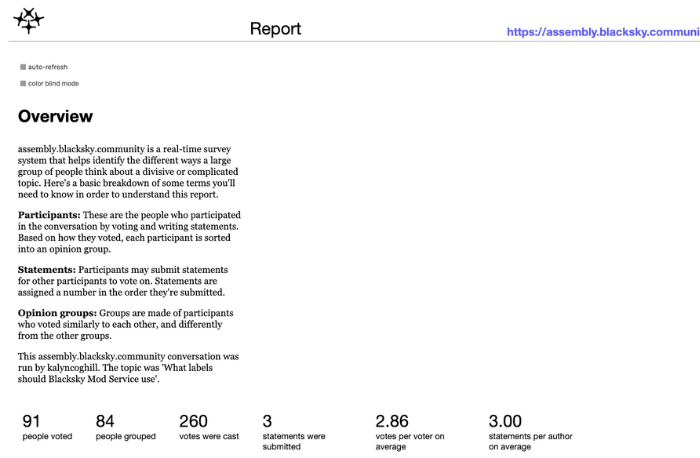
Black Futures
Check out Black Futures - <b><b>“A literary experience unlike any I’ve had in recent memory . . . a blueprint for this moment and the next, for where Black folks have been and where they might be going.”—<i>The New York Times Book Review</i> (Editors’ Choice)</b><br><br></b><i><b>What does it mean to be Black and alive right now?</b></i><br><br>Kimberly Drew and Jenna Wortham have brought together this collection of work—images, photos, essays, memes, dialogues, recipes, tweets, poetry, and more—to tell the story of the radical, imaginative, provocative, and gorgeous world that Black creators are bringing forth today. The book presents a succession of startling and beautiful pieces that generate an entrancing rhythm: Readers will go from conversations with activists and academics to memes and Instagram posts, from powerful essays to dazzling paintings and insightful infographics.<br><br> In answering the question of what it means to be Black and alive, <i>Black Futures</i> opens a prismatic vision of possibility for every reader. by Jenna Wortham and Kimberly Drew on Bookshop.org UK!
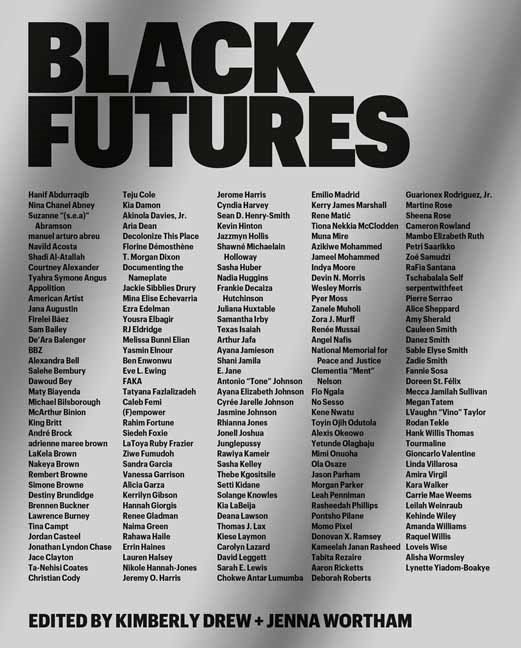
The #BlackCommunistReadingList - AAIHS
Here is a list of recommended books on African Americans and Communism. As a graduate student at the University of Illinois, I read many of these books to gain an intellectual understanding of why black Americans and other people African descent saw Communism as a political ideology through which to achieve black liberation. Harry Haywood’s
When Riot Cops Are Not Enough
In When Riot Cops Are Not Enough, sociologist Mike King examines the policing, and broader political repression, of the Occupy Oakland movement. King’s active and daily participation in that movement provides a unique insider perspective to illustrate how the Oakland police and city administrators lost the ability to effectively control the movement.

A Challenge on Barack Obama & The Black Papers feat Dr. David Johns | Angela Rye SoloPod
Black Panther Woman by Mary Frances Phillips | East Bay Booksellers
The first biography of Ericka Huggins, a queer Black woman who brought spiritual self-care practices to the Black Panther Party.In this groundbreaking biography, Mary Frances Phillips immerses readers in the life and legacy of Ericka Huggins, a revered Black Panther Party member, as well as a mother, widow, educator, poet, and former political prisoner.