PRIDE - PRoteomics IDEntifications Database
ProteomeXchange Dataset PXD052106
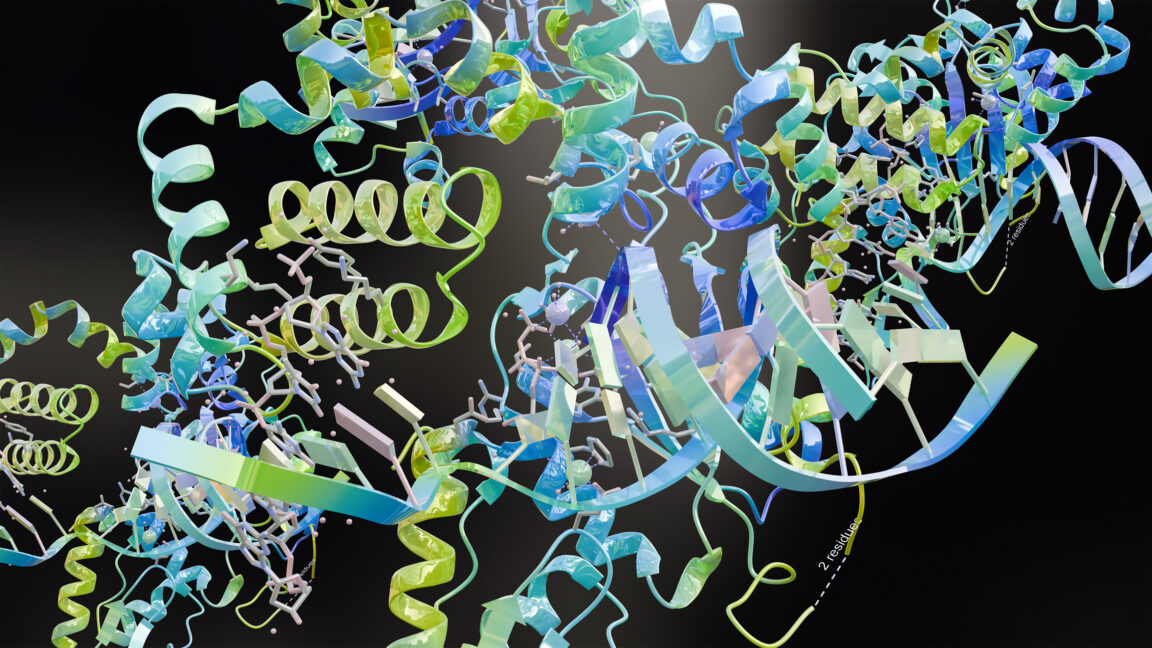
DeepMind releases structure predictions for nearly every known protein
Database powered by AlphaFold algorithm now boasts predicted structures for over 200 million proteins

UniProt
UniProt is the world's leading high-quality, comprehensive and freely accessible resource of protein sequence and functional information.
Notes on Rastair, a variant and methylation caller
In the last year, I’ve had the pleasure to work on Rastair , a bioinformatics project by Benjamin Schuster-Böckler from the Ludwig Institute for Cancer Research at the University of Oxford. It is a …
AlphaFold2 @ CASP14: “It feels like one’s child has left home.”
The past week was a momentous occasion for protein structure prediction, structural biology at large, and in due time, may prove to be so for the whole of life sciences. CASP14, the conference for …

Google figures out how to watermark AI-designed proteins
Intended to help with biosecurity, it works with a popular AI protein design tool.

Designing RNA sequencing experiments: A practical guide to reproducible gene expression analysis
RNA sequencing (RNA-seq) has become a cornerstone of modern biotechnology, offering a comprehensive and high-resolution view of gene expression that enables the discovery of novel transcripts across diverse biological systems. Its applications extend beyond basic transcriptomics, providing powerful tools for uncovering molecular mechanisms underlying disease, environmental responses, and chemical toxicity. In biotechnology and biomedical research, RNA-seq facilitates the identification of regulatory networks and biomarkers that inform therapeutic development, risk assessment, and precision medicine.

#bioinformatics #computationalbiology #aiforscience #singlecell #spatialtranscriptomics #opensource #codex #claudecode #mcp #agenticai | Herry Z.
BioNexus: A Scientific Reliability Layer for Agentic Biology As coding agents such as OpenAI Codex, Claude Code, and Cursor become increasingly capable of running bioinformatics workflows, a new problem emerges: Knowing how to run an analysis does not mean knowing when that analysis is scientifically valid. BioNexus is an open-source project exploring a reliability layer for biological coding agents rather than another standalone AI scientist. Its current architecture focuses on: Machine-readable Capability Contracts — define input semantics, scientific preconditions, canonical backends, refusal conditions, and evidence requirements. EvidenceCard 2.1 — separates execution state from scientific evidence and grades conclusions as PRELIMINARY, SUPPORTED, ROBUST, REPLICATED, FRAGILE, or ABSTAIN. Scientific Intent & Invariant Routing — detects invalid analyses such as pseudoreplication, incompatible data representations, or missing backends. BioNexus Eval — evaluates routing, unsafe claims, refusal behavior, and scientific outcomes. RunBundle Artifact Contract — packages inputs, parameters, results, provenance, environment, and evidence into reproducible machine-readable runs. The long-term goal is simple: Make scientific reliability a first-class infrastructure layer for agentic biology. BioNexus is still evolving, and I am actively looking for contributors in bioinformatics, single-cell/spatial omics, scientific benchmarking, MCP, reproducibility, and AI coding agents. PRs, issues, benchmark datasets, scientific critiques, and failure cases are especially welcome. GitHub: HERRY423/BioNexus #Bioinformatics #ComputationalBiology #AIForScience #SingleCell #SpatialTranscriptomics #OpenSource #Codex #ClaudeCode #MCP #AgenticAI

IPFS (@ipfs.tech)
🪩 Introducing matadisco.org! — a way to discover open datasets via #atproto that doesn't depend on any single institution staying online. 🕺🏼 We have more public data than ever (satellite imagery, climate models, genomic sequences), but finding it is still painfully hard. https://matadisco.org
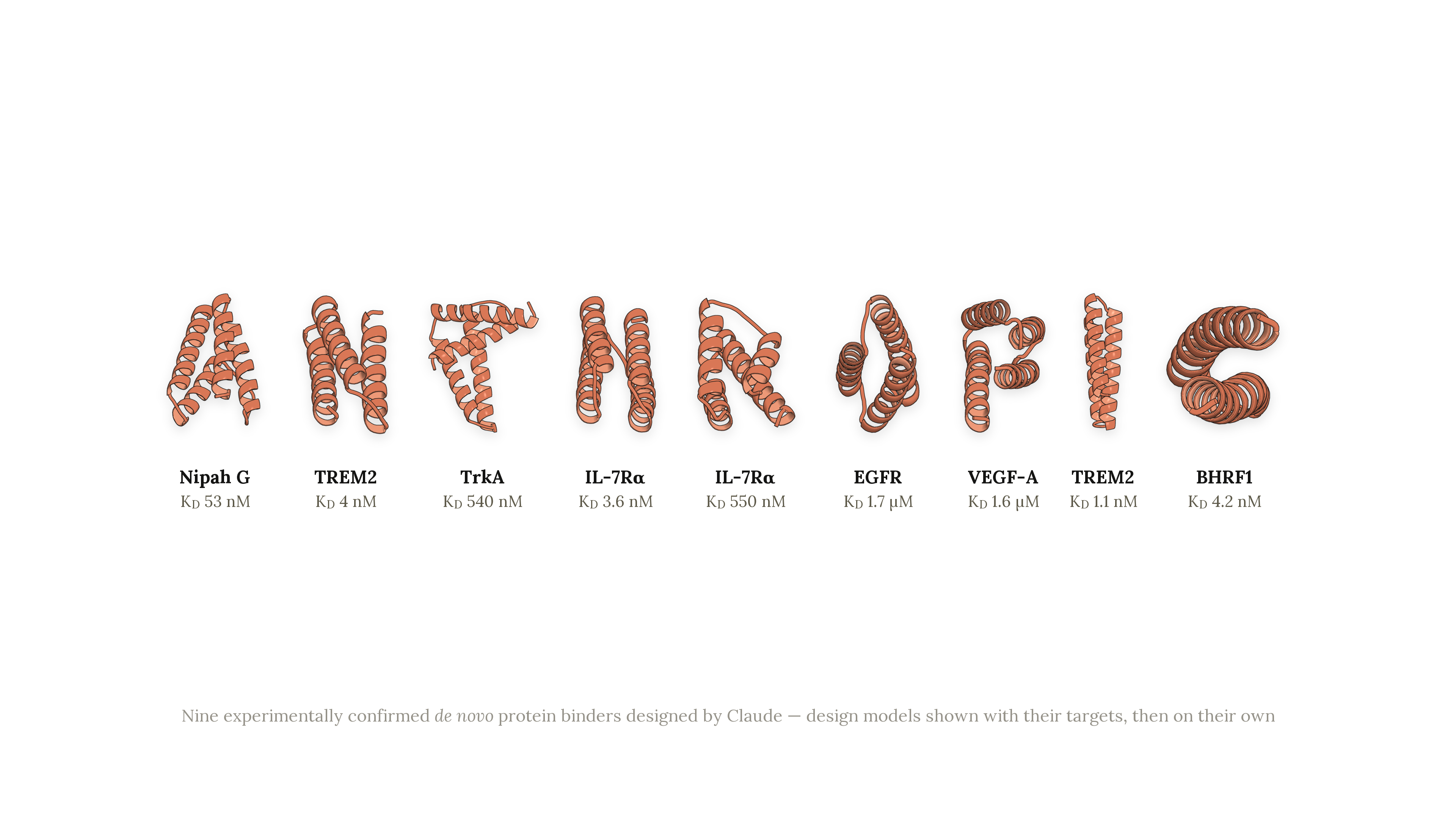
Claude accelerates protein design and analytical chemistry
Two results show how Claude helps life sciences researchers speed up their work: designing protein binders from scratch and analyzing NMR and LC-MS data to speed chemical analysis.
AI for Drug Discovery Needs Trustworthy Biological Data
To unleash the potential of AI in life sciences and drug discovery, biological datasets must be authenticated, validated, and supported by standardized metadata.
modeling_motif.py · Motif-Technologies/Motif-3-Beta at 32b030593c716a9bb860731baeef2925aaaaaf3a
We’re on a journey to advance and democratize artificial intelligence through open source and open science.

Carbon-A: Finding genes in known and unknown genomes
A Blog post by Hugging Face Biology Research on Hugging Face

Introducing GPT-Rosalind for life sciences research
OpenAI introduces GPT-Rosalind, a frontier reasoning model built to accelerate drug discovery, genomics analysis, protein reasoning, and scientific research workflows.