EconStor is a publication server for scholarly economic literature, provided as a non-commercial public service by the ZBW.
Credit Cards as Lifestyle Facilitators
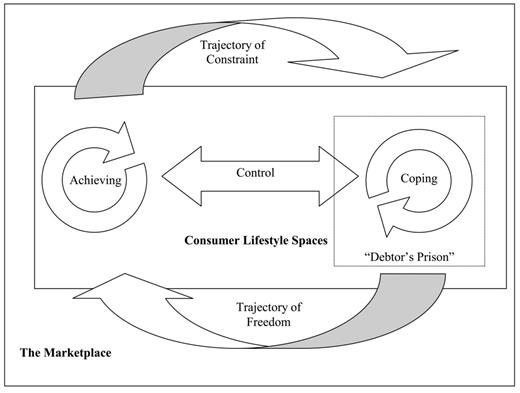
Abstract. Credit cards are an increasingly essential technology, but they carry with them the paradoxical capacity to propel consumers along lifestyle traj
Consumer Rationality and Credit Cards
Borrowing on credit cards at high interest rates might appear irrational. However, even low transactions costs can make credit cards attractive relative to bank loans. Credit cards also provide liquidity services by allowing consumers to avoid some of the opportunity costs of holding money. The effect of alternative interest rates on the demand for card debits can explain why credit card interest rates only partially reflect changes in the cost of funds. Credit card interest rates that are inflexible relative to the cost of funds are not inconsistent with a competitive equilibrium that yields zero profits for the marginal entrant.
Time to Cut Up Those Debit Cards? Effect of Payment Mode on Willingness to Spend
Financial industry data indicate that consumers increasingly prefer debit cards over credit cards, especially as a means of enforcing financial self-discipline. Given prior research suggesting that credit cards act as spending facilitating stimuli, this move toward reduced credit card use would appear to be in the right direction. Ironically, however, the same logos that were implicated in facilitating spending with credit cards are the logos that appear on debit cards. In what should serve as an eye-opener to consumers, it is found that exposure to debit card logos does result in an increased willingness to spend, similar to credit cards.
Differences in Consumer Purchase Behavior by Credit Card Payment System
Abstract. A conceptualization of the relationships between alternative payment systems and various environmental and behavioral variables, which may serve
Manifest Financial | Banking Solutions for Creators
Crafted specifically for creators, streamlining financial management with seamless payments and effortless expense tracking—all in one place.

Do Payment Mechanisms Change the Way Consumers Perceive Products?
Abstract. Do payment mechanisms change the way consumers perceive products? We argue that consumers for whom credit cards (cash) have been primed focus mor
Purchase Justifiability Drives Payment Choice: Consumers Pay with Card to Remember and Cash to Forget
AbstractAlthough consumers often have multiple payment methods at their fingertips, such as cash and credit/debit cards, prior research is silent on how consumers choose between them. We home in on a key element of purchase—purchase justifiability—that affects how consumers choose to pay. Analysis of 118,042 real-world purchases and six experiments reveals that when consumers are motivated to forget (vs. remember) a purchase because they see it as difficult (vs. easy) to justify, they have an increased preference to pay with cash (vs. card) because cards create a “paper/electronic trail” that aids memory retrieval. These payment preferences are strongest among consumers most likely to recall/track their card spending, and manifest only when card expenses are trackable. We reconcile our results with the classic effect of payment method on pain of paying and discuss implications for merchants and for financial institutions designing payment methods of the future.

Payment Rewards and Credit Card Debt: Experimental Evidence
We report on a controlled laboratory experiment in which participants make consumption, saving, and credit card repayment decisions when credit card purchases e

Rewards and Misperceived Spending: Experimental Evidence from Credit Cards
Using proprietary data, a survey, and an experiment with a major bank in China, this paper studies how credit card rewards affect perceived and actual consumer
Introduction to the Journal of Marketing Research Special Interdisciplinary Issue on Consumer Financial Decision Making
If you have citation software installed, you can download citation data to the citation manager of your choice

Google Open Source Report Card

What Do Consumers Really Pay on Their Checking and Credit Card Accounts? Explicit, Implicit, and Avoidable Costs
(May 2009)
The Impact of Credit Cards on Spending: A Field Experiment
In a field experiment, we measure the impact of payment with credit card as compared with cash on insurance company employees' spending on lunch in a cafeteria.
annotations: Sept vérités sur le commerce
Blog de sciences économiques et sociales de Martin Anota. Traductions, revues de presse.
Who Pays For Your Rewards? Redistribution in the Credit Card Market
The Federal Reserve Board of Governors in Washington DC.
Always Leave Home Without It: A Further Investigation of the Credit-Card Effect on Willingness to Pay
In studies involving genuine transactions of potentially high value we show that willingness-to-pay can be increased when customers are instructed to use a credit card rather than cash. The effect may be large (up to 100%) and it appears unlikely that it arises due solely to liquidity constraints. In addition to demonstrating the effect, we provide a methodology for detecting it, and our findings suggest a source of variance to test alternative explanations.