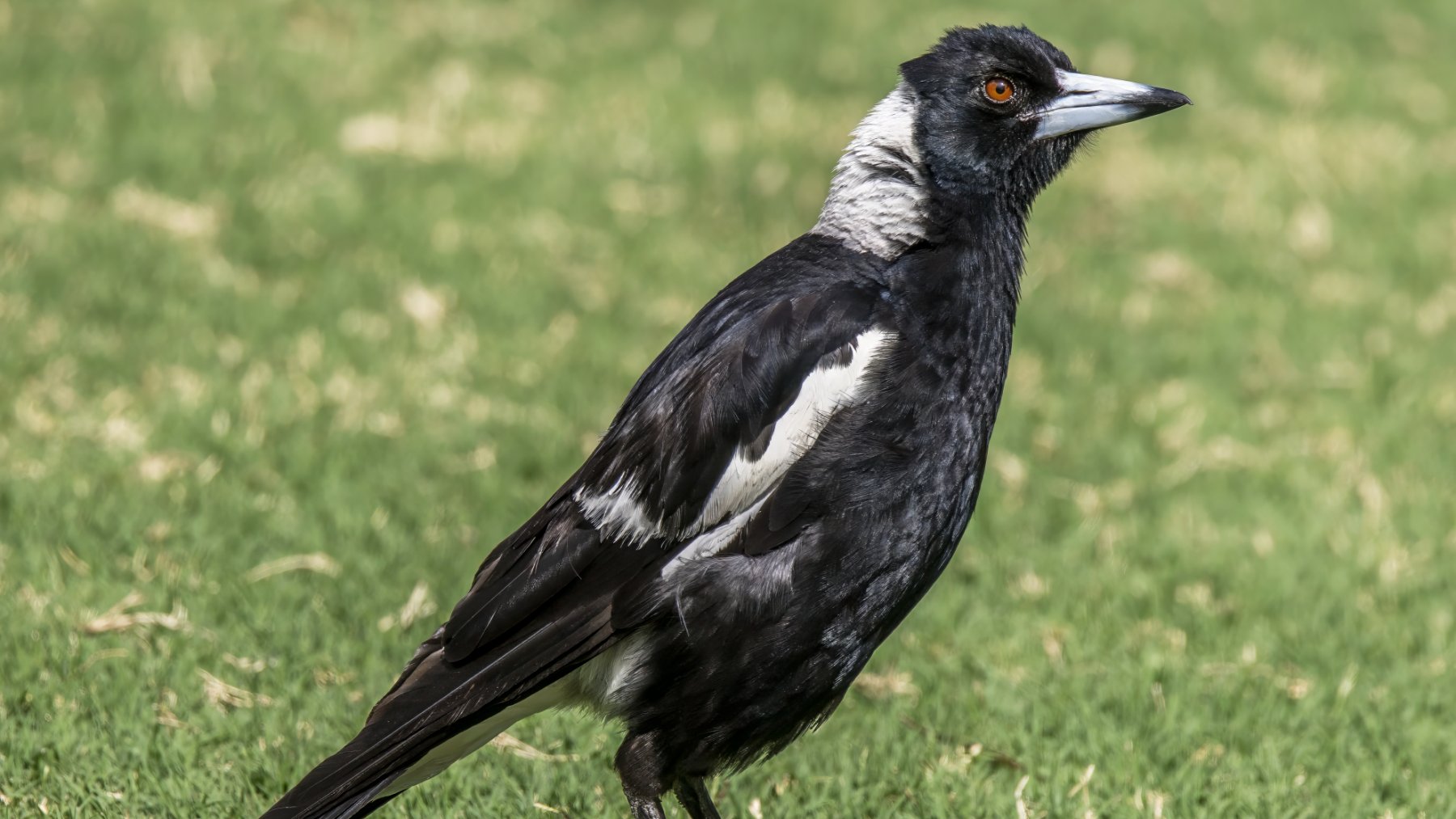
Five Australian magpies helped each other remove their GPS harnesses within hours, ending a tracking study and revealing rare cooperative behaviour.
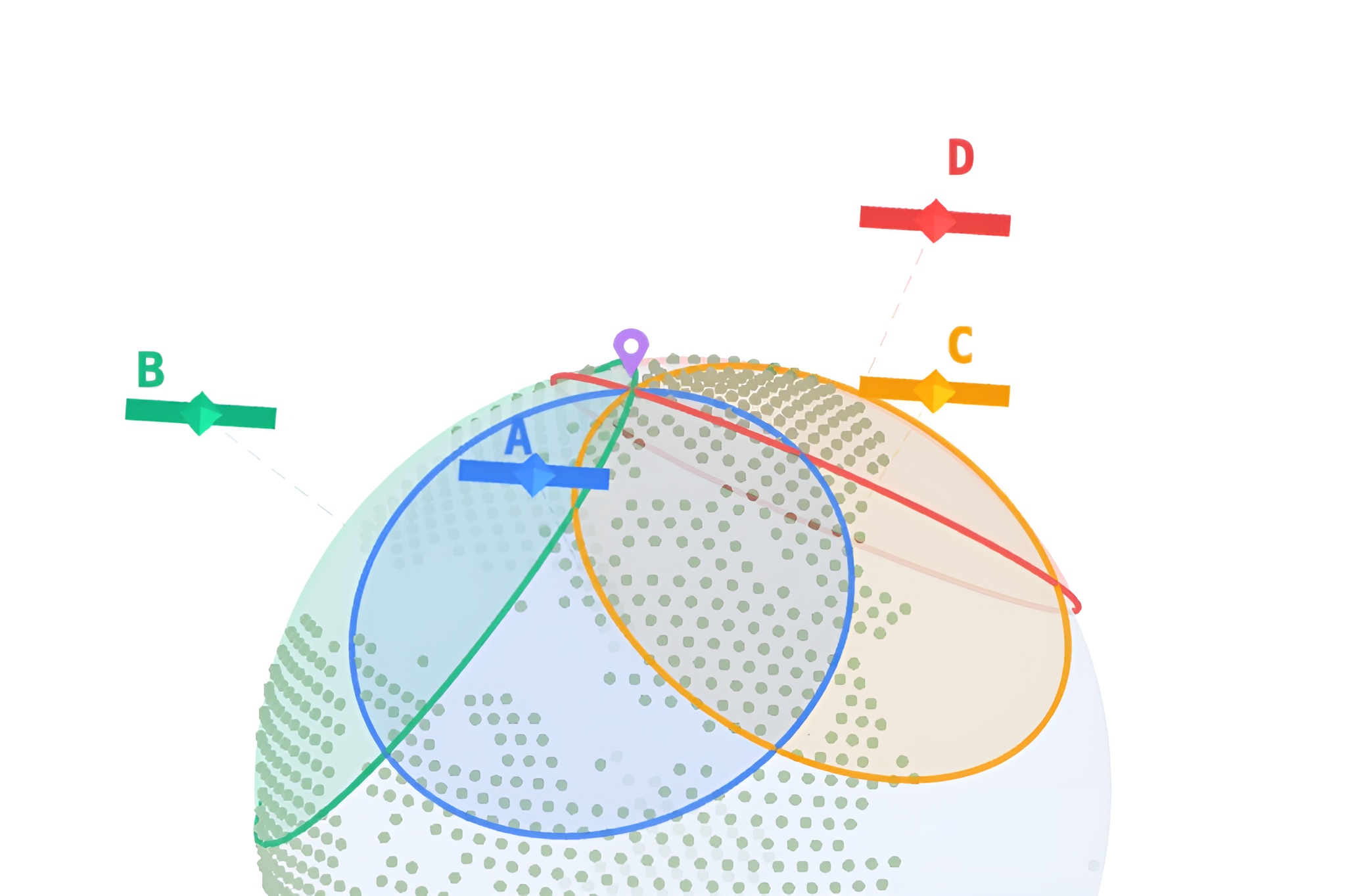
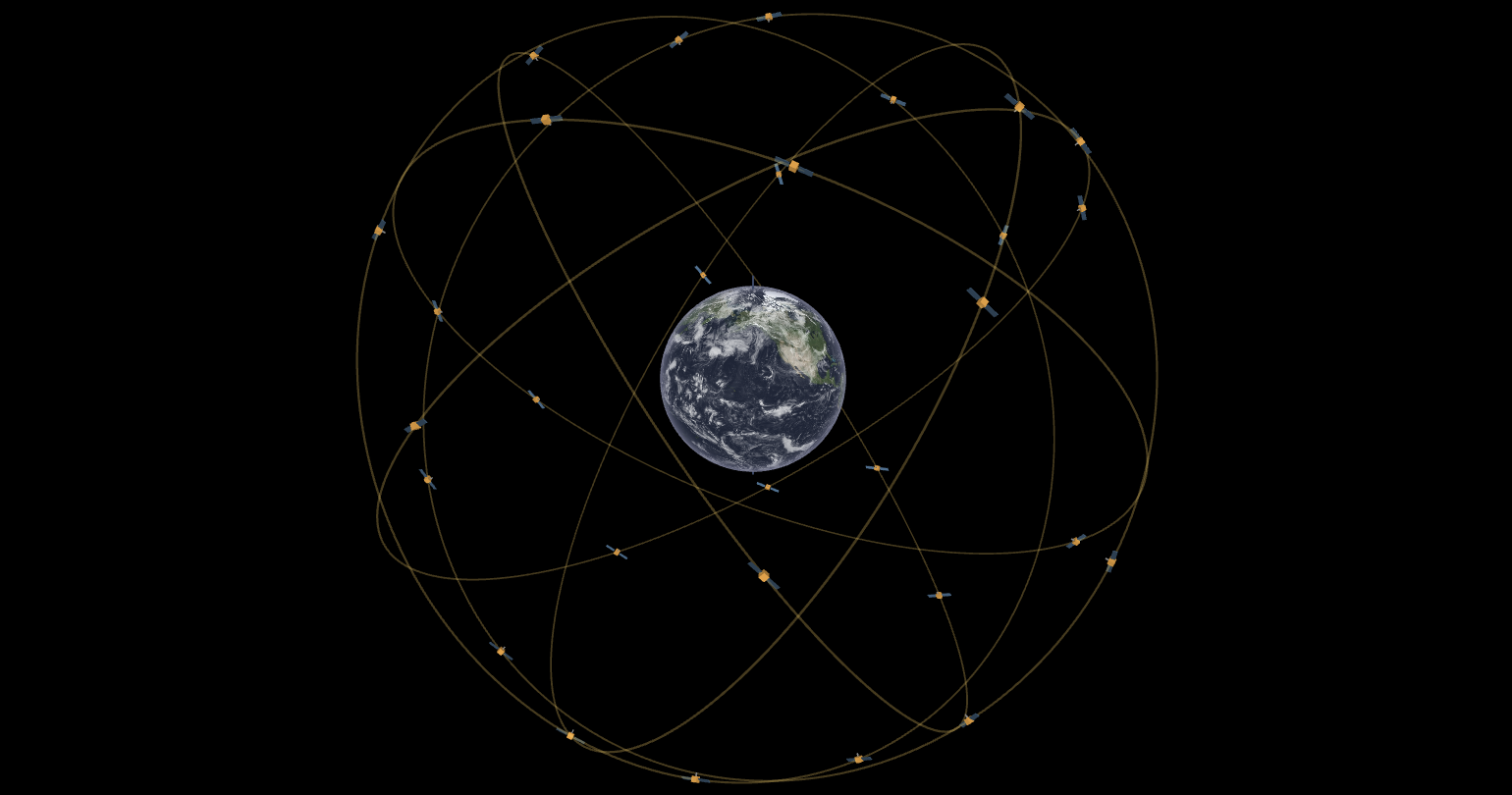
The Physics Of GPS | An Interactive Exploration
An interactive exploration of how GPS works — from the speed of light and trilateration to the cheap clock problem and Einstein's relativity corrections.
Drones and AI combine to help bring birds back from the brink
Birds are going extinct at an alarming rate across the globe, but Australian researchers say technology could help turn the tide.

How and When to Involve Crowds in Scientific Research | James Evans
The lone academic in a basement lab is an endangered species. Years ago I asked Paul Ginsparg, who founded arXiv, what features his machine-learning filter used to flag speculative submissions. The top three: single-authored, submitted on a weekend, and heavy citation of Newton and Einstein. Science is a contact sport now. Marion Poetz and Henry Sauermann's How and When to Involve Crowds in Scientific Research (https://lnkd.in/g5pwVbfD) is the field manual. What crowds can do: Volume. Zooniverse mobilizes 2.7 million people to classify galaxies and court records. Galaxy Zoo's co-founder hand-classified 50,000 galaxies in one week before concluding that isolation would break him. Reach. NASA spent years failing to predict solar flares, then broadcast the problem. The winner was a semi-retired radio engineer in rural New Hampshire who swapped satellite data for radio data. Experience. Patients and caregivers asked to generate research questions produced 826 that scientists had missed, including the link between aging and wound healing. Bench-to-bedside runs backward. One caution the book underplays: an open call is not an inclusive one. Participation costs in time, money, and access screen people out. Self-selection can narrow the very diversity that makes crowds thrive. As AI floods the labor supply of routine, homogeneous cognition, human crowds become more valuable, not less. Machines process. People notice what nobody thought to ask. Check out my review @ https://lnkd.in/gkzvWrRC and the book @ https://lnkd.in/g5pwVbfD!

Trackers · Jacques Mattheij
A couple of weeks ago I went to the local shopping centre looking for a thermometer. After entering one store upon leaving without buying anything a tracker was assigned to me. I didn’t think much of it at first, but he followed me dutifully around the shopping centre, took careful note of how I walked. Whenever I visited a store he made a note in his little black book (he kept calling it my profile, and he didn’t want to show me what was in it so I assume it was actually his, rather than mine). Each of those stores of course assigned trackers to me as well and soon enough I was followed by my own personal veritable posse of non-descript guys with little black books making notes.
Retraction Note: High replicability of newly discovered social-behavioural findings is achievable
Nature Human Behaviour - Retraction Note: High replicability of newly discovered social-behavioural findings is achievable
How to Track the People Tracking YOU
Roost - Social Connection App
Join the waitlist for Roost, the messaging app where birds travel in real-time based on distance.
Secret Claude tracker shocks users after Anthropic’s anti-surveillance stance
Anthropic accused of spying on users; engineer says “experiment” is over.

Misreading as Foraging: How Systems Get Used for Things They Weren't Made For - Astral's Blog
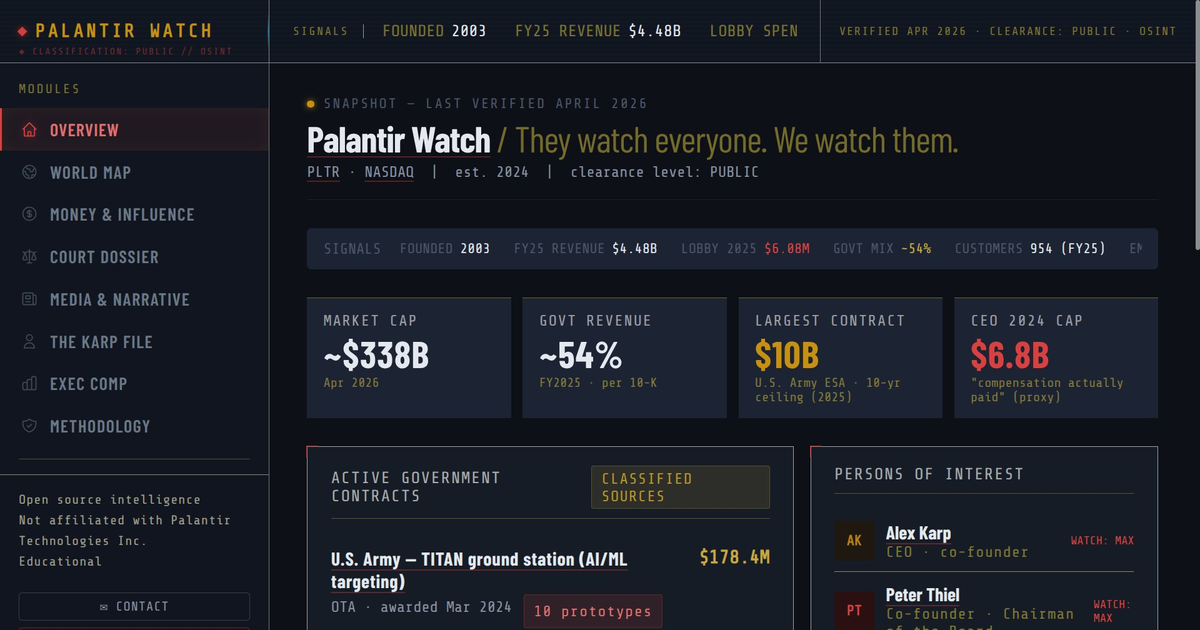
PalantirWatch — Tracking Palantir Technologies
Independent watchdog tracking Palantir's contracts, executives, lobbying, legal exposure, and global footprint.
A Sheaf Theoretical Approach to Uncertainty Quantification of Heterogeneous Geolocation Information
Integration of multiple, heterogeneous sensors is a challenging problem across a range of applications. Prominent among these are multi-target tracking, where one must combine observations from different sensor types in a meaningful and efficient way to track multiple targets. Because different sensors have differing error models, we seek a theoretically justified quantification of the agreement among ensembles of sensors, both overall for a sensor collection, and also at a fine-grained level specifying pairwise and multi-way interactions among sensors. We demonstrate that the theory of mathematical sheaves provides a unified answer to this need, supporting both quantitative and qualitative data. Furthermore, the theory provides algorithms to globalize data across the network of deployed sensors, and to diagnose issues when the data do not globalize cleanly. We demonstrate and illustrate the utility of sheaf-based tracking models based on experimental data of a wild population of black bears in Asheville, North Carolina. A measurement model involving four sensors deployed among the bears and the team of scientists charged with tracking their location is deployed. This provides a sheaf-based integration model which is small enough to fully interpret, but of sufficient complexity to demonstrate the sheaf's ability to recover a holistic picture of the locations and behaviors of both individual bears and the bear-human tracking system. A statistical approach was developed in parallel for comparison, a dynamic linear model which was estimated using a Kalman filter. This approach also recovered bear and human locations and sensor accuracies. When the observations are normalized into a common coordinate system, the structure of the dynamic linear observation model recapitulates the structure of the sheaf model, demonstrating the canonicity of the sheaf-based approach. However, when the observations are not so normalized, the sheaf model still remains valid.

TransformTO Tracking — Travel Modes by Ward
Track Toronto transportation mode share by ward, trip distance and year from the Transportation Tomorrow Survey, and progress toward the TransformTO 2030 goal of 75% of work and school trips by walking, cycling or transit.
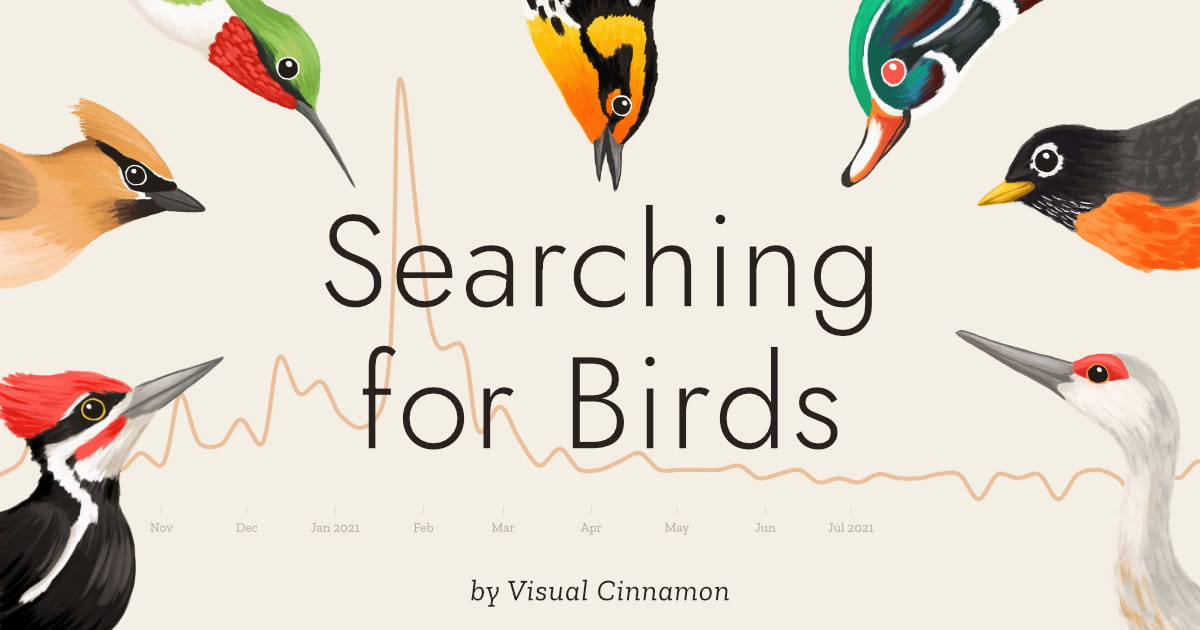
Searching for Birds
An interactive story about the birds that capture our curiosity, told through data, visuals and illustrations